

Neighbourhood watch
Three Manitoban political leaders weigh in on western alienation and the spectre of a fall independence referendum in Alberta

Advertisement
Read this article for free:
or
Already have an account? Log in here »
To continue reading, please subscribe:

Digital Subscription
One year of digital access for only $205*
- Enjoy unlimited reading on winnipegfreepress.com
- Read the E-Edition, our digital replica newspaper
- Access News Break, our award-winning app
- Play interactive puzzles
*First annual payment billed as $205.00 + GST for one year. This annual subscription will automatically renew at $233.00 + GST every 52 weeks (10% off the regular annual price of $259.35). Offer available to new and qualified returning subscribers only. Cancel any time.
To continue reading, please subscribe:
Add Free Press access to your Brandon Sun subscription for only an additional
$1 for the first 4 weeks*
- Enjoy unlimited reading on winnipegfreepress.com
- Read the E-Edition, our digital replica newspaper
- Access News Break, our award-winning app
- Play interactive puzzles
*Your next Brandon Sun subscription payment will increase by $1.00 and you will be charged $17.95 plus GST for four weeks. After four weeks, your payment will increase to $24.95 plus GST every four weeks.
Read unlimited articles for free today:
or
Already have an account? Log in here »
It’s often said Alberta’s separatist movement is unlike others in the democratic world. It can don a cowboy hat, but compared to the Scots, Catalans or Québécois, Albertans are not a distinct people.
Yet whether Alberta signals its desire to remain or to exit Confederation in an October referendum — the question taps a founding Canadian theme that also runs through Quebec’s “souverainisme”: east-west division.
That enduring tension is reflected strongly in an almost forgotten chapter between Quebec’s 1980 and 1995 referendums: the Charlottetown Accord of 1992.
Its central aim was to secure Quebec’s formal acceptance of the 1982 Constitution by recognizing it as a “distinct society.”
The deal — negotiated by Progressive Conservative Prime Minister Brian Mulroney, the premiers, including Manitoba’s Gary Filmon (with more indirect involvement from Quebec; premier Robert Bourassa refused to participate openly, but was active behind the scenes) and Indigenous leaders, among other key stakeholders — also offered sweeteners to the rest of the country.
The West, Albertans especially, had long rallied for “Triple-E” senate reform (elected, equal and effective), and an approximation of it was promised. The Maritimes would receive greater representation in the House of Commons. Strikingly, the package would have recognized Indigenous Peoples’ inherent right to self-government, an area where Manitobans played a key role.
After the failure of the Meech Lake Accord, the Charlottetown document’s predecessor, in 1987 — blocked in Manitoba by MLA Elijah Harper over the exclusion of Indigenous voices — Indigenous leaders got a seat at the negotiation tables. Notably, that included Manitoban Ovide Mercredi, then National Chief of the Assembly of First Nations.
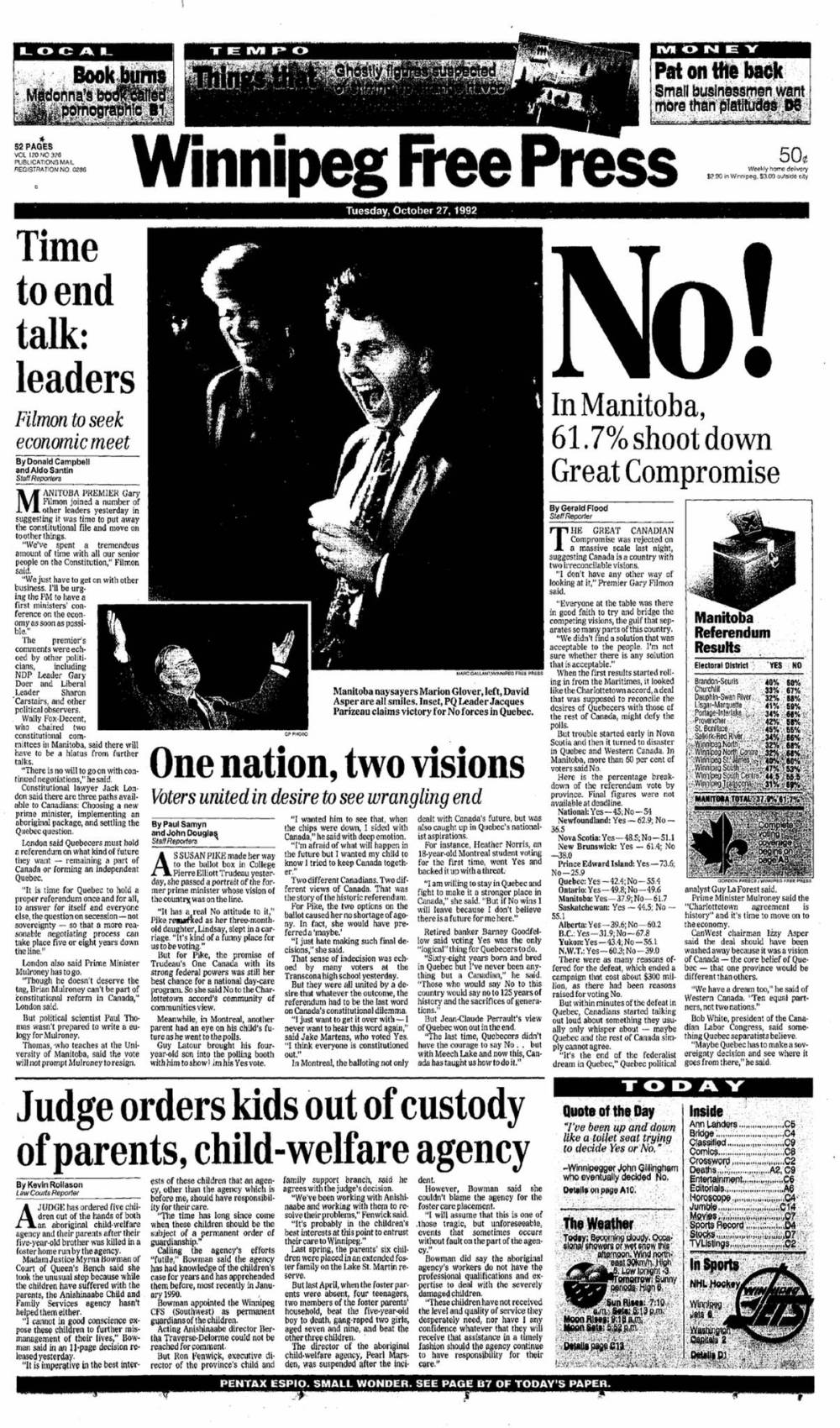
Miraculously, an agreement was struck and went to a national referendum — where it was resoundingly defeated, with most Canadians outside the Northwest Territories and much of the Maritimes voting against it. The upset is often depicted as a clash between not just the political “elites” and “the people,” but the people themselves.
The regional and cultural differences recognized by the Canadian Charter of Rights and Freedoms weren’t simply charming features of Canadian pluralism, but also challenges that big constitutional projects couldn’t easily solve.
The PCs, then led by Kim Campbell, were devastated in the federal election of October 1993, plunging from 156 seats to two in the House of Commons. They were soon overtaken by a populist, Alberta-rooted movement to their right, the Reform party, which had strongly opposed the Charlottetown Accord.
While Reform’s mantra was “The West Wants In!” — not out — western autonomy had become an unavoidable national issue.
Then came Quebec’s second separatist referendum in 1995. The independence side was defeated by a razor-thin margin, but separatist referendums were now an established option for discontented provinces.
The Free Press spoke with three Manitoba political veterans from the era who reflect on Charlottetown’s ripple effects and where Manitoba and Canada may be headed as another separatist movement brews.
Kenneth Young, former Assembly of First Nations regional chief
What are your thoughts on the separatism rumblings coming out of Alberta?
APTN Kenneth Young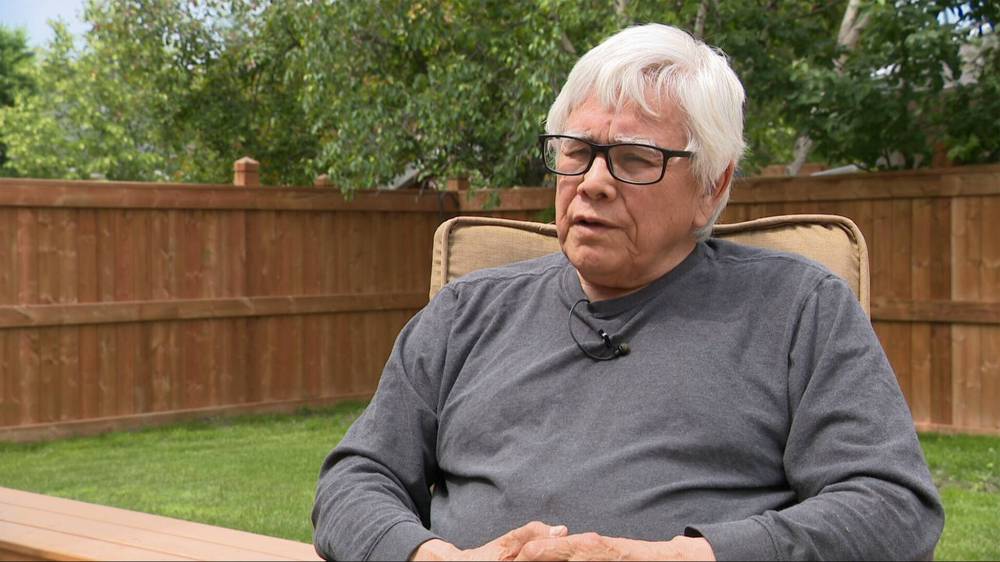
It’s really an issue being raised by some — a very small minority of people — making a lot of noise. But the courts have dealt with the issue. They (because of the Constitution Act’s Section 35) said, “No, you cannot separate from Canada unless you consult with the First Nations regarding their treaty and Aboriginal rights.”
The question might (appear on the referendum) but it’s not going to succeed…. The treaties pre-date Alberta (and) are absolutely fundamental in Canada and should be treated accordingly.
What does it mean for Manitoba?
Saskatchewan, Manitoba and Alberta are basically the ones that are causing all this trouble — though not Manitoba now, because we have a government that’s not trying to talk about separation. And it’s all because of natural resources. The Natural Resources Transfer Agreements (giving the Prairie provinces jurisdiction over their natural resources) happened in 1930 but it was subject to the treaties, though that’s never been really conclusively discussed.
It’s not that the First Nations people want the natural resources for themselves; they want a fair share in the wealth that’s being generated… (Manitobans) understand that the treaties in Manitoba have to be respected. Governments cannot continue to do things that they’ve done in the past without talking to the people who were here first.
You participated in the Charlottetown Accord negotiations. If it had been successful, how might that have altered Alberta’s Indigenous people’s legal options to push back against separatist politics?
Although it said that it recognized the inherent right to self-government, Charlottetown was defeated in the referendum.
We had the accord done, but the First Nation communities were not (engaged) — we didn’t go into the communities during the discussion… to keep them informed.
It was rejected by First Nations people across the country, pretty well, like the rest of Canada. You wouldn’t expect Canadian people to accept something that was done that fast (about 10 months).
(But) I believe Section 35 includes the inherent right to self-government right now — and (that right) is also part of the treaty…. The decisions of the court (against separatism) are not going to be reversed by any court of appeal.
Susan Thompson, mayor of Winnipeg from 1992 to 1998
What are your feelings about the separatism rumblings coming out of Alberta?
I do not consider the separatist movement in Alberta a rumbling. It is very, very serious and has gone on for decades in some form or fashion… (it’s) the culmination of years of federal arrogance. I don’t think the majority of Canadians understand how serious the U.S. economic threat is to our very future.
So, to have separatists in many provinces adding to (that), combined with an unforgivable lack of proper recognition and governance for Indigenous Peoples as the founders — a perfect storm is very apparent.
What does it mean for Manitoba?
MIKE DEAL / FREE PRESS FILES Susan Thompson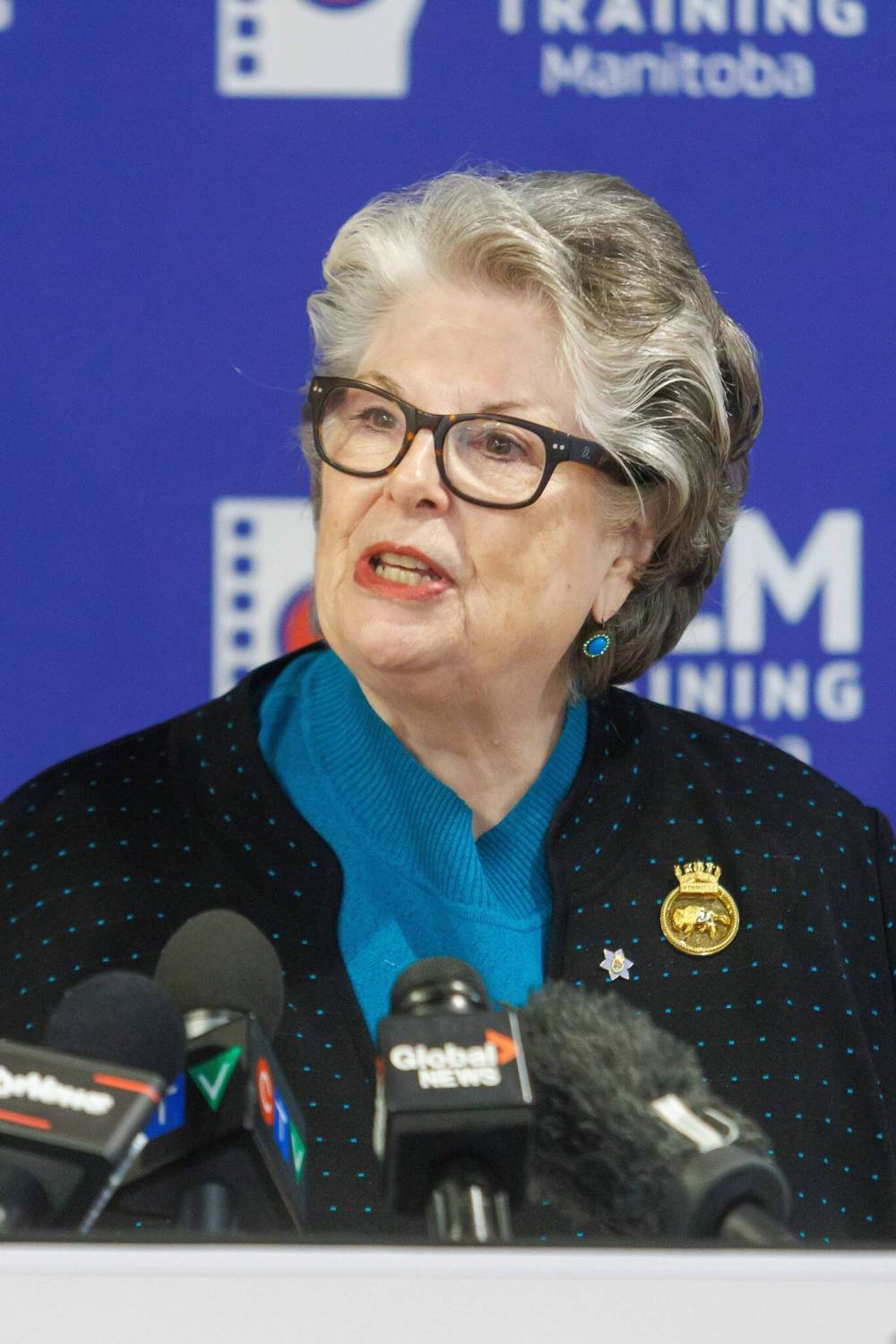
Opportunity (for leadership). I think we have a very shrewd premier (Wab Kinew) who is an excellent orator and sees the big picture of Canada, as we saw at the meeting of Western premiers (in Kananaskis, Alta.) earlier this week. (But) let’s not forget the… far-right factions in Manitoba, endangering the very existence of local municipalities in our province.”
I think we are very lucky to have our current prime minister… (Mark) Carney is a leader of the future world order, as we saw from his speech at the Davos World Economic Forum, and Kinew could definitely be a player or leader in a process of a more co-operative Canada.
You lived in Alberta and Quebec before becoming Winnipeg’s mayor. The Charlottetown Accord was defeated shortly after. What are some memories and lessons from those periods?
The authors of the accord did not get it right, and there was a lack of detail and process. Plus, the timing was just wrong: there had been too many previous failed attempts. People were tired and very worried about the economy in 1992.
And I saw first-hand how differently people thought and felt based on region. Alberta was a “can-do” province, with an entrepreneurial spirit, led by one of the best premiers ever in Peter Lougheed.
Quebec was another world. Arriving to Montreal in the late 1970s in my baby-blue Mustang with Alberta licence plates was not safe!… And I saw first-hand the economic impact (of the 1980 referendum). Major companies simply left Quebec. Others shifted their headquarters to Toronto. Then the 1995 referendum solved nothing. Everybody understood pride, but not their pocketbook.
Alberta needs to think about these kinds of risks.
Gary Filmon, Manitoba premier from 1988 to 1999
What are your thoughts on the separatism rumblings coming out of Alberta?
Well, I’m really concerned about it — not because I think there’s a big chance… (Alberta) would be pulling out — but I don’t like the risks being taken unnecessarily… I think Alberta Premier Danielle Smith is misguided in using the referendum as a way of trying to get rid of the issue.
JEFF DE BOOY / FREE PRESS FILES Gary Filmon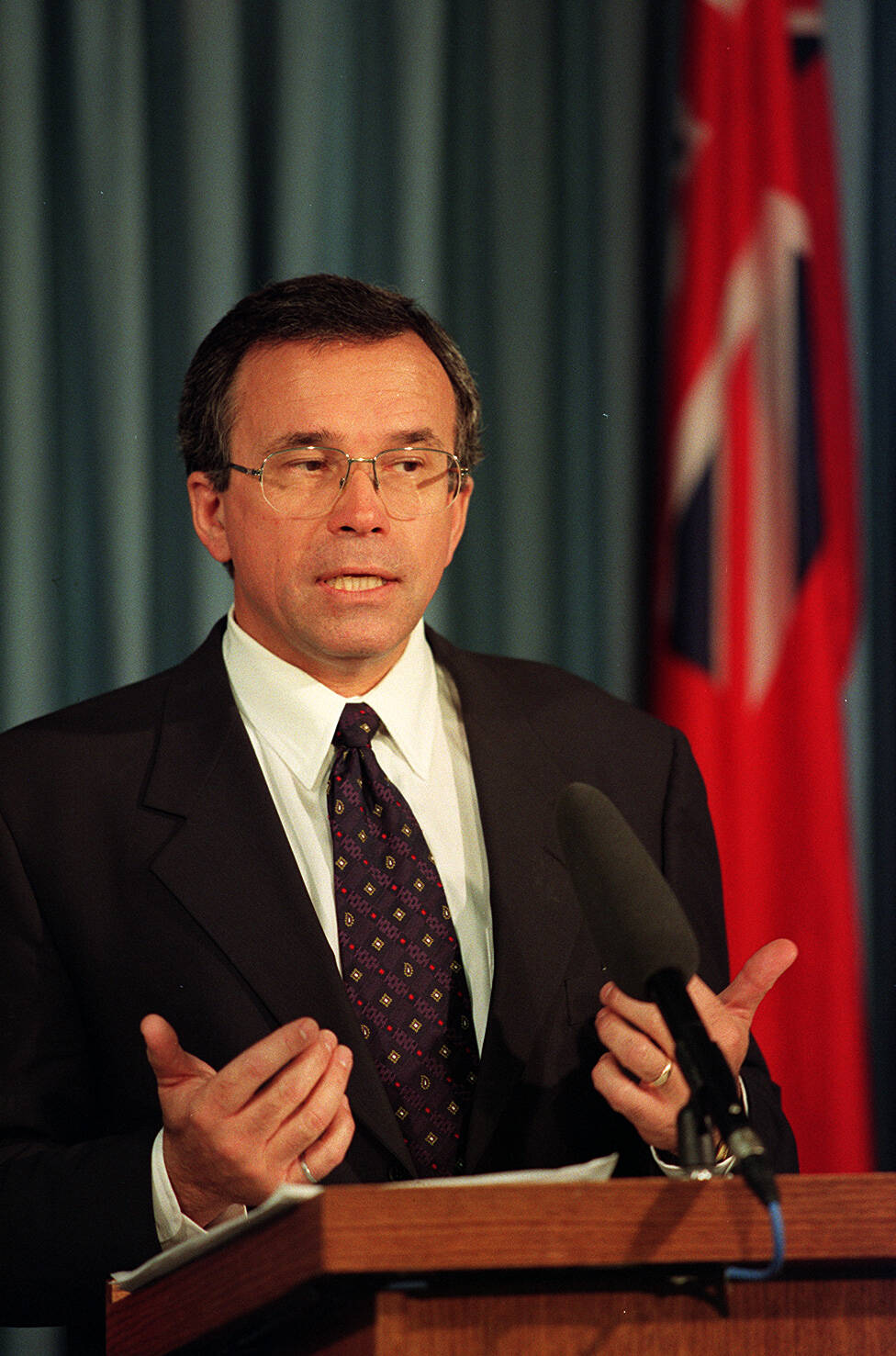
The fact is — and it’s true also of Quebec, from my experience with Meech Lake and Charlottetown — even if they were to lose the referendum, the separatists would not change their minds. They’ll still be out there looking for a chance to do what they think is right.
What does it mean for Manitoba?
Any sense of instability in Canada — whether brought on by this vote or by the election of a separatist party in Quebec — brings instability to the minds of investors from around the world and people wanting to start businesses in Canada. It doesn’t matter whether it happens in Alberta or Quebec; it affects how people view Canada and Manitoba.
What common ground and differences did Alberta and Manitoba display during the Charlottetown Accord, and how do you see the enduring consequences of its defeat?
Alberta Premier (Don) Getty was solid… and I thought Ovide Mercredi did a really good job on behalf of the Indigenous side. He bargained hard — he’s a lawyer — and he was really a very effective representative.
(I) joined in with Alberta and said, Triple E is the right answer… but you couldn’t satisfy (the Alberta critics) unless it was a perfect settlement. And there’s no such thing as a perfect agreement.
I remember on the final day of discussions, I was standing with (Ontario premier) Bob Rae after lunch, and we said: this is so good and to make (Charlottetown) even more democratic, we should have a referendum… We thought it was a wonderful idea. We thought we couldn’t lose. We were very wrong.
The outcome for sure took me by surprise, but I’ve always been aware of the difference in perspective, especially with the southern Alberta group that are more on the religious right side…
There was a group of hard-right people… never given the authority to do the things they wanted done. But since they amalgamated with the (Progressive) Conservative party, they’re trying to do a takeover of the conservative movement.
Responses have been edited for length and clarity.
winnipegfreepress.com/conradsweatman
Conrad Sweatman is an arts reporter and feature writer. Before joining the Free Press full-time in 2024, he worked in the U.K. and Canadian cultural sectors, freelanced for outlets including The Walrus, VICE and Prairie Fire. Read more about Conrad.
Our newsroom depends on a growing audience of readers to power our journalism. If you are not a paid reader, please consider becoming a subscriber.
Our newsroom depends on its audience of readers to power our journalism. Thank you for your support.
Conrad Sweatman is an arts reporter and feature writer. Before joining the Free Press full-time in 2024, he worked in the U.K. and Canadian cultural sectors, freelanced for outlets including The Walrus, VICE and Prairie Fire. Read more about Conrad.
Our newsroom depends on a growing audience of readers to power our journalism. If you are not a paid reader, please consider becoming a subscriber.
Our newsroom depends on its audience of readers to power our journalism. Thank you for your support.
Advertisement Advertise With Us
Advertisement Advertise With Us