A gift of history HBC charter goes on display at Manitoba Museum
Read this article for free:
or
Already have an account? Log in here »
To continue reading, please subscribe:

Digital Subscription
One year of digital access for only $205*
- Enjoy unlimited reading on winnipegfreepress.com
- Read the E-Edition, our digital replica newspaper
- Access News Break, our award-winning app
- Play interactive puzzles
*First annual payment billed as $205.00 + GST for one year. This annual subscription will automatically renew at $233.00 + GST every 52 weeks (10% off the regular annual price of $259.35). Offer available to new and qualified returning subscribers only. Cancel any time.
To continue reading, please subscribe:
Add Free Press access to your Brandon Sun subscription for only an additional
$1 for the first 4 weeks*
- Enjoy unlimited reading on winnipegfreepress.com
- Read the E-Edition, our digital replica newspaper
- Access News Break, our award-winning app
- Play interactive puzzles
*Your next Brandon Sun subscription payment will increase by $1.00 and you will be charged $17.95 plus GST for four weeks. After four weeks, your payment will increase to $24.95 plus GST every four weeks.
Read unlimited articles for free today:
or
Already have an account? Log in here »
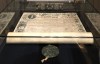
After months of petitions, legal scrutiny and political pressure, the 1670 Hudson’s Bay Company Royal Charter has formally arrived at the Manitoba Museum, marked by a ceremony including many notable Canadian and Indigenous political leaders.
“It’s with a profound sense of gratitude and humility that I stand before you today as we recognize the gifting of the HBC Royal Charter, together with our consortium partners,” said Dorota Blumczynska, CEO of the Manitoba Museum.
“Today marks an opportunity that is not to redefine the past, but to better understand it, and to help us use it to build a more just and inclusive future.”
MIKE DEAL / FREE PRESS From left: Patricia Olasker, vice-chair of the board of governors of the Royal Ontario Museum; Stephen Bowman, vice-chair board of governors of the ROM; Leslie McCue, senior manager of Indigenous learning and programs for ROM; and Kat Kupca, chair of the Manitoba Arts Council, look at the royal charter on display at the Manitoba Museum. 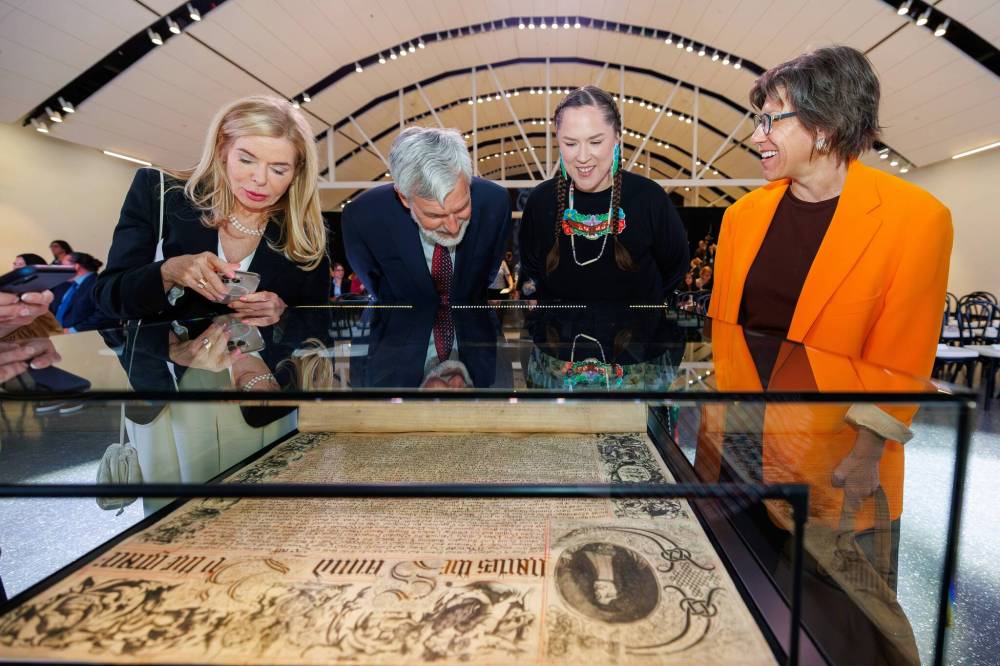
The 356-year-old document, which not only birthed HBC, but effectively laid a foundation for colonial Canada itself, attracted new controversies in the last year or so. After years of bleeding at the bottom line, HBC announced in March 2025 that it would begin liquidating its stores across the country and selling off its assets to pay off creditors.
This included its private collection of art, artifacts and the royal charter itself.
Judging by the consequences, the six pages of parchment are among the most momentous documents signed into existence. By the stroke of King Charles II of England’s hand, the charter gave HBC exclusive land, trading and exploration rights throughout the watershed of Hudson Bay — and effectively empowered HBC to operate as a sovereign government over about one-third of present-day Canada for nearly two centuries.
“Today marks an opportunity that is not to redefine the past, but to better understand it, and to help us use it to build a more just and inclusive future.”
“The pattern established by the charter repeated itself. Others spoke for us, others decided for us, others benefited from our lands that were never truly theirs,” said Ovide Mercredi, former national chief of the Assembly of First Nations, at the welcome ceremony, reading remarks from Grand Chief Kyra Wilson of the Assembly of Manitoba Chiefs (AMC), who could not attend.
“Through the legal fictions of empire, our territories were treated as commodities, as things to be possessed.”
AMC has been a central actor in the acquisition of the royal charter.
In the spring of 2025, it intervened to halt its auction and demanded a First Nations-led review of the HBC’s artifacts up for sale. Public outcry over HBC’s behaviour continued, and by fall the Court of King’s Bench in Ontario had set two conditions for the charter’s auction: that it remain in Canada and be donated to an institution that would steward the artifact on behalf of Canadians.
In December of 2025, a bid by the Weston family and media magnate David Thomson secured the charter. They then donated it to a consortium of four public institutions: the Archives of Manitoba, the Manitoba Museum, the Canadian Museum of History and the Royal Ontario Museum.
MIKE DEAL / FREE PRESS Ovide Mercredi, former national chief of the Assembly of First Nations, speaks Thursday.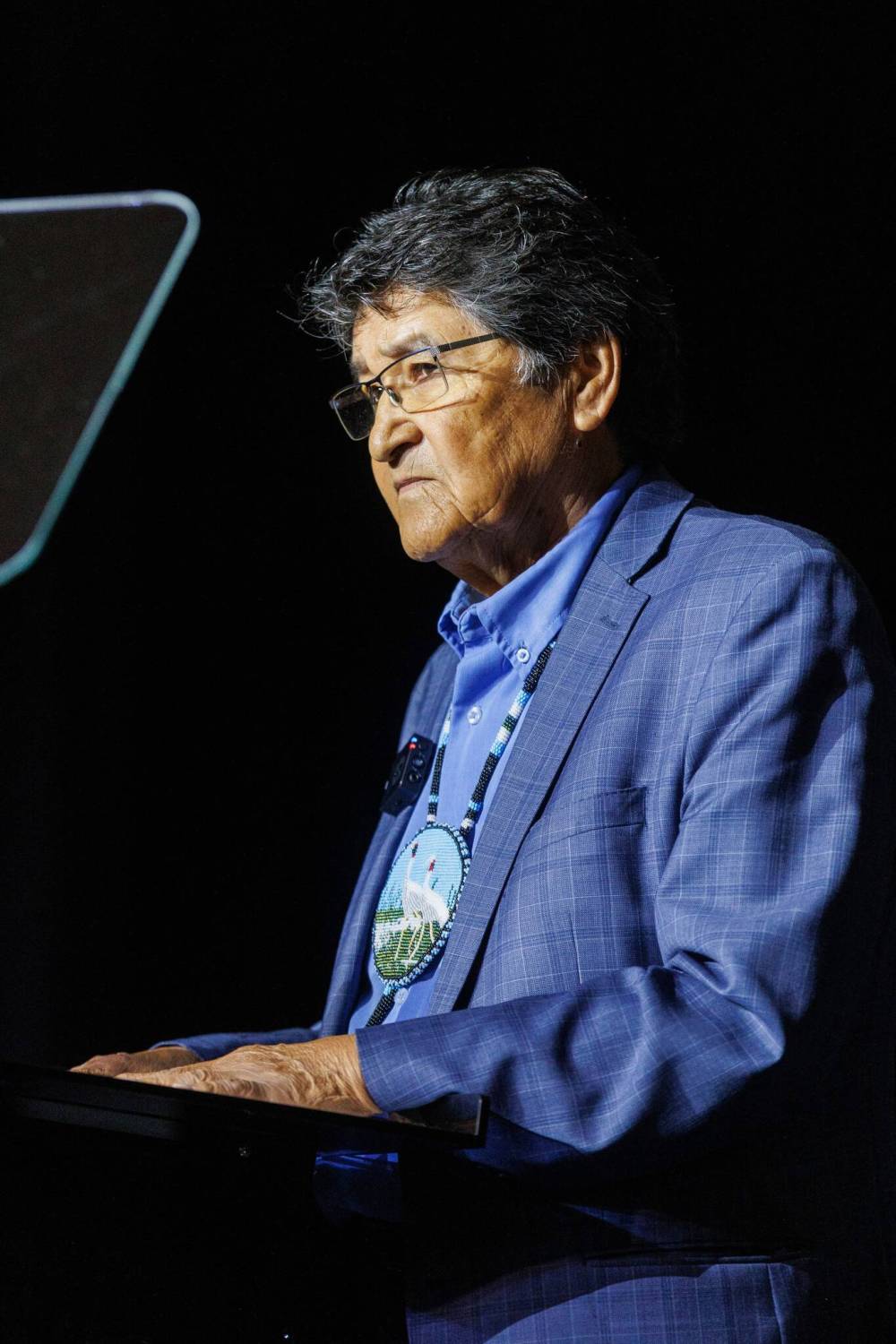
Speakers at the welcoming ceremony Thursday delved into the document’s complex significance for both past and present.
“The charter influenced patterns of trade, settlement and government for centuries. … Yet it is equally important to recognize that this document was created without consultation with or consent from the sovereign Indigenous nations,” said Manitoba Lt.-Gov. Anita Neville.
“The royal charter’s journey from uncertainty and the risk of disappearing into private ownership to its preservation … reflects a collective commitment to stewardship, to accessibility and to public trust.”
Mary Simon, who was governor general of Canada until her five-year mandate ended a few days ago, took a personal tone in her remarks, recalling working as an HBC retail clerk as a teenager in Kuujjuaq, in northern Quebec, and her father’s career with the company in the Arctic.
“At that time, clerks, young white men from the south, were forbidden from having relationships with Indigenous women. It was a rule frequently broken, but firmly enforced,” said Simon.
“That rule ultimately led my father to part ways with the company, so that he could marry my mother. But never once in my life did I hear him speak ill of the Hudson’s Bay Company.”
“Through the legal fictions of empire, our territories were treated as commodities, as things to be possessed.”
The event also had several moments of levity.
“I’m very honoured to share space with (Ovide Mercredi) any time I get a chance to. That’s almost as exciting as being here today for the charter,” said Chief Gordon Bluesky of Brokenhead Ojibway Nation during his speech.
“When I was a young fella, I met a man named Teddy Longbottom, a proud Métis man. He taught me about the history of the Hudson Bay. He taught me the history of the Northwest Company. He taught me about how there was complications (in) that relationship.”
Bluesky ended his speech by opening YouTube on his phone, and directing it to the speaker. Out came the late Longbottom’s song The Ballad of Gordy Ross, with its opening lyrics: “My name is Gordy Ross, my age is three and thirty. I’m a tripman for the HBC, my work is hard and dirty.”
MIKE DEAL / FREE PRESS Former Manitoba premier Gary Doer takes a moment to check out the charter prior to the start of the welcoming ceremony on Thursday.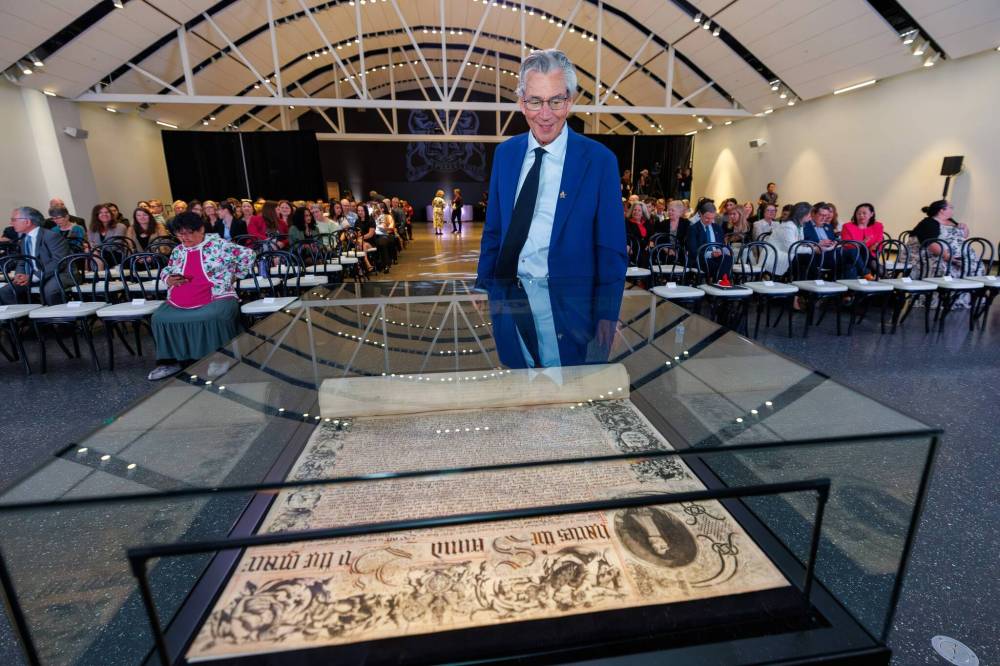
Premier Wab Kinew was not in attendance as he was surveying flooding and damage to Manitoba communities from heavy rains. The premier was represented by Sport, Culture, Heritage and Tourism Minister Nellie Kennedy, who highlighted “the archivists, historians, researchers, and museum professionals behind the scenes.”
“Thank you for preserving the stories and documents that help us understand where Canada has come from and allows us to learn to move forward in a better way,” she said.
The event concluded with remarks from the Manitoba Museum.
“A contemporary understanding calls us to sit with (the) tension to look again at what we accepted as settled truth and recognized what was missing,” Blumczynska said.
“This wider view does not erase moments of collaboration, but it does bring into clear focus histories of exclusion, displacement, and decisions made without consent.”
winnipegfreepress.com/conradsweatman


Conrad Sweatman is an arts reporter and feature writer. Before joining the Free Press full-time in 2024, he worked in the U.K. and Canadian cultural sectors and freelanced for outlets including The Walrus, VICE and Prairie Fire. Read more about Conrad.
Our newsroom depends on a growing audience of readers to power our journalism. If you are not a paid reader, please consider becoming a subscriber.
Our newsroom depends on its audience of readers to power our journalism. Thank you for your support.
Related Articles
HBC Royal Charter welcomed in ceremony at Manitoba Museum