Changing the narrative Cultural consultation gives Indigenous stories strength in Netflix’s new Little House on the Prairie
Read this article for free:
or
Already have an account? Log in here »
To continue reading, please subscribe:

Digital Subscription
One year of digital access for only $205*
- Enjoy unlimited reading on winnipegfreepress.com
- Read the E-Edition, our digital replica newspaper
- Access News Break, our award-winning app
- Play interactive puzzles
*First annual payment billed as $205.00 + GST for one year. This annual subscription will automatically renew at $233.00 + GST every 52 weeks (10% off the regular annual price of $259.35). Offer available to new and qualified returning subscribers only. Cancel any time.
To continue reading, please subscribe:
Add Free Press access to your Brandon Sun subscription for only an additional
$1 for the first 4 weeks*
- Enjoy unlimited reading on winnipegfreepress.com
- Read the E-Edition, our digital replica newspaper
- Access News Break, our award-winning app
- Play interactive puzzles
*Your next Brandon Sun subscription payment will increase by $1.00 and you will be charged $17.95 plus GST for four weeks. After four weeks, your payment will increase to $24.95 plus GST every four weeks.
Read unlimited articles for free today:
or
Already have an account? Log in here »
Through her work as an Indigenous consultant for film and TV, Julie O’Keefe, a citizen of the Osage Nation, has brought accuracy and authenticity to works such as Martin Scorsese’s 2023 crime drama Killers of the Flower Moon, the 2025 western miniseries American Primeval and, most recently, Rebecca Sonnenshine’s new adaptation of Little House on the Prairie.
But she doesn’t work solo.
“One of the things that I always say is, in any of these jobs that I do — whether it’s Shoshone and Paiute and Ute or Osage — I never come alone to this,” says O’Keefe, who grew up in Pawhuska, Okla., the heart of the Osage Nation, and is now based in Santa Fe, N.M. “I engage because those stories are so much richer with our voices added to it, and we know that.
Erik Tanner/Netflix Cultural consultant Julie O’Keefe grew up in Pawhuska, Okla., the heart of the Osage Nation.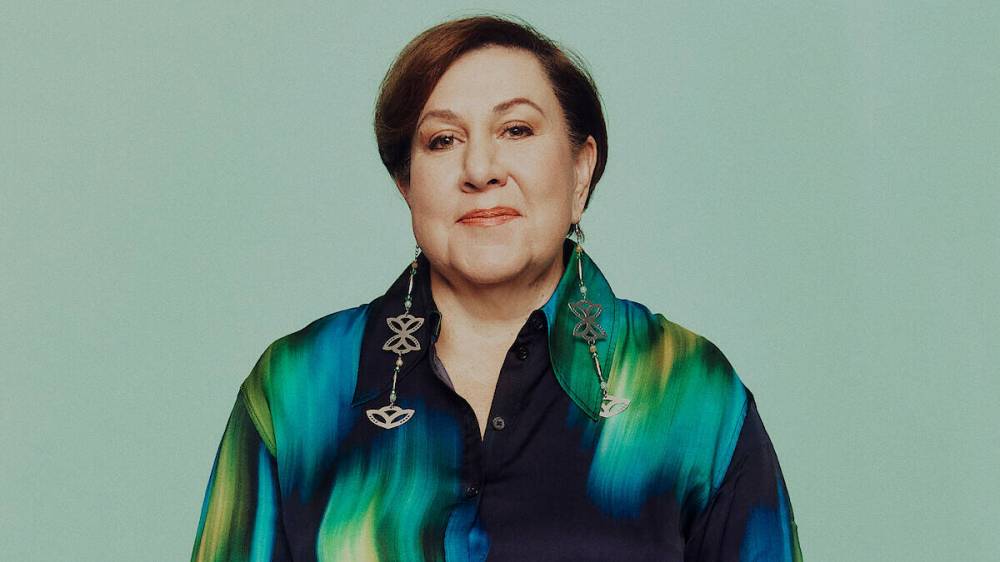
“I’m sitting down with brilliant directors, brilliant writers, and I’m handing over pieces of history that they’re like, ‘How come nobody knows this?’ And the great part is, this is the time in history … people are really starting to get on top of wanting this for their stories, because it really wasn’t of any importance before.”
The new Little House on the Prairie, which was shot in Manitoba and has been a Top 10 show on Netflix since it arrived on the streamer earlier this month, takes a wider view than its source material: Laura Ingalls Wilder’s semi-autobiographical series of novels about growing up as a pioneer girl in the American West.
In the book Little House on the Prairie, the Ingalls family moves from Wisconsin to Kansas and builds their little house on what was actually the Osage Diminished Reserve. This new adaptation includes the perspective of the Osage — fully fleshed out with rich characters — whose land was intruded on by settlers who were, it turns out, illegally squatting.
Handout-Netflix / The Canadian Press Actors Alyssa Wapanatâhk and Meegwun Fairbrother portray White Sun Mitchell and William Mitchell, respectively.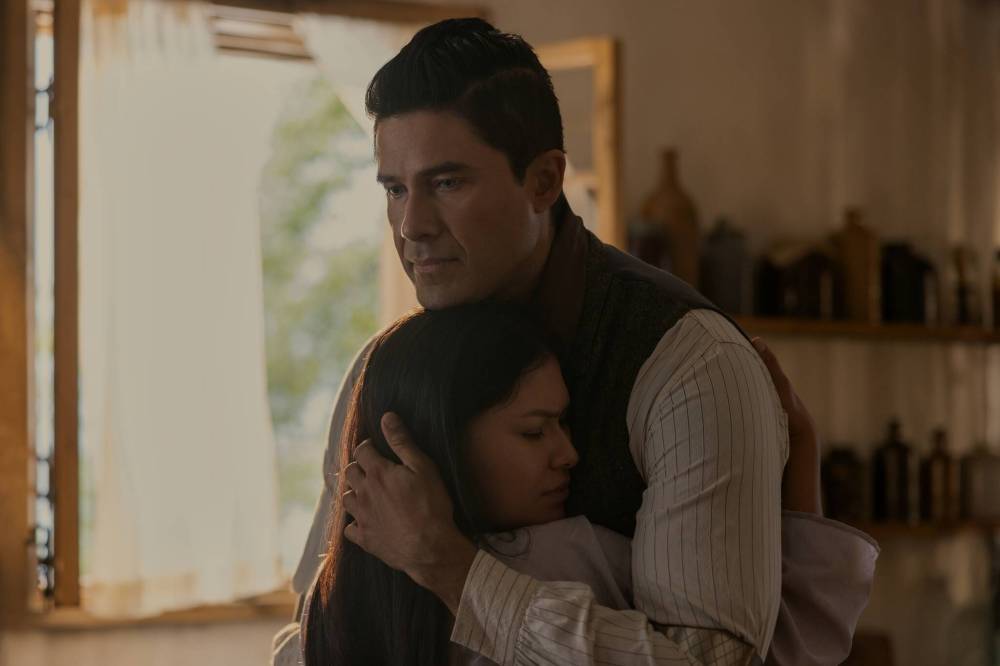
O’Keefe got involved in the production via costume designer Mitchell Travers, whom she’d met at an Apple luncheon for Jacqueline West, the lead costume designer on Killers of the Flower Moon.
“He sat across from me at a table and we’d finished talking and he said, ‘You know I think we’re going to work together someday.’ And at that time, I was thinking, ‘I’ll never be in this industry again. I don’t know anything about TV and film,’” she recalls.
But their moment came three years later: O’Keefe got a text from Travers saying he was working on an adaptation of Little House on the Prairie for Netflix and that he’d given her name to the producers.
“And then, in big letters, ‘and I don’t want to do this without you.’”
The later 1860s/early 1870s, the time period in which Little House is set, is a deeply painful period of history for the Osage, O’Keefe says. They’d already been removed from Missouri to Kansas and faced intense pressure to sign the Drum Creek Treaty, the agreement that led to the tribe’s removal from Kansas to Oklahoma.
The signing of the Drum Creek Treaty is depicted in Episode 7, and the Osage chiefs in that scene are portrayed by real-life Osage elders. Consulting and involving elders is where O’Keefe’s process always begins.
Eric Zachanowich / Netflix From left: Crosby Fitzgerald as Caroline, Luke Bracey as Charles Ingalls, Corvin Mack as Myron, Xander Cole as Little Puma in Little House on the Prairie, which embraces the presence of the Osage in the American West.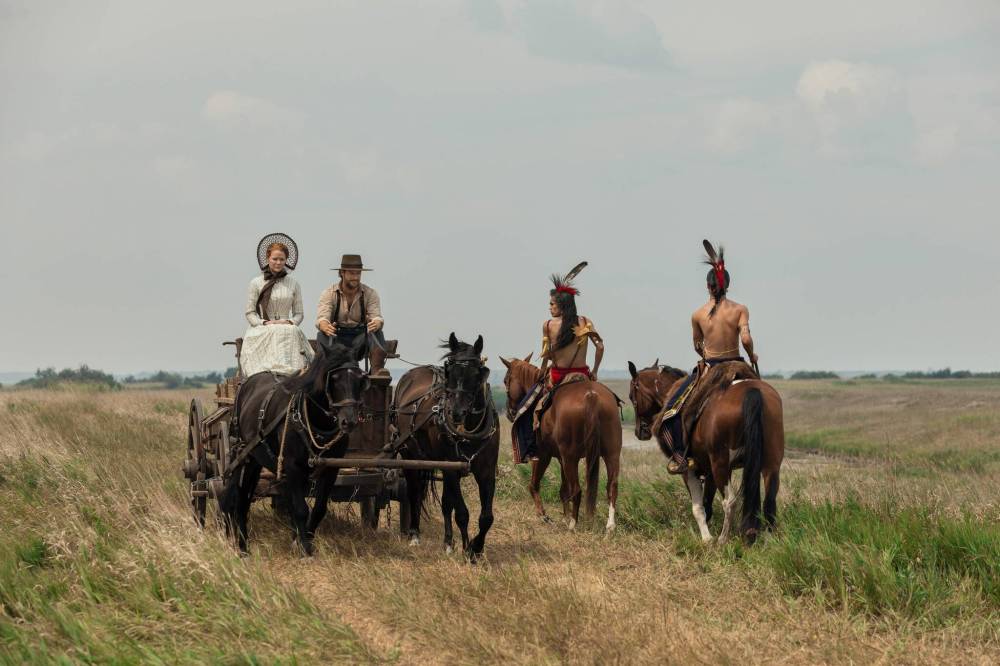
“When you work with any tribe, not just your own nation, but other nations, you want as much feedback and as many voices going into your research to hand over to all the departments that you work with, so that they can use just honest, actionable information that they have no qualms about using,” O’Keefe says. “And those elders really surrounded me because they recognized that the story needed to be told.”
The Osage Nation Museum in Pawhuska was also invaluable to her research.
“It’s a treasure trove and has pieces from that 1870s period,” she says. “I showed up with two binders and each had about 40 pages in it, which ended up being the bible on the show.”
A lot of people think cultural consultation is limited to costumes, but ideally, it touches every department on a production.
“You’re going in as a consultant, but you’re crossing in everybody’s lanes, and some people don’t like that,” she says with a laugh. “But so far, I’ve been very fortunate.”
Her approach to the work is collaborative.
“I’m the one that comes in with the director, with the writers after the script is done, and then I go through and say, OK, let’s do it this way together. I need to know your vision. You tell me what you want for this scene, and then I’m going to go out and find it.”
Eric Zachanowich/Netflix Wren Zhawenim Gotts (left) as Good Eagle, Alice Halsey as Laura Ingalls in Little House on the Prairie.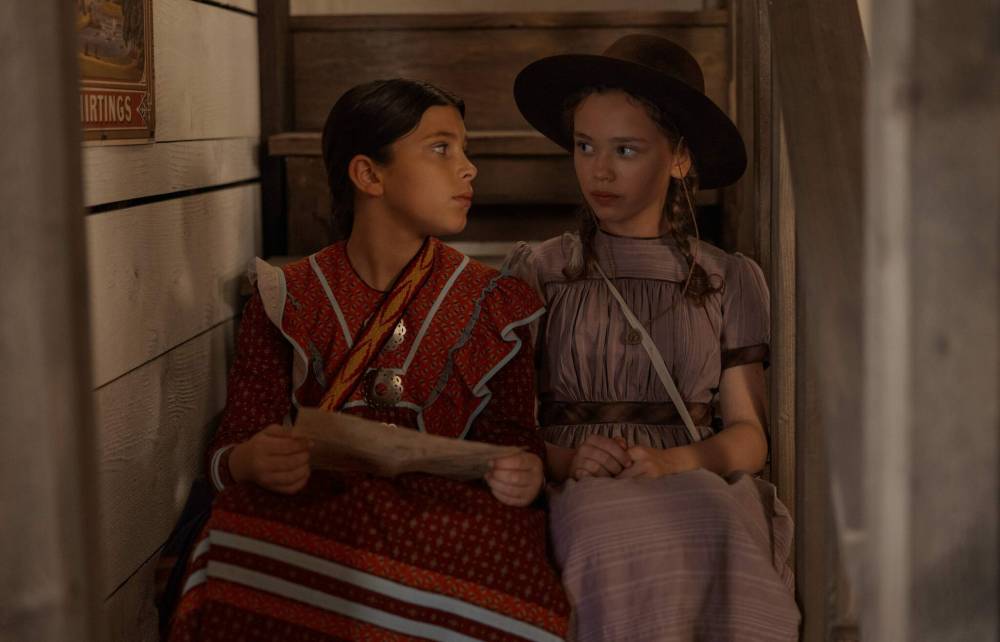
In addition to the Osage Nation Museum, O’Keefe was able to access the archives of the Smithsonian National Museum of the American Indian in Washington, D.C., where she sat on the council, as well as draw upon other connections she’s made. “I brought in Lainie Maker, who’s another Osage woman from my district in Pawhuska, and she came and did a lot of the ribbon work and background work (on costumes) with Mitchell (Travers).”
If she can’t find something, she’ll find someone who can.
“I call universities with different professors that may be in Native studies for a particular area, and I start pulling everything I can — for costume, weaponry, regular word research from books, the set and what would it look like,” says O’Keefe, who also has a vast network of Indigenous artisans across the U.S. she can tap into from her days as an Indigenous art consultant.
“The artists are always the ones telling the stories. They’re doing the research for their art,” she says.
“And then I bring in the cultural people for the show to be on set, which usually they’re leaving their real jobs and their families to come sit on a set, which is hard to find, but they will come.
“Every nation is set up differently, so there’s no pat way of doing this.”
Ojibwa actor Meegwun Fairbrother, who plays William Mitchell, a mixed-blood Osage man whose family’s story is told alongside the Ingalls’, relished the collaborative process in fleshing out his character, from how he looks — “we found this picture of the son of an Osage chief, and he had this interesting slick-back hair with kind of a fauxhawk in the back. We loved that picture and thought, ‘That’s the one’” — to how he speaks.
Learning the Osage language was the biggest aspect of preparation for the role.
Netflix Ojibwa actor Meegwun Fairbrother says getting a firm handle on the Osage language was crucial to preparing for his role in Little House on the Prairie.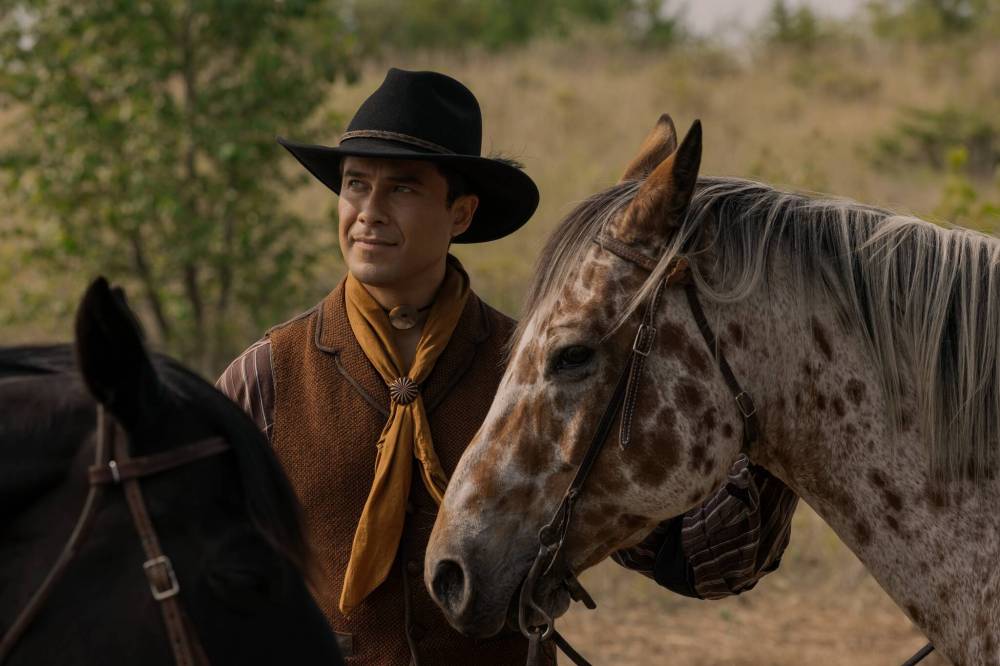
“To me, the greatest way to show respect for a culture is to know their language, to speak their language, so that you understand their customs, their ideologies, their world beliefs from the inside and not just from the outside,” Fairbrother says.
The actor, who has also starred in the legal drama Burden of Truth, worked with Talee Redcorn, an Osage language consultant, for six weeks to get to a place where the language felt “authentic and embodied,” he says.
“My background is Ojibwa, Oji-cree and Cree; those are the language systems that I work with. Learning the Osage was a much different animal. It’s very masculine, very forward, very direct, very beautiful. But there’s also some really interesting sounds that I had not worked with before,” he says.
“I felt like when I would speak the language, it changed how I felt. It changed how I walked, even. It changed how I entered a room and carried myself. Because the Osage are a very proud and powerful nation, I think that comes across with (the character of) Mitchell and his ability to speak several different languages.”
“My background is Ojibwa, Oji-cree and Cree; those are the language systems that I work with. Learning the Osage was a much different animal. It’s very masculine, very forward, very direct, very beautiful.”
The inclusion of authentic language was something that was important to both the production and O’Keefe personally, who says that, by the late 1970s, there were only seven traditional fluent speakers of the Osage language, owing to colonization.
“If you woke up tomorrow and you didn’t know your language, who would you be? The expression of yourself, the world that you see, there is no world without language.”
Now, modern Osage kids text in their language, owing to the Nation’s focus on language preservation and revitalization efforts.
“We had to fight for all of it, and I have worked with a couple of tribes that have completely lost their language, to the point they were so crushed by colonization, they have a difficult time really trying to piece back together what their dances or traditions would have even been,” O’Keefe says. “All they know was that they had been there on the land.
“So I’m very proud of all languages in all series.”
And, when she can, O’Keefe finds a place in the script to include traditional music.
“Music is just as important, because you’re using a language and you’re using a tradition and you’re using a meaning to something, and so I always try, if the budget’s there, to bring music in.”
O’Keefe had just returned from a community screening of Episode 7 at the Osage Casino in Pawhuska. She is proud of the work, but so are her people.
“You can’t ask for any more than that, really, because it’s about my people. It’s never about me.”
jen.zoratti@winnipegfreepress.com
Alberta actress embraces ‘badass’ role
Alyssa Wapanatâhk, one of the stars of the Netflix series Little House on the Prairie, was aware of the previous TV iteration of the show when she was growing up, if only peripherally.
“My grandparents kind of had it on the TV, there in the background, just one of those shows that everybody knew about,” she says in a Zoom interview from Kelowna, B.C. “But I had never watched it myself.”
That might have been just as well. The new version, currently shooting its second season in and around Winnipeg, is distinct from the older version, specifically adding more colour and depth to Indigenous characters, especially Wapanatâhk’s character, White Sun Mitchell.
Eric Zachanowich/Netflix Alyssa Wapanatâhk plays White Sun Mitchell in Little House on the Prairie. 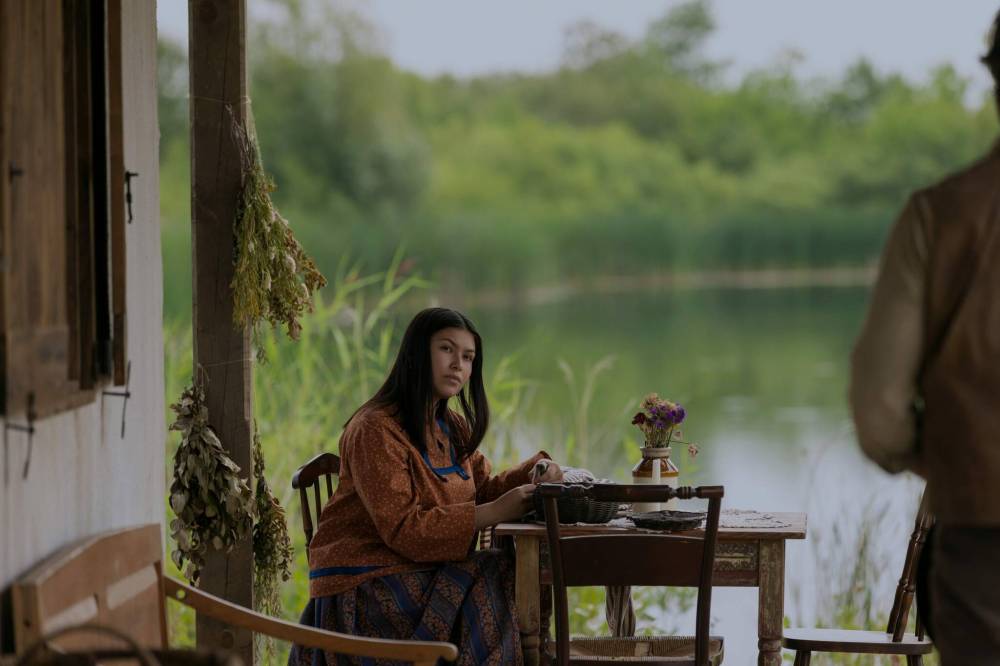
White Sun is an Osage woman whose family life in Independence, Kan., runs parallel to the pioneering Ingalls family, adding a richer perspective.
“Like a lot of the characters that I play, she’s kind of a badass,” the Fort McMurray, Alta.-born Wapanatâhk says. “She’s sharp and a very protective mother and a strong life force in her home tribe and her family.
“And as a woman in the Osage tribe, she, I think, is a really strong pillar and I think she would be a warrior in a lot of cases.”
Wapanatâhk has taken on challenging roles in her career, including the role of Tiger Lily in the 2023 film Peter Pan and Wendy, in which she starred opposite Jude Law. Since a past Disney iteration of Peter Pan was overtly racist, taking the role required a lot of care. She succeeded in bringing her own culture into the mix, for example, having Tiger Lily speak Cree.
For that role, Wapanatâhk, a member of Bigstone Cree First Nation in Alberta, says she often consulted with her grandmother.
“I still call her if I ever have a question about anything that has to do with our language specifically,” she says.
“She’s always been there for me as a supporter and she’s always been there for me to answer any questions I need.”
Eric Zachanowich/Netflix Alyssa Wapanatâhk as White Sun (left), Osage Cultural Consultant Julie O’Keefe in episode 108 of Little House on the Prairie. 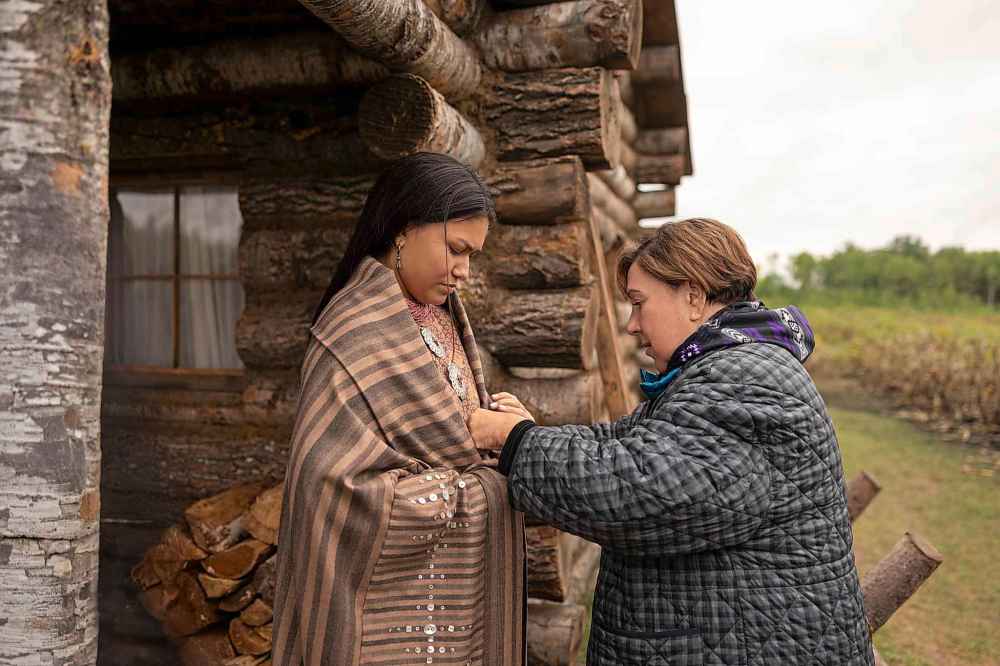
The role of an Osage woman presented some new language challenges, but she still went to her grandmother for advice.
“She and my mom and my little sister are pretty much my biggest support system,” she says. “But this time, I was speaking Osage language, a very, very different language. And I called on Talee Redcorn for that. Talee was our language coach. And he was kind of like the step-in grandparent in a way… and he’s not even that old. But he was awesome to work with.”
Redcorn, a member of the Osage Nation, also plays Governor Joe in one episode of Little House.
The new version of the show was intended to speak with a new audience, as opposed to gratifying the older audience of the original show, says showrunner Rebecca Sonnenshine.
“I understand that they have this place in their heart that is very important to them,” Sonnenshine says. “But I do think that once they see it, they will understand that we are carrying the spirit of those books into 2026.”
Wapanatâhk adds that we’re living in a different world than the 1974-83 period of the original series.
“I think art has always been like a mirror to real life. And I think our show is revealing some things about society that we live in now… that people are afraid of being overpowered, of being lost,” she says.
“I hope that people will see this show and take it in with a kind of a blank slate and just like watch it as a show,” she says.
“It’s joyful, it’s happy. We’re not talking about the war and we’re not talking about oil and gas or anything like that. We’re talking about family and community. And to me, that’s so peaceful. That’s why I watch TV, because it’s one of those places where we could find some solace and then we could learn from it.”
— Randall King

Jen Zoratti is a columnist and feature writer working in the Arts & Life department, as well as the author of the weekly newsletter NEXT. A National Newspaper Award finalist for arts and entertainment writing, Jen is a graduate of the Creative Communications program at RRC Polytech and was a music writer before joining the Free Press in 2013. Read more about Jen.
Every piece of reporting Jen produces is reviewed by an editing team before it is posted online or published in print – part of the Free Press‘s tradition, since 1872, of producing reliable independent journalism. Read more about Free Press’s history and mandate, and learn how our newsroom operates.
Our newsroom depends on a growing audience of readers to power our journalism. If you are not a paid reader, please consider becoming a subscriber.
Our newsroom depends on its audience of readers to power our journalism. Thank you for your support.
Related Articles
Reimagined Little House still shot through with the truth