Get a little culture Folklorama celebrates 55 years
Read this article for free:
or
Already have an account? Log in here »
To continue reading, please subscribe:

Digital Subscription
One year of digital access for only $205*
- Enjoy unlimited reading on winnipegfreepress.com
- Read the E-Edition, our digital replica newspaper
- Access News Break, our award-winning app
- Play interactive puzzles
*First annual payment billed as $205.00 + GST for one year. This annual subscription will automatically renew at $233.00 + GST every 52 weeks (10% off the regular annual price of $259.35). Offer available to new and qualified returning subscribers only. Cancel any time.
To continue reading, please subscribe:
Add Free Press access to your Brandon Sun subscription for only an additional
$1 for the first 4 weeks*
- Enjoy unlimited reading on winnipegfreepress.com
- Read the E-Edition, our digital replica newspaper
- Access News Break, our award-winning app
- Play interactive puzzles
*Your next Brandon Sun subscription payment will increase by $1.00 and you will be charged $17.95 plus GST for four weeks. After four weeks, your payment will increase to $24.95 plus GST every four weeks.
Read unlimited articles for free today:
or
Already have an account? Log in here »
You never have to wait more than a week in Winnipeg during summer for the next major festival.
And you never have to venture very far during Folklorama, which begins Sunday, before running into another church, community centre or curling club humming with music, food and cultural dress.
In sheer scale, it’s the most transformative festival Winnipeg has.
Featuring 45 pavilions this year, its 55th, Folklorama launched Wednesday at a news conference at The Forks. (The official kickoff is Sunday at Assiniboine Park’s Lyric Theatre and Field at 4 p.m., the only chance to see all the Pavilion Ambassadors in one spot.) The event also featured a citizen ceremony for several dozen new Canadians, presided over by Canada’s first Métis citizenship judge, Suzanne Carrière.
Mike Sudoma / Free Press Nuhu Hadi receives a flag after receiving his Canadian citizenship during a ceremony at The Forks Wednesday.
“Having a citizenship ceremony at the launch of Folklorama is very special and very fitting. Both remind us that Canada is strengthened by people from every corner of the world who bring their traditions and cultures to our communities,” said Mayor Scott Gillingham at the event.
Mike Sudoma / Free Press Folklorama executive director Teresa Controneo speaks during a Folklorama kickoff event at The Forks Wednesday morning. Controneo says the festival has broadened people’s horizons in the city over its 55 years.
Attendees were encouraged with the soon-to-be-Canadians to recite the Oath of Citizenship in French and English, with its pledge of allegiance to King Charles, the Constitution and Aboriginal and treaty rights. (Though attendees were also reminded that reciting the oath would not automatically make them Canadian if they weren’t yet approved citizen applicants.)
Mike Sudoma / Free Press Tbeb Okube gets ready to cheer on his dad Yosief Okube as he receives his Canadian Citizenship during a ceremony at The Forks Wednesday morning.
But most of the launch was a whirlwind of music and folkloric attire, with ambassadors from dozens of this year’s pavilions speaking, performing or weaving through the crowd.
One of these ambassadors was Jeff Kozak, representing the Ukraine Kyiv pavilion.
“My family dates back to 1906, so we’ve been here a while. And over that time, there’s been multiple waves of immigration, so we’re trying to be as true to our roots as we possibly can (while) we welcome our newcomers for whatever reason they have arrived in town,” he says.
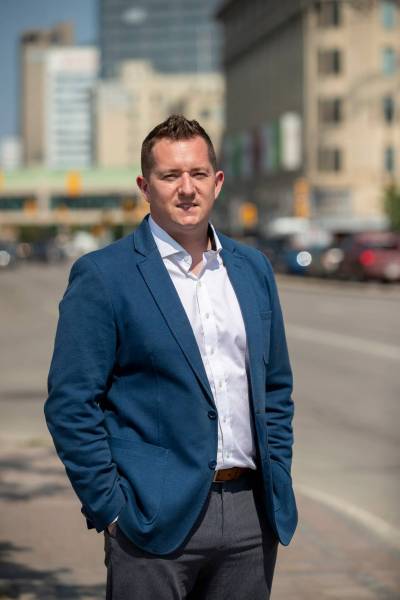
Mike Sudoma / Free Press Adult Ambassador for Ukraine-Kyiv Pavilion Jeff Kozak has spent many years on Folklorama’s stages.
Kozak has spent many years on Folklorama’s stages, dancing and playing the bandura. Emerging around the 15th century, the lute-like instrument associated with the Cossacks is an enduring symbol of Ukrainian folk music and cultural resistance.
“The shows are great. The food is fantastic. I’ve performed at the pavilions since I was a teenager, so it’s been 30 years,” he adds.
Along with the German and Scandinavian pavilions, Ukraine Kyiv pavilion is one of just a few still active that have been part of the festival since its opening year. During its 55th anniversary, Folklorama is shining a spotlight on those founding pavilions.
“(Folklorama) was really just meant to be a one-time celebration of the Centennial, and it was so successful that it just continued,” says Teresa Cotroneo, the festival’s executive director.
The centennial in question was Manitoba’s 100th anniversary in 1970, not Canada’s in 1967. Both milestones helped trigger a surge of new cultural institutions and organizations across Winnipeg, a movement reinforced by Canada’s Multiculturalism Policy of 1971.
John Woods / Free Press files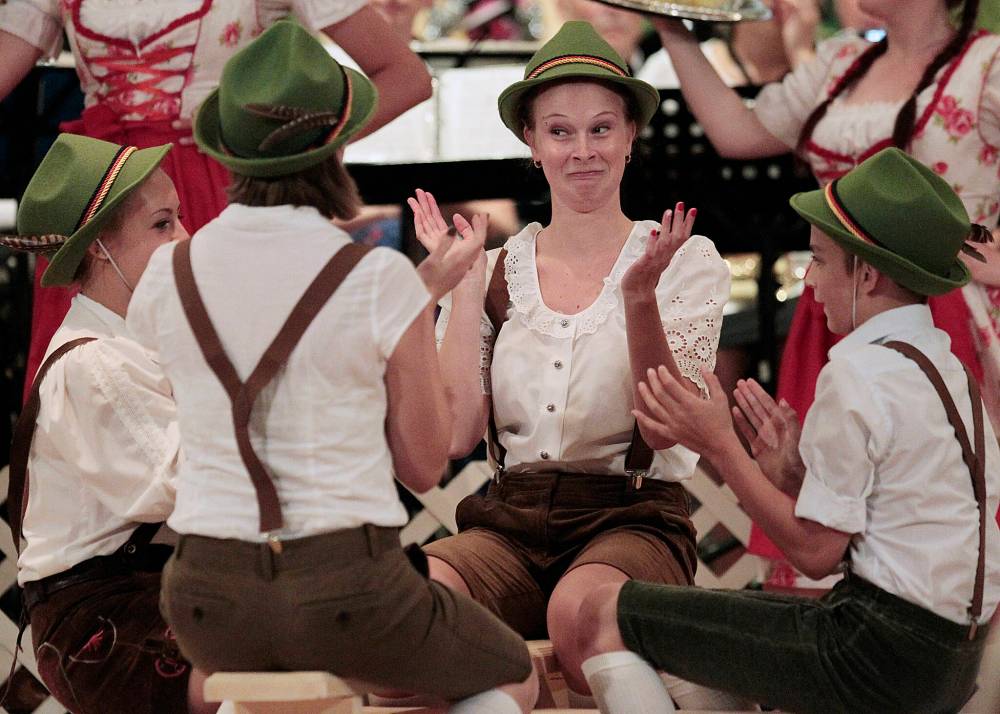
“(Folklorama) really redefined what this community looks like. It’s broadened people’s horizons as far as being comfortable exploring different cultures,” Cotroneo says.
“This year’s festival really has something for everybody, whether it’s children’s activities, a late-night party, an outdoor component that you’re looking for. Really, it’s an opportunity for people to go out.”
A couple of pavilions this year seem especially ready to throw a serious party.
The Mexican Pavilion — running Aug. 9 to 15 at the St. Norbert Community Centre — will explore the country’s cultural history from its pre-Hispanic roots to today, featuring folkloric performances, cuisine and drinks, with tequila, cerveza and margaritas fuelling the late-night fiestas of Aug. 14 and 15.
The Egyptian Pavilion — also Aug. 9 to 15, at the RBC Convention Centre — offers daily performances covering different parts of Egyptian heritage, including Upper Egyptian’s saidi dance traditions, shamadan (the candelabrum balanced on belly dancers’ heads), and the bambouty music of Suez maritime culture.
Mike Deal / Free Press files Young dancers from the Scandinavian Pavilion at Folklorama were still all smiles after a week of dancing at a previous festival.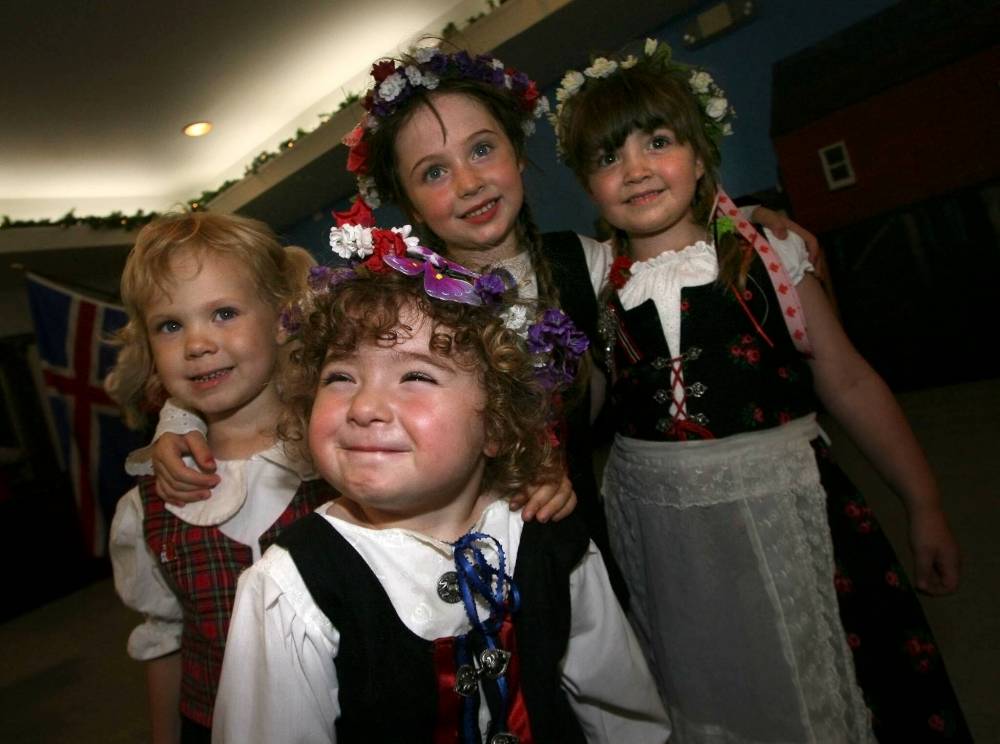
Folklorama also features two new pavilions with new representations from the local Salvadorian and Romanian communities (Aug. 9-15 at the Burton Cummings Community Centre for the first; Aug. 9-15 at St. Demetrios Greek Orthodox Church for the second, Heart of Romania, which is distinct from Week 1’s Romanian Pavilion).
“These are younger community members coming up, and they bring in new perspectives and also want to share what their heritage means to them,” says Cotroneo.
Cotroneo emphasizes that the festival is about sharing culture both across communities and within them, an observation echoed by Nellie Kennedy, Manitoba’s minister of sport, culture, heritage and tourism.
John Woods / Free Press files 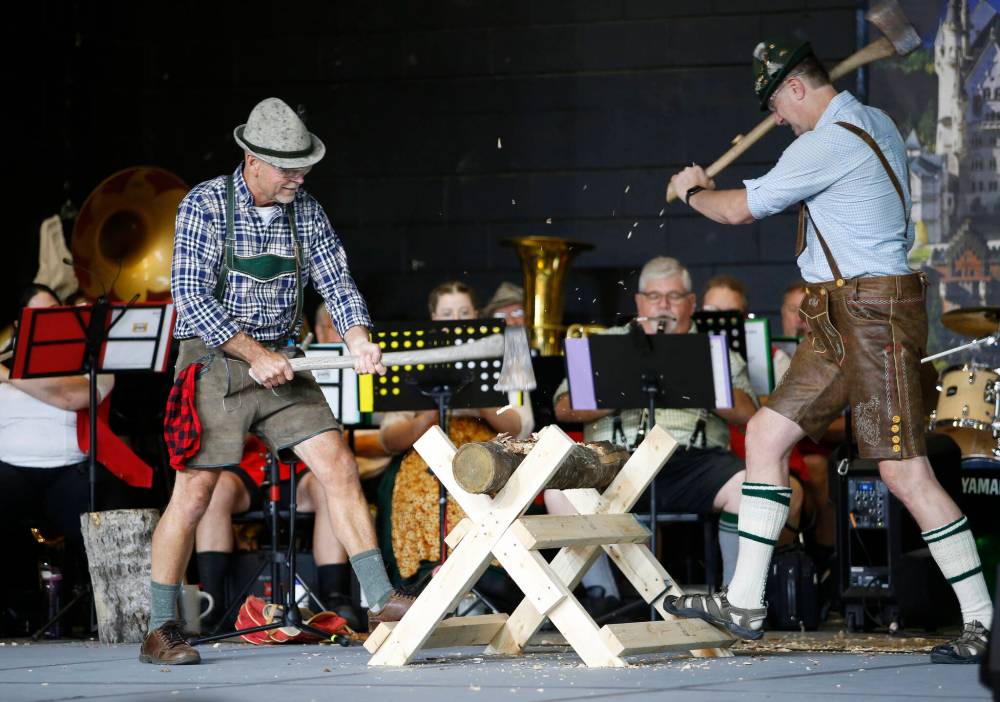
“Folklorama is about cultural transmission. It celebrates the languages, traditions, and identities of many communities that now call Manitoba home. That legacy of sharing and appreciation is what continues to make this festival so meaningful,” she said, after noting that Folklorama is the world’s largest and longest-running festival of its kind.
conrad.sweatman@winnipegfreepress.com

Conrad Sweatman is an arts reporter and feature writer. Before joining the Free Press full-time in 2024, he worked in the U.K. and Canadian cultural sectors and freelanced for outlets including The Walrus, VICE and Prairie Fire. Read more about Conrad.
Our newsroom depends on a growing audience of readers to power our journalism. If you are not a paid reader, please consider becoming a subscriber.
Our newsroom depends on its audience of readers to power our journalism. Thank you for your support.
Related Articles
On eve of Folklorama, Ghana pavilion scrambles to replace stolen outfits





History
Updated on Thursday, July 30, 2026 4:18 PM CDT: Corrected spelling mistakes.
Updated on Friday, July 31, 2026 10:41 AM CDT: Adds details on official kickoff