City skaters’ gnarly narrative In spite of official efforts down the decades to ban boarding on urban streets, a resilient local scene long revolved around a revered rail on Broadway
Read this article for free:
or
Already have an account? Log in here »
To continue reading, please subscribe:

Digital Subscription
One year of digital access for only $205*
- Enjoy unlimited reading on winnipegfreepress.com
- Read the E-Edition, our digital replica newspaper
- Access News Break, our award-winning app
- Play interactive puzzles
*First annual payment billed as $205.00 + GST for one year. This annual subscription will automatically renew at $233.00 + GST every 52 weeks (10% off the regular annual price of $259.35). Offer available to new and qualified returning subscribers only. Cancel any time.
To continue reading, please subscribe:
Add Free Press access to your Brandon Sun subscription for only an additional
$1 for the first 4 weeks*
- Enjoy unlimited reading on winnipegfreepress.com
- Read the E-Edition, our digital replica newspaper
- Access News Break, our award-winning app
- Play interactive puzzles
*Your next Brandon Sun subscription payment will increase by $1.00 and you will be charged $17.95 plus GST for four weeks. After four weeks, your payment will increase to $24.95 plus GST every four weeks.
Read unlimited articles for free today:
or
Already have an account? Log in here »
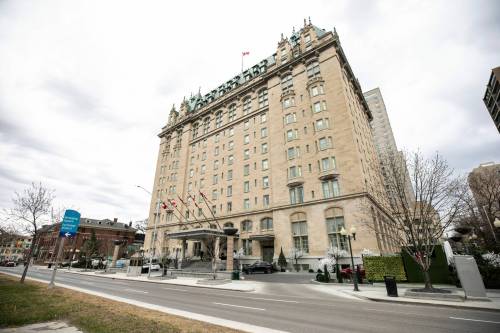
When its construction was completed in the summer of 1976, the Woodsworth Building at the corner of Broadway and Kennedy Street was most notable for its 15-storey height.
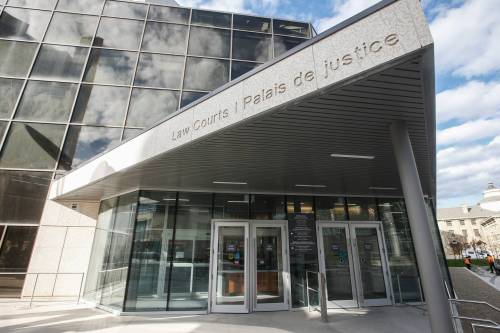
Built to house provincial government operations under then-NDP premier Ed Schreyer and still in service today as a hub of activity next to the Law Courts, the Woodsworth Building has also enjoyed a half-century reign as something else entirely.
It’s an accidental, unofficial mecca of Winnipeg skateboarding.
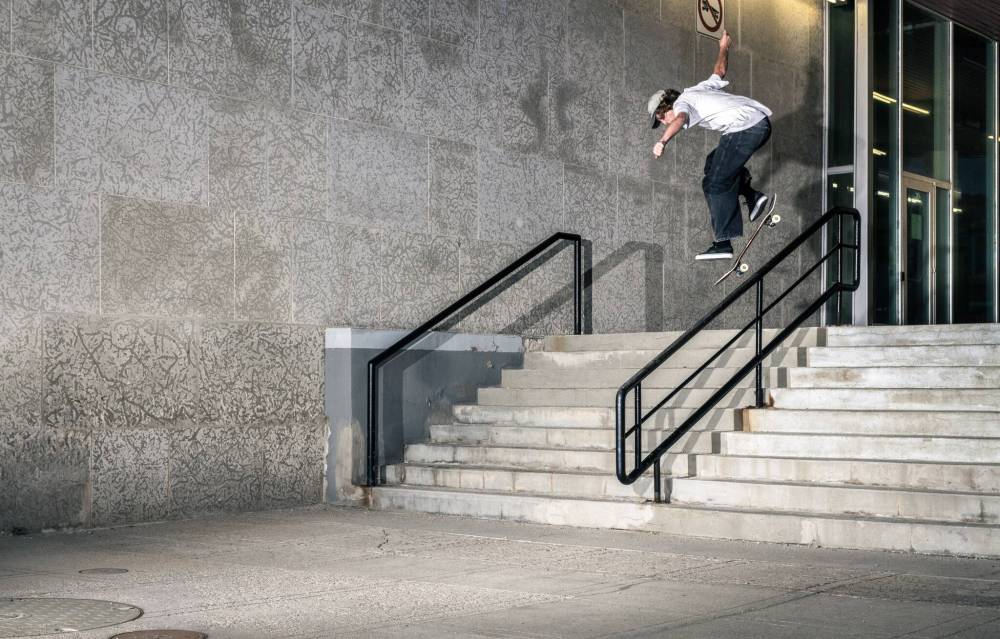
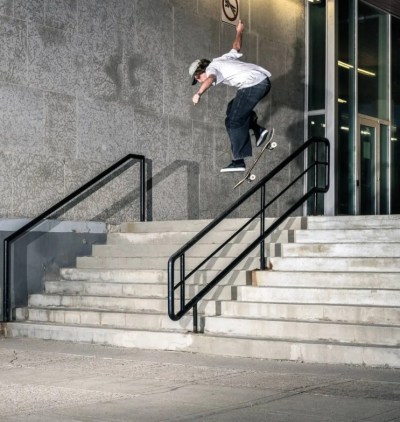
It certainly wasn’t the intention of Schreyer or of renowned local architecture firm Smith Carter, but the outdoor plaza of the Woodsworth — with its sharp angles, long, smooth expanses, Legislative Building views and its perfectly jumpable handrails — became a concrete laboratory for top Manitoban skaters like Jessica Sanchez, Erik Penton and the late Jason Crolly.
International skateboarding icons, including Arto Saari, Bam Margera (of Jackass fame) and Sean Malto, have made a point to visit the city and skate Woodsworth, particularly the rail on the building’s northwest steps and the Broadway-bound rail on the southwest side.
Local skateboarder Tyler Geurts, who skated Woodsworth for the first time in 2002, doesn’t have any difficulty dropping metaphors and similes to emphasize the reputation of the building and its legendary rails.
“I would say that the Woodsworth is like Fenway Park, and the rail would be the Green Monster,” says Geurts, 40, of the historic Boston pallpark and its legendary leftfield wall.
“It’s a proving ground for people to say, ‘Hey, I’m for real.’ Not to give too many analogies, but lots of people go on rollercoasters; this place is a measuring stick that says you must be this gnarly to ride.”
“After practising a trick in the skateparks, you eventually took it to Woodsworth to claim a spot in the long list of never-been-dones,” says Jackson Toone, who edits the local skate magazine Clearcut.

As a skate photographer, Toone captured dozens of those moments, including Penton’s kickflip-back-noseblunt — or in more layman’s terms, a high-difficulty midair corkscrew — in 2024.
Geurts, who lists dozens of local skaters who’ve pulled off their most memorable tricks at Woodsworth, calls the northwest rail “the best handrail in the country.”
Or at least it was.
Last month, after decades of skate scene adoration, the steps were demolished for reconstruction: the handrail’s days were numbered. The only ones celebrating might’ve been the Woodsworth’s security guards, who’d earned notoriety for their devotion to protecting the steps from ollies and 180s.
“Heartbreaking day for Winnipeg,” Penton wrote in an Instagram post late in July. “I have been to quite a few different cities to skate and I’m honestly not sure if I have ever skated a better rail.”
It might seem overtly sentimental, but for skateboarders, the removal of the handrail represented a blow to their particular brand of urban artistry and engagement.
“I would say that it was the most important piece of physical architecture for skateboarding in the city,” Geurts says.
Ever since skateboarding first gained momentum on the flat ground here in the mid-1960s, the pastime has faced an uphill battle in finding its footing among the powers that be.
In May 1965, the Greater Winnipeg Safety Council was convinced that “skurfing” — a portmanteau of skating and surfing that never quite caught on — was an augur for civic malfeasance and sidewalk calamity.
Alderman Joseph Cropo worried that the newly fashionable vehicle could travel as fast as 60 miles per hour.
Not so fast, said Steven Ivanhoe.
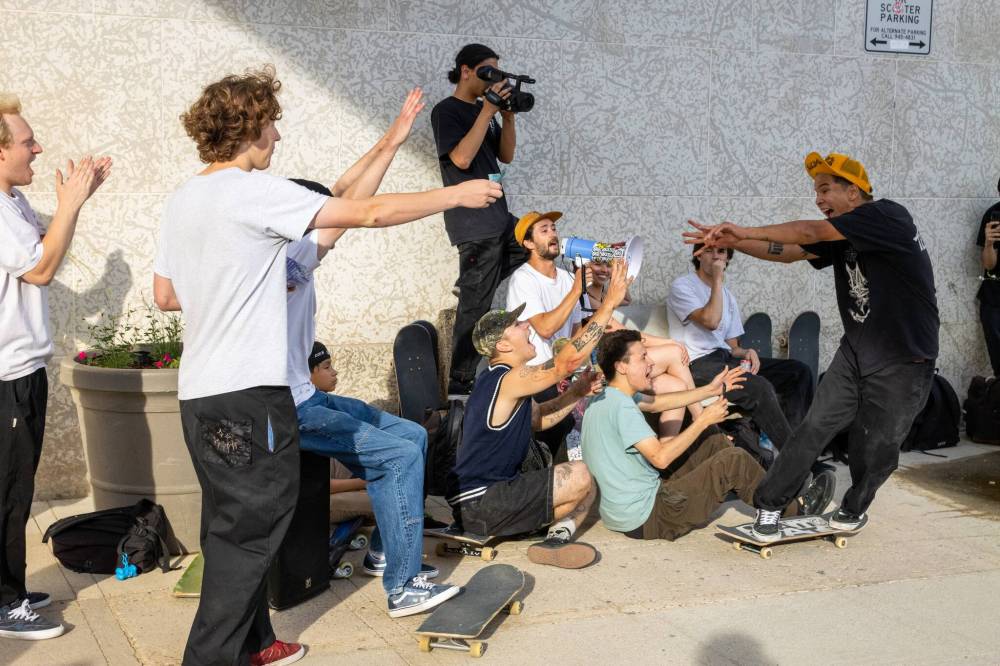
Ivanhoe, the co-founder of Skateboard of Canada — the first Winnipeg company to manufacture wooden skateboards — submitted a brief to council opposing Cropo’s motion to prohibit the use of skateboards on public sidewalks and portions of city streets.
Ultimately, Ivanhoe and his business partner Bernie Sexton — who hired neighbourhood teens to assemble the boards in an East Kildonan garage — were unable to convince the political powers to budge.
Meanwhile, says local skate historian Darren Haugen, the phenomenon started to fizzle.
“It seems like every 10 years, there’s a boom-bust when it comes to skateboarding,” says Haugen, who served on the board of directors for the Skateboard Coalition of Manitoba and ran the website winnipegskateparks.com until the site was hacked and corrupted in 2009.

Haugen, who now lives near Portage la Prairie, isn’t originally from Manitoba, but after moving to Winnipeg from Cold Lake, Alta., in 1999, he began the time-honoured tradition of documenting the underground and undertold history of the local skate scene.
Like Toone has done since his teen years, Haugen would bring his camera to local skate spots to capture contemporary skate history, while also perusing the library stock of microfiche to find records of long-shuttered skate palaces of yore.
He quickly compiled histories of the city skateparks that began to appear as the 1970s wound down, including the 10,000-square-foot Paradise, an indoor facility that ran at 1070 St. James St., for only a few months in 1978.
Run by H. Mel and Judith Sigurdson, as many as 50 skaters could use the park at a time at a cost of $1.25 per hour.

That same year in St. Vital, the Skywave indoor skatepark opened at the former Windsor Theatre (at the junction of St. Mary’s and St. Anne’s roads), featuring a Pepsi-sponsored skate squad, which provided demonstrations across the city.
Now the site of Miller’s Meats, the park was half as big as Paradise, but like its larger competitor, likely served as a response to legislation restricting skateboarding on city streets.
In 1977, the City of Winnipeg passed a bylaw stating that “no person shall ride upon or use any coaster, skateboard, sleigh, skis, skates, toy vehicles or similar devices on a roadway.”
Meanwhile, the Manitoba Medical Association launched a study to assess the potential injury risks associated with skateboarding.
“The indications are that the use of skateboards is rapidly increasing in Manitoba, especially in residential areas of Winnipeg,” the association said.
Parties interested in sharing their views on the subject were asked to send them in to the association’s headquarters on Kennedy Street, a few blocks away from the newly opened Woodsworth Building.
Though the city started building outdoor skateparks, including East Kildonan’s Chornick Park and St. Boniface’s Happyland, in the following years, skateboarding still wasn’t exactly a welcome sight for crotchety politicos downtown.
In 1990, around the time the Woodsworth started to earn a widespread reputation for its angular resplendence, the city once again used the letter of the law to enforce its will: street skating was made illegal, with fines up to $100 ($216 in 2026) handed out for skateboarding anywhere but in public parks or on private driveways.
“I’m sorry to say that skateboarding on a driveway is not much fun,” Jason Hum wrote in a 1992 letter to the editor of the Winnipeg Free Press.
Nowadays, political attention is mostly fixed on devising regulations for the ever-popular electronic bikes, e-scooters and e-skateboards.

The City of Winnipeg currently recognizes 16 skateparks in its jurisdiction, though the city website doesn’t include its most prominent outdoor skatepark — the Plaza at The Forks — on that list.
Opened to the public in June 2006, the Plaza was built at a cost of as much as $3 million, funded by CentreVenture and the late philanthropist James Burns, who wanted to establish a world-class outdoor skate park for public use, sparing no expense to make it possible.

Since opening 20 years ago to considerable fanfare, including a visit from legendary skate pioneer Tony Hawk, the 48,000-square-foot site — designed by the national firm Newline Skateparks — has maintained a reputation as one of the most skateable parks in the country, especially during the summer months.
For years, local shop Sk8 Skates ran free training sessions for beginners there. This year, for the first time, the sessions are co-ordinated by Pihtikwé, a community-led organization that was founded in 2023 by the Manitoba Skateboarding Coalition.
Translating to “come in” or “enter” from the Cree, Pihtikwé was opened as a safe, non-judgemental, accessible indoor skate park at Portage Place prior to the downtown mall’s purchase by True North.
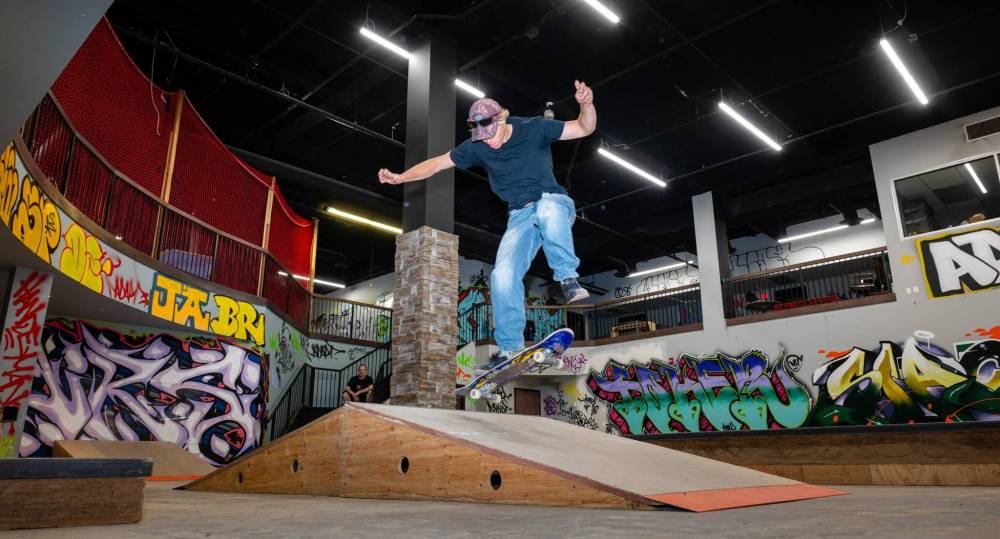
Initially located in the mall’s vacant Staples office supply store at the corner of Portage Avenue and Vaughan Street, Pihtikwé has since relocated to 323 Portage Ave., a smaller space which served as a 24-hour gym prior to the COVID-19 pandemic.
Operating with limited hours during the summer months, the latest iteration of Pihtikwé features beginner-friendly rails and half-pipes, with on-site staff ready to assist.
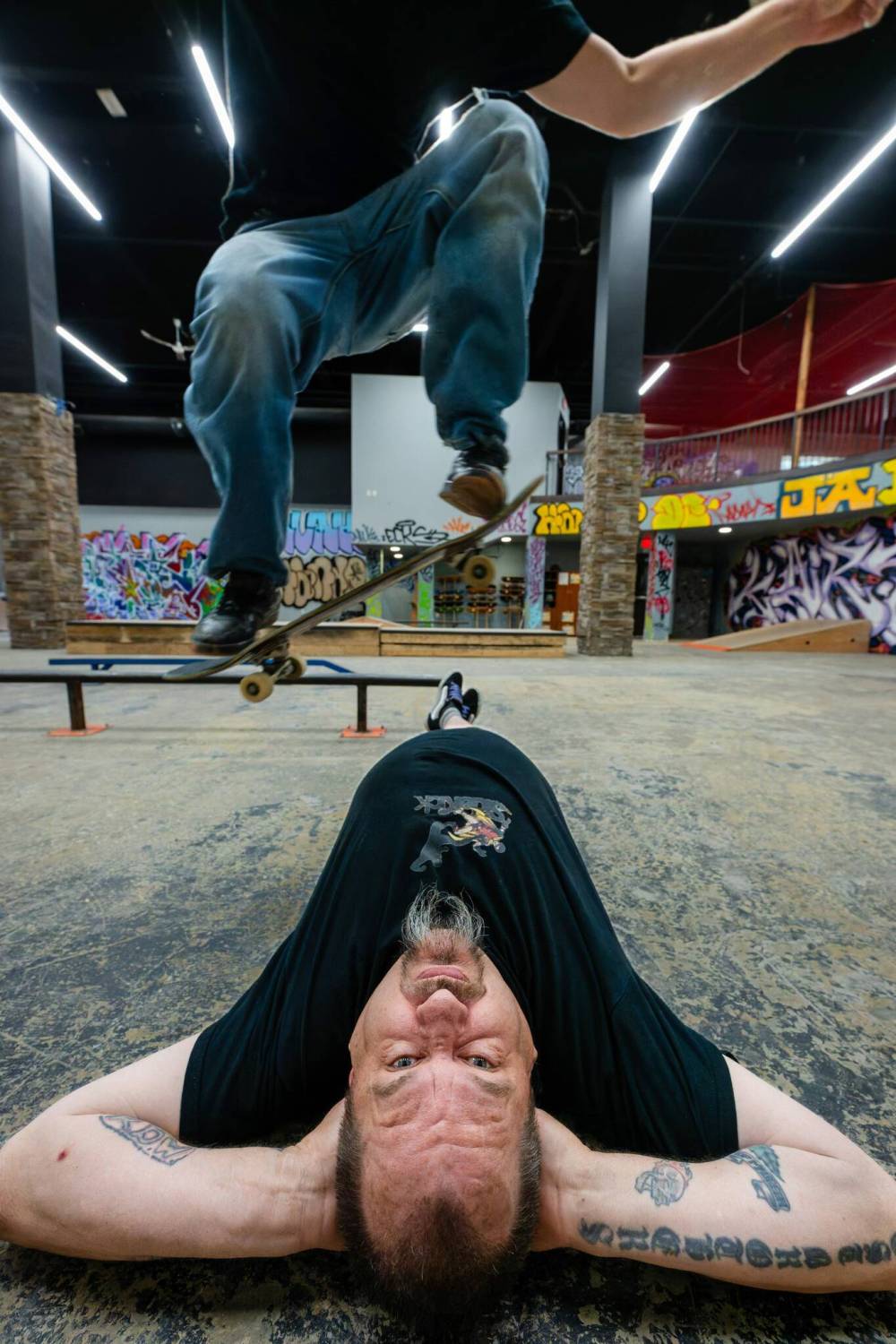
But until winter comes and Pihtikwé gets busy, most of its clientele can be found at the Plaza.
For skate educator Dylan Byrne — who with Issiah Parisian and Pihtikwé managers Dan McRoy and Fane Smeall spent the spring doing demolition and installation work at the new indoor park — the summer job at the Plaza offers daily rewards more valuable than pay.
“I spent about two hours helping this little girl learn how to skate, and two hours might seem like a long time, but those two hours will make her a skater for life,” says Byrne, who was part of a Pihtikwé delegation that staged skate workshops in Cross Lake last week.
“I could just tell she’d be back next week. Watching all these kids slowly fall in love with skateboarding is super cool.”
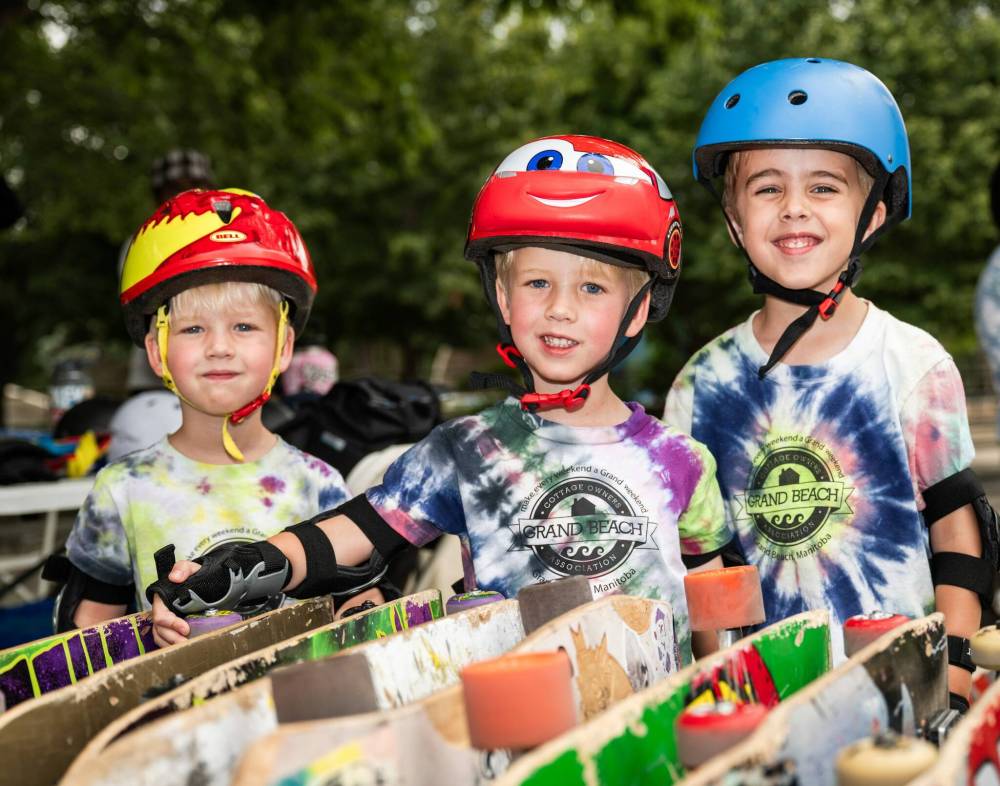
Leiah Bauer drove 60 kilometres from Richer so her three daughters could skate for on a recent afternoon two years after they first found their feet with help from teachers like Byrne, Parisian and Dale Faustino. She says the park is well worth the trip.
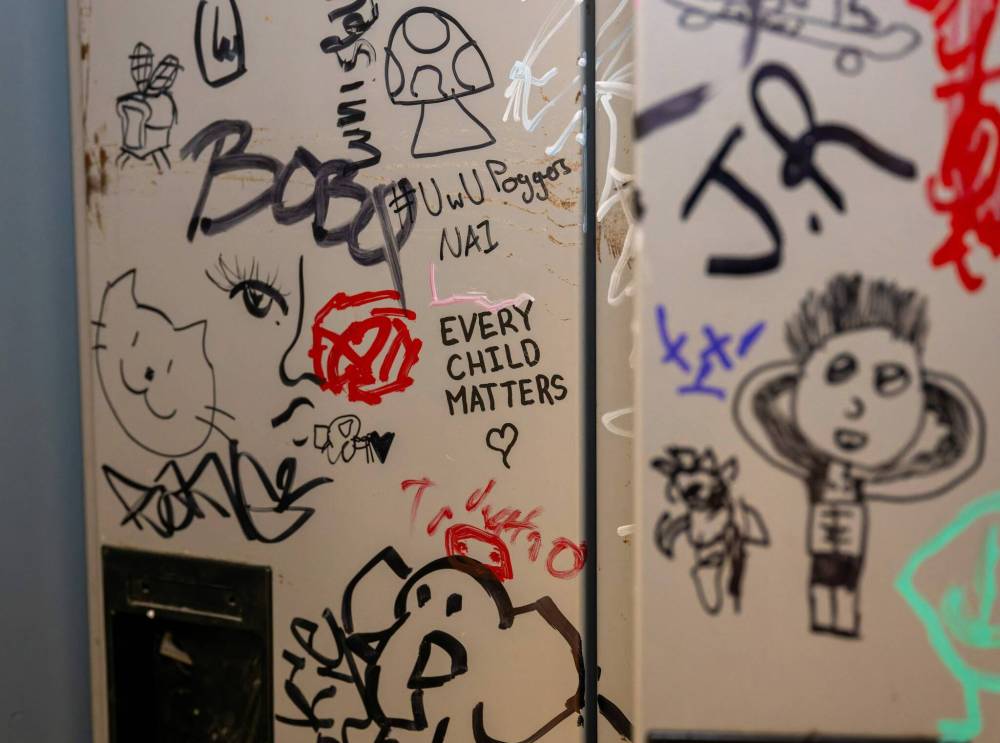
The Pihtikwé team agrees, but says that to mark the park’s 20-year anniversary, they would make some upgrades, including installing lighting to make skating at night safer and more inviting.
“This is a pretty popular park, and all the ledges are supposed to be sharp, but they’ve been pretty rounded,” Byrne says. “More hydration stations would be nice, too,” adds Parisian.
(Until Aug. 29, Pihtikwé skaters will be on-site at The Forks for free daily drop-in lessons between 11 a.m. and 5 p.m., with equipment available to borrow.)
While the city’s skateboarding community now has a wealth of official spots available to explore, plus newly opened or refurbished parks in Brandon, Selkirk and Portage la Prairie, the outpouring of respect for the Woodsworth Building’s beloved handrail was overwhelming, Geurts says.
But the veteran skater says its in good hands.
When he heard the railing was being removed, Geurts contacted the construction crews and managed to persuade them to give him the local skateboarding grail instead of sending it to the recycling plant.
“We understood the importance of this piece and that the community wanted to keep it, and while we couldn’t save the spot — they have to do what they have to do — the crews took good care to make sure we would be able to hold onto the railing,” he says.
“We can’t save the whole place, but I wanted to make sure this super-important piece of Winnipeg skate history wasn’t just thrown in the landfill.”

Geurts doesn’t want the rail to end up in a basement or as a vanity piece either.
“I want the skateboarding community to hang onto it for future use or installation,” he says. “We want to give people, especially younger folk, a chance to skate it.”
Until then, skaters will be on the move, looking for their next unofficial skate mecca.
ben.waldman@freepress.mb.ca

Ben Waldman is a National Newspaper Award-nominated reporter on the Arts & Life desk at the Free Press. Born and raised in Winnipeg, Ben completed three internships with the Free Press while earning his degree at Ryerson University’s (now Toronto Metropolitan University’s) School of Journalism before joining the newsroom full-time in 2019. Read more about Ben.
Every piece of reporting Ben produces is reviewed by an editing team before it is posted online or published in print — part of the Free Press‘s tradition, since 1872, of producing reliable independent journalism. Read more about Free Press’s history and mandate, and learn how our newsroom operates.
Our newsroom depends on a growing audience of readers to power our journalism. If you are not a paid reader, please consider becoming a subscriber.
Our newsroom depends on its audience of readers to power our journalism. Thank you for your support.