Lay of the land
Exhibition offers up 125 different ways to look at Canada

Advertisement
Read this article for free:
or
Already have an account? Log in here »
To continue reading, please subscribe:

Digital Subscription
One year of digital access for only $205*
- Enjoy unlimited reading on winnipegfreepress.com
- Read the E-Edition, our digital replica newspaper
- Access News Break, our award-winning app
- Play interactive puzzles
*First annual payment billed as $205.00 + GST for one year. This annual subscription will automatically renew at $233.00 + GST every 52 weeks (10% off the regular annual price of $259.35). Offer available to new and qualified returning subscribers only. Cancel any time.
To continue reading, please subscribe:
Add Free Press access to your Brandon Sun subscription for only an additional
$1 for the first 4 weeks*
- Enjoy unlimited reading on winnipegfreepress.com
- Read the E-Edition, our digital replica newspaper
- Access News Break, our award-winning app
- Play interactive puzzles
*Your next Brandon Sun subscription payment will increase by $1.00 and you will be charged $17.95 plus GST for four weeks. After four weeks, your payment will increase to $24.95 plus GST every four weeks.
Read unlimited articles for free today:
or
Already have an account? Log in here »
As a curator and head of collections and exhibitions at WAG-Qaumajuq, Riva Symko has been contemplating landscapes in art for a long time. But living in an ever-changing and ever-threatened one has altered her perspective on them.
Before coming to Winnipeg, Symko and her husband lived in Anchorage, Alaska. One day, seven or so years ago, they were out hiking when a sudden thunderstorm rolled through — “which is very unusual in Alaska,” she says — sparking a forest fire that ended up raging out of control. That summer, the whole city, save for the ocean side, was surrounded by fire and blanketed with heavy smoke. Climate change was viscerally visible.
“And since then, I really haven’t been able to look at a beautiful landscape the same,” she says.
MIKAELA MACKENZIE / FREE PRESS Artist Lourdes Still’s 12 Dips of Blue, which is part of Terra Cognita/Incognita, symbolizes the full moons we experience each year.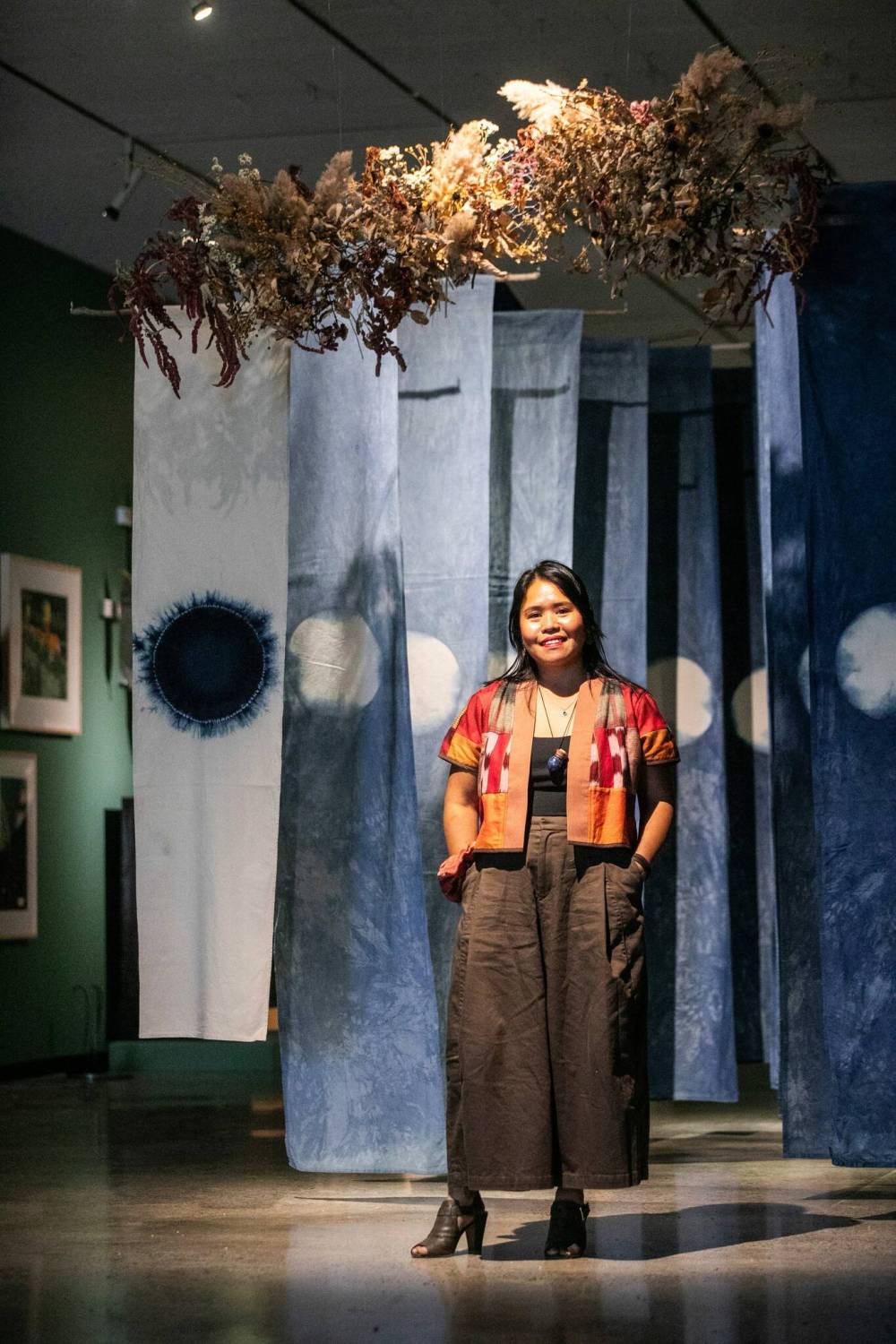
With Terra Cognita/Incognita, a new exhibition opening at WAG-Qaumajuq Wednesday night, Symko wants to inspire and challenge viewers to look at landscapes differently, too.
Translating to “known land/unknown land” and curated by Symko, the show is composed of more than 125 artworks from the WAG-Qaumajuq permanent collection, braiding together different perspectives on national identity, geography and climate change through both Indigenous and settler Canadian lenses.
Obviously, there are more than a few landscape works in the gallery’s collection, so challenge one was dialing in her focus.
“I had at least double that (number of works), if not more. One thing with working with a permanent collection, you’re always editing down from, like, 30,000,” Symko says.
Exhbition preview
Terra Cognita/Incognita
● WAG-Qaumajuq, 300 Memorial Blvd.
● Opens Wednesday during WAG Wednesdays, 5-9 p.m.; celebration begins at 7 p.m.
● Free
Still, she had a few guideposts. She knew she wanted a mix of media, a mix of cultural perspectives and a mix of time periods, so they could all exist in conversation with one another.
“I was thinking of it as a cabinet of curiosities in a way, just to show the breadth and scope of how much landscape is in the art world, and we kind of pass it by, or maybe don’t think about it, or we just assume we know what it is.”
The exhibition features Carl Beam, Eleanor Bond, Emily Carr, Sarah Anne Johnson, Norval Morrisseau and Tom Thomson, as well as photographers Edward Burtynsky and André Kertész.
And, of course, those most famous chroniclers of Canadiana, the Group of Seven, which are grouped together near the exhibition’s entrance. (In a canny bit of curation, Symko has hung a Carr just outside the group, acknowledging her association even if she wasn’t an official member.)
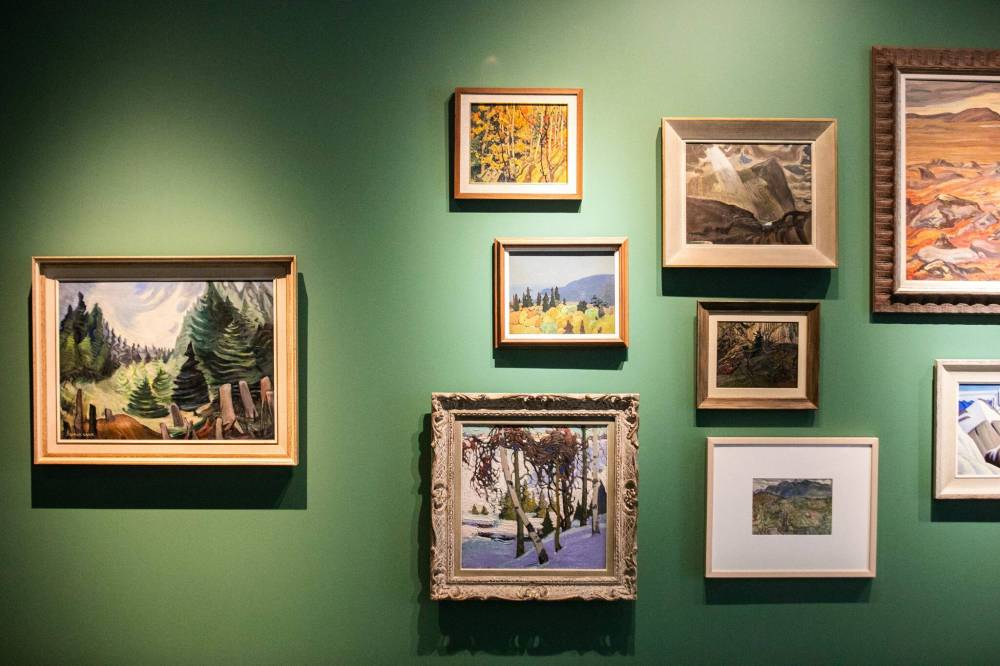
“Many of them came from a commercial art background, and very specifically were looking to create this Canadian identity out of the landscape that is now deeply embedded in our collective consciousness — and yet, it’s missing Indigenous communities, it’s setting up the land as though it’s this vast, open place, ready for exploitation, but really, that exploitation has come at the cost of the people that were here first,” she says.
Symko wants to get people thinking about the context beyond the painting.
“They are beautiful, and it’s no wonder that they became these national icons because they’re difficult not to love — even when you’re coming to them from a critical point of view. But you do have to come to them from a critical point of view, and think about them in relation to climate change and colonialism.”
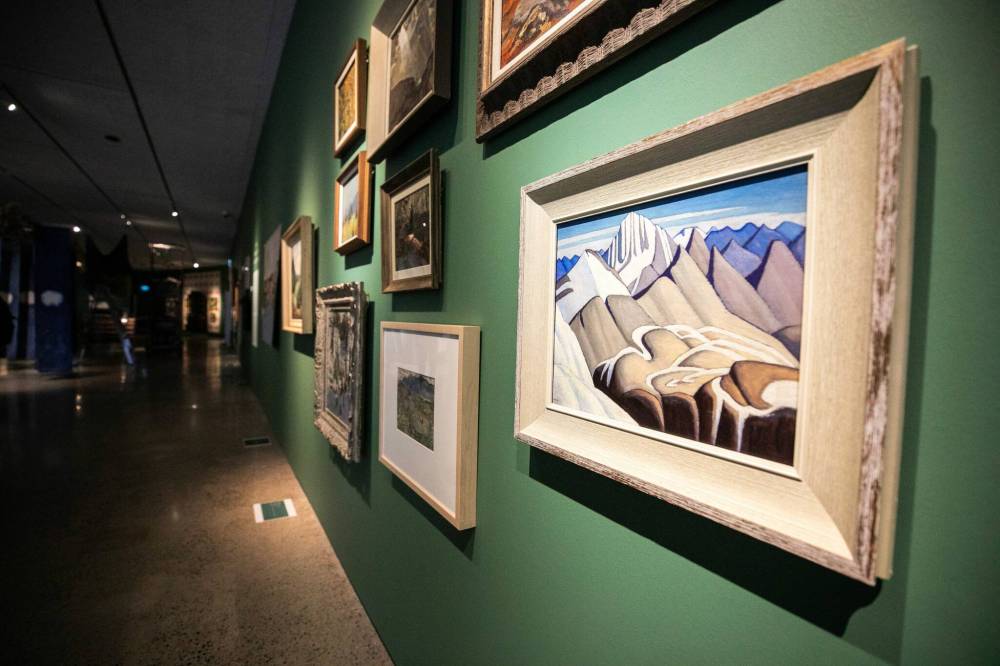
Elsewhere, the works on view contend with landscapes not just physical spaces, but sites of identity, memory and connection. And some are not traditional landscapes at all; Keith Berens’ 2009-10 abstract encaustic works White Shell 1, 2 and 3, for example, draw upon his Indigenous ancestry and think about the land as layers of people, stories and histories.
And, as this is an exhibition about the land, its design and installation took environmental impact into consideration. The show features hand-painted signage from the Travelling Sign Painters instead of plastic-based text panels, rice wallpaper from Martha Street Studio and repurposed Manitoba Tyndall stone for display plinths in partnership with Alpha Masonry.
Terra Cognita/Incognita also features four pieces on loan from local contemporary artists Anna Binta Diallo, Sarah Fuller, Debra Frances Plett and Lourdes Still, who created a new large-scale commission for the exhibition.
Still owns and operates Masagana Flower Farm & Studio, a seasonal flower farm and natural dye studio near La Broquerie where she grows her own dyes (marigold, indigo, cosmos and more). Her piece, 12 Dips of Blue, is a naturally dyed textile installation in varying shades of indigo and symbolizes the 12 full moons we see in a year. (There is actually a 13th panel; 2026 has 13 full moons.)
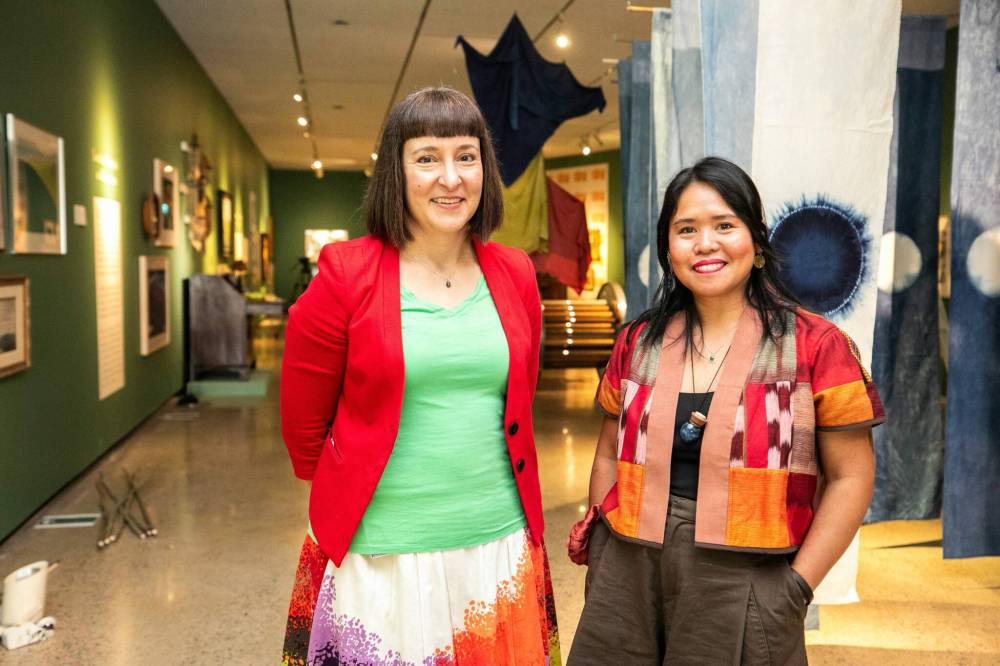
Still moved to Manitoba from the Philippines in 2009, and says she didn’t really feel at home until she started sinking her hands in the dirt and gardening with her now husband.
“Something about tending the plants — because in Manitoba we have to start everything indoors, and then April, May we transplant them — and so something about helping the plants get rooted in the garden, I was also getting rooted.”
Still says she’s honoured her work is part of this exhibition.
“I’m really, really excited for the public to engage with it, walk through it, and also I hope that one of the things that they would wonder about is where in nature their favourite colours come from.”
Terra Cognita/Incognita is on view until November 2027.
jen.zoratti@winnipegfreepress.com
Jen Zoratti is a columnist and feature writer working in the Arts & Life department, as well as the author of the weekly newsletter NEXT. A National Newspaper Award finalist for arts and entertainment writing, Jen is a graduate of the Creative Communications program at RRC Polytech and was a music writer before joining the Free Press in 2013. Read more about Jen.
Every piece of reporting Jen produces is reviewed by an editing team before it is posted online or published in print – part of the Free Press‘s tradition, since 1872, of producing reliable independent journalism. Read more about Free Press’s history and mandate, and learn how our newsroom operates.
Our newsroom depends on a growing audience of readers to power our journalism. If you are not a paid reader, please consider becoming a subscriber.
Our newsroom depends on its audience of readers to power our journalism. Thank you for your support.
Jen Zoratti is a columnist and feature writer working in the Arts & Life department, as well as the author of the weekly newsletter NEXT. A National Newspaper Award finalist for arts and entertainment writing, Jen is a graduate of the Creative Communications program at RRC Polytech and was a music writer before joining the Free Press in 2013. Read more about Jen.
Every piece of reporting Jen produces is reviewed by an editing team before it is posted online or published in print – part of the Free Press‘s tradition, since 1872, of producing reliable independent journalism. Read more about Free Press’s history and mandate, and learn how our newsroom operates.
Our newsroom depends on a growing audience of readers to power our journalism. If you are not a paid reader, please consider becoming a subscriber.
Our newsroom depends on its audience of readers to power our journalism. Thank you for your support.
Advertisement Advertise With Us
Advertisement Advertise With Us