Steinem’s life a lesson in audacity, generosity, courage

Advertisement
Read this article for free:
or
Already have an account? Log in here »
To continue reading, please subscribe:

Digital Subscription
One year of digital access for only $205*
- Enjoy unlimited reading on winnipegfreepress.com
- Read the E-Edition, our digital replica newspaper
- Access News Break, our award-winning app
- Play interactive puzzles
*First annual payment billed as $205.00 + GST for one year. This annual subscription will automatically renew at $233.00 + GST every 52 weeks (10% off the regular annual price of $259.35). Offer available to new and qualified returning subscribers only. Cancel any time.
To continue reading, please subscribe:
Add Free Press access to your Brandon Sun subscription for only an additional
$1 for the first 4 weeks*
- Enjoy unlimited reading on winnipegfreepress.com
- Read the E-Edition, our digital replica newspaper
- Access News Break, our award-winning app
- Play interactive puzzles
*Your next Brandon Sun subscription payment will increase by $1.00 and you will be charged $17.95 plus GST for four weeks. After four weeks, your payment will increase to $24.95 plus GST every four weeks.
Read unlimited articles for free today:
or
Already have an account? Log in here »
I wish I could tell you the first time I heard the word “feminist,” it was from Gloria Steinem, but it was definitely from a Spice Girl.
Props, though, to the Spice Girls for actually using the F word. So many people these days are afraid of it — afraid of using it, afraid of identifying with it, afraid of claiming it for themselves.
Gloria Steinem wasn’t, and she made it so we wouldn’t be either.
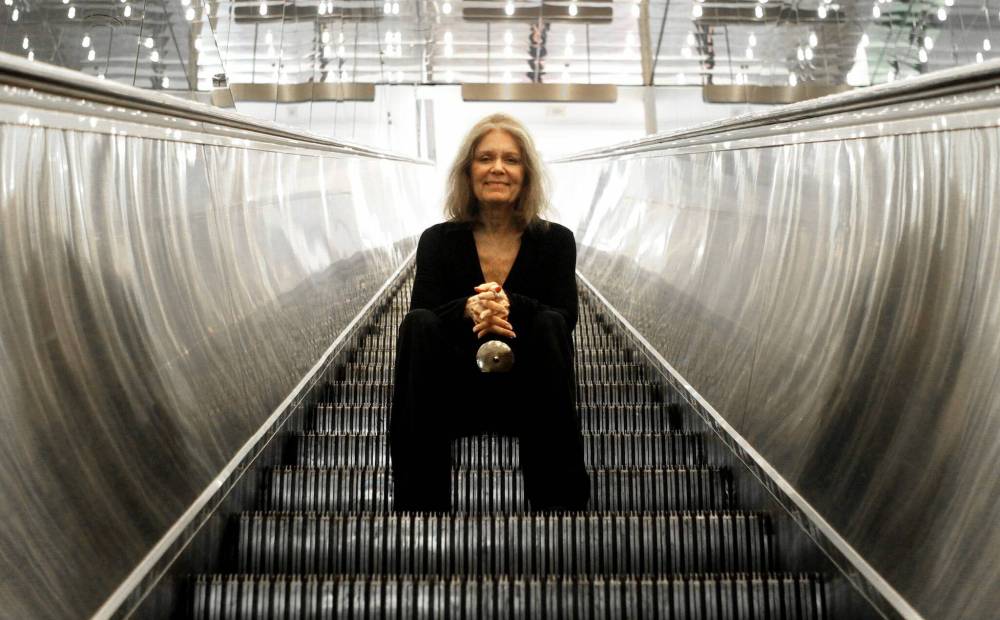
Chris Young / The Canadian Press
Writer, feminist and activist Gloria Steinem died this week at age 92.
The trailblazing American journalist and feminist activist died this week. She was 92. She was a lion, a woman who fought for rights and freedoms that many subsequent generations take for granted — and which, in the last decade especially, have been increasingly threatened.
I didn’t discover her words and work until my own feminist awakening in my 20s, and marvelled at all she made possible. Here are five lessons we can learn from Steinem.
See yourself as part of something bigger.
In 1969, while working as a journalist, Steinem attended a “speak out” in New York’s Greenwich Village at which women discussed their illegal abortions. Steinem felt what she’d later call “the big click.” Her eyes had been opened, forever, to systemic sexism and misogyny. She felt it: the unmistakable rage about injustice.
It’s too easy, in this era of relentless individualism and optimization, to look out only for ourselves. But when we see ourselves as part of something bigger, we can accomplish so much more. As Steinem herself said, “Whenever one person stands up and says, ‘Wait a minute, this is wrong,’ it helps other people do the same.”
Use your voice, and be audacious about it.
Steinem was dismissed as a “girl reporter” at the beginning of her career, dismissed as a pretty girl pretending to be a writer, to paraphrase something journalist Gay Talese told her.
But Steinem kept going. She wrote the 1963 exposé A Bunny’s Tale, for which she donned the corset and bunny ears to go undercover to expose the working conditions at the Playboy Club in New York City. She would go on to write culture-defining essays and columns and reported pieces, and, in 1971, be the co-founder of Ms., the pioneering feminist magazine and first glossy owned, run and written by women.
Steinem used her voice, in print and protest, to fight for reproductive freedom, equal pay and workplace rights, and against domestic violence, workplace sexual harassment and marriage inequality.
I have the cover of the July 1972 issue of Ms. — the one with Wonder Woman on the cover — framed in my home office. It’s a daily inspiration to me to keep using mine.
Be generous.
Writer/director/actor Lena Dunham posted a lovely tribute to Steinem on Instagram in which she praised her generosity.
“You weren’t just generous with your life force, your vision or your intellect,” Dunham wrote. “You were generous with your time, your laughter and even your jewelry (like the time I admired your silver vulva ring and you plucked it off your hand and placed it on mine.)”
Whatever you have to give, give freely. It’s a beautiful way to be a person in the world.
Create community.
For decades, Steinem hosted salons in the Upper East Side brownstone she called home for more than 50 years. Diverse groups of women — of all ages and backgrounds — would gather in a circle in her cosy, colourful living room for wide-ranging conversations about everything from sex to the state of feminism.
Creating a site of in-person connection and bringing people together in an informal — but intentional — way is activism, too, especially at a time when too many of our social connections happen online at the whims of ever-divisive and siloing algorithms.

Keep fighting.
Steinem fought and championed rights for women tirelessly and, in the space of her lifetime, saw ground gained and lost. The last few years have been particularly frightening, as American women are systematically being stripped of their reproductive freedoms and young, conservative trad wife influencers are trying to convince a generation of women to give up their own agency and make a man their plan.
Steinem did her work until she died, and now it’s our turn to carry on her legacy. We have to stay angry. We have to feel the big click. We have to keep fighting.
There’s a fire within all of us. Tend to it, so it may light the way forward.
jen.zoratti@winnipegfreepress.com
Jen Zoratti is a columnist and feature writer working in the Arts & Life department, as well as the author of the weekly newsletter NEXT. A National Newspaper Award finalist for arts and entertainment writing, Jen is a graduate of the Creative Communications program at RRC Polytech and was a music writer before joining the Free Press in 2013. Read more about Jen.
Every piece of reporting Jen produces is reviewed by an editing team before it is posted online or published in print – part of the Free Press‘s tradition, since 1872, of producing reliable independent journalism. Read more about Free Press’s history and mandate, and learn how our newsroom operates.
Our newsroom depends on a growing audience of readers to power our journalism. If you are not a paid reader, please consider becoming a subscriber.
Our newsroom depends on its audience of readers to power our journalism. Thank you for your support.
Jen Zoratti is a columnist and feature writer working in the Arts & Life department, as well as the author of the weekly newsletter NEXT. A National Newspaper Award finalist for arts and entertainment writing, Jen is a graduate of the Creative Communications program at RRC Polytech and was a music writer before joining the Free Press in 2013. Read more about Jen.
Every piece of reporting Jen produces is reviewed by an editing team before it is posted online or published in print – part of the Free Press‘s tradition, since 1872, of producing reliable independent journalism. Read more about Free Press’s history and mandate, and learn how our newsroom operates.
Our newsroom depends on a growing audience of readers to power our journalism. If you are not a paid reader, please consider becoming a subscriber.
Our newsroom depends on its audience of readers to power our journalism. Thank you for your support.
Related Articles
Gloria Steinem lived to see a backlash against the strides she helped make for feminism





Advertisement Advertise With Us
Advertisement Advertise With Us