Shtetl story Rainbow Stage, WJT stage classic Yiddish tale
Read this article for free:
or
Already have an account? Log in here »
To continue reading, please subscribe:

Digital Subscription
One year of digital access for only $205*
- Enjoy unlimited reading on winnipegfreepress.com
- Read the E-Edition, our digital replica newspaper
- Access News Break, our award-winning app
- Play interactive puzzles
*First annual payment billed as $205.00 + GST for one year. This annual subscription will automatically renew at $233.00 + GST every 52 weeks (10% off the regular annual price of $259.35). Offer available to new and qualified returning subscribers only. Cancel any time.
To continue reading, please subscribe:
Add Free Press access to your Brandon Sun subscription for only an additional
$1 for the first 4 weeks*
- Enjoy unlimited reading on winnipegfreepress.com
- Read the E-Edition, our digital replica newspaper
- Access News Break, our award-winning app
- Play interactive puzzles
*Your next Brandon Sun subscription payment will increase by $1.00 and you will be charged $17.95 plus GST for four weeks. After four weeks, your payment will increase to $24.95 plus GST every four weeks.
Read unlimited articles for free today:
or
Already have an account? Log in here »
Reb Lazar Wolf (Dov Mickelson) marched down Selkirk Avenue last Friday afternoon to collect sustenance for his Fiddler on the Roof castmates, who’ve spent the past two weeks rehearsing at the Ukrainian National Federation Hall.
“Rugelach?” Mickelson offered after making a quick stop for a bag of sweet pastries at the 89-year-old Gunn’s Bakery, following in the footsteps of his parents’ and grandparents’ generations, those Jews who sought refuge in this neighbourhood after the world they once knew in Eastern Europe was obliterated by continental campaigns of anti-semitism which ultimately led to the Holocaust.
The pre- and post-war focal point of Winnipeg’s Jewish community, the North End became for thousands of refugees and immigrants a stand-in for shtetls — the small, yet sprawling communities that existed under tenuous and ever-threatened autonomy as satellite communities across the Pale of Settlement, the region within the Russian Empire where Jewish people were allowed to reside.
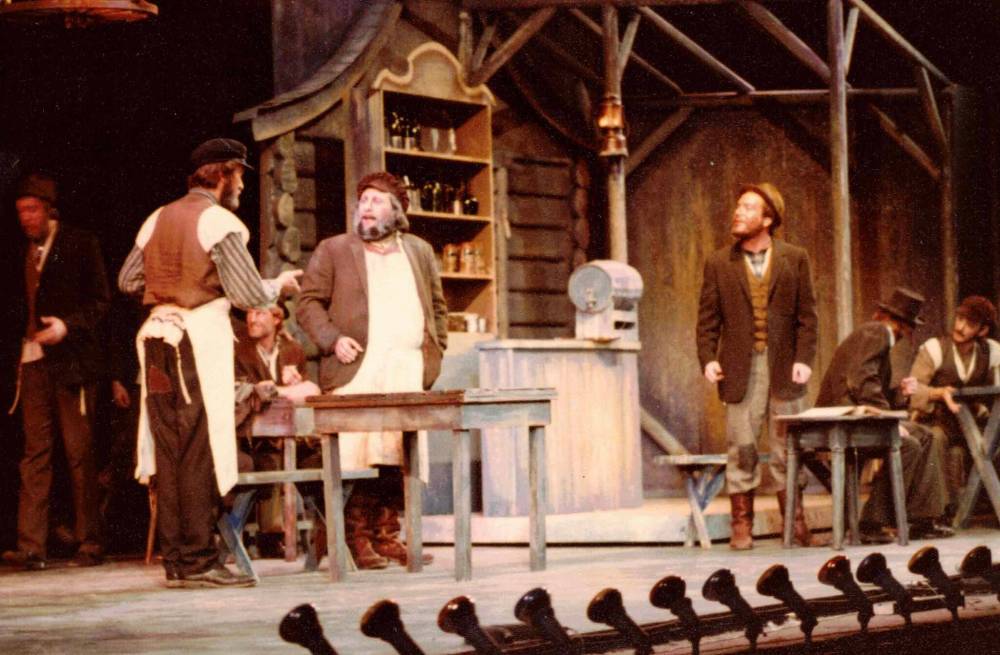
Under the rule of the Tsar — pheh — opportunity was scarce and any expression of Jewish joy or celebration — a bar mitzvah morning, a wedding night or a bris for a newborn boy — could occasion brutal suppression by either the ruling class or by the villagers at the gate.
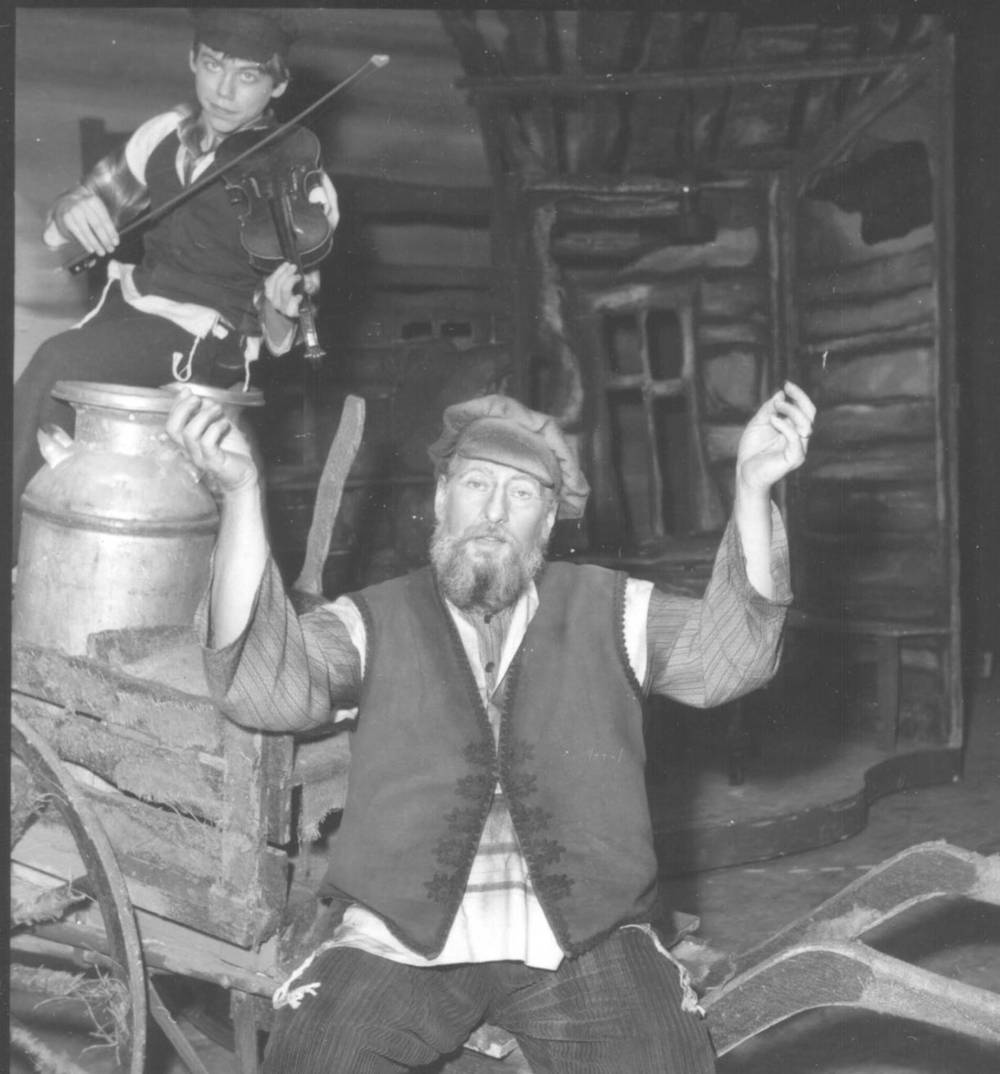
That’s the world upon which Solomon Rabinovich — pen name, Sholem Aleichem — drew in composing his most lasting Yiddish folk tales, centred on the fantastic dreams of Tevye the Milkman, a shtetl patriarch whose optimistic tendency toward tradition as a means of continuity is imperiled by political forces whose power exceeds that of his prayer.
Though Sholem Aleichem — whose name translates to “peace be unto you” — died in New York City 110 years ago at the age of 57, those stories have maintained relevance and momentum well into the 21st century.
On the strength of Fiddler on the Roof, Jerry Bock and Sheldon Harnick’s musical adaptation of Aleichem’s stories, the author’s work has become as much a cultural component of the modern Ashkenazi Jewish experience as the artworks of Marc Chagall or pumpernickel bagels.
Theatre Preview
Fiddler on the Roof
At Rainbow Stage
A Winnipeg Jewish Theatre co-production with the Rusalka Ukrainian Dance Ensemble
to Sept. 13
Tickets $65 at rainbowstage.ca
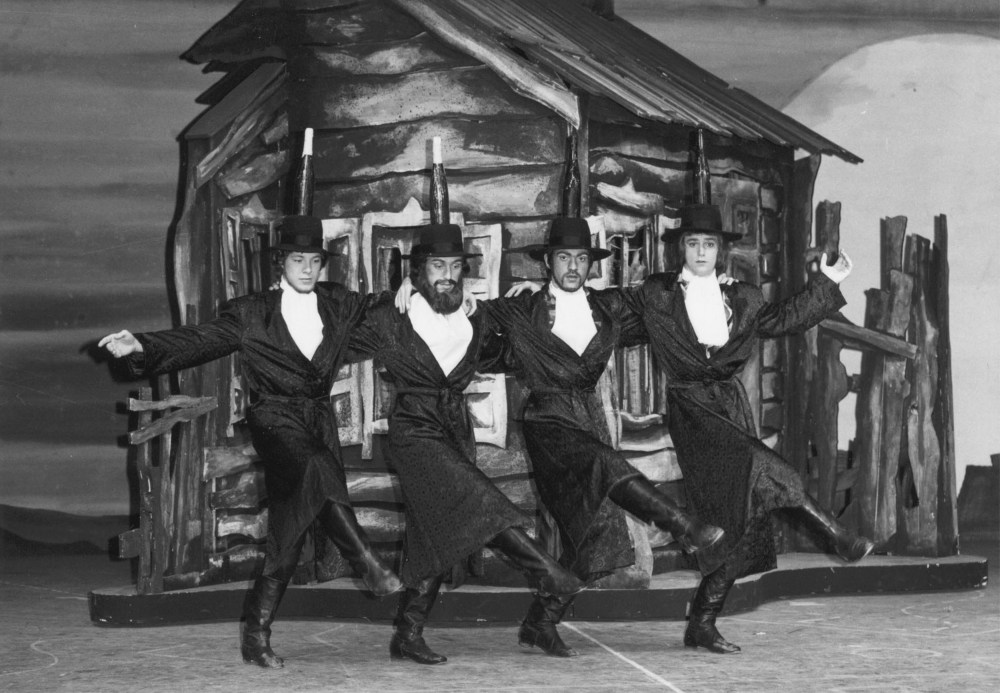
When the descendants of those driven across oceans by the wicked force of anti-semitism look at photographs of their ancestors, they can almost hear the swelling harmonies of Sunrise, Sunset.
But Fiddler on the Roof — which is being produced at Rainbow Stage this week as a co-production with the Winnipeg Jewish Theatre — is far from a monocultural, or monotheistic, experience.
“Anybody who is Jewish, and also anyone who is not Jewish and experienced any kind of persecution — and these days we know that unfortunately few are spared — we know for sure can relate to this beautiful story. It is very much a universal story,” says Debbie Maslowsky, who is playing Tevye’s (Daniel Kash) wife Golde.
Gathered in the basement of the UNF Hall, Maslowsky, Harry Nelken (the Rabbi) and Malacai Hiebert (the Fiddler) don’t need to look very far for reminders of the privilege of sanctuary in the aftermath of movement forced by policy or warfare: several women, bustling about while speaking in Ukrainian, prepare perogy packages for newcomer families settling into Manitoban life four years after the Russian invasion began.
“It is very much a universal story.”
For Nelken, who played the rabbi and Lazar Wolf in 1984 and 1993 at Rainbow Stage, the story of Fiddler continues to inspire introspection over 40 years after he was first directed to hora his heart out in Kildonan Park. He was born in a refugee camp to Holocaust survivors after the end of the Second World War, and above all else, Nelken is reminded by the script of the power of family, faith and resilience.
“My parents were on the run for nine and a half years, and they made it to Canada and made a good life for my siblings and I think that’s a testament to their spirit,” he says. “The courage and forward thinking, not knowing where you’ll go, having to learn a new language and a new culture. But what choice do you have?”
“The courage and forward thinking, not knowing where you’ll go, having to learn a new language and a new culture. But what choice do you have?”
Winnipeg Jewish Theatre artistic director Dan Petrenko’s father didn’t know about his own Jewish identity until he was in high school in Ukraine during an era when religion was under constraint and when Soviet Jews sought refuge to practice their religion free of suppression.
His mother, who wasn’t allowed to observe holidays, was confused each September when New Year cards arrived in the mailbox from relatives in Argentina.
“Her family was certain that ‘Shana Tova’ was a Spanish saying,” says Petrenko, who was born in Israel and raised in Toronto, where he began his theatre career with the Olive Branch Theatre.
Petrenko, who has led the WJT since 2022, says that while the musical is rooted in the history of where we’ve been, the story of Tevye and his family ends with an open question of where the Jewish people should go next.
”Fiddler has been a constant in my life since I first encountered it, and it’s always resonated with me because I knew that’s the world my ancestors came from,” says Petrenko, who will direct the production with choreography by Jillian Willems and music direction by Konrad Pluta.
“Fiddler has been a constant in my life since I first encountered it.”
“But it’s never spoken to me as much as it has over the past three years. The rise in anti-semitism has been accompanied by this feeling of questioning where home is, and what it means to be feel at home as a Jewish person. I don’t know if Fiddler answers that question, but it raises it.”
For Maslowsky, who appeared in Rainbow’s 1993 production as Tzeitel, all personal answers are rooted in inherited tradition: during her performance as Golde, she will be wearing the head covering her grandmother wore every Friday night to light the candles to welcome Shabbat into her north Winnipeg home.
“My grandparents had nothing fancy. No jewelry. No fancy clothes. They didn’t have dishes that matched, but she had this black lace head covering,” says Maslowsky, whose maternal grandparents moved from Ananyev, Russia to Leader, Sask. in 1925, and whose father, Samuel, was born in 1923 in Pavoloch, Ukraine, where no Jewish people are known to live today.
“The covering has her name (Freda Yacowar) sewn onto it. I asked the costumer — please don’t take that off. I want it on there.”
Tradition, tradition.
A Winnipeg story
“It seems everything has a Winnipeg connection,” says Petrenko, who recounts that Sholom Aleichem’s uncle, Nissel Rabinovich Zimmerman, is buried at Transcona’s Children of Israel cemetery.
Born in Korostyshiv, where, according to the 1897 census, more than half of the citizens were Jewish, Zimmerman married Hudel Levitan, together immigrating to Canada in 1880. Most of the Jewish population of Korostyshiv were expelled in the 1918 and 1919 pogroms, Petrenko says, with the remaining Jewish residents killed by the Nazis during the fall of 1941.
“It’s interesting that members of Sholom Aleichem’s family were driven out of their shtetl and ended up moving to North America — much like Tevye, Golde, Bielke, and Shprintze,” Petrenko says.
Zimmerman died on May 3, 1898 at age 64.
A joke by Harry Nelken
“I knew a fella who used to go to the old folks home to read to the residents. One day, he goes to the front door and there’s an old lady with a blanket over her knees, staring straight ahead. ‘Hello, Mrs. Green,’ he says. No response. He goes to her left ear. ‘Hello, Mrs. Green.’ No response. Goes to her right ear. ‘Hello, Mrs. Green, do you know who I am?’ And she says, ‘If you don’t know who you are, go to the front desk.’”
ben.waldman@freepress.mb.ca
If you value coverage of Manitoba’s arts scene, help us do more.
Your contribution of $10, $25 or more will allow the Free Press to deepen our reporting on theatre, dance, music and galleries while also ensuring the broadest possible audience can access our arts journalism.
BECOME AN ARTS JOURNALISM SUPPORTER
Click here to learn more about the project.

Ben Waldman is a National Newspaper Award-nominated reporter on the Arts & Life desk at the Free Press. Born and raised in Winnipeg, Ben completed three internships with the Free Press while earning his degree at Ryerson University’s (now Toronto Metropolitan University’s) School of Journalism before joining the newsroom full-time in 2019. Read more about Ben.
Every piece of reporting Ben produces is reviewed by an editing team before it is posted online or published in print — part of the Free Press‘s tradition, since 1872, of producing reliable independent journalism. Read more about Free Press’s history and mandate, and learn how our newsroom operates.
Our newsroom depends on a growing audience of readers to power our journalism. If you are not a paid reader, please consider becoming a subscriber.
Our newsroom depends on its audience of readers to power our journalism. Thank you for your support.