History lessons Permanent exhibition at human rights museum looks at Black experience in Canada
Read this article for free:
or
Already have an account? Log in here »
To continue reading, please subscribe:

Digital Subscription
One year of digital access for only $205*
- Enjoy unlimited reading on winnipegfreepress.com
- Read the E-Edition, our digital replica newspaper
- Access News Break, our award-winning app
- Play interactive puzzles
*First annual payment billed as $205.00 + GST for one year. This annual subscription will automatically renew at $233.00 + GST every 52 weeks (10% off the regular annual price of $259.35). Offer available to new and qualified returning subscribers only. Cancel any time.
To continue reading, please subscribe:
Add Free Press access to your Brandon Sun subscription for only an additional
$1 for the first 4 weeks*
- Enjoy unlimited reading on winnipegfreepress.com
- Read the E-Edition, our digital replica newspaper
- Access News Break, our award-winning app
- Play interactive puzzles
*Your next Brandon Sun subscription payment will increase by $1.00 and you will be charged $17.95 plus GST for four weeks. After four weeks, your payment will increase to $24.95 plus GST every four weeks.
Read unlimited articles for free today:
or
Already have an account? Log in here »
Canada does not have a standardized national curriculum, something Alia Aluma sometimes notices in conversation.
“You can almost tell where someone’s from by asking them what they know about Black history because you will learn reasonably specific things, and so if you’re in Saskatchewan, you (may) have no idea that Africville exists,” says the Montreal-based creative and curator.
She’s referring to a small community in Halifax of historically Black Nova Scotians, founded by formerly enslaved African Americans who fled the United States during the War of 1812.

Annie Kierans photo
At the Knees of Our Ancestors exhibition at the Canadian Museum for Human Rights.
By the same token, it may seem unlikely that the average Nova Scotian is aware of the Order of Sleeping Car Porters, North America’s first Black union, established in Winnipeg two years before the General Strike of 1919.
But the new permanent exhibition Aluma has curated for the Canadian Museum for Human Rights — At the Knees of Our Ancestors, which is part of a larger initiative to enrich Black content, programming and community engagement at the CMHR — addresses a more general national amnesia, sometimes obscured by Canadians’ role in the Underground Railroad.
That is Canada’s complicity in slavery.
Slavery was officially abolished across Canada in the 1830s, when Britain’s Slavery Abolition Act came into effect, three decades before slavery ended in America after years of intense civil war.
For centuries beforehand, Canada played a notable role in the transatlantic slave trade.
From the time Olivier Le Jeune, a young enslaved African boy, was brought to New France in 1628 until 1834, slavery was practiced in Canada — and the Abolition Act did not end Black indentureship or sever Canada or the British Empire’s economic connections to slave societies elsewhere.
“One thing that has been missing in Canadian museums is acknowledging that race was conceptualized to justify slavery. What makes this exhibit unique is that we are really using this different point to emphasize that this is where racism started,” Aluma says.
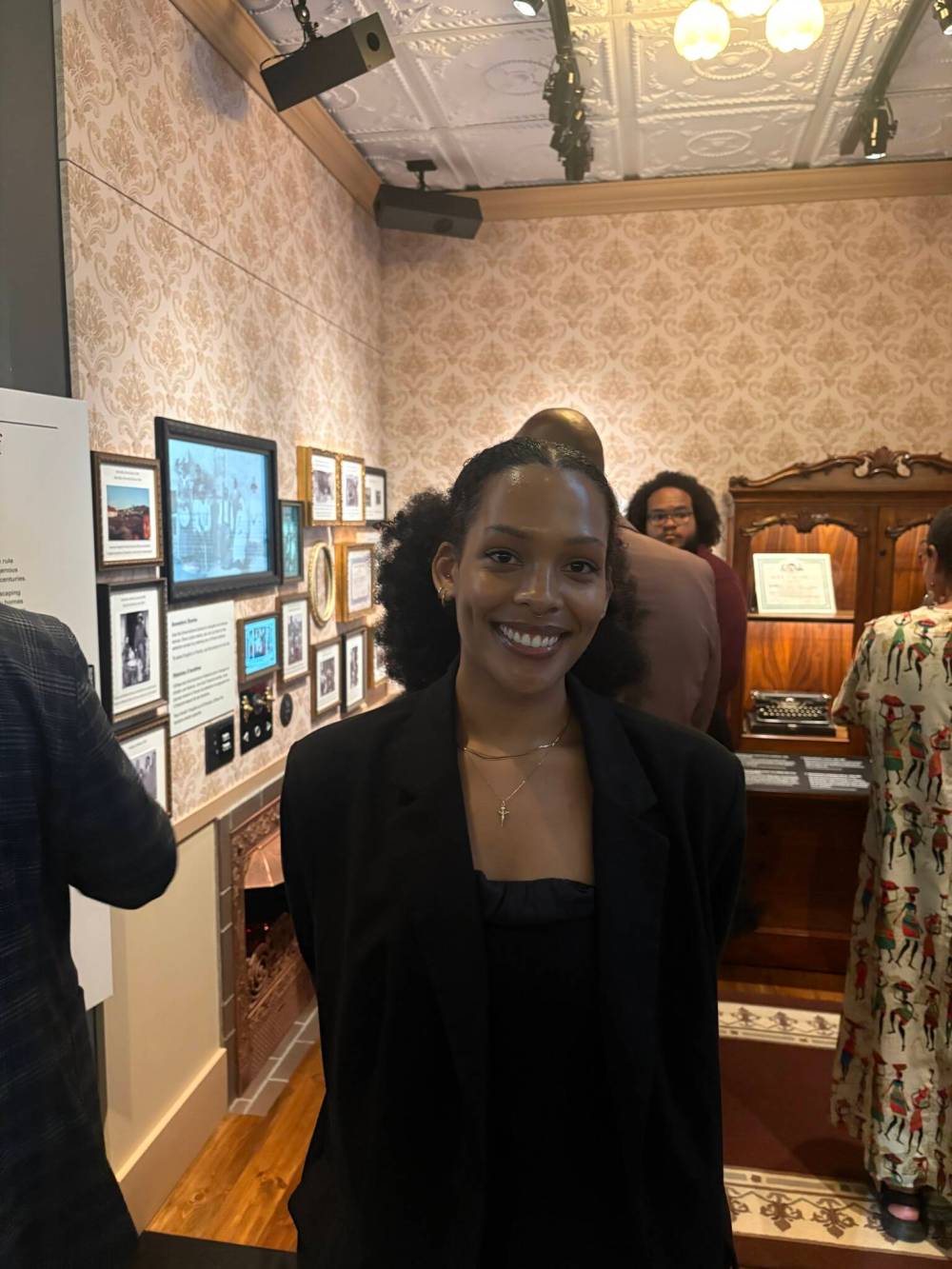
Conrad Sweatman / Winnipeg Free Press
Alia Aluma curated At the Knees of Our Ancestors for the Canadian Museum for Human Rights.
“The exhibit looks closely at Black history in Canada, as told by community, with community.”
At the Knees of Our Ancestors is not just about presenting the overarching historical record, but also illuminating more intimate histories; stories about places where escapees took refuge, abolitionists organized and communities gathered. The Order of Sleeping Car Porters also make an appearance.
“It’s important to acknowledge the role this country played, while also celebrating the everyday moments of joy, love and creativity that move us forward,” Aluma says.
In this way, it’s similar to other interactive “story niches” in the Canadian Journeys permanent section of the museum that explore Canada’s steps and missteps on the march to greater human rights — pieces such as One Woman’s Resistance, which invites the visitor to sit on a theatre seat and take in Viola Desmond’s 1946 protest against racial segregation in a Nova Scotia movie theatre.
At the Knees of Our Ancestors was unveiled Thursday at a press conference that included such speakers as former governor general Michaëlle Jean.
“Instead of placing history at a distance, behind glass, at the knees of our ancestors, au près de nos ancestres, this brings us into a family home, into that intimate space where memories are preserved and passed from one generation to another,” she said.
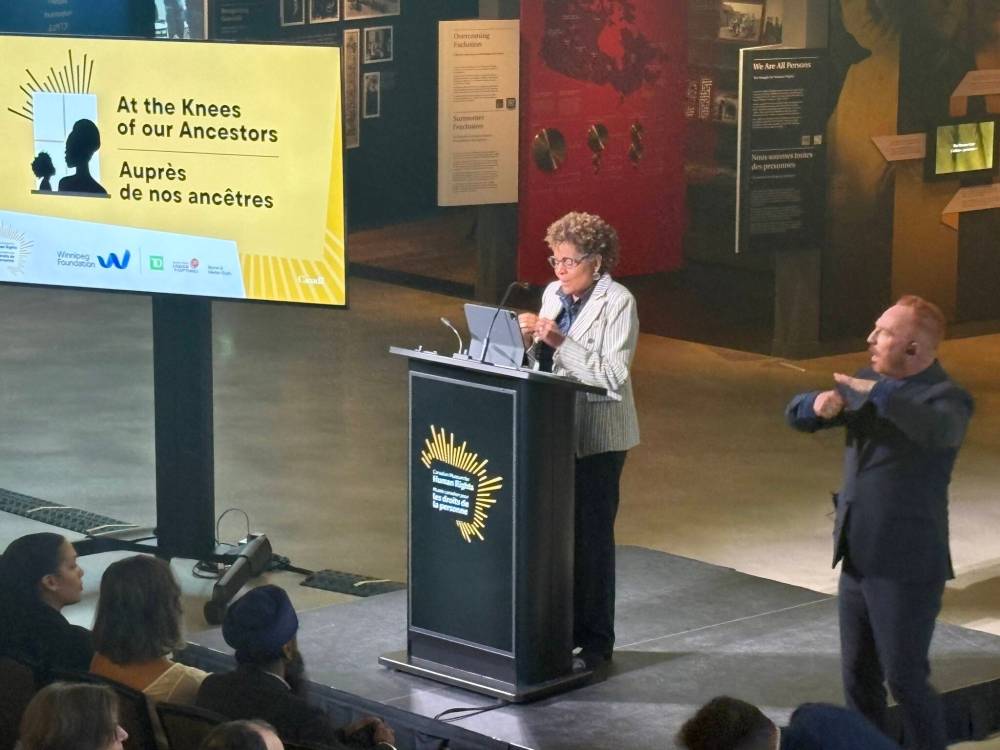
Conrad Sweatman / Winnipeg Free Press
Former governor general Michaëlle Jean says the exhibition brings people into intimate family spaces.
“Its very creation, I have learned, grew out of encounters with Black families across Canada who opened their homes, shared meals, stories, photographs and private archives.”
Jean is town for the National Black Canadians Summit, a national gathering of Black community leaders, activists, youth and allies hosted in Winnipeg this weekend.
Among the many summit delegates also in attendance at the launch was Judy Williams, program manager and chair of the Black Canadian Experience Centre, who also spoke.
She told a story about discovering a letter, as a child, addressed to a “Black Beauty.”
While it seemed romantic at the time, she later learned that Black Beauty was her great-great-great grandmother and the author was the man who had enslaved her. While he freed the woman’s daughters — including Williams’ great-great-grandmother, who travelled north to Minnesota and worked in domestic service while still a child — he did not free their mother.

“I think about the pain and sacrifice she must have endured as she sent her young daughters away, knowing that their freedom and safety depended upon leaving her,” said Williams to the audience.
“It was not a love story; it was a tragedy.”
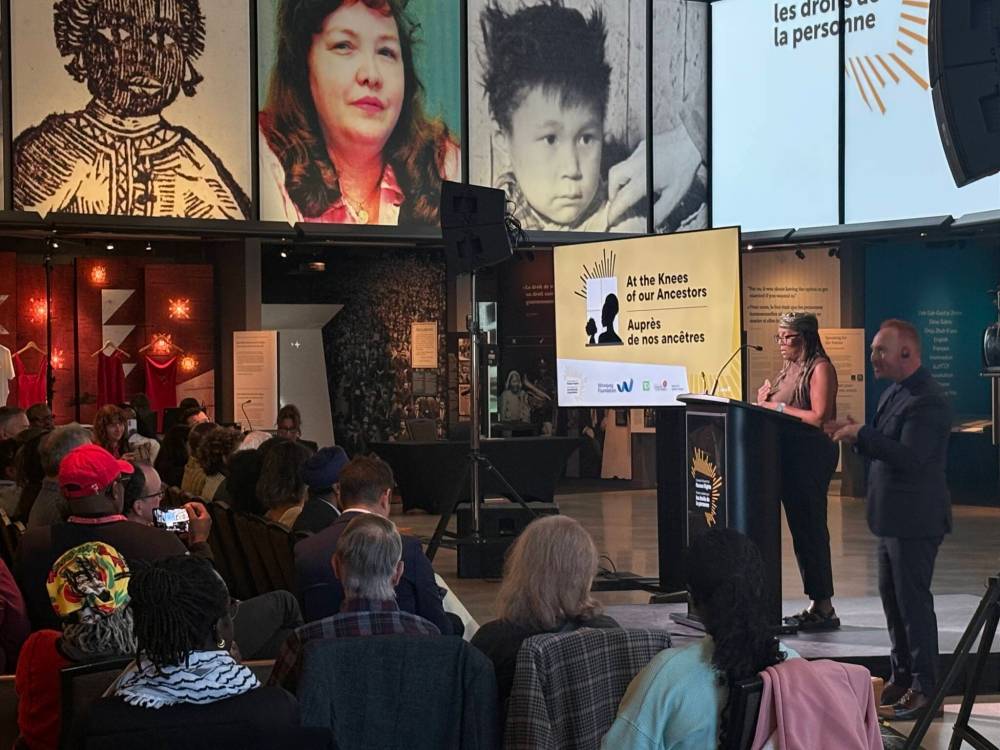
Conrad Sweatman / Winnipeg Free Press
Judy Williams is the program manager and chair of the Black Canadian Experience Centre.
Williams, also a sewer and upholsterer, explained that she’s now reclaimed “Black Beauty” as the name used for in her creative work.
“For me, proclaiming that name is an act of remembrance, resilience and honour,” she said.
conrad.sweatman@winnipegfreepress.com

Conrad Sweatman is an arts reporter and feature writer. Before joining the Free Press full-time in 2024, he worked in the U.K. and Canadian cultural sectors and freelanced for outlets including The Walrus, VICE and Prairie Fire. Read more about Conrad.
Our newsroom depends on a growing audience of readers to power our journalism. If you are not a paid reader, please consider becoming a subscriber.
Our newsroom depends on its audience of readers to power our journalism. Thank you for your support.



History
Updated on Sunday, September 20, 2026 9:50 AM CDT: Corrects references to Judy Williams