Stitch in time Careful work goes into preserving vintage threads at costume museum
Read this article for free:
or
Already have an account? Log in here »
To continue reading, please subscribe:

Digital Subscription
One year of digital access for only $205*
- Enjoy unlimited reading on winnipegfreepress.com
- Read the E-Edition, our digital replica newspaper
- Access News Break, our award-winning app
- Play interactive puzzles
*First annual payment billed as $205.00 + GST for one year. This annual subscription will automatically renew at $233.00 + GST every 52 weeks (10% off the regular annual price of $259.35). Offer available to new and qualified returning subscribers only. Cancel any time.
To continue reading, please subscribe:
Add Free Press access to your Brandon Sun subscription for only an additional
$1 for the first 4 weeks*
- Enjoy unlimited reading on winnipegfreepress.com
- Read the E-Edition, our digital replica newspaper
- Access News Break, our award-winning app
- Play interactive puzzles
*Your next Brandon Sun subscription payment will increase by $1.00 and you will be charged $17.95 plus GST for four weeks. After four weeks, your payment will increase to $24.95 plus GST every four weeks.
Read unlimited articles for free today:
or
Already have an account? Log in here »
Every Friday morning seven retired women — Diane Zakala, Helen Leeds, Margaret Mills, Melinda Barr, Therese Leneveu, Karen Eastwood and Letizia Sandron — make their way from homes across the city to a nondescript warehouse in downtown Winnipeg.
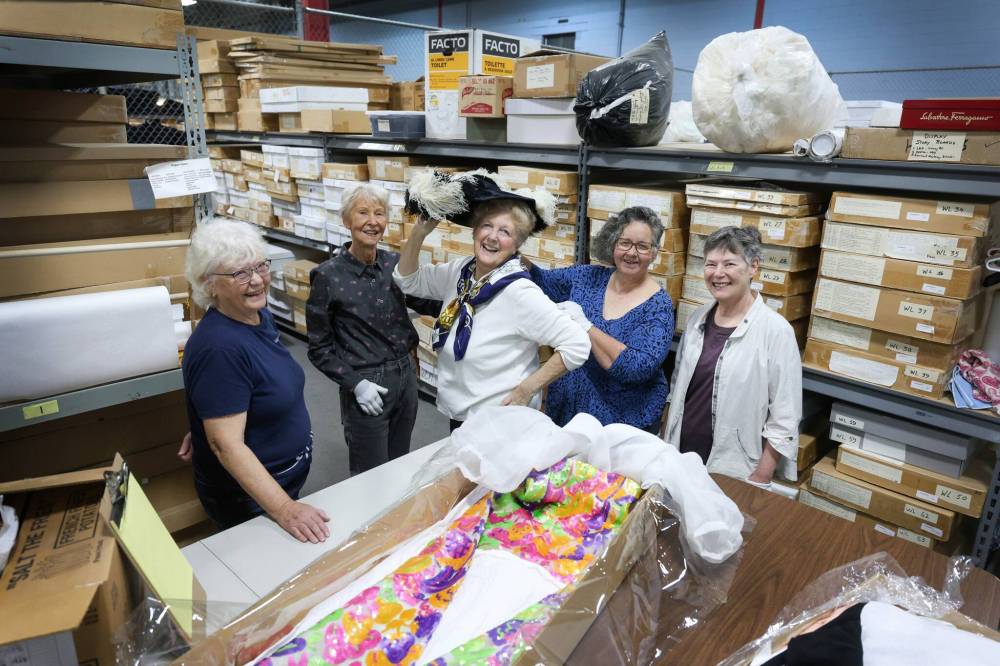
The group members troop in right at 9 a.m., as they have been doing every week for the last eight years, towards the back of the brightly lit warehouse where the bulk of the collection of the Costume Museum of Canada (410-70 Arthur St.) is stored.
The vintage fashion pieces — some dating back to more than a century — have been carefully packed away in long, flat garment boxes, stacked on rows of shelves.
Ruth Bonneville / Free Press
From left: Volunteers Helen Leeds, Diane Zakala, Margaret Mills, Therese Leneveu and Melinda Barr go through the vintage collection at the Costume Museum of Canada.
Some clothes are in mint condition, impeccably taken care of by their owners, while a few show signs of wear and tear and need little bit of care courtesy of expert seamstress Barr, who lovingly restores items which have incurred minimal damage.
The repository of historical clothing is a hive of activity as the ladies — every one a volunteer — tackle their tasks for the day.
Divesting themselves of coats, hats and bags, the women snap on white gloves — a must when handling vintage fashion — with practised ease before opening boxes holding velvet frocks and satin gowns, gauzy tulle blouses and sequinned pants cushioned in acid-free paper.
Zakala carefully unfolds the tissue-thin translucent sheets to reveal a 1929 tailored Chanel skirt suit and blouse.
“This is a very fine lightweight wool piece and this is the silk blouse that goes with it. You can see the same material is used in the lining of the suit,” she explains, lifting the outfit from its box.
Leeds, the museum’s manager of collections, goes to her laptop to pull up info on the Chanel. She is working on digitizing the museum’s entire collection.
Ruth Bonneville / Free Press
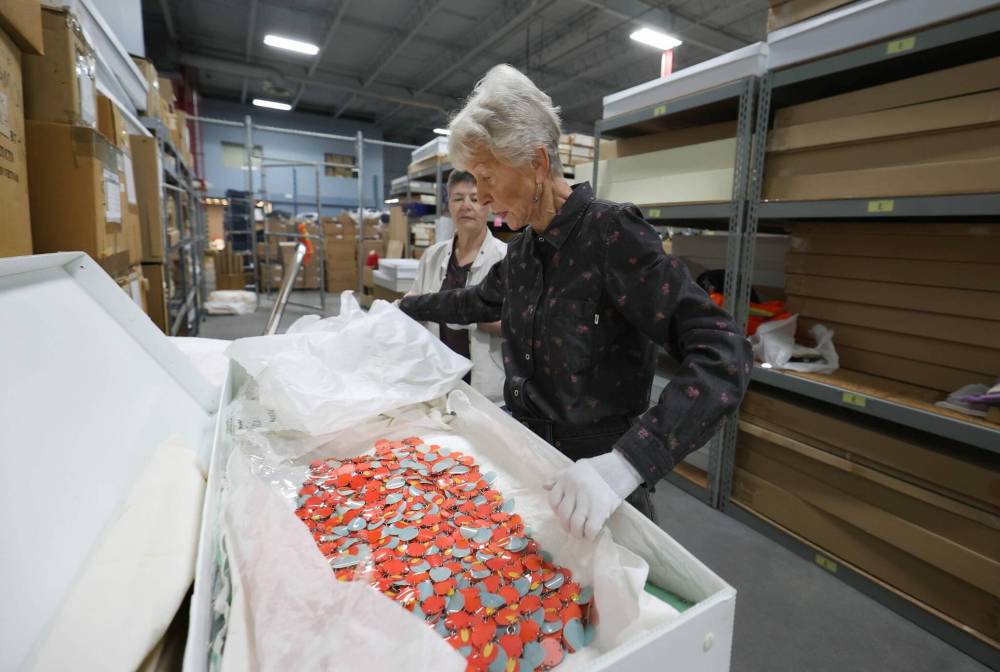
Volunteer Diane Zakala, right, and Melinda Barr open a box containing a famous Paco Rabanne dress made of plastic and metallic materials.
It was a gargantuan task when she first took it on, but everyone contributes to the process.
The team had to physically go through every box, each one packed with multiple pieces, in the warehouse to ensure the items inside corresponded with the alphanumeric labels in the front of the box.
“We’ve been going through all these boxes since 2018 and I’ve been listing them in the computer,” the retired pharmacist says, adding more than a few boxes were missing items which had to be tracked down, checked over and repacked in the correctly labelled garment box.
They also came across clothes and accessories that had been“thrown into boxes” without being documented.
These pieces had to be checked for damage, then placed in a category, given an accession number — “because once an item has a number it belongs to the museum,” Leeds explains — and packed in the correct garment box before being hauled back onto shelves.
Ruth Bonneville / Free Press
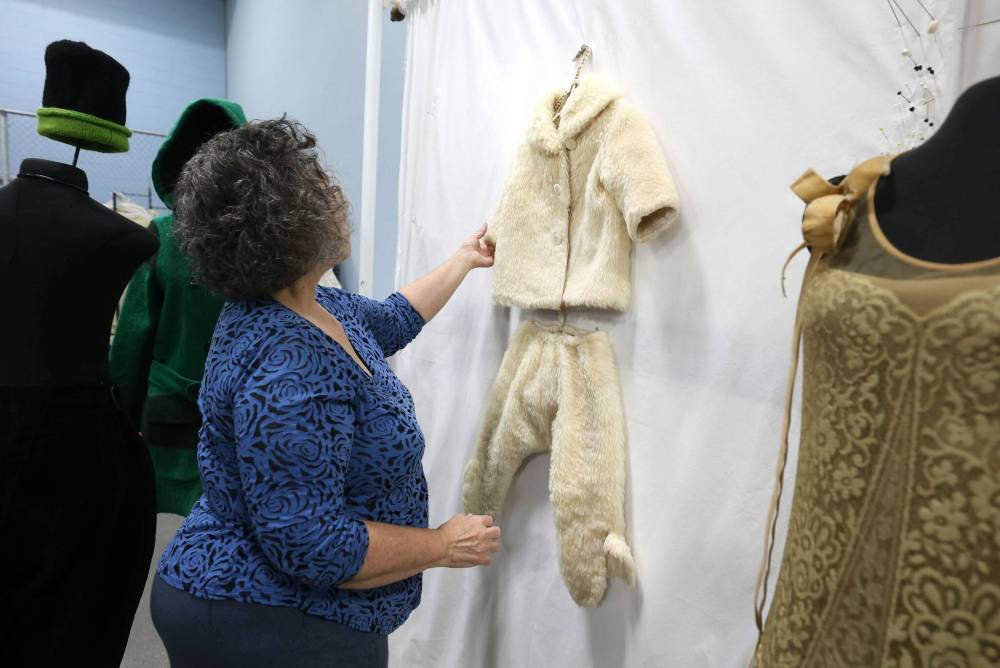
Volunteer Therese Leneveu with a 1933 children’s snow suit on display.
This information, together with a photograph of the item, was then added to the database.
Eastwood and Leneveu have photographed around 25,000 items stored in the 1,900 boxes at the warehouse location.
Sandron, whose background is in commercial garment production, numbers each item, adds dates, detailed descriptions and, when possible, its provenance and attaches a picture of it to update the master inventory document.
Together the volunteers have already listed 20,230 items in the collection stored at the warehouse.
Now, when they need to locate specific items for a specific exhibition at the Arthur Street museum location, they can check the database, walk down the relevant aisles, look for the correct box and procure what they need.
Ruth Bonneville / Free Press
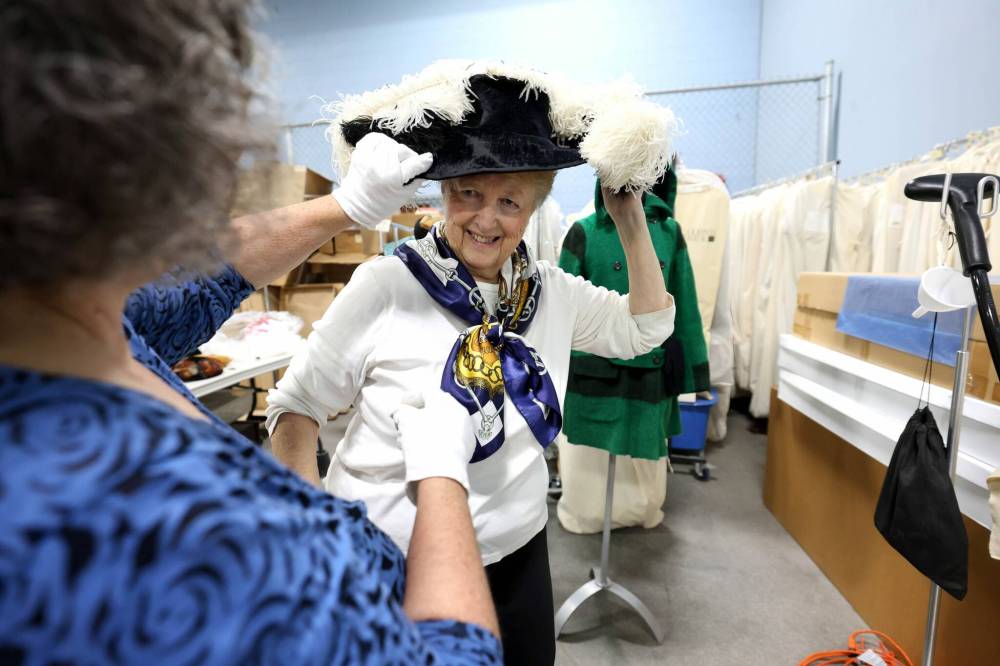
Margaret Mills tries on a hat from 1909 made with horse hair and ostrich feathers.
The museum board sets the theme for upcoming exhibitions, which take place every quarter. The museum also has a new display during First Friday events and at Nuit Blanche.
The team also has to go through all the new old things that continue to arrive at the warehouse from the museum location.
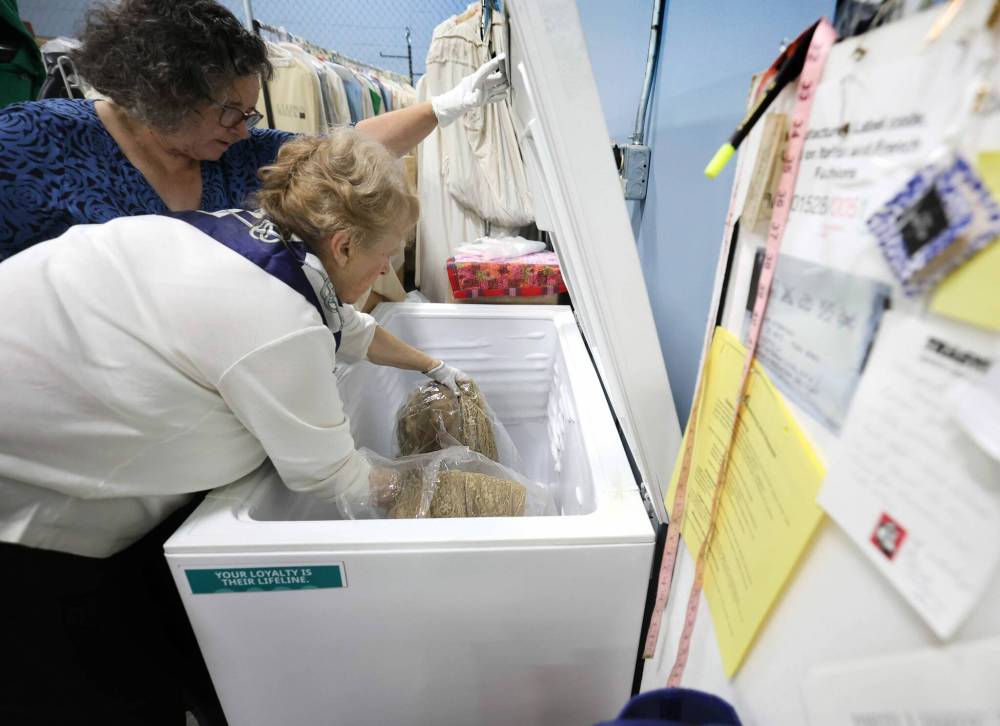
Donated by the public, each piece is checked to ensure it’s in good condition — “if it’s too damaged or dirty we don’t take it; it has to be in a condition fit for display,” Zakala explains — before being frozen, like the 1926 wedding dress Mills and Leneveu have wrapped in protective plastic and are quarantining in the large chest freezer at the back of the warehouse.
The dress will remain in deep freeze for a week, taken out for a short period before being frozen again for another week.
“We freeze anything that comes in here twice, just to prevent introducing any kind of bug or mite into the facility,” Leeds explains as Mills moves on to steaming a drop-waisted lacy dress on a mannequin. It’s done its time in the freezer and will be packed away into a box until the time comes for it to shine at a show.
Mills, an “original” volunteer, has been with the museum for 40 years, right from its early days when it was located in Dugald. She can look at a shoe or dress and know what year if was made, Zakala shares, adding, “Margaret is very good at acquisitions; she’s an encyclopedia of knowledge.”
Ruth Bonneville / Free Press
Volunteer Margaret Mills places a 1926 wedding dress into a freezer to help protect it while Therese Leneveu assists her.
Retired physician Leneveu is the newest volunteer; she’s been with the team for around six years.
Leneveu manages one of the musuem’s fundraisers, a mobile hat exhibition and sale that can booked by businesses, organizations and assisted living facilities. The show was on hiatus during the COVID-19 pandemic but is back up and running now.
She also takes part in the community education program Museum in a Suitcase, an interactive, hands-on classroom activity with a a focus on aspects of textiles and clothing history.
Leneveu was a regular museum visitor when it was in Dugald in the 1980s and even attended a workshop on how to preserve and pack vintage clothing after inheriting her great-grandmother’s clothes, which she had brought from Ukraine.
“I always wondered what was in those boxes when I went to the costume museum in Dugald,” she says. “And now I get to open them up and look at the gorgeous things in them.”
Ruth Bonneville / Free Press
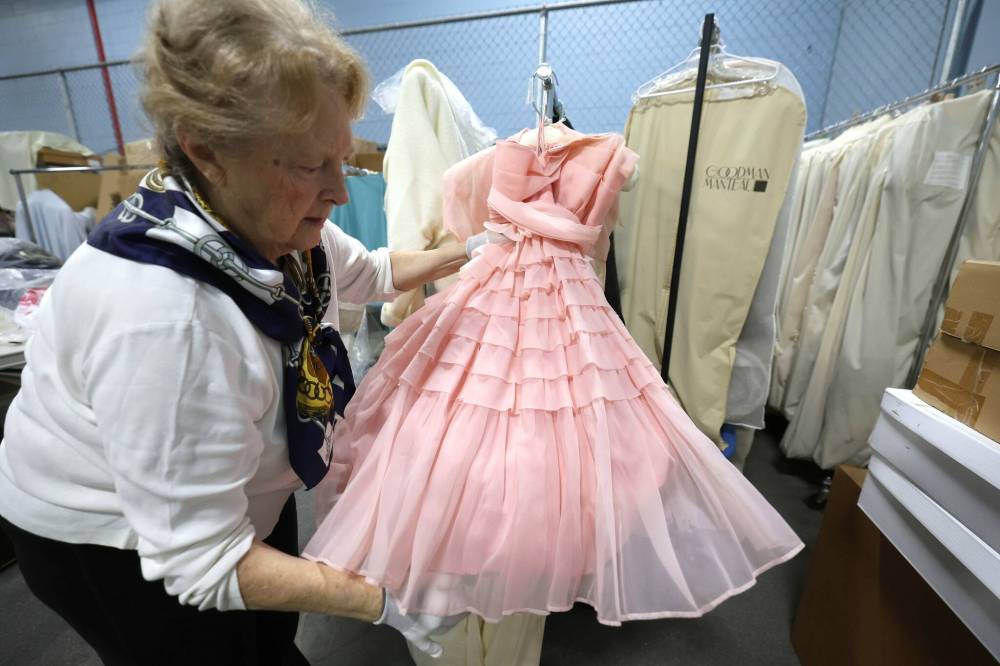
Margaret Mills looks over a 1950s pink organza strapless grad dress.
av.kitching@winnipegfreepress.com


AV Kitching is an arts and life writer at the Free Press. She has been a journalist for more than two decades and has worked across three continents writing about people, travel, food, and fashion. Read more about AV.
Every piece of reporting AV produces is reviewed by an editing team before it is posted online or published in print — part of the Free Press‘s tradition, since 1872, of producing reliable independent journalism. Read more about Free Press’s history and mandate, and learn how our newsroom operates.
Our newsroom depends on a growing audience of readers to power our journalism. If you are not a paid reader, please consider becoming a subscriber.
Our newsroom depends on its audience of readers to power our journalism. Thank you for your support.