Literary harvest October perfect time to put on a sweater, drink something warm and crack open a book
Read this article for free:
or
Already have an account? Log in here »
To continue reading, please subscribe:
Digital Subscription
One year of digital access for only $1.44 a week*
- Enjoy unlimited reading on winnipegfreepress.com
- Read the E-Edition, our digital replica newspaper
- Access News Break, our award-winning app
- Play interactive puzzles
*Billed as $5.77 plus GST every four weeks. After 52 weeks, price increases to the regular rate of $19.95 plus GST every four weeks. Offer available to new and qualified returning subscribers only. Cancel any time.
To continue reading, please subscribe:
Add Free Press access to your Brandon Sun subscription for only an additional
$1 for the first 4 weeks*
- Enjoy unlimited reading on winnipegfreepress.com
- Read the E-Edition, our digital replica newspaper
- Access News Break, our award-winning app
- Play interactive puzzles
*Your next Brandon Sun subscription payment will increase by $1.00 and you will be charged $17.95 plus GST for four weeks. After four weeks, your payment will increase to $24.95 plus GST every four weeks.
Read unlimited articles for free today:
or
Already have an account? Log in here »
With Halloween around the corner, spooky season is in full effect.
But October is more than ghosts, goblins, Jack-o-lanterns and other things that go bump in the night. Not entirely, anyway. October is also a time of harvest, of change and renewal.
Pull on a sweater, pour something warm to drink and follow along as the Free Press arts and life team presents a literary tour through October Country…
Something Wicked This Way Comes, by Ray Bradbury
Few authors write so frequently, so passionately about October as Ray Bradbury did. From his earliest work throughout the rest of his career, Bradbury returned again and again to the October Country as the settings of short stories, poems and novels.
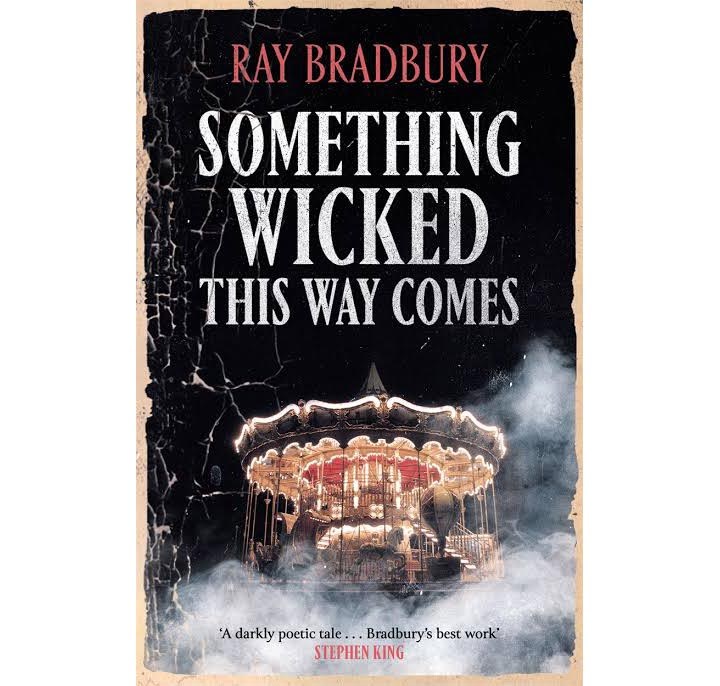
But in his 1962 novel Something Wicked This Way Comes, October is as much a character as protagonists Will Halloway or Jim Nightshade, or the creepy carnival cortege of Cooger & Dark’s Pandemonium Shadow Show that rides in, under cover of darkness, bringing Halloween to Green Town, Ill., a week early “one strange wild long dark year.”
The carnival is full of strange characters indeed, from the Mr. Dark, a.k.a. the Illustrated Man, on down through sideshow mainstays the Skeleton, the Dust Witch, Mr. Electrico and many more who revel in the shadows and the liminal space October occupies on the calendar.
“For these beings,” Bradbury writes, “fall is the ever normal season, the only weather, there be no choice beyond. Where do they come from? Dust. Where do they go? The grave. Does blood stir their veins? No: the night wind. What ticks in their heads? The worm. What speaks from their mouth? The toad. What sees from their eye? The snake. What hears with their ear? The abyss between the stars… Such are the autumn people. Beware them.”
Yet at its dark, poetic heart, Something Wicked is a coming-of-age story, a tale of friendship and family, nostalgia and the growing pains inherent in moving forward through life. Stephen King himself considers the novel to be Bradbury’s best work, and it is a clear inspiration for King’s 1991 novel Needful Things, itself a fine example of an October Country read.
— Sheldon Birnie
The October Film Haunt, by Michael Wehunt
Michael Wehunt has been a must-read for me ever since his short fiction collection, Greener Pastures, was released in 2016. His first novel, The October Film Haunt, is a testimonial to the power of horror movies, and the many reasons one might be drawn toward art that peers into the dark and unknown.
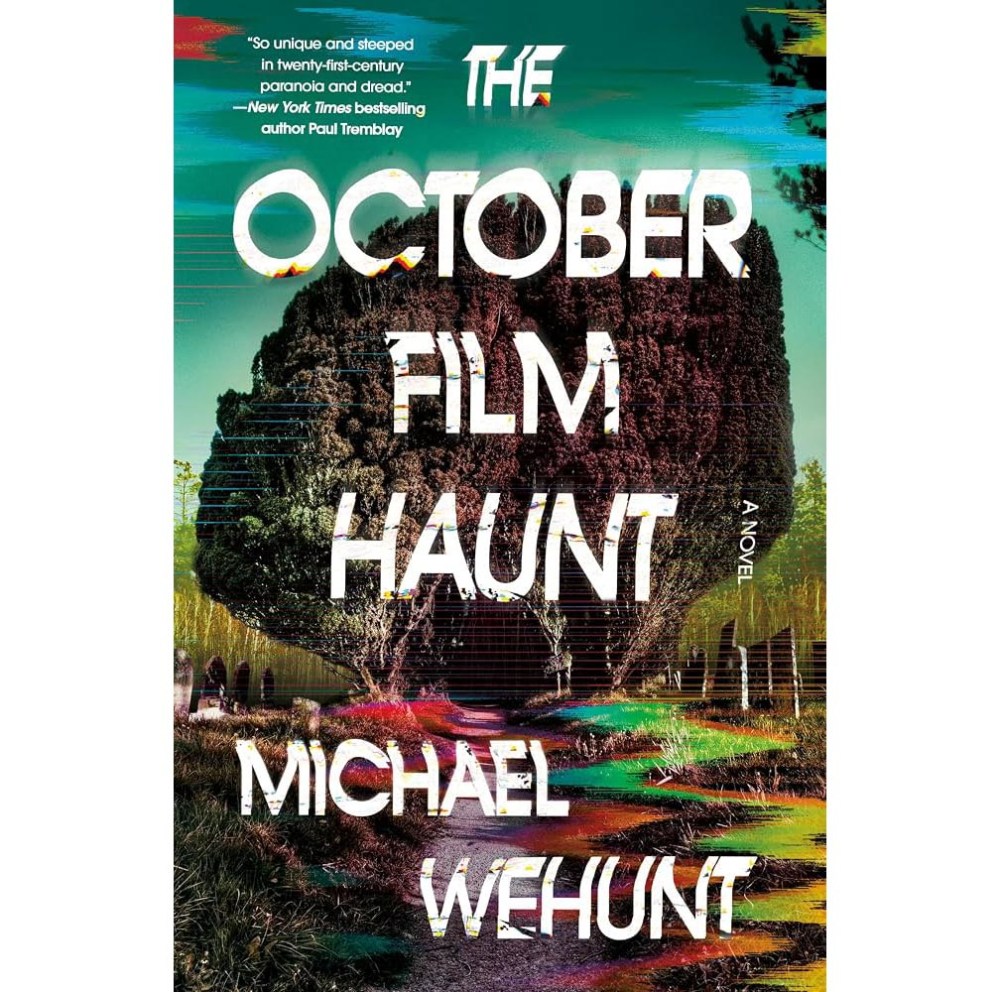
When we begin, the trio of horror film obsessives for which the book is named is already disbanded: their practice of camping (in October) at filming locations for horror films came to an abrupt end after a disastrous trip to a graveyard from the (fictional) film Proof of Demons — an opaque and experimental work that may actually depict supernatural activity, created by a reclusive director.
Ten years later, ostracized Haunt member Jorie Stroud lives a quiet, rural life in Vermont with her son after her hyperbolic writing about the Proof of Demons “haunt” left her as a snuffed-out rising star with a dead girl on her conscience. One of her fellow Haunt members is estranged, and the other’s dead.
Then Jorie gets a VHS cassette in the mail, the first of many signs that Proof of Demons, and the cult obsessed with its maker, aren’t done with her yet.
A layered, meta and gut-wrenching take on horror fiction and its cultural impact, The October Film Haunt would fall flat out of the gate if the fake film it’s built around didn’t seem that good. But Wehunt portrays Proof of Demons with such careful, unsettling language that the bits of it we get make clear why the story’s cast can’t help but stare into its cinematic abyss.
— Darren Ridgley
Attachments, by Rainbow Rowell
Rainbow Rowell’s debut novel, from 2011, is a fall read in the same way that Nora Ephron films and Gilmore Girls are fall watches: pure cosy autumnal rom-com vibes.
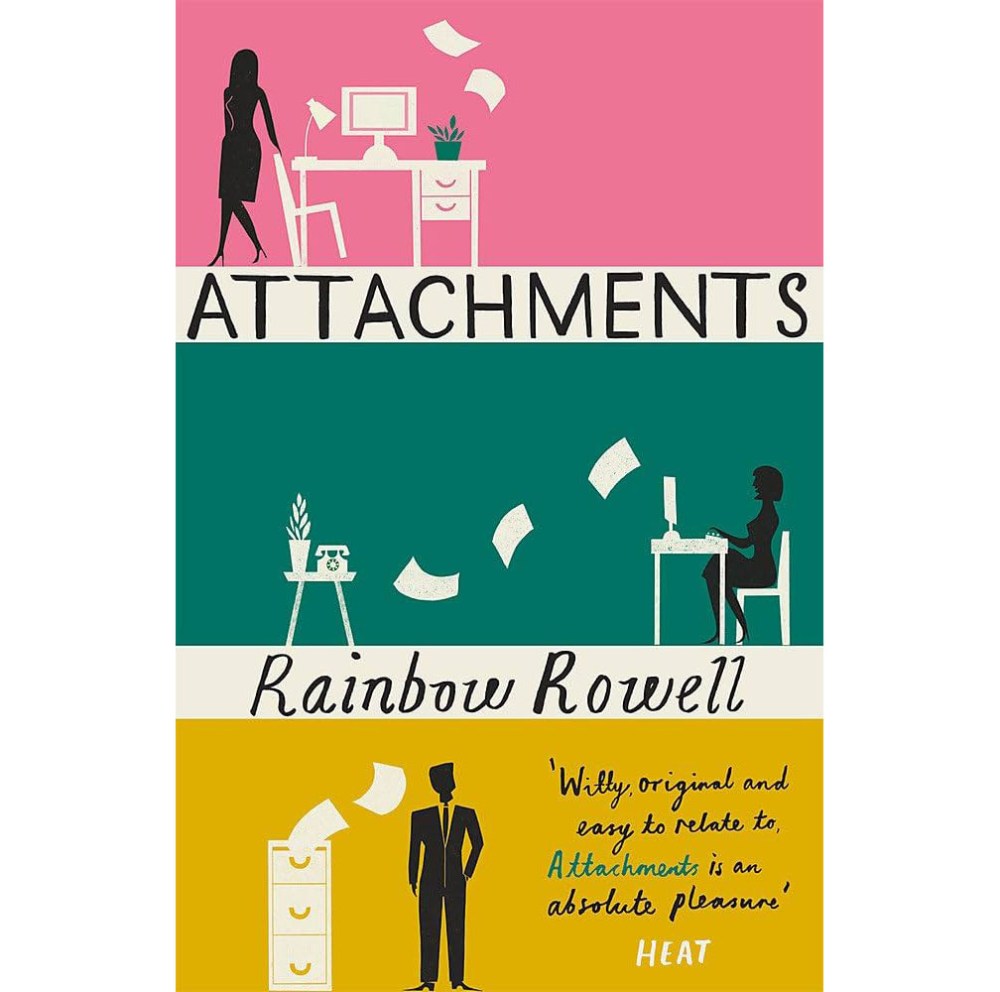
Newsroom friends and colleagues Beth Fremont and Jennifer Scribner-Snyder love to email each other about everything at work. Lincoln O’Neill, the Omaha Courier’s Internet security officer, loves reading their work emails… and soon finds himself falling in love with Beth.
A good chunk of the novel is set in the autumn of 1999, and is largely composed of Beth and Jennifer’s email correspondence. In one message to Jennifer, Beth rhapsodizes about October, her favourite month: “There’s a chill in the air that lifts my heart and makes my hair stand on end. Every moment feels meant for me. In October, I’m the star of my own movie — I hear the soundtrack in my head (right now, it’s Suite: Judy Blue Eyes) — and I have faith in my own rising action. I was born in February, but I come alive in October.”
“You’re a nut,” Jennifer writes back.
“A hazelnut. A filbert,” Beth responds. “October, baptize me with leaves! Swaddle me in corduroy and nurse me with split pea soup. October, tuck tiny candy bars in my pockets and carve my smile into a thousand pumpkins. O autumn! O teakettle! O grace!”
Beth clearly has a bosom buddy in Anne Shirley of Anne of Green Green Gables, who was similarly rapturous about the 10th month of the year, breathlessly telling non-nonsense Marilla: “I am so glad to live in a world with Octobers.”
— Jen Zoratti
The Devil and Webster by Jean Hanff Korelitz
For me, nothing says October like a good campus novel. Regardless of what season they’re actually set in, they elicit that back-to-school feeling — crisp leaves in the quad, dreary faculty meetings, library carrells filled with low autumnal light, beer pong at frat parties. Think Donna Tartt’s The Secret History, Michael Chabon’s Wonder Boys or Richard Russo’s Straight Man for lauded literary iterations.

Jean Hanff Korelitz knows academia (her 2009 novel, Admission, about a Princeton admissions officer, was made into the Tina Fey movie of the same name) and it shows in her sixth book, The Devil and Webster. The Webster of the title is a fictional liberal arts college in Massachusetts (think Dartmouth or Wesleyan) where Naomi Roth, a dyed-in-the-wool leftie, is the first female president.
Her first term in office is not going smoothly, owing to a student protest over the fact that a Black professor was denied tenure; Naomi’s daughter is among the protesters, as is a Palestinian student with a painful history. Because tenure proceedings are confidential, they are not privy to the reasons the prof was not approved.
It’s not easy to write a satire about identity politics on campus, but Hanff Korelitz threads the needle, with a keen eye for hypocrisy but a sympathetic ear for the young students who “need to feel their specialness. And one way they feel it is to transmute any kind of discomfort into outright oppression.”
— Jill Wilson
All My Cats by Bohumil Hrabal
Fall feels like as good a season as any to pay a visit to this mordant 39-page volume of countryside memoir by subversive new wave writer and poet Bohumil Hrabal. Set in 1965, published in 1983, All My Cats is an icicle-cold, pre-Prague Spring’s tale of shelter, isolation and the toll of caretaking in central Bohemia.

Hrabal was becoming a national literary figure in Czech Republic, with two successful novellas — 1964’s Dancing Lessons for the Advanced Age and 1965’s Closely Observed Trains — on shelves and best-seller lists.
Inspired by the political and social restrictions experienced by Hrabal while working along Czech railroads during the Second World War, Closely Observed Trains — adapted in 1966 into an Oscar-winning film by Jiří Menzel — was successful enough, in financial terms, that the once struggling poet could afford to purchase a small cottage in Kersko, about a 40-minute drive from Prague.
Almost as soon as Hrabal and his wife Eliška Plevová arrived in their white Renault 5, a hatchback they nicknamed Autičko, meaning ”little car,” several cats showed up. Their numbers climbed so high that Hrabal — who describes his love for the pets and his brutality toward them with startling specificity — must consider culling the population, which turns feral over its first winter.
“I would sometimes go to Kersko by car to tend to the cats, but only in good weather,” he wrote. “And when I did take the car and caught myself driving a little too fast, I’d slow down, because if I were to have an accident, what would become of the cats?
“When the roads were icy or it was snowing or raining, I’d take the bus, because that way I was sure to arrive safely. Yet even when I took the bus and sat in the front row, I’d suddenly wonder: What if the bus crashed? Who would feed the cats? And I’d move to a seat in the middle rows and remain alert so that if something happened I could dive out of harm’s way, because if anything happened to me, who would give milk to my cats?”
— Ben Waldman
Death on the Island, by Eliza Reid
The chill of fall permeates former Icelandic first lady Eliza Reid’s first novel, a murder mystery set in the cold, wet autumn of a small, windswept island off the coast of mainland Iceland.
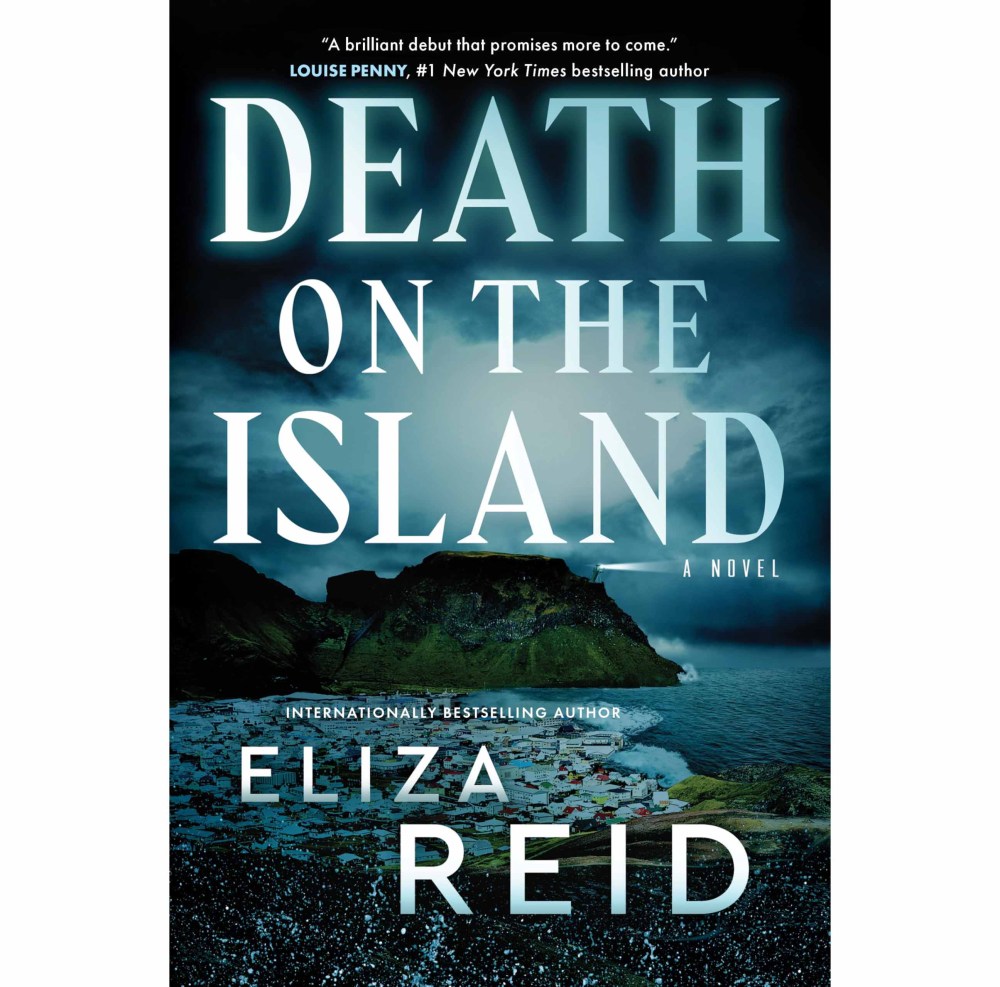
At a dinner party attended by business and political higher-ups at a lauded, high-end restaurant, the deputy ambassador of Canada to Iceland suddenly dies under mysterious circumstances, seemingly poisoned by a signature cocktail. With the fall’s howling winds kicking up and the ferry system shut down, guests are stranded on the island — in the company of a murderer.
Jane Shearer, the wife of Canada’s head ambassador, sets out to help a young policeman figure out who is responsible for her husband’s colleague’s death — all while the killer remains among the group who attended the dinner. Could it be the award-winning author, the lauded chef, the mayor or… the ambassador himself?
Reid’s first foray into fiction is a cosy-adjacent, locked-door, Agatha Christie-type whodunit — that alone makes it worthy of reading in the fall. Toss in some punishing Icelandic autumn weather and you’ll be tucking under a warm blanket (or pulling on your Icelandic wool sweater) while sipping a cup of tea and rifling through Death on the Island.
— Ben Sigurdson