Cancel culture’s (more) awkward phase?
Rogan, Whoopi, Awkwafina, Chappelle: None cancelled but, some experts say, ‘the main issue is now people are talking about all this’
Advertisement
Read this article for free:
or
Already have an account? Log in here »
To continue reading, please subscribe:
Digital Subscription
One year of digital access for only $1.44 a week*
- Enjoy unlimited reading on winnipegfreepress.com
- Read the E-Edition, our digital replica newspaper
- Access News Break, our award-winning app
- Play interactive puzzles
*Billed as $5.77 plus GST every four weeks. After 52 weeks, price increases to the regular rate of $19.95 plus GST every four weeks. Offer available to new and qualified returning subscribers only. Cancel any time.
To continue reading, please subscribe:
Add Free Press access to your Brandon Sun subscription for only an additional
$1 for the first 4 weeks*
- Enjoy unlimited reading on winnipegfreepress.com
- Read the E-Edition, our digital replica newspaper
- Access News Break, our award-winning app
- Play interactive puzzles
*Your next Brandon Sun subscription payment will increase by $1.00 and you will be charged $17.95 plus GST for four weeks. After four weeks, your payment will increase to $24.95 plus GST every four weeks.
Read unlimited articles for free today:
or
Already have an account? Log in here »
Hey there, time traveller!
This article was published 21/02/2022 (1700 days ago), so information in it may no longer be current.
To appreciate how truly unprecedented these times are when it comes to cultural communication, consider that in 19th-century England, people trekked down to Speakers’ Corner just outside London’s Hyde Park to have their views heard by the masses.
We’re talking boldfaced names like Vladimir Lenin and Karl Marx, who today would have millions of Twitter followers. Back then, you were lucky if a few hundred people showed up, and amplifying what you said required not just journalists but also at least a day to print and deliver your brilliant wisdom or outrageous screed.
Today, Speakers’ Corner lives on your smartphone, a 24-7 digital soapbox that spans the globe. We can hear what everyone says, whether they are famous or not, and respond to whatever was said instantly, whether we are famous or not.
This is either the ultimate democratization of dialogue, or, as podcaster Brené Brown wrote on Instagram, the world reconfigured as “a big high school cafeteria”: “You can sit anywhere you want and talk to whomever you please, and for better and worse, people can pretty much say what they want. It’s a free-for-all.”
That virtual cafeteria is packed with strident voices opining about a range of issues. Vaccines. Masks. Sex. Sexism. Politics. Economics. And perhaps most of all, race.
Just two years ago, George Floyd’s murder seemed to briefly rally all those protesting for greater awareness, but that moment was fleeting, replaced by a far murkier view of what to do next, says Neal Lester, professor of English at Arizona State University and founding director of its Project Humanities, described as a community-focused effort to “build understanding through talking, listening and connecting.”
“There was a frenzy to get on board and show you were doing the work,” he says. “That was short-lived, because when you’re dealing with systemic racism, you can’t just shake a wand at that.”
What has replaced that singular reactive moment are reactions to racially or ideologically questionable comments that find both people and corporations all over the map, stirring questions about free speech vs. cancel culture and unfettered platforms versus rule-following traditional media.
Four recent incidents come to mind.
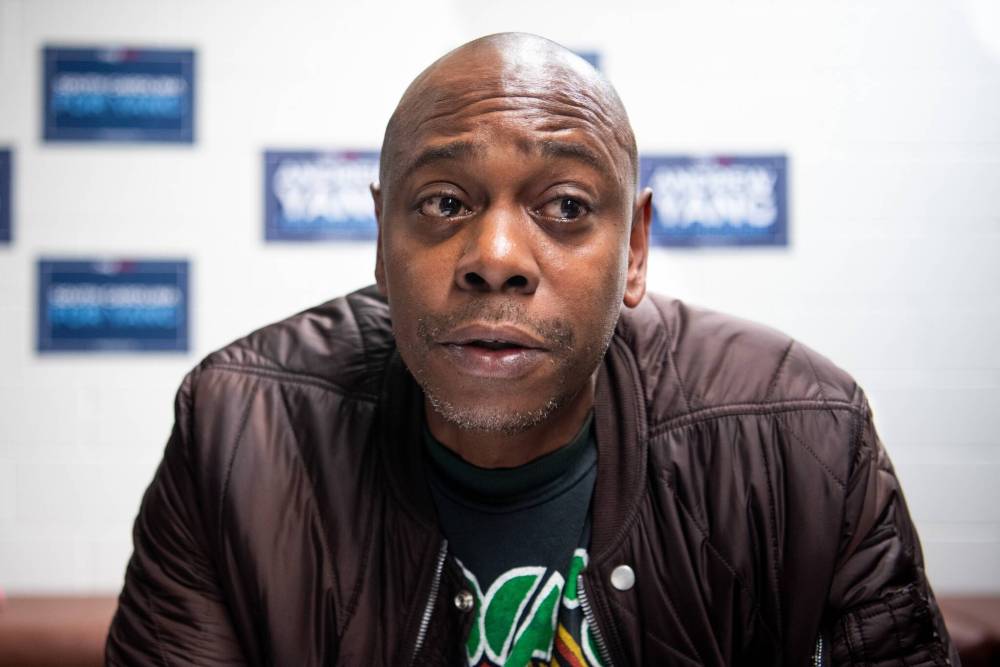
Not long ago, comedian Dave Chappelle caused a firestorm with his comments about trans people that infuriated the LGBTTQ+ community. Netflix stood by Chappelle, who offered not an apology but an extended tour where he explained his position while promoting a new documentary. His career sails on.
Asian-American comedian and actor Awkwafina has been taken to task for appropriating African-American Vernacular English, or a “Blaccent,” in her routines. Awkwafina offered up a nuanced defense on Twitter before quitting the platform. A week later, she appeared in a new Disney+ ad during the Super Bowl.
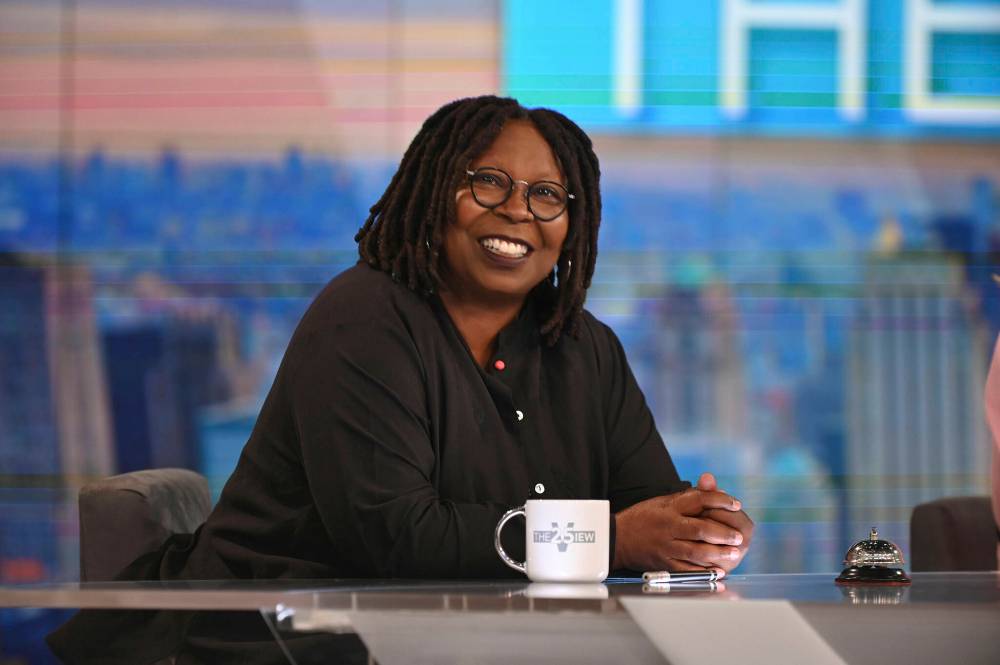
Whoopi Goldberg, on an episode of The View, said the Holocaust was not “about race” but rather man’s inhumanity to man, sparking criticism from Jewish leaders and support from many Black fans. She returned to the air after a two-week suspension by ABC.
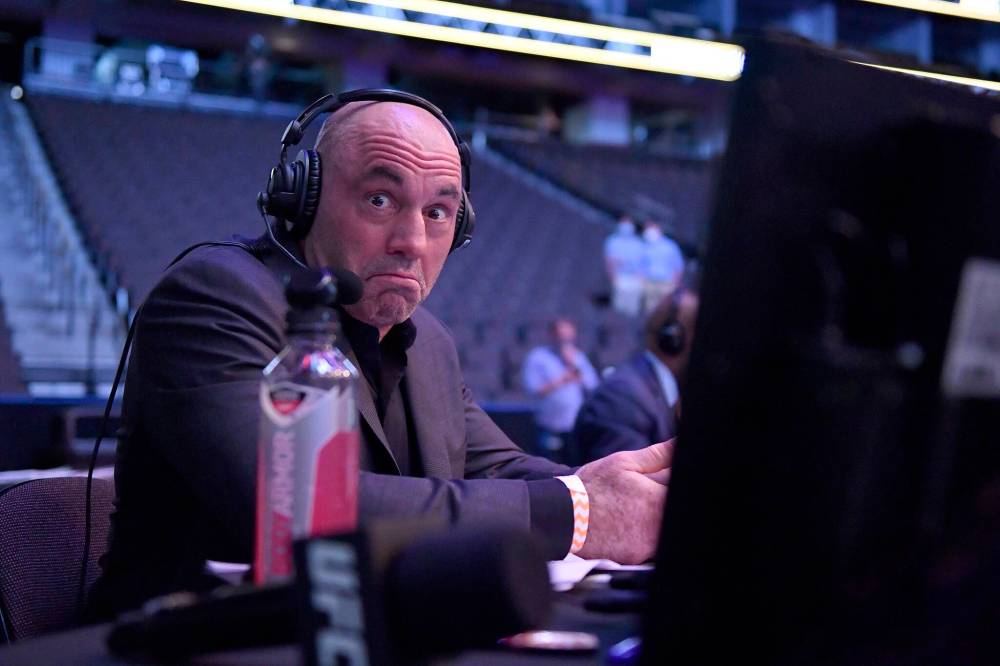
And then there’s Joe Rogan, the popular podcaster lured to music platform Spotify for US$100 million, who first stirred controversy by having guests who were critical of COVID-19 vaccines and masks. Then it was pointed out he had used a Black racial epithet repeatedly on his podcast and compared being in a theatre filled with Black moviegoers to visiting Planet of the Apes. Rogan apologized, removed the offending episodes, pledged to do better, and is still on Spotify.
It’s too much to argue that cancel culture is cancelled, but it is perhaps on notice. And that may not be a bad thing, argue a range of cultural experts and scholars.

“In its early stages, cancel culture, whether on #MeToo or racial matters, went too far and in ways that were not ethically sustainable,” says James Davison Hunter, a University of Virginia sociologist whose 1991 book, Culture Wars: The Struggle to Define America, cemented that two-word term into the vernacular.
“The extremism of the activists discredited many of the legitimate concerns of these movements,” he says. “I think what we are now seeing is a pullback from that extremism.”
Hunter also factors in the change of political leadership in Washington, saying that under U.S. president Donald Trump, progressives felt compelled to signal instances they felt could not be tolerated. With Democrats now in power, it makes “cancelling offenders less urgent.” That more militant stance will return if Republicans take back control, he says.
Having such a clearly defined and politically motivated approach to sorting out cultural issues and their offenders is problematic, says Todd Boyd, who holds the Katherine and Frank Price Endowed Chair for the Study of Race and Popular Culture at the University of Southern California.
“What frustrates me is people often have no appreciation for context,” he says. “You don’t want to be in an environment where someone says something, and boom, they’re done, because everything is not the same. The culture needs to get away from broad-based criticism and pay more attention to nuance.”
In Boyd’s view, nuance leads to different views on the cases in point. He believes Goldberg’s comments were “not deserving of a suspension” but were instead a “clumsy attempt to explain something as a Black American.” In Awkwafina’s case, he believes cultural appropriation by Asians is different from when white people do it, “because there’s no long history of oppression between those two cultures.”
Meanwhile, Boyd says, Chappelle comes from a comedy tradition with a “built-in free speech component,” whereas Rogan “isn’t just talking about opinions but getting into matters of public health and safety” and therefore deserves increased scrutiny.
“Each case is different,” he says. “One size doesn’t fit all.”
A quick online hunt finds heated exchanges over each of these cultural transgressions.
For example, Rep. Maxine Waters, a California Democrat, rushed to Goldberg’s defence on Twitter, saying her friend would never “knowingly” hurt anyone. But others immediately if politely disagreed with the congresswoman. “There are NO two sides to this issue in my humble opinion,” wrote @Truescorpio4u.
Awkwafina’s case generated similarly polarized responses. Some supported the Queens native: “I’m a Black woman, a Jamaican who grew up in Queens also now I live in Maui (Asia’s doorstep) where I learned and use Asian/Hawaiian slang all day everyday!” wrote @tprimesubprime. But most scolded the star for failing to apologize in her long Twitter signoff, in which she discussed the “fine line between offence and pop culture.”
Sometimes the result is simple confusion.
“Can someone explain why Joe Rogan won’t be silenced after his racial slurs on his podcast on Spotify but Chris Cuomo who helped his brother Andrew with his debacle was fired from CNN?” asks singer and activist @StellaParton, sister of country legend Dolly Parton. “I don’t get how we can pick and choose who we cancel/punish and who we embrace/endorse. Someone let me know! I’m as confused as a cat in a litter box.”
Replied @maestro214: “One word, Stella. Money! Followed by another word: greed. Followed by some more words: lust for power! There, I’m done now.”
Another word inevitably makes its way into the mix: race. For some cultural scholars, many of today’s fraught conversations are rooted there.
“The United States is experiencing growth pains of a new emergent social order where American white populations are in decline and each major minority group is experiencing population increases,” leading to “the Joe Rogan whites of America demanding to be seen,” says James Lance Taylor, professor of politics at the University of San Francisco and an expert on Black nationalism.
“The lack of moral consensus on what is wrong and right in society, or is acceptable or unacceptable conduct, means there is no clear Black voice of opposition,” Taylor says.
He also says economics always play a role. He cites the example of singer India.Arie, who declared she would ask that her music be removed from Spotify, alongside Neil Young and others, to protest Rogan’s use of a Black epithet as well as the platform’s poor royalty payment structure. But she later accepted Rogan’s apology.
“India.Arie needs the revenues generated from Spotify’s exploitative system of royalties,” says Taylor, adding that while the singer made an effort to protest Rogan’s derogatory comments, she ultimately had to keep her needs front and centre. “Average Blacks anticipate the racism. It is a known known.”
Taylor’s view suggests we remain at a cultural stalemate anchored to racial issues that is a still a long way from being unblocked.
But American University professor Lara Schwartz, who directs its Project on Civil Discourse, believes there’s a positive aspect to this turbulent state of cultural affairs: the abundance of feverish discourse.
“Conversations happen faster now, whether on cable news or social media, but the one truism to remember is people can’t be wrong about the way you made them feel,” Schwartz says. “That doesn’t mean we always have to change the way we say or do things, but when people signal they have been hurt, the brave thing is to try and engage with that.”
The response, she says, should not always be punitive. “We all have a line we don’t want people to cross, but you can suddenly find you are the one on the other side of someone else’s line,” she says. “If we’re interested in finding a definitive answer for any of these cultural cases, we are bound to be disappointed.”
And the goal shouldn’t be to come to conclusions like a judge and jury, says Arizona State University’s Lester.
“We’re having conversations about race in a new way,” he says. “Whoopi Goldberg is back, Joe Rogan is back, canceling is illusory, so the main issue is now people are talking about all this.”

From that historical perspective, we are all, for better and worse, light years away from the days when sharing your views meant standing on a soapbox in Speakers Corner and hoping people would gather.
The combination of thorny issues and the ability to literally broadcast sentiments worldwide in an instant makes for an understandably dizzying time. But hope lives when debate comes out of the shadows.
“To expect simple answers to cultural questions is unrealistic, given the reality we all have to exist in dealing with masks, vaccines, schools, not to mention issues of race and economics,” Lester says. “It’s all on the agenda, and it’s all playing out in public. But at least it’s being discussed.
“Will it shift the tide? That’s another question.”
— USA Today