‘Hoofer’ wants to leave legacy, but for now he just wants to dance
Advertisement
Read this article for free:
or
Already have an account? Log in here »
To continue reading, please subscribe:

Digital Subscription
One year of digital access for only $205*
- Enjoy unlimited reading on winnipegfreepress.com
- Read the E-Edition, our digital replica newspaper
- Access News Break, our award-winning app
- Play interactive puzzles
*First annual payment billed as $205.00 + GST for one year. This annual subscription will automatically renew at $233.00 + GST every 52 weeks (10% off the regular annual price of $259.35). Offer available to new and qualified returning subscribers only. Cancel any time.
To continue reading, please subscribe:
Add Free Press access to your Brandon Sun subscription for only an additional
$1 for the first 4 weeks*
- Enjoy unlimited reading on winnipegfreepress.com
- Read the E-Edition, our digital replica newspaper
- Access News Break, our award-winning app
- Play interactive puzzles
*Your next Brandon Sun subscription payment will increase by $1.00 and you will be charged $17.95 plus GST for four weeks. After four weeks, your payment will increase to $24.95 plus GST every four weeks.
Read unlimited articles for free today:
or
Already have an account? Log in here »
Hey there, time traveller!
This article was published 22/05/2009 (6347 days ago), so information in it may no longer be current.
ONE of these days, Bill Evans will complete the two books he’s writing.
And he’ll finish distilling thousands of videotapes into a few DVDs that will sum up his life’s work.
"I am interested in leaving a legacy," says the veteran American dancer, choreographer and dance professor, who has been connected to Winnipeg since he was artistic director of the Contemporary Dancers from 1983 to 1985.
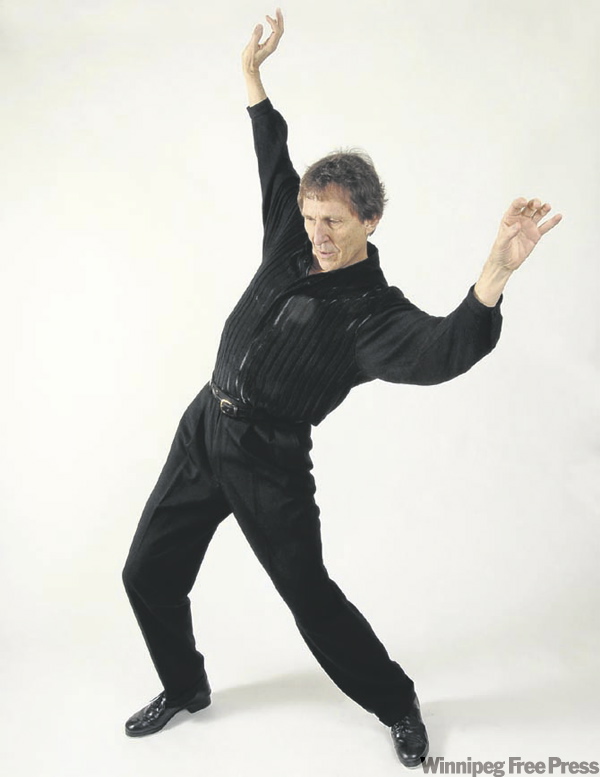
But for now, Evans is too busy following the example of the legendary African-American tap "hoofers" of the 1920s to 1940s. Those masters went on performing into old age. Evans, 69, is still throwing himself into solo shows and remains one of North America’s most respected tap specialists.
In 2004, he was named one of three favourite tap dance artists (along with Savion Glover and Brenda Bufalino) in Dance Magazine‘s national readers’ poll.
Evans is based in western New York State. Currently in Winnipeg for a two-week teaching stint at the School of Contemporary Dancers, he performs tonight at the Contemporary Dancers’ home venue, the Rachel Browne Theatre.
He’s being presented by Gearshifting Performance Works, the company run by local modern soloist Jolene Bailie. She has been mentored by Evans for years, and wanted to pay tribute to him by getting him onstage here.
The show is billed as an intimate evening of tap dancing. Evans will perform classic numbers originated by giants such as Bill "Bojangles" Robinson, Charles "Honi" Coles and Cholly Atkins.
Then he’ll move into his own works, which blend tap with modern dance — an unusual hybrid. Throughout the show, he says, "I chat with the audience. They learn a little bit of tap history and I share my personal journey."
That journey started in a tiny town in Utah in the 1940s. The very first movie Evans saw, at the age of three, had tap dancing in it. His fate was sealed.
He learned to tap, but he came of age in an era when the art form had lost its popularity and there was no work for tappers. Over six feet tall and lanky, he became a professional ballet dancer, then moved into modern dance.
"I believe the reason tap dance went into such a decline in the 1950s and ’60s is because it lost contact with its roots," he says.
It wasn’t until the 1970s that a tap renaissance brought long-overdue attention to the African-American greats whose steps had been appropriated by Hollywood and Broadway. In his late 30s, Evans began to meet and take classes from the giants.
"I was just completely bowled over with their elegance, and their rhythmic complexity and refinement," he remembers. "Now they’re all gone."
The old guys’ style, full of tricky syncopation and focused on the feet and legs, is usually called "rhythm tap" today.

"Rhythm-tap artists consider themselves musicians," he says. "It’s really about the music they make."
Evans’ 50-year CV goes on for pages. It’s awe-inspiring to think that this artist who speaks of "a deep and long-lasting connection to Winnipeg" studied under 20th-century legends including jazz giant Jack Cole and modern-dance pioneers José Limón and Anna Sokolow.
But he says you don’t need any knowledge of such traditions to enjoy the rhythms of tap dance, which he has performed to warm response even in remote villages in India.
alison.mayes@freepress.mb.ca
If you value coverage of Manitoba’s arts scene, help us do more.
Your contribution of $10, $25 or more will allow the Free Press to deepen our reporting on theatre, dance, music and galleries while also ensuring the broadest possible audience can access our arts journalism.
BECOME AN ARTS JOURNALISM SUPPORTER
Click here to learn more about the project.