Bryce Kanbara says collaborators share credit for Governor General’s art award

Advertisement

Advertise with us

Bryce Kanbara says he can't take sole credit for winning a Governor General's Award in Visual and Media Arts.

Read this article for free:


or

Already have an account? Log in here »

To continue reading, please subscribe:

Subscribe and receive a limited-edition Free Press branded hat or tote.

Digital Subscription

One year of digital access for only $205*

  • Enjoy unlimited reading on winnipegfreepress.com
  • Read the E-Edition, our digital replica newspaper
  • Access News Break, our award-winning app
  • Play interactive puzzles

*First annual payment billed as $205.00 + GST for one year. This annual subscription will automatically renew at $233.00 + GST every 52 weeks (10% off the regular annual price of $259.35). Offer available to new and qualified returning subscribers only. Cancel any time.

To continue reading, please subscribe:

Add Free Press access to your Brandon Sun subscription for only an additional

$1 for the first 4 weeks*

  • Enjoy unlimited reading on winnipegfreepress.com
  • Read the E-Edition, our digital replica newspaper
  • Access News Break, our award-winning app
  • Play interactive puzzles
Start now

*Your next Brandon Sun subscription payment will increase by $1.00 and you will be charged $17.95 plus GST for four weeks. After four weeks, your payment will increase to $24.95 plus GST every four weeks.

Hey there, time traveller!
This article was published 23/02/2021 (2019 days ago), so information in it may no longer be current.

Bryce Kanbara says he can’t take sole credit for winning a Governor General’s Award in Visual and Media Arts.

The Hamilton artist and curator says he shares the honour with all of the collaborators who have influenced his wide-ranging body of work.

The Canada Council for the Arts named the eight artists Tuesday who will each receive a $25,000 prize in recognition of their creative excellence.
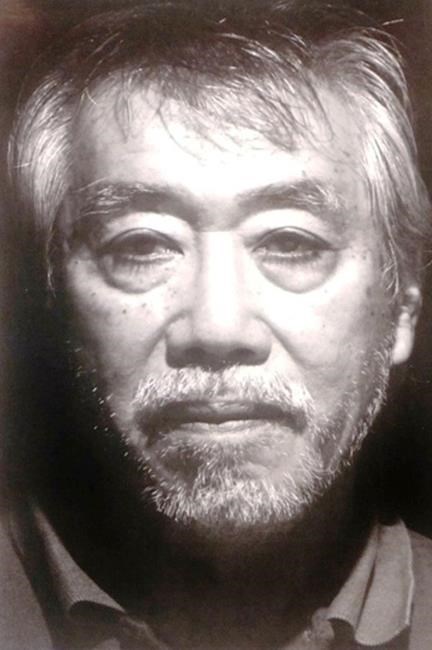
Bryce Kanbara, as shown in this undated handout image, says he can't take sole credit for winning a Governor General's Award in Visual and Media Arts. The Hamilton artist and curator says he shares the honour with all of the collaborators who have influenced his wide-ranging body of work. THE CANADIAN PRESS/HO-Jim Chambers*MANDATORY CREDIT*

In the citation for the Outstanding Contribution Award, nominator Shelley Niro praised Kanbara for using his visual talents to “make the city a culturally exciting, inviting and vibrant place to live” since 1970.

But Kanbara, whose work spans painting, sculpture and printmaking, says he draws as much inspiration from the community as he gives back through public art projects.

The curator/chair of the Japanese Canadian Cultural Centre’s arts committee says his practice is shaped by the connections he’s cultivated with various communities and creatives over the years.

And while he may be the one receiving a medallion, the 73-year-old says the awards acclaim is as much theirs as it is his.

“In doing what I do, I meet so many artists who I admire so much … Most of them have a tough time just persevering,” Kanbara said in a phone interview ahead of Tuesday’s announcement.

“In a lot of ways, I feel privileged that I’ve been able to do what I do to give them a hand.”

Kanbara’s penchant for collaboration dates back to 1970, when he was a founding member of Hamilton Artists, Inc., which is believed to be one of Canada’s first artist-run centres.

He has held curatorial positions at the Burlington Art Centre, the Art Gallery of Hamilton, the Glenhyrst Art Gallery of Brant and Toronto’s Japanese Canadian Cultural Centre.

He’s served in leadership roles at a number of cultural organizations, including the National Association of Japanese Canadians, the Ontario Arts Council and the Hamilton Centre for Civic Inclusion.

Kanbara has long been committed to making art more accessible, often through public installations. For example, his recurring exhibit “The Shadow Project” commemorates the 1945 atomic bombings of the Japanese cities of Hiroshima and Nagasaki by inviting participants to draw chalk outlines of one another on the ground.

In 2003, he became the curator and proprietor of Hamilton’s You Me Gallery. During the COVID-19 pandemic, Kanbara built a wall in the middle of the gallery so the art would be easier to view through the window.

While his Japanese-Canadian heritage has always figured largely in his work, Kanbara recently became involved in a series of photography projects with the Muslim, Hindu and Indigenous communities in an effort to bridge cultural divides.

“They’re projects that just arise, from my perspective, out of a necessity to make these kinds of connections and improve communications and interactions with people,” said Kanbara.

“I’ve always felt that even with my personal art … community gives what I do a framework that I can feel comfortable working within.”

Kanbara said he plans to direct some of his prize money to maintain a property where his father lived in a Japanese village, which he makes available to other Japanese-Canadians and artists.

Also among this year’s Governor General’s Award in Visual and Media Arts honourees is Saidye Bronfman Award winner Lou Lynn, a Winlaw, B.C.-based artist who specializes in glass and metal sculptures.

The Artist Achievement Award winners are:

— Yellowknife-based Inuk artist Germaine Arnaktauyok

— Lori Blondeau, a Cree/Saulteaux/Métis artist from Saskatchewan

— Dempsey Bob, a Terrace, B.C.-based carver who draws from the traditional style of Tahltan-Tlingit sculptural art

— Bonnie Devine, a Toronto installation artist, whose work is influenced by Anishinaabe traditions

— Cheryl L’Hirondelle, an interdisciplinary artist of “Cree/Halfbreed and German/Polish” ancestry, according to her biography

— Montreal media artist Luc Courchesne

In a statement, Simon Brault, director and CEO of the Canada Council for the Arts, said this year’s winners include a record number of First Nations, Inuit and Metis artists.

This report by The Canadian Press was first published Feb. 23, 2021.
Report Error Submit a Tip

More Stories

Manitoba association pitches CentrePort for national food terminal

Gabrielle Piché 4 minute read Preview

Manitoba association pitches CentrePort for national food terminal

Gabrielle Piché 4 minute read Yesterday at 6:00 AM CDT

A Manitoba association is vying for federal dollars to build a major food terminal as Ottawa unrolls its national food security strategy.

Michael Mikulak, head of industry advocate group Food & Beverage Manitoba, said he’s in talks with several federal departments.

He’s envisioning a 120,000-square-foot site at CentrePort Canada, the trimodal inland port spanning parts of Winnipeg and the Rural Municipality of Rosser.

About 15,000 sq. ft. would become a production-focused commercial kitchen for Manitoba companies to rent as they grow. A warehouse to store and distribute food — from Manitoba and elsewhere — would consume most of the building, Mikulak said.

Read
Yesterday at 6:00 AM CDT

The ‘Buy Canadian’ trade war challenge

Editorial 4 minute read Preview

The ‘Buy Canadian’ trade war challenge

Editorial 4 minute read 2:00 AM CDT

“Buy Canadian,” they tell us, as trade tensions escalate between Canada and the United States. “Elbows up,” the pithy slogan advises again and again, in response to the latest daily affront from increasingly unbalanced U.S. President Donald Trump.

And there’s no question Canadians from coast to coast to coast have bought into the patriotic mindset that politicians, from Prime Minister Mark Carney right on down to elected officials at the municipal level, have implored us to adopt.

“We were attacked,” is how Carney described the Aug. 21 unraveling of trade talks, after U.S. negotiators reportedly inserted last-minute demands the Canadian side viewed as both unreasonable and unacceptable. “You’re at war when you get attacked. We got attacked.”

The breakdown led to the immediate imposition by Trump of steep new tariffs on $29 billion worth of Canadian goods headed to south-of-the-border markets. A targeted, dollar-for-dollar Canadian tariff response will take effect after the Labour Day weekend. In the meantime, Canadians are more motivated than ever to stand firm against Trump’s tyrannical tactics.

Read
2:00 AM CDT

Westwood standoff ends with two arrested

Morgan Modjeski and Erik Pindera 3 minute read Preview

Westwood standoff ends with two arrested

Morgan Modjeski and Erik Pindera 3 minute read Updated: Yesterday at 6:29 PM CDT

An hours-long standoff in Westwood came to an end Thursday with Winnipeg police arresting two men and seizing a gun.

Winnipeg Police Service officers were called to Byrd Avenue shortly before 9:30 a.m. after a man was seen walking with what appeared to be a firearm, said police spokesman Const. Claude Chancy.

Officers identified a home connected to the investigation, he said.

Two men were arrested but Chancy could not yet say what they will be charged with. It’s not clear whether either of the men arrested was the male spotted with a gun.

Read
Updated: Yesterday at 6:29 PM CDT

Puzzles Palace

1 minute read Monday, Jul. 27, 2026

To solve our puzzles, please subscribe with this special offer: |

The symptom and the disease

Alan H. Menkis 5 minute read 2:00 AM CDT

On the same morning, the Free Press carried two pieces written from opposite vantage points, arriving at the same locked door.

Charles Bernstein, writing as a gastroenterologist, described a nurse-practitioner program at Health Sciences Centre that gave patients with inflammatory bowel disease somewhere to turn before their illness forced them to an emergency room. It was then not funded to continue, and it ended. A service that had been approved, put in place, and shown to work was allowed to lapse.

Tom Brodbeck, writing as a columnist, described Shared Health, an organization created eight years ago as a fourth layer of administration added to the three the system already had — Manitoba Health, the regional authorities, and hospital administrations. He asked what this layer has done for patient care that those three could not, found no one able to answer, and concluded that the province should either make the case or let the structure go.

One writer watched something that worked disappear. The other watched something no one can justify persist. Their accounts are two symptoms of one disease.

Explaining Canada’s superior employment rate

Wayne Simpson 5 minute read Preview

Explaining Canada’s superior employment rate

Wayne Simpson 5 minute read 2:00 AM CDT

Donald Trump regularly makes outrageous claims. Fentanyl was pouring across the northern border from Canada and had to be stopped. Canada is nasty to deal with and has the highest tariffs in the world. Canada needs the U.S. but the U.S. doesn’t need Canada. Canadians want to become the 51st state. And so on.

In the latest trade dispute, after Mark Carney walked away from negotiations, Trump made a new claim that Canada’s unemployment rate was 10 per cent and climbing rapidly. Insofar as the unemployment rate is closely monitored, reported monthly, and given similar attention to the rates of inflation and economic growth, the comment was likely intended to signal Canada’s weakness. It fits Trump’s narrative that Canada needs the U.S. for its livelihood and protection and would be better off more directly under U.S. influence as a 51st state, or perhaps a protectorate like the Philippines or Panama in the past.

Fact checkers quickly reported that Canada’s unemployment rate is really 6.4 per cent for July, not 10 per cent, has fallen from 6.9 per cent in April, and is at its lowest rate since May 2024. Some astute observers pointed out that Canada’s method for the calculation of the unemployment rate leads to a higher rate than the U.S. by about one per cent. Under the American methodology, then, our unemployment rate would be 5.4 per cent, not that far off the U.S. July rate of 4.1 per cent.

Detection of unemployment is less straightforward that might appear, as it is sandwiched between the labour force statuses of employment and inactivity at a particular point in time. The internationally established standard for determination of unemployment is the notion of searching for work — you are unemployed if you do not have paid employment and you are looking for work without success. Surveys have been developed to categorize respondents as employed, unemployed or inactive, including the labour force survey (LFS) in Canada and the current population survey (CPS) in the U.S.

Read
2:00 AM CDT