In visions of post-pandemic life, Roaring ’20s beckon again
Advertisement
Read this article for free:
or
Already have an account? Log in here »
To continue reading, please subscribe:

Digital Subscription
One year of digital access for only $205*
- Enjoy unlimited reading on winnipegfreepress.com
- Read the E-Edition, our digital replica newspaper
- Access News Break, our award-winning app
- Play interactive puzzles
*First annual payment billed as $205.00 + GST for one year. This annual subscription will automatically renew at $233.00 + GST every 52 weeks (10% off the regular annual price of $259.35). Offer available to new and qualified returning subscribers only. Cancel any time.
To continue reading, please subscribe:
Add Free Press access to your Brandon Sun subscription for only an additional
$1 for the first 4 weeks*
- Enjoy unlimited reading on winnipegfreepress.com
- Read the E-Edition, our digital replica newspaper
- Access News Break, our award-winning app
- Play interactive puzzles
*Your next Brandon Sun subscription payment will increase by $1.00 and you will be charged $17.95 plus GST for four weeks. After four weeks, your payment will increase to $24.95 plus GST every four weeks.
Read unlimited articles for free today:
or
Already have an account? Log in here »
Hey there, time traveller!
This article was published 28/05/2021 (1953 days ago), so information in it may no longer be current.
NEW YORK (AP) — History repeats itself. But do decades duplicate?
As hopes rise that the pandemic is ebbing in the United States and Europe, visions of a second “Roaring Twenties” to match last century’s post-pandemic decade have proliferated. Months of lockdown and restrictions on social life have given way to dreams of a new era of frivolity and decadence. For some, it feels like party time.
In many parts of the world, such thoughts are unthinkable. India is engulfed in crisis. The virus is raging in South America. Japan is grappling with a punishing new wave of cases. And even in places where cases are falling and vaccinations are expanding, deep wounds remain from more than a year of death, illness and isolation. COVID-19 won’t disappear. More infectious variants are circulating. Herd immunity may be elusive. Long-term health effects will linger. There will be no Hollywood ending.
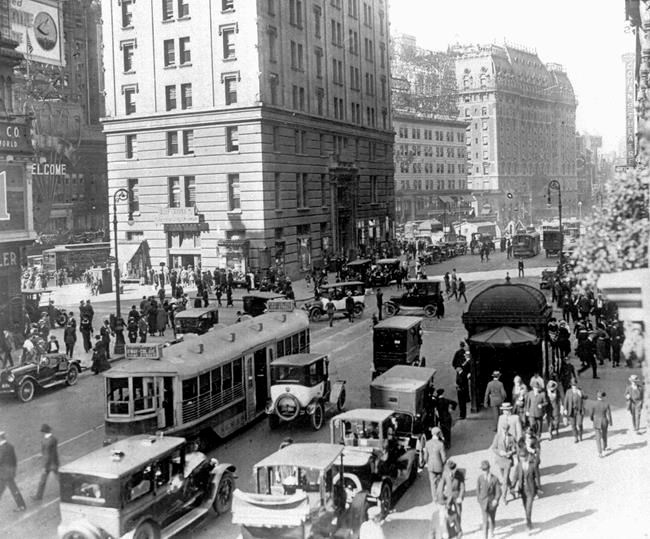
But a coming summer and a soaring stock market have lifted optimism and fueled predictions of a new Roaring Twenties. This time, Bill Maher has suggested, we do it without “the Depression at the end of it.” The New Yorker joked that prohibition in “the New Roaring Twenties” should be on “company-mandated virtual happy hours.” Madison Avenue has turned up the heat. Suitsupply, a men’s fashion brand, is running a suggestive ad campaign with writhing models and the tagline: “The New Normal Is Coming.” Summer travel is booming. A summer of love “sexplosion ” is predicted. Even the bob is back in style.
Is it fair to connect these twin ’20s, both decades that follow closely on the heels on of worldwide pandemic? Could two ‘20s really roar? Do we all need to start buying flapper dresses and brushing up on our F. Scott Fitzgerald?
Some of the parallels are legitimate, says Nicholas Christakis, professor of sociology and medicine at Yale University and author of “Apollo’s Arrow: The Profound and Enduring Impact of Coronavirus on the Way We Live.” After an interim period of “coping with the clinical, psychological and economic shock of the virus,” he says, we’ll see an uplift this summer, with a post-pandemic period taking root by 2023. It will, he says, be “a bit of a party.”
“Understandably, people will be very relieved when this is all finally over. People have been cooped one way or another for a very long time,” Christakis says. “We’re going to see people relentlessly seeking out social opportunities in nightclubs and restaurants and bars and sporting events and musical concerts and political rallies. We might see some sexual licentiousness, some loosening of sexual mores.”
Such prognostications have tantalized many eager for the fabled liberation of a century ago — what Fitzgerald described as “the most expensive orgy in history.” Outside of the 1960s, perhaps, no decade looms larger in the collective imagination than the 1920s, thanks in part to the emerging mass culture that captured the time — the swinging speakeasies, the Harlem Renaissance, the first “talkie” in 1927’s “The Jazz Singer.” Over time, the mythology has only grown glitzier (see Baz Luhrmann, “Gatsby,” 2013).
There’s truth in that portrait of the ’20s, but mainly to wealthier white Americans.
The decade was punishing to farmers; for the first time, more people lived in cities. Membership surged for the Ku Klux Klan, which targeted African Americans, immigrants, Jews and Catholics — anyone who didn’t meet its definition of a “real American.” In 1921, one of the worst incidents of racial violence occurred — the Tulsa Race Massacre. Three years later, the Immigration Act of 1924 restricted immigrants from Asia and Eastern Europe.
The 1920s, in short, were not all they were cracked up to be. “We have today in the United States, cheek by jowl, Prosperity and Depression,” the author and civil rights activist W.E.B. Du Bois wrote in 1926.
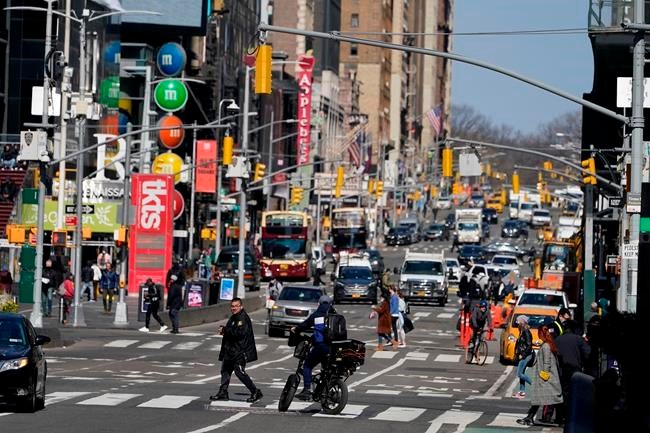
It’s not hard to see many of the same threads today: racial injustice, economic inequity, convulsive technological change. The 1921 campaign slogan of Warren G. Harding — “a return to normalcy” — sounds very familiar and even appealing to those who have had it with the “new normal.”
Forecasts on Wall Street, of course, vary. The United Nations last month raised its global economic forecast to 5.4% growth in 2021. While many analysts are predicting the pace to quicken in the months and years ahead, Tina Fordham, partner and head of global political strategy for Avonhurst, foresees a post-lockdown period that will feel like “The Great Gatsby” only to a few.
“For many, it could be more like ‘The Grapes of Wrath,’ unless steps are taken to address inequities — which accelerated during the pandemic — and the gaps in the social safety net,” Fordham concluded.
Are we even right to connect the 1920s with the 1918 influenza? To John M. Barry, author of the defining history “The Great Influenza,” it’s a false association. The so-called Spanish Flu was far more virulent and deadly. It killed more than 50 million worldwide and some 675,000 Americans — more than ten times the toll of WWI to the U.S.
“People seem to think we just leapt into the Roaring Twenties,” says Barry. “But first we went through 1919, which is one of the most chaotic and violent years in American history. Then you had a serious recession in 1920, 1921. The aftermath this time, one would hope, is quite different.”
People also experienced the 1918 influenza differently. Lockdowns then never lasted more than a few weeks. The societal surge that followed in the ’20s? Most historians ascribe that to the postwar period.
“The Roaring Twenties, that was the Lost Generation,” says Barry, who is writing a book on the COVID-19 pandemic. “There was a sense of fatalism, ennui, disillusionment with the world that I think was much more closely related to the war.”
Lucy Moore, author of “Anything Goes: A Biography of the Roaring Twenties,” connects World War I with the 1918 influenza in that they both were punishing for young Americans. The 1920s, says Moore, were propelled by a disillusioned, emancipated youth.
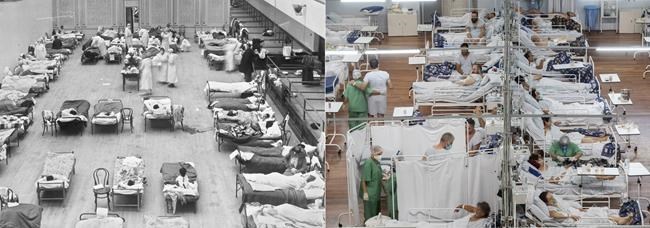
“The young have sacrificed a lot during this pandemic on behalf of the older generation,” Moore says. “There was a sense of that after the war and after the Spanish Flu. The war was very much young people being sent off to die by an older generation they’d been taught to trust but then felt very let down by.”
Whether the same response will happen in the aftermath of this pandemic is something to watch for. The crisis is far from over, Christakis cautions. “We don’t want to spike the ball at the 5-yard line,” he says. But throughout history, Christakis sees a pattern common to prolonged calamity. Plagues are followed by boom times. After the Black Death came the erosion of feudalism.
“The Roaring Twenties is just a metaphor,” Christakis says. “Grief walks the streets during times of plague, so people will rightly be relieved when this period of loss is behind us.”
___
Follow AP Film Writer Jake Coyle on Twitter at: http://twitter.com/jakecoyleAP