EXPLAINER: What to know as Chauvin sentenced in Floyd death

Advertisement

Advertise with us

MINNEAPOLIS (AP) — Former Minneapolis police Officer Derek Chauvin faces sentencing Friday in the death of George Floyd, with a judge weighing a prison term experts say could be as much as 30 years.

Read this article for free:


or

Already have an account? Log in here »

To continue reading, please subscribe:

Subscribe and receive a limited-edition Free Press branded hat or tote.

Digital Subscription

One year of digital access for only $205*

  • Enjoy unlimited reading on winnipegfreepress.com
  • Read the E-Edition, our digital replica newspaper
  • Access News Break, our award-winning app
  • Play interactive puzzles

*First annual payment billed as $205.00 + GST for one year. This annual subscription will automatically renew at $233.00 + GST every 52 weeks (10% off the regular annual price of $259.35). Offer available to new and qualified returning subscribers only. Cancel any time.

To continue reading, please subscribe:

Add Free Press access to your Brandon Sun subscription for only an additional

$1 for the first 4 weeks*

  • Enjoy unlimited reading on winnipegfreepress.com
  • Read the E-Edition, our digital replica newspaper
  • Access News Break, our award-winning app
  • Play interactive puzzles
Start now

*Your next Brandon Sun subscription payment will increase by $1.00 and you will be charged $17.95 plus GST for four weeks. After four weeks, your payment will increase to $24.95 plus GST every four weeks.

Hey there, time traveller!
This article was published 24/06/2021 (1871 days ago), so information in it may no longer be current.

MINNEAPOLIS (AP) — Former Minneapolis police Officer Derek Chauvin faces sentencing Friday in the death of George Floyd, with a judge weighing a prison term experts say could be as much as 30 years.

Chauvin, 45, was convicted in April of second-degree unintentional murder, third-degree murder and second-degree manslaughter for pressing his knee against Floyd’s neck for about 9 1/2 minutes as the Black man said he couldn’t breathe. It was an act captured on bystander video, which prompted protests around the world.

Here’s what to watch for in a hearing that could run as long as two hours:
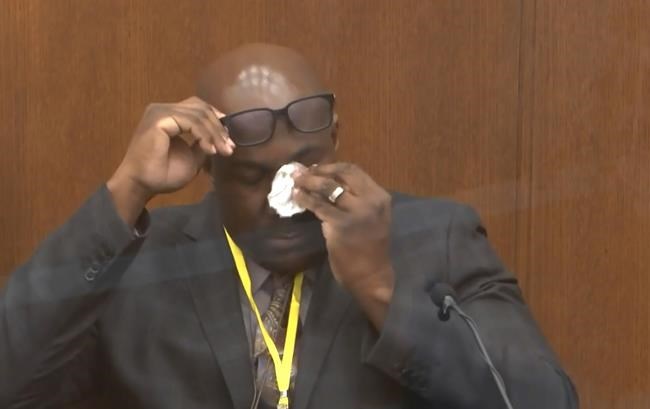
FILE - In this April 12, 2021, file photo, from video, Philonise Floyd, brother of George Floyd, becomes emotional as he testifies as Hennepin County Judge Peter Cahill presides over court Monday,, in the trial of former Minneapolis police Officer Derek Chauvin. Former Minneapolis police Officer Derek Chauvin faces decades in prison when he is sentenced Friday, June 25, 2021, following his murder and manslaughter convictions in the death of George Floyd. Floyd's death, filmed by a teenage bystander as Chauvin pinned Floyd to the pavement for about 9 and a half minutes and ignored Floyd's
FILE - In this April 12, 2021, file photo, from video, Philonise Floyd, brother of George Floyd, becomes emotional as he testifies as Hennepin County Judge Peter Cahill presides over court Monday,, in the trial of former Minneapolis police Officer Derek Chauvin. Former Minneapolis police Officer Derek Chauvin faces decades in prison when he is sentenced Friday, June 25, 2021, following his murder and manslaughter convictions in the death of George Floyd. Floyd's death, filmed by a teenage bystander as Chauvin pinned Floyd to the pavement for about 9 and a half minutes and ignored Floyd's "I can't breathe" cries until he eventually grew still, reignited a movement against racial injustice that swiftly spread around the world and continues to reverberate.(Court TV via AP, Pool, File)

WHAT’S POSSIBLE?

Under Minnesota statutes, Chauvin will be sentenced only on the most serious charge of second-degree murder. That’s because all of the charges against him stem from one act, with one victim.

The max for that charge is 40 years, but legal experts have said there’s no way he’ll get that much. Case law dictates the practical maximum Chauvin could face is 30 years — double what the high end of state sentencing guidelines suggest. Anything above that risks being overturned on appeal.

Of course, Judge Peter Cahill could sentence Chauvin to much less. Prosecutors have asked for 30 years, while defense attorney Eric Nelson is seeking probation.

Mark Osler, a professor at University of St. Thomas School of Law, said both sides have staked out extreme positions, and the “gulf is huge between them. I don’t think that either side is going to end up getting what they want.”

WHAT’S REALISTIC?

Minnesota has sentencing guidelines that were created to establish consistent sentences that don’t consider factors such as race or gender. For second-degree unintentional murder, the guideline range for someone with no criminal record goes from 10 years and eight months to up to 15 years. The presumptive sentence is in the middle, at 12 1/2 years.

Cahill last month agreed with prosecutors that aggravating factors in Floyd’s death warrant going higher than the guidelines. The judge found that Chauvin abused his position of authority, treated Floyd with particular cruelty, and that the crime was seen by several children. He also wrote that Chauvin knew the restraint of Floyd was dangerous.

“The prolonged use of this technique was particularly egregious in that George Floyd made it clear he was unable to breathe and expressed the view that he was dying as a result of the officers’ restraint,” Cahill wrote last month.

Osler said Cahill’s finding of aggravating factors showed his willingness to go above the guidelines. But he said those guidelines still function like a tether, and the further Cahill moves from the guidelines, the more the tether stretches. He said a 20- or 25-year sentence is more likely than 30.

Joe Friedberg, a Minneapolis defense attorney who has been watching the case, agreed. He cited a U.S. Supreme Court case, Koon v. United States, in which the court said a judge could consider that a former police officer would likely spend much of his sentence in isolation for his own safety. Cahill might take the harder time into consideration to give Chauvin a little less, Friedberg said.

WHAT’S HAPPENED BEFORE?

Minnesota sentencing data for the five years through 2019 show that of 112 people sentenced for the same conviction as Chauvin, only two got maximum 40-year sentences. Both cases involved children who died due to abuse; both defendants had prior criminal records and struck plea deals.

The longest sentence during that time period for someone with no criminal history like Chauvin was 36 years, in another case involving the death of a child due to abuse. The sentence was appealed but upheld, with an appellate court finding it “was not excessive when a 13-month-old child was beaten to death.”

WHAT’S EXPECTED AT THE HEARING?

Attorneys on both sides are expected to make brief arguments. Victims or family members of victims can also make statements about how they’ve been affected, but none have said publicly that they will.

Chauvin can talk if he wants, but it’s not clear if he will. Experts say it could be tricky for Chauvin to talk without implicating himself in a pending federal case accusing him of violating Floyd’s civil rights.

While some experts say Chauvin won’t talk, Mike Brandt, another defense attorney watching the case, said he thinks Chauvin will speak, and that he can say a few words without getting himself into legal trouble. “If I was him, I think I would want to try and let people know that I’m not a monster.”

Community members can submit impact statements online, and they may become part of the public record.

WHAT WILL CAHILL CONSIDER?

Cahill will look at arguments submitted by both sides, as well as victim impact statements, community impact statements, a pre-sentence investigation into Chauvin’s past, and any statement Chauvin might make.

When judges hear from defendants, they are typically looking to see if the person takes responsibility for the crime or shows remorse. Friedberg, the defense attorney, said he doubts any statement from Chauvin would affect Cahill’s sentence.

“In state court sentencing in Minnesota it just doesn’t seem to matter to the judges what anybody says at the time of sentencing,” Friedberg said. “When they come out on the bench they will have already decided what the sentence will be.”

HOW LONG ACTUALLY BEHIND BARS?

No matter what sentence Chauvin gets, in Minnesota it’s presumed that a defendant with good behavior will serve two-thirds in prison and the rest on supervised release, commonly known as parole.

That means if Chauvin is sentenced to 30 years, he would likely serve 20 behind bars, as long as he causes no problems in prison. Once on supervised release, he could be sent back to prison if he violates conditions of his parole.

Since his April conviction, Chauvin has been held at the state’s only maximum security prison, in Oak Park Heights. That’s unusual — people don’t typically go to a prison while waiting for sentencing — but Chauvin is there for security reasons. He has been on “administrative segregation” for his safety and has been in a 10 foot-by-10 foot cell, away from the general population. He has meals brought to his room, and is allowed out for solitary exercise for an average of one hour a day.

It wasn’t immediately clear where he would serve his time after he is sentenced. The Department of Corrections will place Chauvin after Cahill’s formal sentencing order commits Chauvin to its custody.

____

Find AP’s full coverage of the death of George Floyd at: https://apnews.com/hub/death-of-george-floyd

Report Error Submit a Tip

More Stories

Venezuela: unfinished business for the U.S.

Gwynne Dyer 5 minute read 2:01 AM CDT

Experienced imperialists understand that you can’t just take over a country and expect it to run itself. It takes time and work to turn it into an obedient and profitable colony and two months is not enough. Donald Trump moved on to his next target too soon and given how Iran’s been working out for him, he probably hasn’t thought of Venezuela in months.

U.S. Secretary of State Marco Rubio, who acts as Trump’s viceroy for Venezuela, hasn’t been there since the U.S. kidnapped President Nicolás Maduro and his wife in January. (In fact, he may never have been there at all — I can find no evidence of it.) But he does think about Venezuela. In fact, he controls the country very tightly from his Washington office.

He and Trump’s choice for interim president, Delcy Rodríguez, talk online every day, we are told. (She was the vice-president under Maduro, so she was the obvious choice if Trump wanted a local collaborator with supporters in the army and the secret police.) Rubio collects the government’s income and he tells her what she can spend her share on.

It’s an awkward arrangement, because the cabinet is still the core Chavista leaders, minus only Maduro himself. Trump thinks Rodríguez is a “terrific person” and doesn’t worry about elections: Venezuelans “wouldn’t even know how to have an election right now.” But Rubio understands that they really do expect an election to be part of the “transition.”

Sending the wrong message

Andrea Charron 4 minute read 2:01 AM CDT

The U.S. State Department has announced plans to close five overseas diplomatic posts approved by Congress: Douala, Cameroon (a branch office); St. George’s, Grenada (an embassy); Nagoya, Japan (a consulate); Medan, Indonesia (a consulate); and Winnipeg, Canada (a consulate).

All are located in countries that are partners or allies of the United States.

It is unusual for the United States to reduce its diplomatic footprint. With the exception of some retrenchment efforts during the Trump administration, Washington has generally viewed diplomacy as a force multiplier. Diplomacy is not simply a matter of authority and leverage. It requires sustained local engagement, relationships and presence.

Consulates and branch offices are not the same as embassies. They are smaller missions, headed by consuls or consuls general rather than ambassadors and often provide a more limited range of services. Yet they play a vital political, economic and cultural role, supporting both local populations and American citizens abroad.

Family hopes police alert will bring missing woman home

Morgan Modjeski 3 minute read Preview

Family hopes police alert will bring missing woman home

Morgan Modjeski 3 minute read Thursday, Aug. 6, 2026

The family of Ashley Arason has made a desperate plea for her to come home.

The 41-year-old last had contact with her family on April 6, 2019, which was her 34th birthday.

“I’ve got a place for her,” said her older sister, Pamela Arason, through tears on Thursday. “She has a place to go, a home to come to.”

On Thursday, Winnipeg Police Service renewed the call for help from the public to solve the missing person case.

Read
Thursday, Aug. 6, 2026

The view from here: Phyllis Green. Boob Tree, 1975

2 minute read Preview

The view from here: Phyllis Green. Boob Tree, 1975

2 minute read 2:01 AM CDT

Staycation: The Art of Being Here feautres more than 100 Manitoba-related artworks from the Winnipeg Art Gallery-Qaumajuq collection, spanning the past 50 years. These pieces reveal how the places around us are layered with memory, story and lived experience. Over the coming weeks, the Free Press will spotlight works from this eclectic exhibition, each one offering a new way of seeing home. Experience it in person and enjoy some staycation time at the gallery, on view until December.

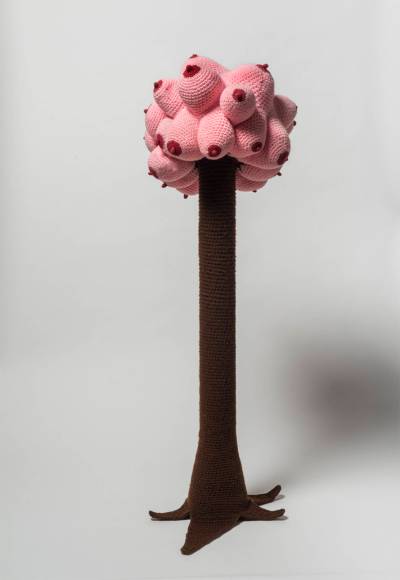
Phyllis Green. Boob Tree, 1975

(Yarn, wood. Collection of the Winnipeg Art Gallery; Acquired with funds from the Estate of Mr. and Mrs. Bernard Naylor, funds administered by The Winnipeg Foundation, 2014-128. Photo: Ernest Mayer.)

The year 1975 was designated International Women’s Year by the United Nations, and in celebration, the WAG staged the show Images of Women, which explored how women had historically been depicted, an impressive selection but by mostly male artists. Amid pushback from the community, Sharron Zenith Corne and Marian Yeo organized a second exhibition, Woman as Viewer, which challenged those portrayals by only featuring works by women. It was called the first Canadian exhibition of feminist art. American artist Phyllis Green’s Boob Tree, a four-foot-tall crochet sculpture of a cluster of breasts, adorned the exhibit posters, which were so popular they were snatched by passersby! The sculpture is playful and unsettling, re-appropriating the objectification of women’s bodies.

Read
2:01 AM CDT

Police resuming drug-enforcement crackdown, working with outreach community

Chris Kitching 7 minute read Preview

Police resuming drug-enforcement crackdown, working with outreach community

Chris Kitching 7 minute read Thursday, Aug. 6, 2026

Winnipeg police are relaunching a drug enforcement campaign in some neighbourhoods Friday after they say a 10-day sweep led to more than 100 arrests and a drop in reported crime earlier this summer.

Police said the renewed initiative, targeting open drug use and trafficking, will continue into November with an outreach-first approach and a partnership with a coalition of community groups in response to criticism of the initial campaign.

“While there was a great deal of support for the enforcement actions we undertook to address public safety issues, there was also criticism about the lack of collaboration,” Winnipeg Police Service Chief Gene Bowers told reporters.

“At that time, I acknowledged that community organizations should have been part of our efforts. Hence, we’re here today.”

Read
Thursday, Aug. 6, 2026

Leon’s Getting Larger and their tours are getting longer

Tiago Resko 4 minute read Preview

Leon’s Getting Larger and their tours are getting longer

Tiago Resko 4 minute read Yesterday at 3:00 AM CDT

Emo music was never just a phase for Nikola Boticki.

“It was people just saying the things I was feeling,” says the 26-year-old vocalist and guitarist. “Growing up, it’s kind of like, ‘I feel that way but I’m not going to say that out loud,’ so it was nice to hear someone say it.”

Boticki got into the punk subgenre near the end of his angsty high school years and his appreciation only grew while in isolation during the COVID-19 pandemic.

The music inspired him to form his own emo band, Leon’s Getting Larger, with friends Luke Penner (vocals/drums) and Noah St Hilaire (bass).

Read
Yesterday at 3:00 AM CDT