

NOTEBOOK: For English fan, Euro 2020 offers a sliver of hope
Advertisement
Read this article for free:
or
Already have an account? Log in here »
To continue reading, please subscribe:

Digital Subscription
One year of digital access for only $205*
- Enjoy unlimited reading on winnipegfreepress.com
- Read the E-Edition, our digital replica newspaper
- Access News Break, our award-winning app
- Play interactive puzzles
*First annual payment billed as $205.00 + GST for one year. This annual subscription will automatically renew at $233.00 + GST every 52 weeks (10% off the regular annual price of $259.35). Offer available to new and qualified returning subscribers only. Cancel any time.
To continue reading, please subscribe:
Add Free Press access to your Brandon Sun subscription for only an additional
$1 for the first 4 weeks*
- Enjoy unlimited reading on winnipegfreepress.com
- Read the E-Edition, our digital replica newspaper
- Access News Break, our award-winning app
- Play interactive puzzles
*Your next Brandon Sun subscription payment will increase by $1.00 and you will be charged $17.95 plus GST for four weeks. After four weeks, your payment will increase to $24.95 plus GST every four weeks.
Read unlimited articles for free today:
or
Already have an account? Log in here »
Hey there, time traveller!
This article was published 10/07/2021 (1923 days ago), so information in it may no longer be current.
LONDON (AP) — When I was much younger, a soccer anthem called “Three Lions” offered an exuberant cry. “Football’s coming home,” the lyrics went, after “30 years of hurt.”
That was a quarter century ago. Thirty years of hurt have become 55. And I have suffered all of them.
My earliest sporting memory: my dad and my much older half-brother shouting at the TV screen as West Germany came back from a two-goal deficit to beat England in extra time in the quarterfinals at Mexico 1970. I was too young to understand the enormity. Three years later, when England fell to Poland at Wembley and didn’t even qualify for Germany 74, it was abject heartbreak for a soccer-mad 10-year-old.
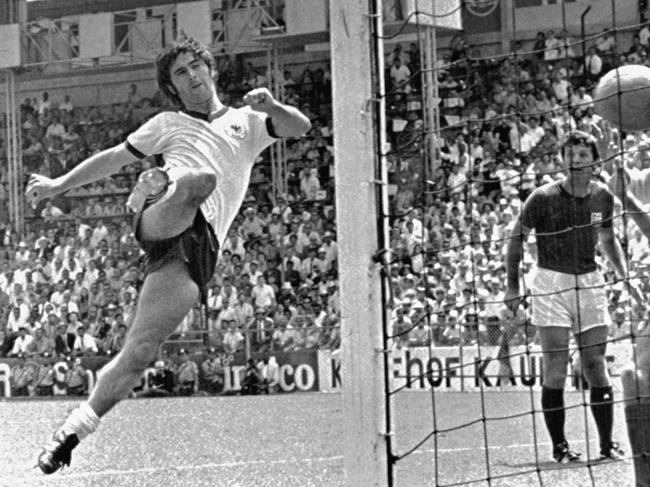
I still recall the despair, made worse by a contrarian older sister who for some reason supported Poland. You have to remember that seven years previous England had been World Champions, so to not qualify was a national disaster. Another failure to qualify for Argentina ’78 was made even harder because, for the second World Cup running, Scotland qualified and took great pleasure to remind the auld enemy of that.
I remained obsessed, with an encyclopedic knowledge of facts and statistics. And even without England present in 1978, I feigned illness to get a week off school and watch the live matches on telly.
The 1980s were only a little better. At least we qualified.
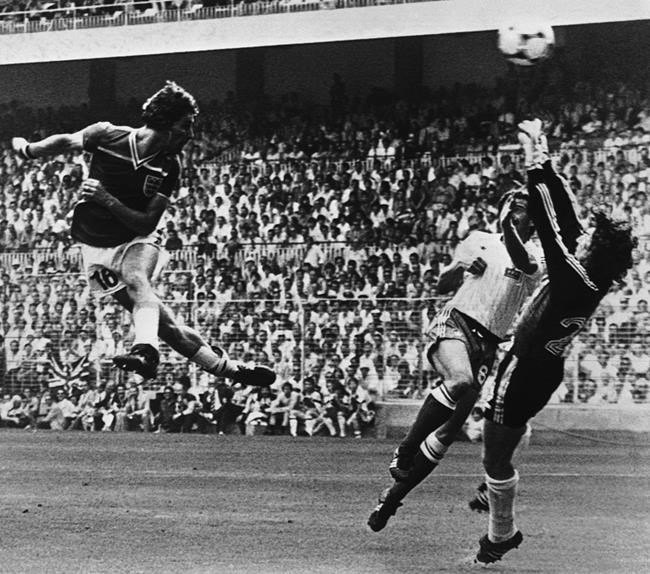
— Elimination from Spain 82 despite being unbeaten caused some England fans to cry foul at an unjust system. Italy had Paolo Rossi leading its attack to a third World Cup; England had Paul Mariner, who died Friday at age 68. I had passed my driving test before the 1982 World Cup and tried to convince my two best friends to drive to Spain in the rust bucket that was my appropriately named Triumph Toledo. They either had less fervor than me or more common sense. They declined. I watched at home alone.
— The “Hand of God” in 1986: A win over mighty Paraguay briefly raised hopes, but who were we kidding? A quarterfinal loss to a Maradona-inspired Argentina was the right result. I watched at the Glastonbury festival, which helped soften the blow, but the drive back to London was not a happy one. (Although I did adhere to the advice of one of the festival headliners, The Cure: “Boys Don’t Cry.”)
— The decade ended with Euro 88 in Germany. England lost all three matches. Some of its fans went on the rampage, fighting the Irish, the Dutch, the Germans, the police and probably even each other. I was at university and there had been some boozed-up talk in the Union Bar of a making an end-of-term trip there. We wisely decided against it. In the end, everyone was glad to see the back of England.
It was clearly time to take stock of the situation.
EXPECTING MORE
Unlike some of my fellow England sufferers, I was always realistic. I rarely said they were the best team in the world.
But I expected more. We were, after all, the nation that gave the world the beautiful game. And for substantial chunks of these 55 years of failure, English teams dominated club soccer at the highest level — and, from the inception of the Premiership, became the most financially lucrative league in the world.
I graduated in 1990. Two days after my final exam, I asked my mum to borrow her car. She never asked me where I was going. If I had said Italy, she might well have ended that great adventure before it had even started. I stayed for three weeks, driving around watching matches with tickets purchased outside the grounds.
The team gave us something to cheer. Last-minute winners against Belgium and the emergence of Gazza, probably English soccer’s most gifted player, gave us hope. But once again, at the hands of the Germans, it ended in tears — Gazza’s and my own.
By the time we got to Euro ’96, I was working as a photo editor and editing pictures from the events. That helped soften the blow when the inevitable defeat happened, but it was still tough to take. England was the best team in that tournament. Gazza’s goal against Scotland, the demolition of the Dutch and actually winning a penalty shootout against Spain made us feel that this one would be different.
It wasn’t, and 25 years later we are still watching replays.
ONE STEP FORWARD, ONE STEP BACK
It seemed that brief glimpses of hope were often immediately followed by a step backwards.
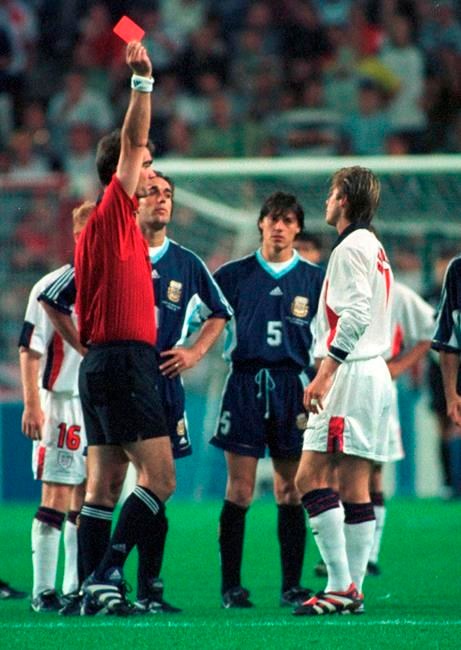
The semifinal at the World Cup in Italia 90 preceded the group-stage elimination at Euro 92 in Sweden. The promise of Euro 96 was not built upon, and a disappointing exit at France 98 and a group-stage departure from Euro 2000 followed. The noughties and the “Golden Generation” came and went.
By then, we actually edited pictures inside the stadiums. So in tribunes in Shizuoka, Lisbon and Gelsenkirchen, I witnessed England’s finest suffer quarterfinal exits.
Portugal in 2004 was hard to take. Why couldn’t England win a tournament with all the talent at its disposal when the eventual victors were a well-drilled but very workmanlike Greece team? The inability of that gifted crop of players to set club rivalries aside has always been seen as a major factor, but they really were not good enough. I still felt these early exits keenly, especially when I thought we had a chance.
But maybe I was starting to care a little less.
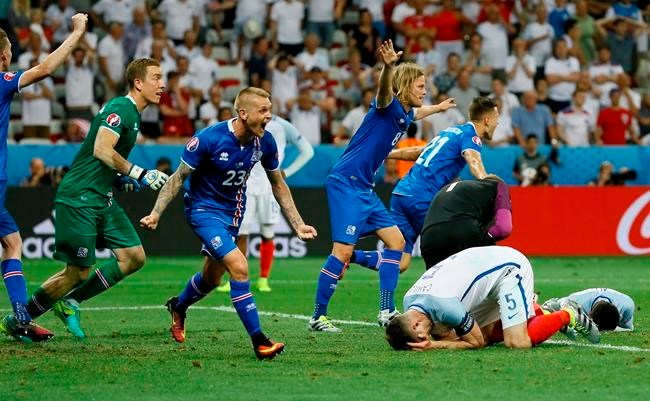
By the time England was outclassed by Germany in 2010, unable to win a single game in 2014 and topped by a quarterfinal defeat at the hands of soccer minnows Iceland at the 2016 Euros in France, people had lost faith to the point that failure was no longer feared. It was expected.
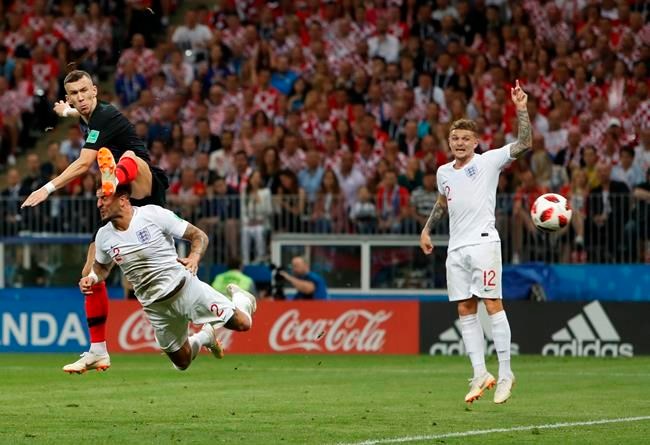
That said, a 2018 semifinal in Russia was welcome relief and gave the country the thrill of a run to the latter stages of a major tournament — something not experienced for over 20 years. Disappointment, though, was not far away: The inability to beat Croatia in the semis left an all-too-familiar taste in the mouth.
OPTIMISM RENEWED
The future seemed brighter. England had had a lot of international success at the underage level. U17 and U20 World Cup wins in the last five years would, many hoped, produce success. In many ways, the COVID-inflected year’s delay in Euro 2020 allowed the likes of Mason Mount and Phil Foden to become influential players at the top of the European game.
That talent allowed us to dream, once again, that football was “coming home.”
On June 29, a 2-0 win over rival Germany in the round of 16 got everyone buzzing. My 5-year-old daughter became hooked. Suddenly, a father’s protective instinct took over: I decided to prepare her for the worst and save her from years of heartache.
“You know England may lose?” I said. A look of incredulity flashed across her face.
“England never lose!” she proclaimed defiantly.
The semifinal against Denmark on Wednesday was nerve-racking. Even my old coping mechanism — immersing myself in work — was faltering. At times, I reverted to being that 10-year-old kid from the 1970s, but with a twist of responsibility. I was supporting England now for two people: the me who was starting to believe again, and my little girl, whose confidence in England’s invincibility I wanted to keep intact for at least one more match.
And then it happened: England won. Now, after 30 years of hurt — no, 55 — we move on to a final against Italy.
My daughter asserts that we are unbeatable. I hope she’s right.
___
Tony Hicks is deputy director of international photos for The Associated Press, based in London. Follow him on Twitter at http://twitter.com/hicksy663
Related Articles
Ricci, Sirois send Valour FC top of CPL table Racist abuse targets three English players








Advertisement Advertise With Us
Advertisement Advertise With Us

