Latest WSO concert premieres American composer Amy Beach’s ‘Gaelic Symphony’
The performance comes ahead of International Women’s Day which is marked on March 8
Advertisement
Read this article for free:
or
Already have an account? Log in here »
To continue reading, please subscribe:
Digital Subscription
One year of digital access for only $1.44 a week*
- Enjoy unlimited reading on winnipegfreepress.com
- Read the E-Edition, our digital replica newspaper
- Access News Break, our award-winning app
- Play interactive puzzles
*Billed as $5.77 plus GST every four weeks. After 52 weeks, price increases to the regular rate of $19.95 plus GST every four weeks. Offer available to new and qualified returning subscribers only. Cancel any time.
To continue reading, please subscribe:
Add Free Press access to your Brandon Sun subscription for only an additional
$1 for the first 4 weeks*
- Enjoy unlimited reading on winnipegfreepress.com
- Read the E-Edition, our digital replica newspaper
- Access News Break, our award-winning app
- Play interactive puzzles
*Your next Brandon Sun subscription payment will increase by $1.00 and you will be charged $17.95 plus GST for four weeks. After four weeks, your payment will increase to $24.95 plus GST every four weeks.
Read unlimited articles for free today:
or
Already have an account? Log in here »
Hey there, time traveller!
This article was published 05/03/2023 (1326 days ago), so information in it may no longer be current.
Ahead of the International Women’s Day which is marked around the globe on March 8, the Winnipeg Symphony Orchestra championed a lesser-known female composer living in the shadows of her more frequently performed, male counterparts for well over a century.
Its latest concert in the (B)eyond Classics series led by Daniel Raiskin presented the WSO premiere of Amy Beach’s “Gaelic Symphony,” given its debut by the Boston Symphony Orchestra in 1896 and notably the first symphony composed and published by an American woman.
It’s truly remarkable that Beach, also a piano prodigy who penned roughly 300 works, wrote her entire symphony on par with Brahms or Elgar with nary a formal composition lesson in sight. It’s a testament to both her brilliance and ambitious drive that she accomplished so much during a time when a woman’s primary role typically focused on hearth and home.
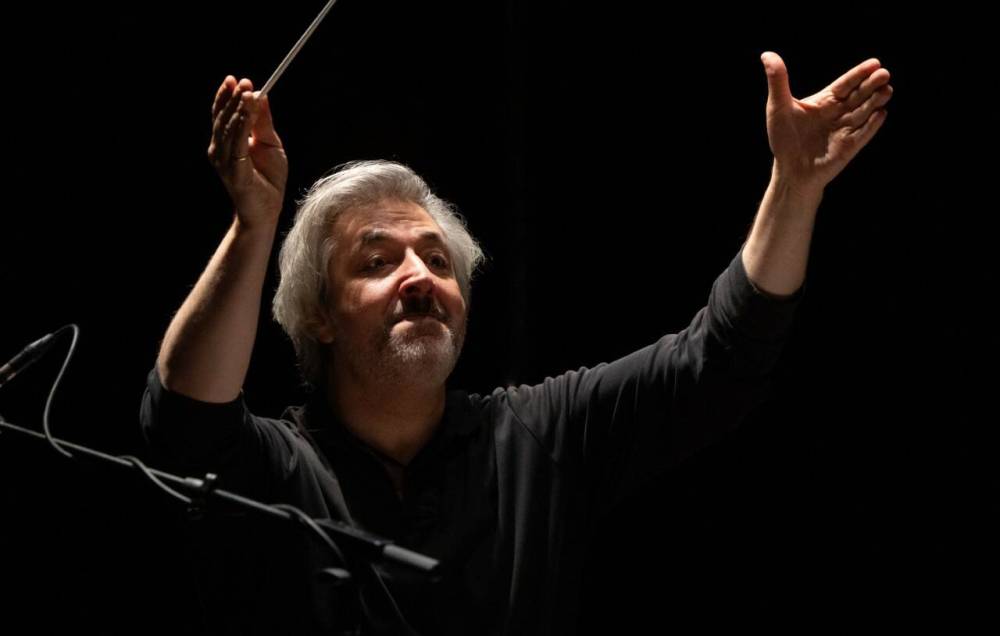
Photo by Mark Rash / Archives
The latest concert in the WSO’s (B)eyond Classics series was led by Daniel Raiskin.
The four-movement work influenced by Dvorak’s “New World Symphony,” is taut with dramatic tension, as well as being infused with folksy Irish melodies reflecting the composer’s own heritage. Raiskin drove the players hard throughout, including its opening movement based on Beach’s own song “Dark is the Night” chronicling a turbulent sea voyage. The second movement provides respite from the storms, including principal oboist Beverly Wang’s thoughtfully rendered Irish jig filled with sub-text that bleeds into the strings.
Beach spotlights individual musicians throughout her masterfully orchestrated, 45-minute piece, with the third movement “Lento con molta espressione” featuring a rhapsodic opening violin solo performed by concertmaster Gwen Hoebig, juxtaposed with principal cellist Yuri Hooker’s own lyrical commentary. The finale “Allegro di molto” inspired by the Celts’s “sturdy life…passions and battles” hurtles forward to its triumphant finish, with Raiskin and his musicians’ no guts, no glory performance attesting to the full power of this mighty orchestra when pushed to the max.
Saturday night’s program also heralded the Manitoba debut of internationally acclaimed American flutist Demarre McGill, who treated Saturday night’s mostly older crowd of 784 to two offerings.
Mozart’s “Flute Concerto, No. 1 in G major, K. 31,” became an ideal showcase for McGill’s engaging artistry, with the flutist often appearing to dance with his gleaming wind instrument as he tossed off sprightly, clearly articulated runs, trills, and large leaps between registers first displayed during the opening “Allegro maestoso.” A highlight of the entire evening became his virtuosic cadenzas in which the artist unleashed his full arsenal of technical pyrotechnics, that saw his flute pop like a cork and sing like a siren.
He then proceeded to show off his more lyrical side in the subsequent “Adagio ma non troppo,” in which one molten phrase melted into the next. This performance may have ebbed and flowed a bit more, and been tenderer during certain moments with even the strings’ entries at times feeling phoned in. However McGill’s shorter, deeply expressive cadenza fared better, with the soloist, now unshackled by the proverbial tyranny of the downbeat, able to play with greater ease and freedom. The finale “Rondo” teemed with gracious gentility in the spirit of a minuet, with the beaming artist, who also currently serves as principal flute for the Seattle Symphony, rightfully given a standing ovation with a demand for two curtain calls by the enthused audience.
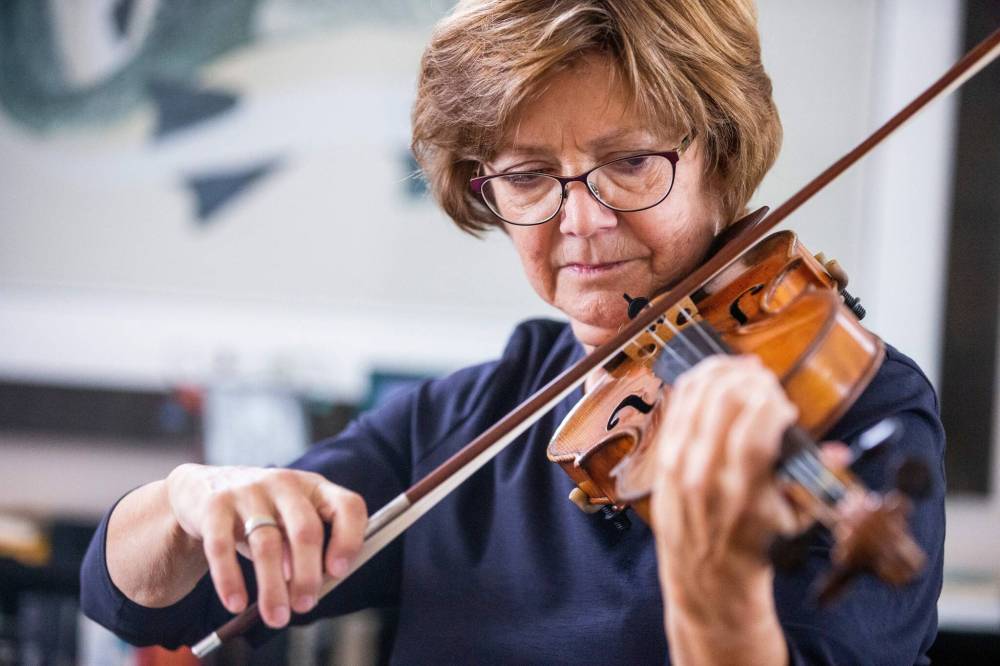
Violinist Gwen Hoebig. (Mikaela Mackenzie / Free Press files)
His second offering, American composer/conductor Michael Tilson Thomas’s “Notturno” (2005) written for flute, harp and strings paid homage to the unabashedly lyrical world of Italian music, as well as the sense of “wonder” experienced by musicians as they deepen their craft. The textural orchestration including double and flutter tonguing effects showcased McGill’s bravura, with the musician taking listeners on a journey into an expansive landscape of mercurial moods. However, the 14-minute, episodic work composed for American flutist Paula Robison and notably also a WSO premiere arguably created several false endings. McGill’s fierce conviction underscored by the maestro’s sensitive direction nonetheless created an effective through line for this contemporary piece, that would be right at home on the Winnipeg New Music Festival stage.
Holly.harris@shaw.ca
If you value coverage of Manitoba’s arts scene, help us do more.
Your contribution of $10, $25 or more will allow the Free Press to deepen our reporting on theatre, dance, music and galleries while also ensuring the broadest possible audience can access our arts journalism.
BECOME AN ARTS JOURNALISM SUPPORTER
Click here to learn more about the project.
Holly Harris writes about music for the Free Press Arts & Life department.
Our newsroom depends on a growing audience of readers to power our journalism. If you are not a paid reader, please consider becoming a subscriber.
Our newsroom depends on its audience of readers to power our journalism. Thank you for your support.