Winnipeg goes back in time for cinematic Mob job November 1963
Advertisement
Read this article for free:
or
Already have an account? Log in here »
To continue reading, please subscribe:

Digital Subscription
One year of digital access for only $205*
- Enjoy unlimited reading on winnipegfreepress.com
- Read the E-Edition, our digital replica newspaper
- Access News Break, our award-winning app
- Play interactive puzzles
*First annual payment billed as $205.00 + GST for one year. This annual subscription will automatically renew at $233.00 + GST every 52 weeks (10% off the regular annual price of $259.35). Offer available to new and qualified returning subscribers only. Cancel any time.
To continue reading, please subscribe:
Add Free Press access to your Brandon Sun subscription for only an additional
$1 for the first 4 weeks*
- Enjoy unlimited reading on winnipegfreepress.com
- Read the E-Edition, our digital replica newspaper
- Access News Break, our award-winning app
- Play interactive puzzles
*Your next Brandon Sun subscription payment will increase by $1.00 and you will be charged $17.95 plus GST for four weeks. After four weeks, your payment will increase to $24.95 plus GST every four weeks.
Read unlimited articles for free today:
or
Already have an account? Log in here »
Hey there, time traveller!
This article was published 17/07/2025 (452 days ago), so information in it may no longer be current.
Nicholas (Nicki) Celozzi didn’t grow up hearing Mob stories. They came later, in quiet conversations with his uncle Pepe.
Over time, Pepe began to open up, sharing memories of people who vanished without explanation, of coded conversations and family ties that ran deeper than most.
To the outside world, it was the stuff of true-crime headlines, but to Celozzi — grand-nephew of Mob boss Sam Giancana — it was personal. It was family.
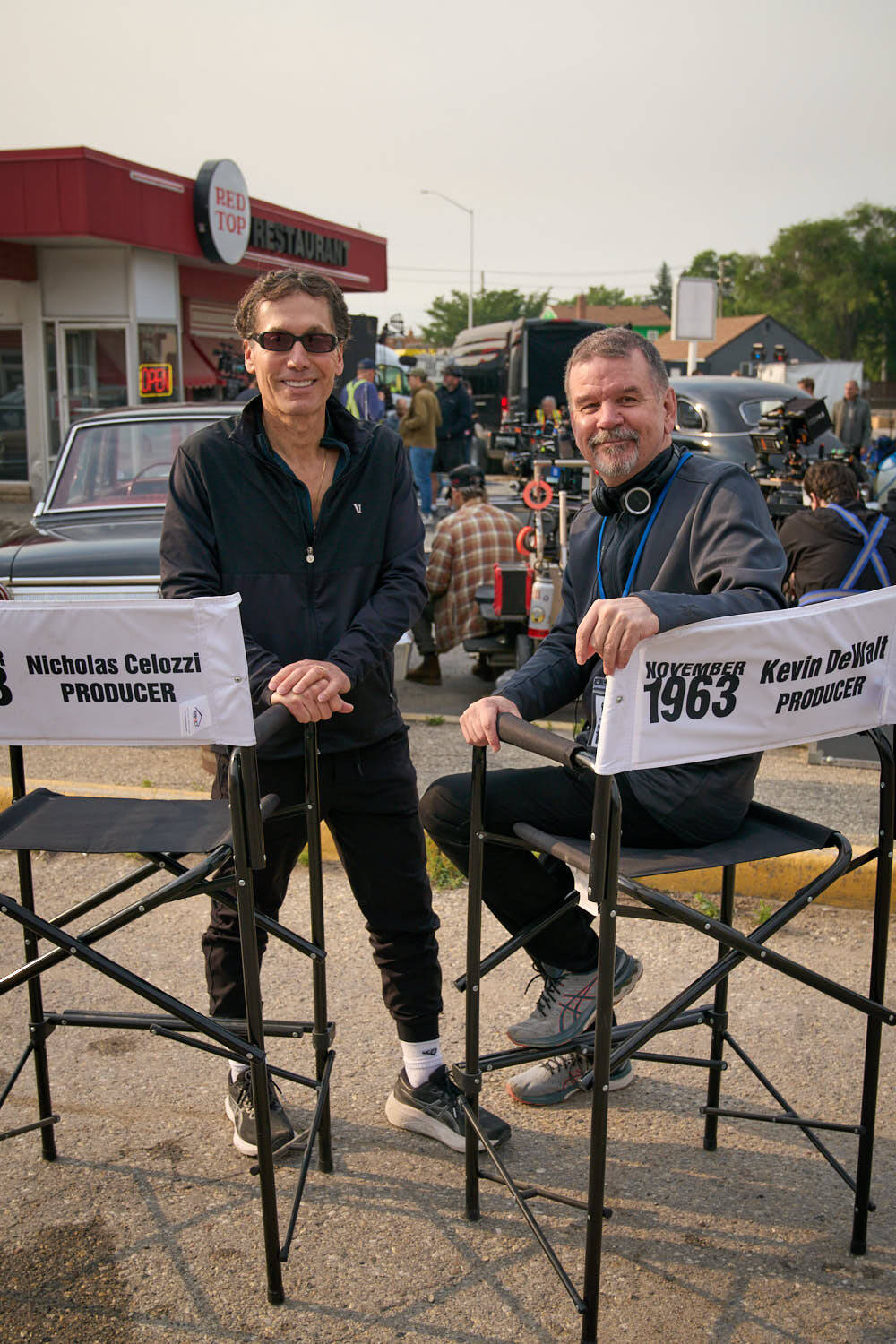
ALLEN FRASER / NOVEMBER 1963
Producer/writer Nicholas Celozzi (left) and Kevin DeWalt of Mind’s Eye Entertainment
Now, decades later, the screenwriter and producer is telling the story he was born into — the kind of story others have tried, and failed, to tell from the outside. His upcoming film November 1963, directed by two-time Academy Award nominee Roland Joffé (The Killing Fields, The Mission), doesn’t just revisit a moment in American history. It reclaims it.
“We got tired of people monetizing our family’s name. It won’t stop unless we put it out there ourselves,” Celozzi says.
Celozzi wrote the screenplay and is producing the film alongside veteran Canadian producer Kevin DeWalt of Mind’s Eye Entertainment.
Production of the independent film began in March, with Winnipeg standing in for 1960s Chicago and Dallas.
Post-production is being completed in Saskatchewan, making it a fully Prairie-made project.
The film, which unfolds over the 48 hours leading up to the assassination of U.S. president John F. Kennedy, centres not on JFK himself, but on the figures in the shadows — the mobsters, intermediaries and political players whose backdoor dealings helped shape one of the most debated events in modern history.
Celozzi doesn’t claim to offer a new theory. What he offers is something more elusive: a first-person account shaped by lived experience, family access and deep emotional insight.
“I’m not glorifying anyone, but they were human beings. They were smart, complicated, anxious, and I knew them,” he says.
At the heart of the story is Celozzi’s uncle Sam — Sam Giancana — head of the Chicago Outfit at its peak. One of the most powerful Italian-American criminal organizations in the U.S. during the 1950s and early ’60s, the Outfit, started by Al Capone, had strong links to the Kennedy family during JFK’s presidential campaign and presidency.
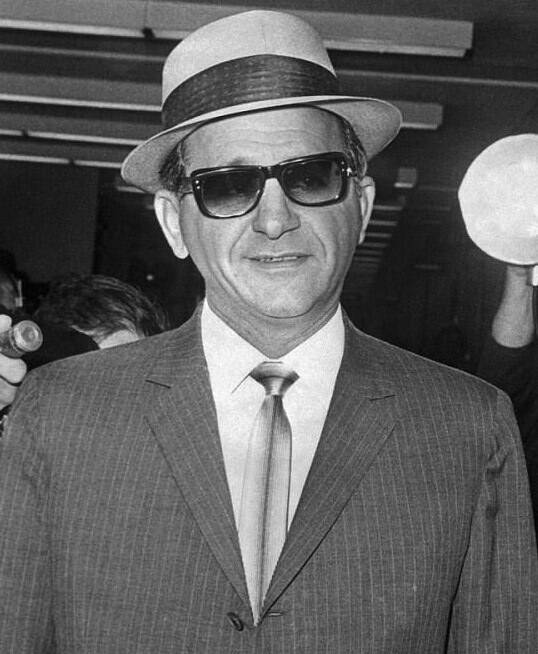
SUPPLIED
Sam Giancana was head of the Chicago Mob in the late 1950s and early 1960s.
Giancana was the man the government kept tabs on, worked with and, some believe, eventually turned on.
“The Outfit was as powerful as it was because the government helped make it that way,” Celozzi says matter-of-factly. “They used them to do their dirty work until they didn’t need them anymore.”
Growing up, Celozzi didn’t see any of this as unusual. His childhood was shaped by an unspoken awareness that everyone around him grew up fast.
“It was a strange normality. You just knew not to ask too many questions.”
But questions came anyway, especially from the outside. With every poorly researched documentary or dramatized gangster flick — the 1995 film Sugartime stars John Turturro as Giancana — his family became further distorted.
“All these caricatures yelling and swearing, running like football players down a field — that’s not them. I wanted people to see the real people behind the headlines,” he says.
To do that, he knew he’d have to walk a tightrope.
“The hardest part was being truthful without hurting people. Sam’s daughters are still alive. I’m closest to two of them. Bonnie is a creative consultant on the project. Without her, I wouldn’t have done this.”
That sense of responsibility runs through every line of the screenplay.
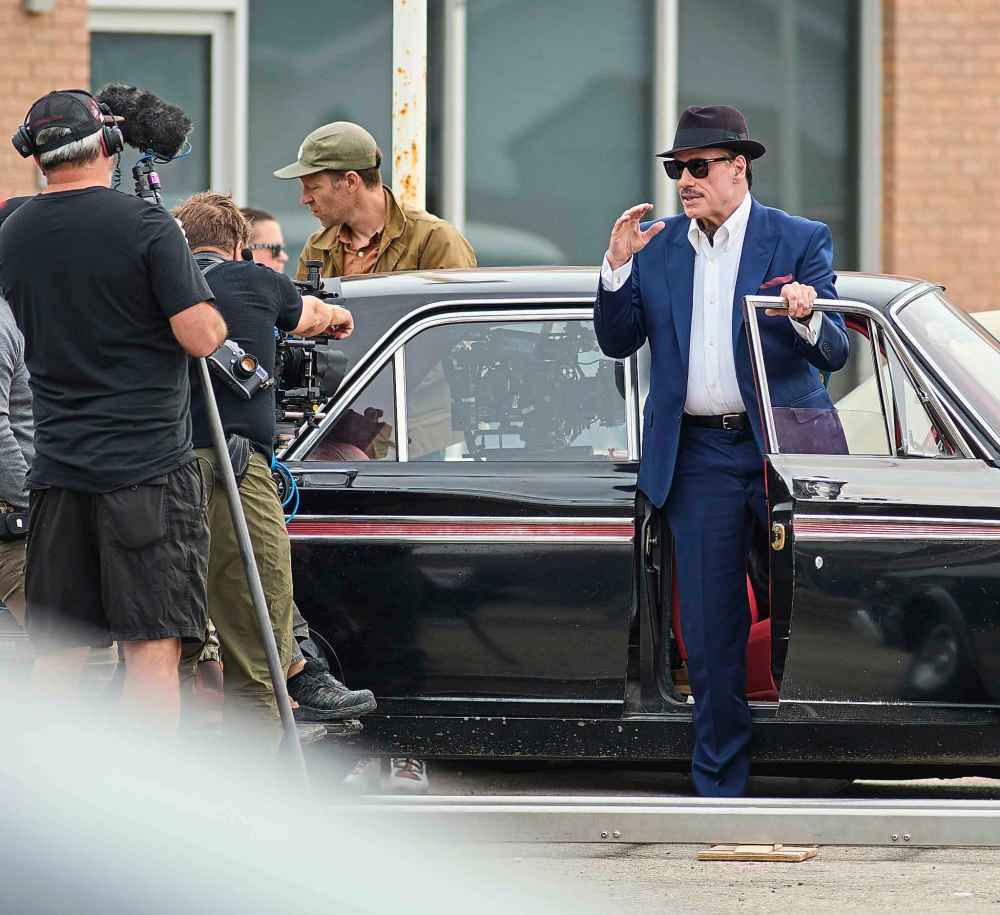
DAVID LIPNOWSKI / CHRISD.CA
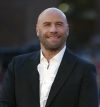
Actor John Travolta on set in the parking lot of Red Top Restaurant on St.Mary’s Road.“I wrote characters, not caricatures. These men weren’t supermen. They had ulcers. They broke down. They second-guessed. They masked their fear. I know that because I saw it,” he explains,
DeWalt says he wasn’t sure what to make of it when Celozzi first brought him the story six years ago — even though they’d met decades earlier at a social event in Regina.
“I said, ‘Really? This is a true story?’” he recalls.
But then Celozzi flew him to San Diego to meet Bonnie Giancana.
“She looked me in the eye and said, ‘Our family wants the truth told.’ That moment changed everything.”
According to DeWalt, what makes the project so compelling is its emotional authenticity.
“Nobody in the family is proud of this, but it’s a story about loyalty, betrayal and the grey areas of history,” he says.
What also sets November 1963 apart is its refusal to retread worn conspiracy theories. It’s a story that’s never been told.
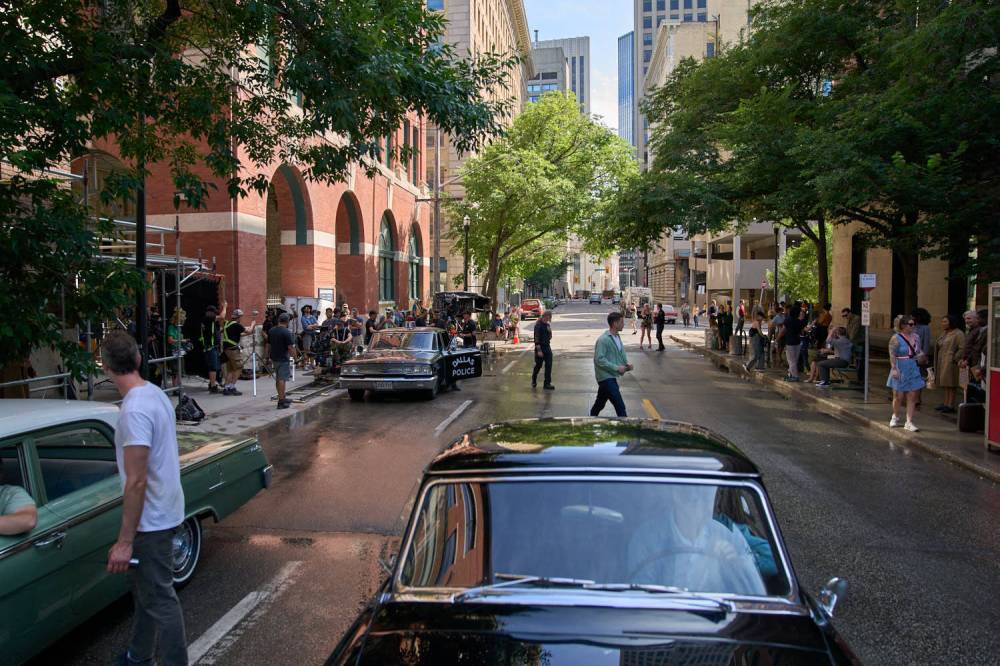
ALLEN FRASER / NOVEMBER 1963
The Exchange District is transformed into Dallas for November 1963.
The film moves fast, but its emotional core is nuanced. The decision to use split screens and simultaneous storylines was rooted in how Celozzi first heard the story himself, from his uncle Joseph (Pepe) Giancana.
“He was the fly on the wall. Now the audience gets to be that fly,” Celozzi says.
Each of the film’s central characters is based on a real person (most of whom are now deceased), giving the cast rare access to historical materials. Actors studied interviews, documents and photos to shape their portrayals. In some cases, they even stayed with relatives of the characters they were playing.
“Roland Joffé spent three days living in one character’s actual home, working with the actor to really get inside the role. It’s been that detailed, that immersive,” DeWalt says.
Casting the right actors to embody such emotionally loaded material was critical.
“I didn’t want anyone who thought this was just another gangster movie; these roles come with weight,” Celozzi says.
“I was in the room with the actors. I could say, ‘No, that’s not how he walked. That’s not how he looked at you.’ And they embraced that.”
The star-studded cast includes John Travolta (Pulp Fiction) as Johnny Roselli; Robert Carlyle (The Full Monty) as Jack Ruby; Dermot Mulroney (My Best Friend’s Wedding) as Chuckie Nicoletti; Mandy Patinkin (Homeland) as Anthony Accardo; Jefferson White (Yellowstone) as Lee Harvey Oswald; and Thomas Fiscella (The Mysterious Benedict Society) as Sam Giancana.
The production team scouted locations in New Orleans and Atlanta before discovering the texture and scale they needed in the Winnipeg.
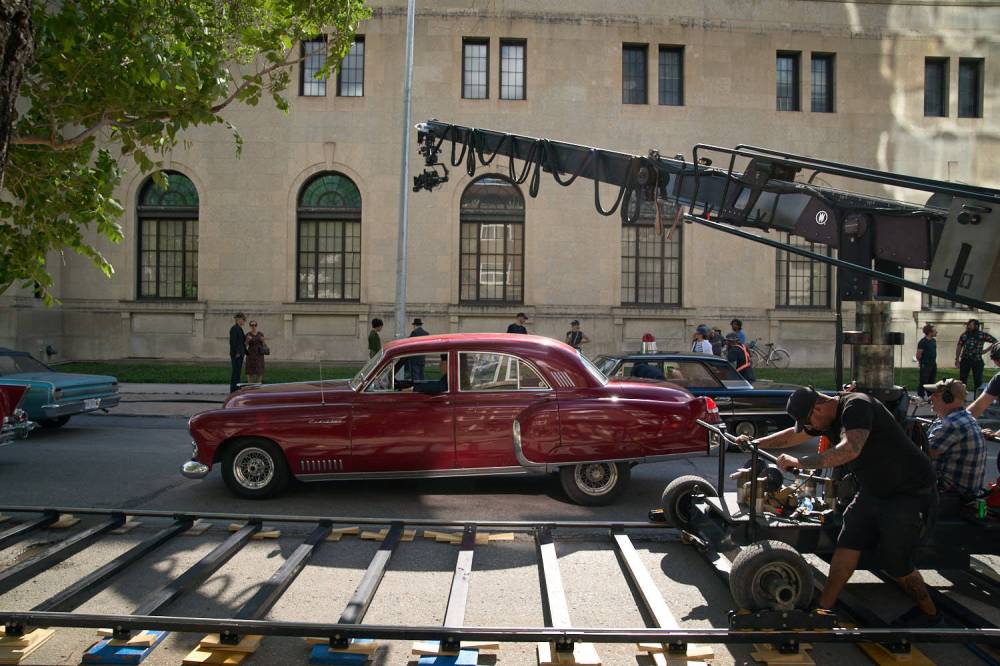
ALLEN FRASER / NOVEMBER 1963
The period cars on set were all locally sourced.
The Exchange District’s turn-of-the-century facades are now doubling as Dallas and Chicago circa 1963, complete with vintage signage, authentic period wardrobe and more than 75 classic cars sourced locally.
“It’s the only place in North America where you can find eight blocks by eight blocks that look like the 1940s or ’50s. The production value is extraordinary. When you see this movie, it will feel like you’re standing on the Grassy Knoll in 1963,” DeWalt says.
Of course, mounting a project of this scale hasn’t been easy. With more than 200 crew members and an estimated 1,500 background actors, it’s the largest production ever undertaken by Mind’s Eye Entertainment.
There’s also a strong emotional undercurrent for DeWalt, who still remembers the day Kennedy was shot.
“I was a kid, but I remember the silence in the house, the shock. It was like 9/11 — the world stopped. And to now be helping tell a story that humanizes that moment … it’s just a thrill on a human level.”
So what will audiences take away?
“I hope they walk out thinking, ‘That makes sense.’ I’m not trying to control how they feel. I’m just putting the truth in front of them,” DeWalt says.
Celozzi knows that truth is unsettling. He knows it raises more questions about government complicity, secrecy and power than it answers. He knows there are echoes in today’s headlines. But he’s not afraid.
“The last person who might’ve had a problem with this died in 2014. And the rest? They’ve either gone quiet or given me their blessing,” he says.
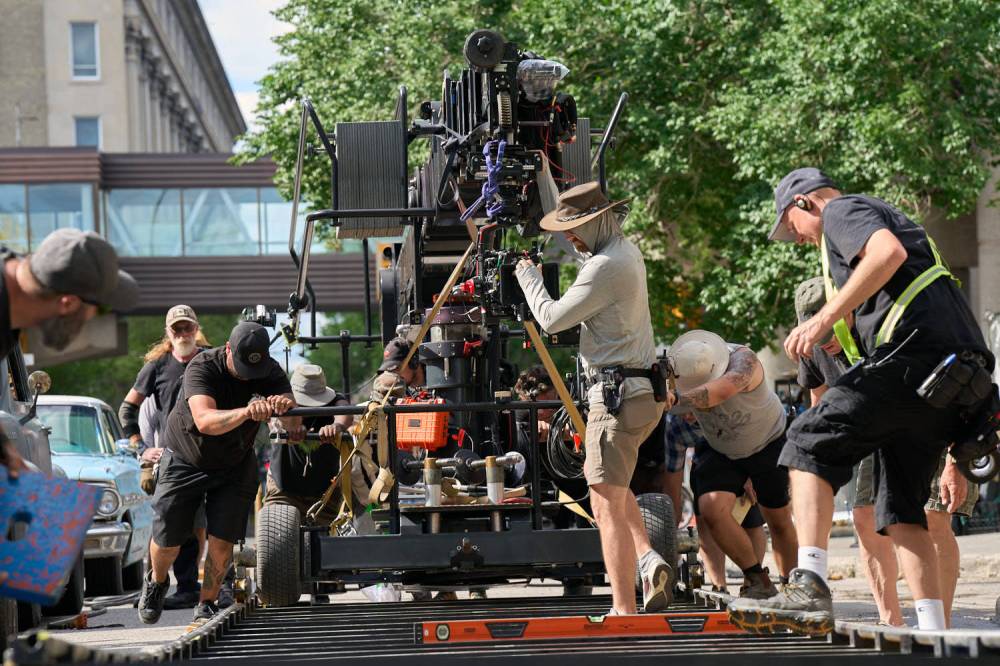
ALLEN FRASER / NOVEMBER 1963
November 1963 is being shot in locations around Winnipeg.

What about his uncles? Would they approve?
“I don’t think Sam would be too happy, but I think he knew I’d do it one day,” he says of the Mafia boss, who died in 1975 at age 67 after being shot seven times while in the basement of his home. There are numerous theories and suspects about who killed Giancana and why, but officially his murder remains unsolved.
At the end of the day, Celozzi isn’t trying to rewrite history, just to correct its tone. To show that the men behind the myths had routines, regrets and love in their lives. That they dressed up for Halloween. That they cried alone after losing a spouse. That they were more than the headlines.
“I’m not saying bad things didn’t happen. I’m saying they were human.”
arts@freepress.mb.ca
If you value coverage of Manitoba’s arts scene, help us do more.
Your contribution of $10, $25 or more will allow the Free Press to deepen our reporting on theatre, dance, music and galleries while also ensuring the broadest possible audience can access our arts journalism.
BECOME AN ARTS JOURNALISM SUPPORTER
Click here to learn more about the project.
If you value coverage of Manitoba’s arts scene, help us do more.
Your contribution of $10, $25 or more will allow the Free Press to deepen our reporting on theatre, dance, music and galleries while also ensuring the broadest possible audience can access our arts journalism.
BECOME AN ARTS JOURNALISM SUPPORTER
Click here to learn more about the project.
Related Articles
Hey, isn’t that John Travolta?

Advertisement Advertise With Us
Advertisement Advertise With Us
History
Updated on Thursday, July 17, 2025 11:39 AM CDT: Adds photo of Travolta.