‘Lion’ of journalism loses its voice as Vancouver’s Langara College program faces end
Advertisement
Read this article for free:
or
Already have an account? Log in here »
To continue reading, please subscribe:

Digital Subscription
One year of digital access for only $205*
- Enjoy unlimited reading on winnipegfreepress.com
- Read the E-Edition, our digital replica newspaper
- Access News Break, our award-winning app
- Play interactive puzzles
*First annual payment billed as $205.00 + GST for one year. This annual subscription will automatically renew at $233.00 + GST every 52 weeks (10% off the regular annual price of $259.35). Offer available to new and qualified returning subscribers only. Cancel any time.
To continue reading, please subscribe:
Add Free Press access to your Brandon Sun subscription for only an additional
$1 for the first 4 weeks*
- Enjoy unlimited reading on winnipegfreepress.com
- Read the E-Edition, our digital replica newspaper
- Access News Break, our award-winning app
- Play interactive puzzles
*Your next Brandon Sun subscription payment will increase by $1.00 and you will be charged $17.95 plus GST for four weeks. After four weeks, your payment will increase to $24.95 plus GST every four weeks.
Read unlimited articles for free today:
or
Already have an account? Log in here »
VANCOUVER – Oksana Shtohryn, a former lawyer in Ukraine, was attracted to the two-year journalism program at Vancouver’s Langara College because it was hands on, quicker to complete than a four-year course.
She’s graduating in June from the program she loves, at a journalism school that has award-winning alumni and a six-decade history.
But days after landing her second internship at a major media outlet, Shtohryn learned that the school was expected to shut down.
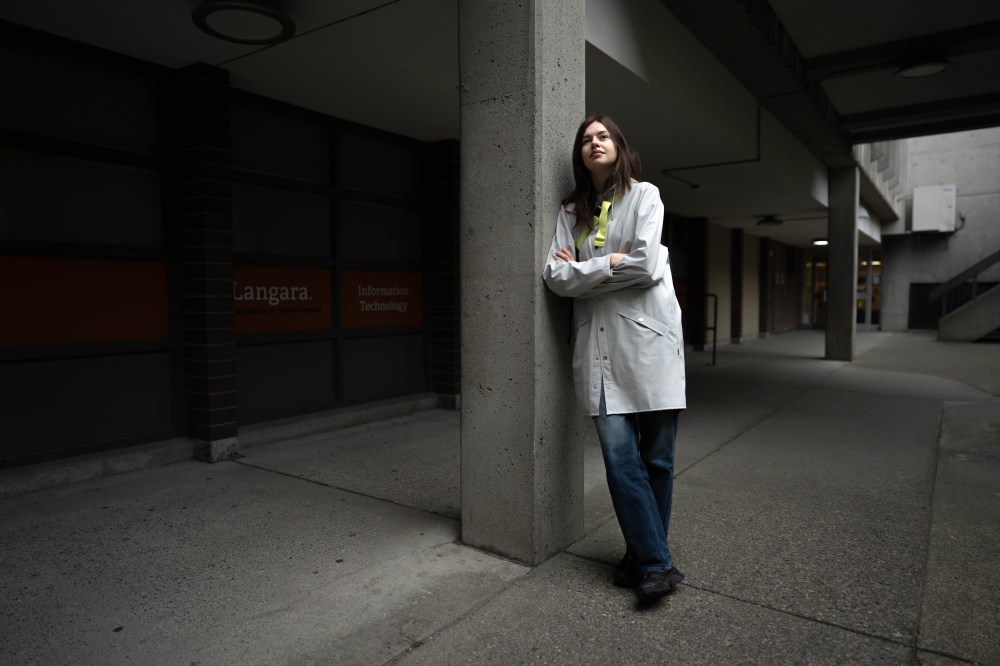
“I went from this high feeling (that) the program had really delivered for me. … to the sadness knowing that future students won’t get the same chance because there won’t be any,” she said.
Just two years ago, the school was celebrating that three of its former students had been honoured with National Newspaper Awards.
Now staff and graduates of the school are preparing for its shuttering, grieving the loss of a program known for offering an express route from the classroom to the newsroom.
While the college says a final decision has not been made, program chair Barry Link said he’s been told to make plans to graduate the last cohort of students in spring 2027.
Langara’s two-year diploma program is the latest in a long line of journalism education options that have been either paused or ended at post-secondary institutions across Canada as the industry struggles and jobs in conventional media environments become scarce.
Link, who graduated from Langara’s one-year certificate program in journalism in 1992, said a final decision from the college on the diploma program is expected this week.
“We’re already scaling back the classes that we’re offering in the next academic year, and we are not taking in any new students at this point,” he said.
“Our returning students, second-year students that are coming back in the fall, we are making plans to teach them out, to graduate them, and then there’s nothing after that.”
He said the loss of the program is awful, even if it is not a surprise after Langara’s one-year certificate program ended last year.
“What comes after this? Where will the new trained journalists or communications professionals come from?” Link said.
“There’s a big conversation about how journalism sort of reinvents itself, and, more importantly, makes itself sustainable. And losing a journalism school is part of that.”
A statement from the college said it was reviewing the journalism program and may recommend to pause the fall 2026 semester intake “due to low student demand,” but says no final decisions have been made.
Link said it’s no secret enrolment was down, with the school getting about half the number of students it used to.
But the curriculum had been updated to add a communications side to the training and the school had been working to move the one-year certificate to an online course before it was ended.
“So there’s been a lot of changes made. There was a lot of energy, a lot of effort put into trying to reshape the program,” he said.
Globe and Mail columnist Gary Mason, a 1982 Langara journalism graduate, remembered it as a highly competitive program with only 20 spots for more than 200 applicants.
“They were just turning out people, year after year after year, that filled newsrooms all throughout the province, in Western Canada and further points east,” he said.
“It’s like losing this kind of lion, you know? That roared for so many years, and now it’s kind of lost its voice, and it’s very, very sad.”
Mason, who has worked for decades in Canadian media, said the Langara program offered more hands-on experience than four-year university degrees.
“An editor wouldn’t have had to do much work on a basic story written by a Langara grad who was fresh out of journalism school, and I think that that was the attraction at the time to the (Vancouver) Sun or the Province (newspapers),” he said.
Decades later, he said he still looks back on his time at Langara fondly.
“It was such an important part of my life. It was only two years, but it really set the direction and put me on a trajectory that I’m on today.”
Archie McLean, an associate journalism professor at Mount Royal University and chair of J-Schools Canada, a national organization that represents journalism schools, said Langara’s situation is not unique.
“Just off the top of my head, in the last five or so years, I could think of five, or 10 probably, programs that have either suspended registration or closed their programs entirely,” he said.
That includes programs in Calgary, Regina and Ontario, he said.
There are fewer journalism jobs and those that do exist are often more precarious and demanding, he said.
“The business itself, the industry itself, is not super healthy right now, and so that has a trickle-down effect into post-secondary institutions,” he said.
Shtohryn said ending the program means limiting choices for those who want to go into journalism.
She said she was hopeful of a job in journalism, because she’s passionate about the work, but she worries about the industry.
“For new journalists, I feel like you just have to get ready for that instability ahead of us,” she said.
McLean said the Langara journalism program made a big difference in the media scene in British Columbia and losing it is sad even if it is part of a larger trend.
“It doesn’t make it any less hard for students and graduates and instructors of the program who really had a deep attachment to it. So each one of these program closures is really sad,” he said.
“Some of them may come back, but it does feel like a lot of them won’t be around anymore, and that’s definitely sad for those of us who care about journalism and care about journalism education.”
Mason said he would still encourage prospective journalism students to give it try if they are passionate.
“it’s probably more important today than it ever has been so I would say to somebody, if you really believe that, if you have this burning passion to, you know, be a truth seeker, then absolutely go into it.”
This report by The Canadian Press was first published May 18, 2026.