After 39 years, Antoni Cimolino prepares to take his final bow at Stratford
Advertisement
Read this article for free:
or
Already have an account? Log in here »
To continue reading, please subscribe:

Digital Subscription
One year of digital access for only $205*
- Enjoy unlimited reading on winnipegfreepress.com
- Read the E-Edition, our digital replica newspaper
- Access News Break, our award-winning app
- Play interactive puzzles
*First annual payment billed as $205.00 + GST for one year. This annual subscription will automatically renew at $233.00 + GST every 52 weeks (10% off the regular annual price of $259.35). Offer available to new and qualified returning subscribers only. Cancel any time.
To continue reading, please subscribe:
Add Free Press access to your Brandon Sun subscription for only an additional
$1 for the first 4 weeks*
- Enjoy unlimited reading on winnipegfreepress.com
- Read the E-Edition, our digital replica newspaper
- Access News Break, our award-winning app
- Play interactive puzzles
*Your next Brandon Sun subscription payment will increase by $1.00 and you will be charged $17.95 plus GST for four weeks. After four weeks, your payment will increase to $24.95 plus GST every four weeks.
Read unlimited articles for free today:
or
Already have an account? Log in here »
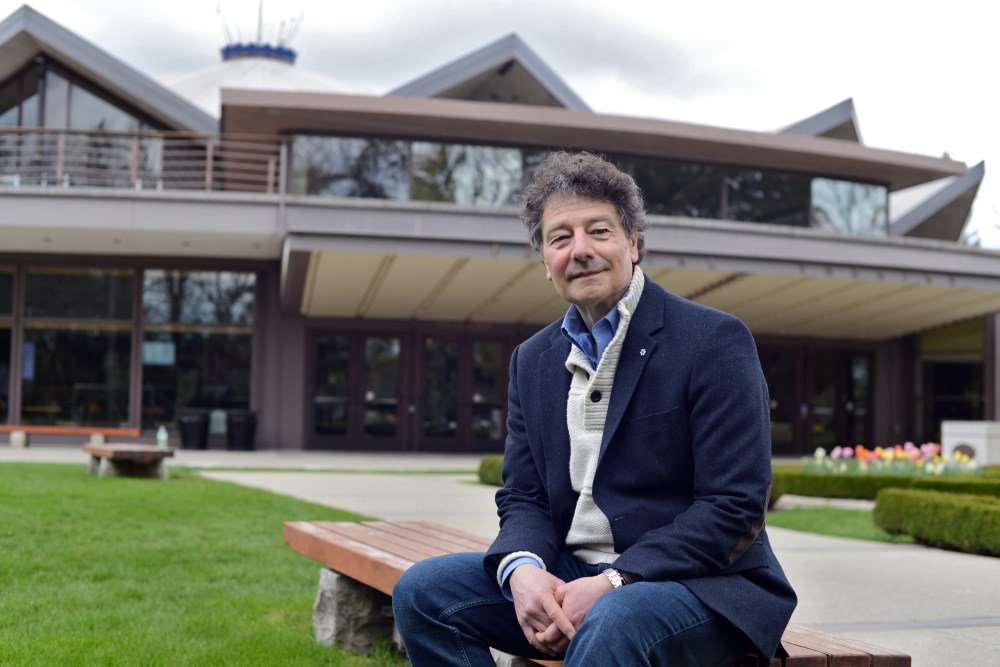
STRATFORD, ONTARIO – Antoni Cimolino is ending his tenure at the helm of Canada’s most influential theatre institution on a reflective note.
Perhaps unsurprisingly, his farewell season is rich with metaphor.
Its name, “This Rough Magic,” is tied to a line from “The Tempest,” which was the last play written by Shakespeare alone. The magic, Cimolino explained, is the theatre itself.
“I wanted to celebrate the power of theatre, and what it’s meant to my life,” he said.
“But also, I wanted celebrate the power of theatre in the world we live in today. We need theatre like never before.”
The season will open with a production of “The Tempest” directed by Cimolino himself. It’s only the ninth time the festival has staged the play in its 73-year history, and in eight of those cases it was directed by the man at Stratford’s helm.
“The Tempest” is considered something of a farewell from the Bard. So too will it be part of Cimolino’s goodbye.
Prospero is often seen as an analog for Shakespeare. His magic captivates his audience, but it also separates Prospero from the life he lived before. At the end of Act V, he casts aside his magic and returns to his old life. The audience’s applause, Prospero says in the epilogue, will set him free from the spell.
“The magic of watching people onstage — we know that they’re actors, we know they’re not in that actual situation, but by witnessing them going through that, we kind of live through it vicariously,” he said.
“And so it becomes like a jungle gym for life. It becomes a place that we can safely witness conflict and see how that conflict is resolved.”
The 65-year-old theatre executive started at the festival in 1988 as an actor, playing Romeo opposite Megan Follows’ Juliet in 1992, before moving into directing in the mid-’90s.
From there, he continued to climb. He became general manager and then executive director, overseeing the financial side of Stratford’s operations. That included creating the multimillion-dollar endowment foundation in 1999 and modernizing the Studio Theatre in 2002.
In 2013, he became artistic director, shifting gears to the creative side of the business.
“What I’ve witnessed over the course of the almost four decades that I’ve been here is that Stratford as an arts institution has had to pick up a lot of the pieces that have been dropped a bit in society,” he said.
Ontario’s education system has in recent years focused more on math and sciences than literature and art, Cimolino said. In response, the festival has had to teach both its actors and its audiences.
It offers professional development courses for school teachers, and in 2013, early in his tenure as artistic director, Cimolino announced each season would have a theme and launched what’s now called the Meighen Forum, a series of talks meant to explore the ideas presented by the festival’s playbill.
That same year, the festival introduced a direct bus that runs from downtown Toronto to downtown Stratford because the city has for a long time been underserved by public transportation.
All this was necessary for the festival to survive, he said.
But none of those measures could prepare Stratford for COVID-19, which struck seven years into Cimolino’s tenure as artistic director.
The 2020 season had to be cancelled. In its place, Stratford uploaded 12 plays they’d filmed and launched a streaming service, Stratfest@Home.
Asked to reflect on Cimolino’s legacy, that’s what actor Paul Gross thinks about: “The stress involved in trying to carry an organization like this with all of these employees, when everything is shut down and you have no way of generating any income because nobody can come to the theatre.”
“We owe them an enormous debt of gratitude for that,” he said, referring to Cimolino and executive director Anita Gaffney.
Gross, who portrays Vladimir in this year’s production of “Waiting for Godot,” said it is a minor miracle that Stratford is in the financial shape it is.
As of October 2025, the Stratford Shakespearean Festival Endowment Fund had $158 million in assets, including $144 million in long-term investments, according to the Canada Revenue Agency’s database of registered charities.
The festival itself had revenue of $73.3 million last year, according to CRA filings, but ran a $5-million deficit, spending $78.9 million.
“My work in recent years, since becoming artistic director, is really about selecting the plays, selecting the players. So it was much more focused on the art,” Cimolino said. “Whereas for a good long period of time, it was focused on the development of Stratford as an institution: building up our resources, making sure that every function behind the scenes was good and strong.”
Last year’s festival was the longest in its history, stretching into mid-December thanks in large part to the success of the musical “Annie.” The show was extended until Dec. 14, while three others ran through to mid-November.
“If you’re going to divide up the leadership into two people as we’ve done, an executive and an artistic director, you need an executive director who really cares about the art, who wants to see it happen. Not finances first, but art first. And you also need an artistic director who cares about the finances, that doesn’t want to bankrupt the place, that is going to be careful in allocating resources.”
Cimolino said the work involved in keeping the festival running — including all the education they do — is taxing.
“That creates a lot of burden on an institution, to be all things to all people, and I worry about that.”
With that greater role, he said, should come recognition that the festival is “not something that is a frill” — it should be supported like an essential service.
In addition to cultural literacy, the service includes community-building, he said.
“There’s more and more conflict in the world. There seems to be more and division in society that is in part fuelled by devices that we hold inches from our face that tell us exactly what we want to hear,” Cimolino said.
The theatre is the opposite, he said. It’s a physical place where everyone is oriented toward the same thing, over which they have no control.
“Theatre is a place where we come together as a community…. We laugh at what’s foolish, we are moved by things that we think are heroic or selfless, and we come to communal values together.”
Like Cimolino, Donna Feore has spent the bulk of her career at Stratford. She started with the festival in 1990 as a featured dancer in “Guys and Dolls” and now serves as artistic associate for musical theatre development.
This season, she’s directing and choreographing both musicals at the festival: “Something Rotten” and a new production of the show in which she got her Stratford start.
“A lot of things in this space haven’t changed because of the tradition and history here,” she said.
But in some ways, things are different.
“Our programming is really exciting,” she said. “We’re doing some really interesting, brave choices and looking at new work. That’s changed a lot since I started here — the real desire for new work, both in plays and musicals.”
New plays that debuted at the festival during Cimolino’s tenure include works by Hannah Moscovitch (“Bunny” in 2016); Erin Shields (“Paradise Lost” in 2018); and Jovanni Sy and Leanna Brodie (“Salesman in China” in 2024).
Stratford commissioned its first new play in 1958 — just five years since the festival’s inception — but for most of its life it was focused on the classics.
“I wanted us to become a generator of new works so that the voice of the ancients was right alongside the contemporary voice, the voice today,” Cimolino said.
Combining the two — the old and the new — can help audiences make sense of the world, he said.
Cimolino’s successor is Jonathan Church, a British theatre director who’s been a frequent audience member at Stratford but has never directed there. Church will take up the post on Nov. 1.
This season will feature two world premieres: “The King James Bible Play” by Charlotte Corbeil-Coleman and “The Tao of the World” by Sy.
It will also include a production of “Saturday, Sunday, Monday” — an Italian play originally written by Eduado De Filippo in 1959. The script was first translated into English in the 1970s, but as part of his final season, Cimolino wanted to breathe fresh life into it with a new translation.
The play, which is set in Naples in the late ’50s, is about a family at Sunday dinner. The husband suspects his wife of cheating, the wife feels her husband isn’t complimentary enough about her cooking.
He and York University professor Donato Santeramo translated the script together.
For Cimolino, it resonates personally. He grew up in Sudbury, Ont., the son of Italian immigrants.
“Italian was my first language, Donato and I both,” he said. “We have heard these expressions that are said in this play from our mothers and fathers. We’ve lived in those households. We know what it’s like.”
Family is top of mind as Cimolino prepares to end his tenure at Stratford. The festival — and the town it’s named for — is where he and his wife built their family.

After this season, he’ll head to Halifax to be with his son and granddaughter. Then, to Taiwan, where his daughter has lived for a number of years.
“I probably wasn’t as home as much as I should have been. My children are grown up. My son’s just had a daughter. And I’m really thinking, how much of my life do I want to continue to dedicate to putting on plays and how much do I want to do the things I didn’t do before?” he said.
“I think I’ve got to find that right balance now. I’ve led an exciting life, but not a balanced life.”
And so Prospero will leave his island.
This report by The Canadian Press was first published May 25, 2026.
Related Articles
Stratford Festival names Jonathan Church as its next artistic director

Advertisement Advertise With Us
Advertisement Advertise With Us