Elementary school days inspire musician’s latest
Memories of East Selkirk evoked on Zoon Monkman’s new album

Advertisement
Read this article for free:
or
Already have an account? Log in here »
To continue reading, please subscribe:

Digital Subscription
One year of digital access for only $205*
- Enjoy unlimited reading on winnipegfreepress.com
- Read the E-Edition, our digital replica newspaper
- Access News Break, our award-winning app
- Play interactive puzzles
*First annual payment billed as $205.00 + GST for one year. This annual subscription will automatically renew at $233.00 + GST every 52 weeks (10% off the regular annual price of $259.35). Offer available to new and qualified returning subscribers only. Cancel any time.
To continue reading, please subscribe:
Add Free Press access to your Brandon Sun subscription for only an additional
$1 for the first 4 weeks*
- Enjoy unlimited reading on winnipegfreepress.com
- Read the E-Edition, our digital replica newspaper
- Access News Break, our award-winning app
- Play interactive puzzles
*Your next Brandon Sun subscription payment will increase by $1.00 and you will be charged $17.95 plus GST for four weeks. After four weeks, your payment will increase to $24.95 plus GST every four weeks.
Read unlimited articles for free today:
or
Already have an account? Log in here »
At the dawn of the MP3 era, an adolescent Zoon Monkman didn’t have the money for an iPod or a Microsoft Zune, the short-lived competitor to Apple’s revolutionary personal-listening device.
What the recording artist from Brokenhead Ojibway Nation did have in his backpack was the catalogue for the Scholastic Book Club, where only one product demanded attention: an AM-FM radio pen that scoured the airwaves for connection with every click.
For Monkman — a Polaris Music Prize-nominated musician who records as Zoon and pioneered the “moccasingaze” genre, which blends the dreamy textures of shoegaze with the rhythms and energies of Indigenous song — his mother’s gift of the ballpoint pen was a means of both self-discovery and the development of his musical taste.
ZOON PHOTO Zoon’s most recent album, Happy Thought School, was released in June by Paper Bag Records.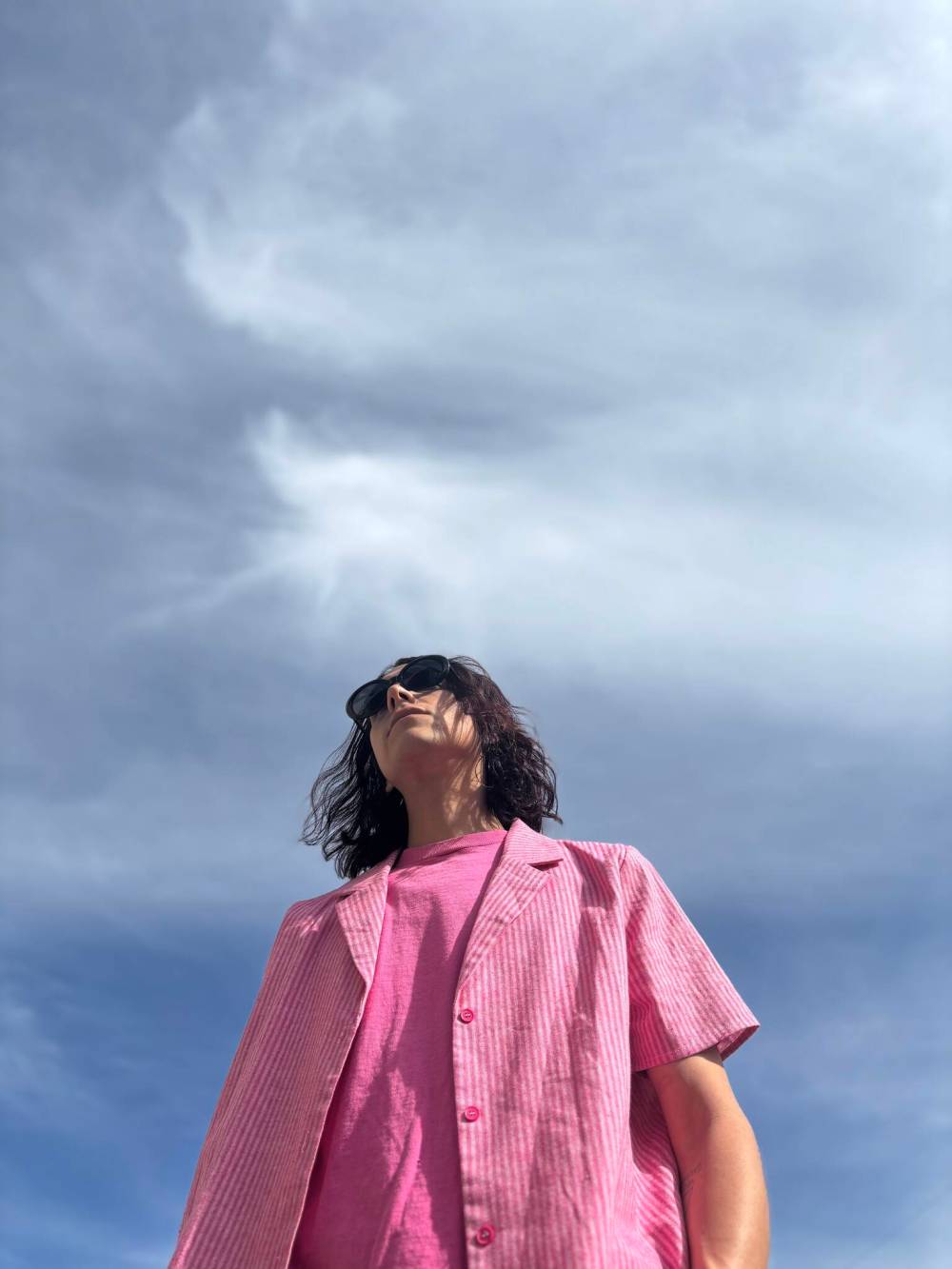
During lonely days as an elementary student at East Selkirk’s Happy Thought School, the device was also a recess-hour tether to distant worlds, where artists such as Feist, Avril Lavigne and Broken Social Scene were introduced by the enthusiastic voice of a man who called himself Ace Burpee.
“The only way I could really get a signal was to wander to the very, very back, the far edge of the school, climbing trees to get to higher ground,” says Monkman, 34, who also plays in the alt-rock act Ombiigizi.
“My sister and brother were twins, so they had each other. But at school in Selkirk I was kind of alone, having to deal with the stress of school, so this radio pen was kind of like my lifeline. It kind of felt like I was in that world for as long as the lunch hour lasted, and then it was back to having to deal with the school.”
Monkman’s musical and personal education, and his family’s scholastic experiences, are the most explicit influences on the artist’s most recent record, Happy Thought School, released in June through Toronto’s Paper Bag Records.
Happy Thought School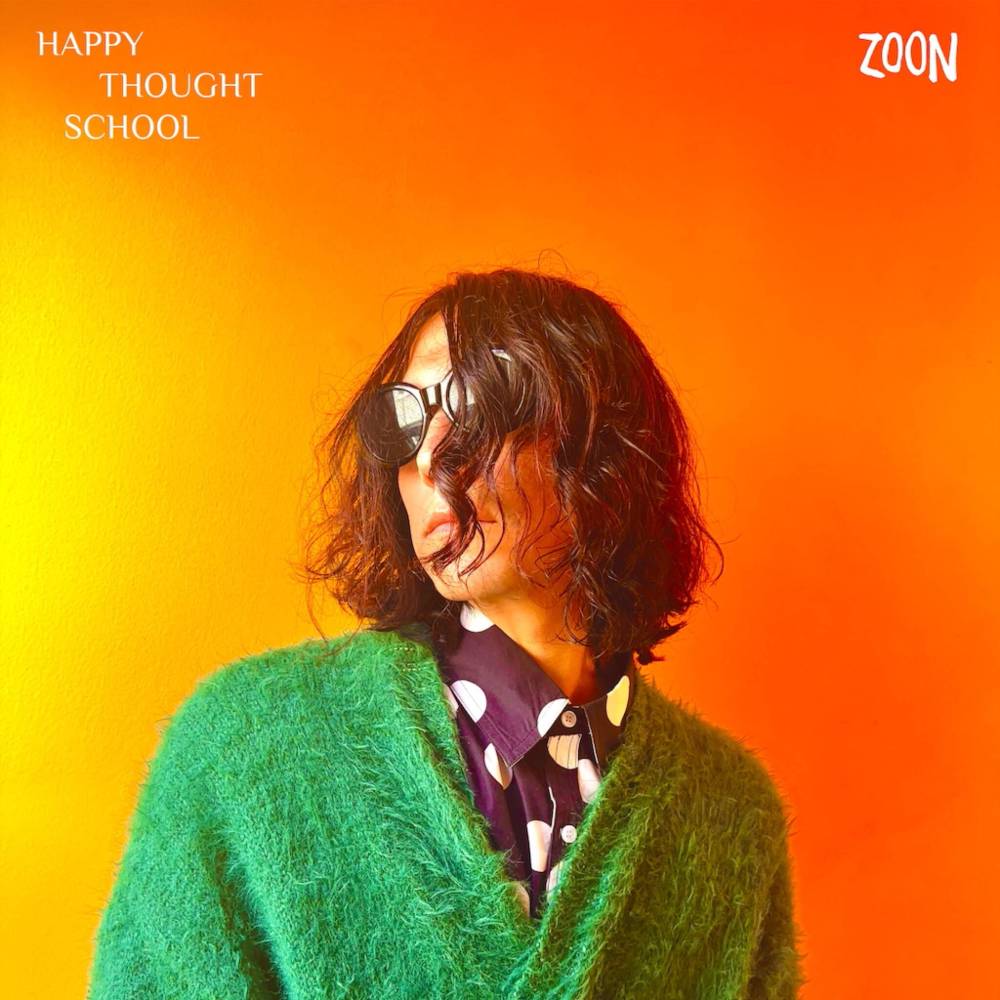
Following 2020’s Bleached Wavves and 2023’s Bekka Ma’iingan, two records which were defined by ethereality and contemplative distance, Happy Thought School is Zoon’s most conversational work to date. The title track begins with propulsive chamber pop and bird calls that lead to sampled interviews with his mother and his aunt Dorothy about their experiences with racism in Manitoba’s school system.
Decades before Monkman climbed trees to find Nirvana, the musician’s matriarchs were told by a school principal they weren’t welcome inside.
“We literally had to stay on the bus,” Dorothy says.
For Monkman, who has collaborated with artists such as Broken Social Scene, Laraaji and Lee Ranaldo of Sonic Youth (the pair played an improvisational set with Ranaldo’s wife, Winnipeg-raised multimedia artist Leah Singer, at the Art City Ball in May), the record was inspired by encouragement to explore pop sensibilities.
That led Monkman to work with Chris Chu of American indie-rock band Pop Etc., but also to reflect on how he first encountered pop music: with cheap headphones, at low frequencies, and through spotty signals from schoolyard treetops.
ZOON PHOTO Zoon‘s first two records were defined by ethereality and contemplative distance; with his third record, Happy Thought School, is his most conversational work to date.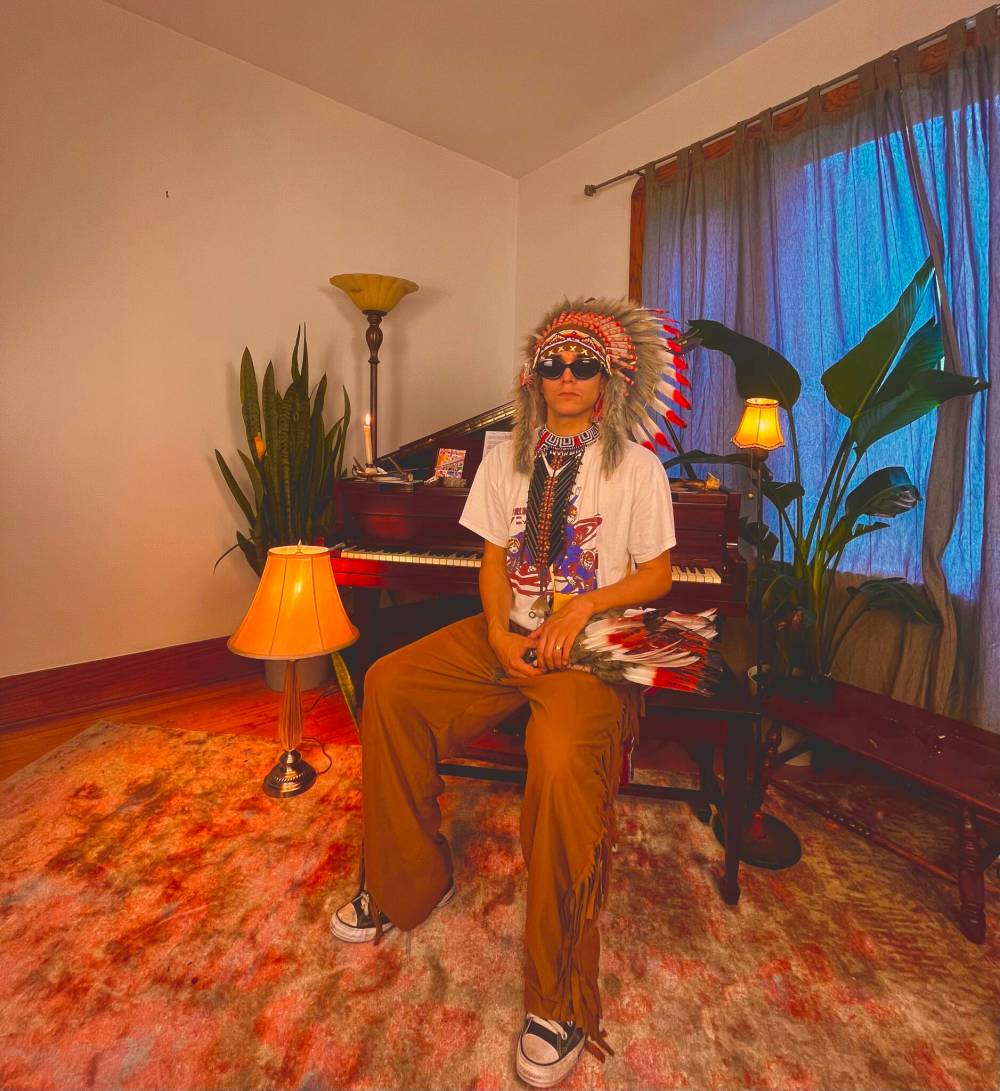
Underneath that thematic canopy, each track — especially You Can’t See Me (This Low) — feels like a transmission between past and future selves, reminders that where we arrive is always defined by where we’ve been and where we’ve been told to go.
The poppy sounds, energetic beats and optimistic title belie experiences of solitude and perseverance shared by Indigenous people around the world, the artist says.
“My mom and my aunt were able to share these stories about their experiences, and to have those recordings meant so much to me,” Monkman says, discussing the title track. “If you look up the life expectancy of Indigenous people, it isn’t that long. For them to pass down this knowledge is very meaningful, and I wanted to share that in an album. I think I was able to convey it in a beautiful way.”
ben.waldman@freepress.mb.ca
If you value coverage of Manitoba’s arts scene, help us do more.
Your contribution of $10, $25 or more will allow the Free Press to deepen our reporting on theatre, dance, music and galleries while also ensuring the broadest possible audience can access our arts journalism.
BECOME AN ARTS JOURNALISM SUPPORTER
Click here to learn more about the project.
Ben Waldman is a National Newspaper Award-nominated reporter on the Arts & Life desk at the Free Press. Born and raised in Winnipeg, Ben completed three internships with the Free Press while earning his degree at Ryerson University’s (now Toronto Metropolitan University’s) School of Journalism before joining the newsroom full-time in 2019. Read more about Ben.
Every piece of reporting Ben produces is reviewed by an editing team before it is posted online or published in print — part of the Free Press‘s tradition, since 1872, of producing reliable independent journalism. Read more about Free Press’s history and mandate, and learn how our newsroom operates.
Our newsroom depends on a growing audience of readers to power our journalism. If you are not a paid reader, please consider becoming a subscriber.
Our newsroom depends on its audience of readers to power our journalism. Thank you for your support.
Listen up
Kris Ulrich’s take on the Kinks
Last month, Winnipeg rocker Kris Ulrich turned back the clock to 1970 for his cover of This Time Tomorrow, the eighth track from the Kinks’ classic record Lola Versus Powerman and the Moneygoround, Part One. The 2024 winner of the Western Canadian Music Award for best rock artist, Ulrich’s throwback sound is an ideal fit for Ray Davies’ timeless lyrics. The track is available for purchase at krisulrich.bandcamp.ca, along with his 2025 EP Remainders. Catch Ulrich along with indie duo Slow Spirit at the Lyric Theatre in Assiniboine Park on Thursday.
The Haileys love a dumpster fire
The latest track from these mononymous Winnipeg rockers is dedicated to “the hot messes, train wrecks and beautifully chaotic people out there.” Released Sunday, Walking Disaster is a rollicking hit in the making for the group. “I should cancel my subscription; I should stop fuelling her fire,” the song begins. But looking away is easier said than done.
Irvin Miller is everywhere
He and his blues-rock band kept the Canada Life Centre crowd entertained at Thursday night’s Sea Bears playoff win, and Miller isn’t slowing down. Powered by cane sugary Coca-Cola, the 23-year-old rocker played two shows over the weekend and heads to Ear Falls, Ont., this Friday for a performance at the Trout Forest Music Festival. The rest of the bill includes local acts such as the Bros. Landreth, D. Rangers, KC is Lazy and Tommy Douglas Keenan. Visit troutfest.com for tickets and more lineup info.
If you value coverage of Manitoba’s arts scene, help us do more.
Your contribution of $10, $25 or more will allow the Free Press to deepen our reporting on theatre, dance, music and galleries while also ensuring the broadest possible audience can access our arts journalism.
BECOME AN ARTS JOURNALISM SUPPORTER
Click here to learn more about the project.
Ben Waldman is a National Newspaper Award-nominated reporter on the Arts & Life desk at the Free Press. Born and raised in Winnipeg, Ben completed three internships with the Free Press while earning his degree at Ryerson University’s (now Toronto Metropolitan University’s) School of Journalism before joining the newsroom full-time in 2019. Read more about Ben.
Every piece of reporting Ben produces is reviewed by an editing team before it is posted online or published in print — part of the Free Press‘s tradition, since 1872, of producing reliable independent journalism. Read more about Free Press’s history and mandate, and learn how our newsroom operates.
Our newsroom depends on a growing audience of readers to power our journalism. If you are not a paid reader, please consider becoming a subscriber.
Our newsroom depends on its audience of readers to power our journalism. Thank you for your support.
Advertisement Advertise With Us
Advertisement Advertise With Us