‘It’s high-tech theft’: As AI music booms, Canadian artists demand consent, transparency and pay
Advertisement
Read this article for free:
or
Already have an account? Log in here »
To continue reading, please subscribe:

Digital Subscription
One year of digital access for only $205*
- Enjoy unlimited reading on winnipegfreepress.com
- Read the E-Edition, our digital replica newspaper
- Access News Break, our award-winning app
- Play interactive puzzles
*First annual payment billed as $205.00 + GST for one year. This annual subscription will automatically renew at $233.00 + GST every 52 weeks (10% off the regular annual price of $259.35). Offer available to new and qualified returning subscribers only. Cancel any time.
To continue reading, please subscribe:
Add Free Press access to your Brandon Sun subscription for only an additional
$1 for the first 4 weeks*
- Enjoy unlimited reading on winnipegfreepress.com
- Read the E-Edition, our digital replica newspaper
- Access News Break, our award-winning app
- Play interactive puzzles
*Your next Brandon Sun subscription payment will increase by $1.00 and you will be charged $17.95 plus GST for four weeks. After four weeks, your payment will increase to $24.95 plus GST every four weeks.
Read unlimited articles for free today:
or
Already have an account? Log in here »
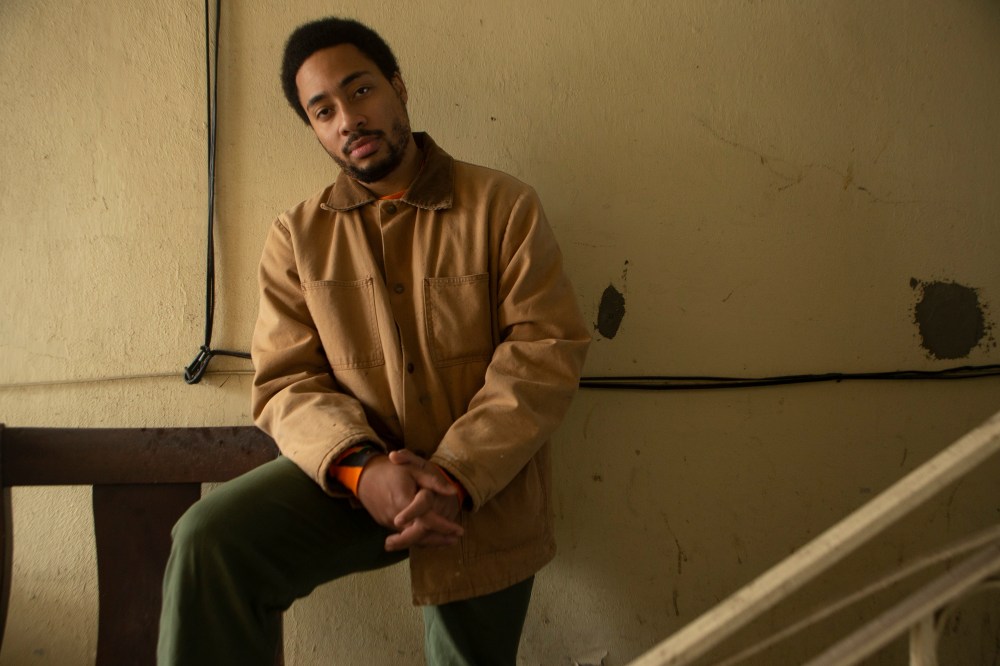
Cadence Weapon never gave artificial intelligence permission to learn from his music.
But the Edmonton-raised rapper, born Rollie Pemberton, says he recently found 129 of his songs in datasets used to train AI music generators.
He was alarmed, but not surprised. To Pemberton, it’s part of a broader fight musicians face as AI-generated music floods streaming platforms and companies train models on existing creative work, often without artists’ knowledge or consent.
“It definitely feels like an existential struggle for artists today against AI,” he says. “It feels challenging to navigate on a few different levels because AI inherently relies on scraping existing data.”
The concerns come as Canada’s music industry pushes for rules requiring AI companies to compensate the songwriters and musicians whose work helps power their systems.
The federal government is currently holding a public consultation on AI transparency, asking what meaningful disclosure should look like as the technology becomes increasingly embedded across the economy. Music organizations, including SOCAN and Music Publishers Canada, are preparing submissions.
In a statement, the government said it’s seeking “a balanced copyright framework” that protects creators while supporting AI innovation and investment. It encouraged Canadians to share input through the public consultation, which runs until Sept. 23.
Pemberton says he’s already seen AI creep into recording sessions, with some producers using the technology to generate elements such as drum parts — an approach he rejects. Now, he’s watching it creep into the charts, too.
Earlier this month, Los Angeles rapper Fenix Flexin acknowledged on social media he used AI on his viral hit “RUBBERZ,” calling it a tool artists must “keep up” with or “get left behind.” The synth-pop track, sung in a Morrissey-like affectation, reached No. 58 on the Billboard Hot 100.
Meanwhile, Compton rapper Tyga said he used AI on his new album “$tarface,” while superproducer Dr. Dre recently said he uses AI as “a tool for creativity.”
Pemberton is less enthused. He sees independent artists getting squeezed from both sides: their work helps train AI systems, while the resulting music competes for the same listeners.
Apple Music vice-president Oliver Schusser said earlier this year that “more than a third” of tracks uploaded to the platform were “100% AI.” Streamer Deezer recently said about 44 per cent of new songs it receives each day are AI-generated. Spotify, meanwhile, said last year it had removed 75 million “spammy” AI-generated tracks from its service.
“It’s flooding every platform with slop and diluting payments even more on Spotify,” Pemberton says. “These slop merchants are making it even worse for artists than it already was.”
For the music industry, the issue is not simply whether songs are being used to train models. It’s that AI music generators have been largely unwilling to say what they are using.
WHERE DID AI LEARN TO SING?
Music Publishers Canada CEO Margaret McGuffin says the organization frequently hears from songwriters and publishers who discover their music has appeared in AI training datasets.
“We believe that this is an infringement of copyright,” says the head of the non-profit representing music publishers and their songwriting partners.
“Those companies that are doing that scraping and training of those songs need to pay, and there needs to be consent. There needs to be transparency also, in terms of what’s been scraped and what’s been used to train models.”
In June, an investigation published by The Atlantic found four giant datasets containing more than 21 million music tracks that had circulated among AI developers as training material for creating AI models. The publication said they were discovered by examining AI research papers and scouring data-sharing sites where developers exchange training data.
The datasets allegedly included music by independent Canadian artists such as Backxwash, Luna Li, Tre Mission, Lunice and Nemahsis. Several complained on social media that they believed their work had been used without permission or compensation.
“I’m sure there are positive uses for AI but I don’t think that stealing existing humans’ work is the way to do it,” says Grammy-winning Canadian roots artist Allison Russell. Forty of her songs appear in The Atlantic’s database of music identified in AI training datasets.
“They’re learning without consent from everything that’s out there and then trying to imitate it. We need legal guardrails, frankly. It’s high-tech theft.”
AI companies have generally argued that training models on publicly available material qualifies as fair use under copyright law. Suno, which is facing litigation in the U.S. from major record labels, has acknowledged training its model on “tens of millions” of recordings from the “open internet,” many of them copyrighted, but says the practice is lawful.
Suno did not respond to email requests for comment. Two other popular platforms, Udio and Treblo, also did not provide comment for this article.
The datasets that have been revealed don’t show which AI companies used the music for training.
Artists often have no concrete way to prove their music was used.
That lack of transparency is one of the biggest obstacles to enforcing copyright, says Fraser Turnbull, head of legal and policy at SOCAN.
“Without knowing whether or not your work has been used, that’s the difficult part of enforcing your rights,” Turnbull says. “You have to at least prove some of the elements of copyright infringement.”
WHO GETS PAID WHEN AI MAKES HITS?
SOCAN is among the music bodies pushing for federal rules requiring AI developers to report what goes into their systems.
“We are looking for a transparency legislation from the Canadian government to say if you are a developer of an AI system, you have to disclose everything that that AI system trained on,” Turnbull says.
The performance rights organization recently announced an exploratory collaboration with Musical AI, a company developing music-attribution technology.
They’re testing whether the platform can identify existing works that contributed to an AI-generated output — potentially allowing the creators whose music helped shape it to be compensated.
The project remains in the proof-of-concept stage, with no system yet implemented.
One challenge is scale. If an AI-generated song contains hundreds of tiny musical fragments, SOCAN would have to determine how many creators should receive money and how much each should get.
“Do we start making really small micropayments to everyone on a work?” Turnbull says. “Or do we have to look at a higher scale of, OK, these were the top 10 works that influenced an output?”
THE COPYRIGHT FIGHT IN OTTAWA
The industry is also watching legal battles abroad.
A recent German ruling found Suno infringed copyright by using protected songs to train its AI system. Turnbull calls the decision “very promising,” though it’s expected to be appealed.
But the music industry isn’t just asking AI companies to pay up. It’s also warning Ottawa not to change the rules in their favour.
During a 2024 federal consultation, tech companies argued that training AI on copyrighted material does not infringe copyright. Google said existing law already permits it, and urged the government to adopt an exemption to make that explicit. Canadian AI firm Cohere similarly called for the law to clearly state the training process doesn’t violate copyright.
Music Publishers Canada and SOCAN are urging the government to rule out introducing a broad text-and-data-mining exception to copyright law.
“If (AI companies) think they can get this, they’re not going to enter into fair agreements based on the needs of songwriters and publishers,” McGuffin says.
Canada’s long-awaited 50-page national AI strategy, released in June, made no mention of copyright, drawing criticism from creative industries.
Last year, Australia’s federal government firmly decided against changing its copyright law to allow text-and-data mining without permission. McGuffin says a similar stance in Canada could pave the way for “cooperative licensing deals that have creators getting paid” for the use of their music.
“We’re asking the Canadian government to make it clear for everyone in the marketplace that there’s not going to be any ambiguity,” Turnbull agrees, “and that AI companies will have to properly compensate creators for their works.”

Last month, Music Publishers Canada also intervened in a federal court case over an AI-altered image inspired by Vincent van Gogh’s painting “The Starry Night,” arguing that only human creators should qualify as authors under copyright law.
Meanwhile, Canadian artists like Pemberton are keeping focus on what AI can’t replicate: the messy, unpredictable process of human creativity.
No matter how well AI can mimic the music, he argues, it can’t feel the feelings that make it meaningful.
“It doesn’t have a broken heart,” he says. “It doesn’t have the sad experiences to draw from. It doesn’t live.”
This report by The Canadian Press was first published Aug. 27, 2026.

Advertisement Advertise With Us
Advertisement Advertise With Us