For a century, journalists have had a voluntary ethics code. Editors are giving it an AI-era reboot
Advertisement
Read this article for free:
or
Already have an account? Log in here »
To continue reading, please subscribe:
Digital Subscription
One year of digital access for only $1.44 a week*
- Enjoy unlimited reading on winnipegfreepress.com
- Read the E-Edition, our digital replica newspaper
- Access News Break, our award-winning app
- Play interactive puzzles
*Billed as $5.77 plus GST every four weeks. After 52 weeks, price increases to the regular rate of $19.95 plus GST every four weeks. Offer available to new and qualified returning subscribers only. Cancel any time.
To continue reading, please subscribe:
Add Free Press access to your Brandon Sun subscription for only an additional
$1 for the first 4 weeks*
- Enjoy unlimited reading on winnipegfreepress.com
- Read the E-Edition, our digital replica newspaper
- Access News Break, our award-winning app
- Play interactive puzzles
*Your next Brandon Sun subscription payment will increase by $1.00 and you will be charged $17.95 plus GST for four weeks. After four weeks, your payment will increase to $24.95 plus GST every four weeks.
Read unlimited articles for free today:
or
Already have an account? Log in here »
NEW YORK (AP) — Walk into a corner of a newsroom somewhere and you can often find it affixed to a bulletin board, perhaps peeking out from behind the coffee pot: the Society of Professional Journalists’s Code of Ethics. It’s less than a thousand words, fitting neatly on a poster.
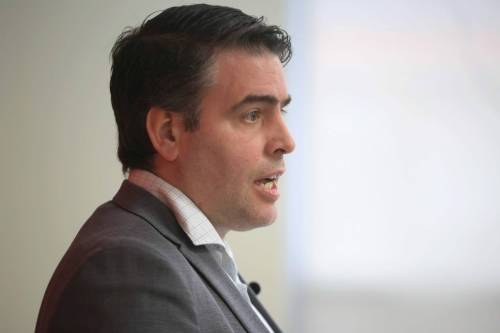
But those words — organized around four key journalistic principles — are important enough, asserts Dan Axelrod, that they just might save our democracy.
“I’m going to just say it,” says Axelrod, chairman of the SPJ Ethics Committee and former longtime Gannett business reporter. ”This is the way to protect democracy. This is to protect society. There but for the grace of God goes a society without journalists.”
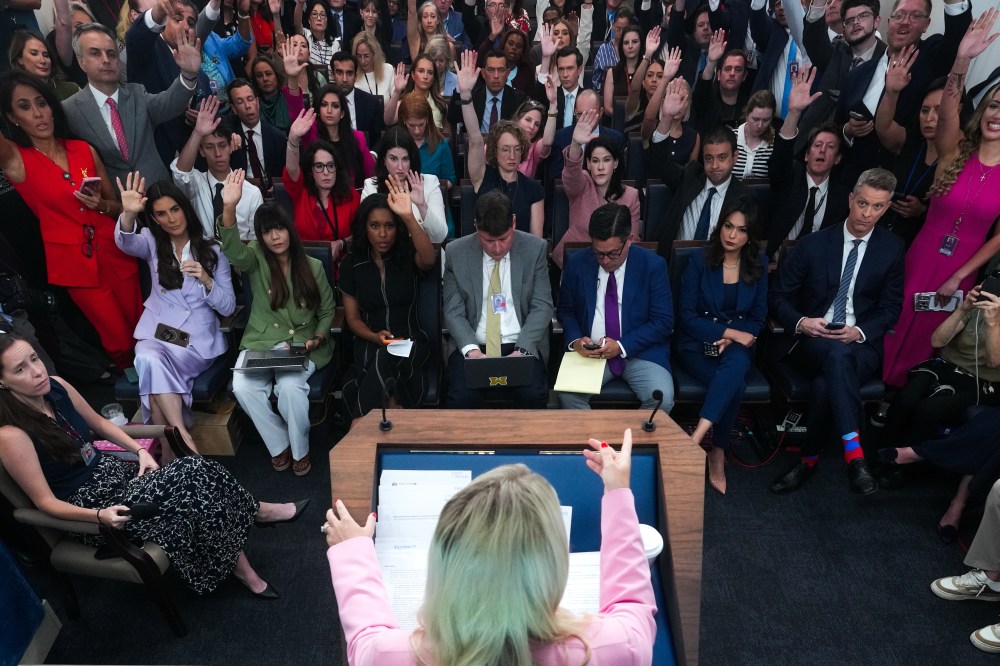
Axelrod is talking not only about the existence of the code but the need, every so often, to update it. It’s a laborious process, taking about a year and countless hours of meetings and feedback, virtual and in person.
Yet as the media landscape seems to shift daily and new technologies emerge, SPJ has decided that the time is at hand — for the first time in 12 years, and only the sixth in the code’s century-long history.
A conclave, of sorts, to update the code
The seriousness of the undertaking brought the committee and other media ethics experts to Indianapolis in June, after lots of virtual meetings. Seems it wasn’t the most relaxing way to spend a weekend.
“Passions definitely got heated,” Axelrod says.
“Well, there were no fistfights,” quips his colleague, Chris Roberts, vice chairman of the committee and a journalism professor at the University of Alabama. He explains there was “a lot of smithing of the words.”
The result: No white smoke, but a 967-word draft code, 73 longer than the existing one.
But why update in the first place? The first reason — hardly a surprise — is the rapid emergence of AI.
“We were thinking about artificial intelligence and how it’s used and sometimes misused by news organizations,” Roberts says, “as they confront that new technology that saves them money, but also causes a lot of trouble if it’s not used effectively and ethically.”
Another issue concerns the very term “professional journalists.” Recent years have seen a huge increase in independent, so-called “creator journalists.” The SPJ thinks they, too, should have a code to guide them. (The code, as always, is a voluntary guide and not enforceable.)
One key goal is to address an existential crisis in the field: an increasing lack of public trust in the media.
“We’re talking about a world that does not trust us as much as they did,” Roberts says. “We’re talking about politicians and others who go out of their way to smack journalism around because it dares point out their shortcomings. Meanwhile, the business of journalism has changed so much financially, and a third of journalists don’t work for a traditional news organization.
“All of those things and so many more are pretty good reasons to take another look,” he says, “and remind people that there are standards that should be standards, regardless of whether you call yourself a journalist, or the type of platform for which you work.”
Four key principles remain the same
The SPJ, which has some 4,000 members nationwide, was founded in 1909. In 1926 it adopted its first code of ethics, then formed an ethics committee in 1948 and revised the code five times — the last in 2014.
The four, unchanging key principles: “Seek Truth and Report It.” “Minimize Harm.” “Act Independently.” “Be Accountable and Transparent.”
But much else has evolved. A report accompanying the draft notes that traditional newsroom jobs are dwindling as the industry contracts. Simultaneously, it says, there’s been a marked growth in citizen journalists, freelancers, online influencers and pundits. The report cites a Pew study that shows fully one-third of journalists were freelance or self-employed in 2023.
It also cites the shrinking presence of news outlets serving as watchdogs, as well as “people, organizations and private investors without journalism backgrounds, who are buying or opening news properties, affecting news coverage, influencing editorial decisions and pushing personal agendas.”
The SPJ says the rapid rise in use of generative AI and other new technology — in news, as elsewhere — raises ethical questions.
So a new line says: “Remember that speed, technology or medium do not excuse inaccuracy or unfairness. Journalists are ethically responsible for their work, regardless of tools and technologies used.” In other words: The buck stops with the journalist, regardless of what AI might say.
“We don’t want people using the excuse of a technology to say that they couldn’t produce things ethically and transparently,” says Roberts.
But the proposed draft — to be voted on in October by the broader organization after a current feedback period — does not mention AI by name, referring only to tools and technologies, so it will remain relevant as technology changes. It also addresses other issues like verification, misinformation, crime reporting, fabricated images and more.
They fixed some problematic wording
A notable addition — and one that generated much discussion — is this line: “Be vigilant and courageous about holding those with power accountable. Counter the unfair marginalization of those with less power.”
What’s interesting is what it replaces. The original text said: “Give voice to the voiceless.” That phrasing was seen as problematic, because it assumed that some groups lack a voice.
Notes committee member Eric Deggans: “It’s not that they don’t have a voice. It’s that too often mainstream news outlets don’t pay attention to it or don’t even know that it exists.”
“What we wanted to try to speak to,” says Deggans, NPR’s critic-at-large and a media ethics professor at Washington and Lee University, “was this idea that there are groups out there that may be marginalized from news coverage … and (journalists) should make an effort to include them when it’s relevant, particularly when it builds the accuracy of the story.”
Given the changes in the industry, one might ask another, overarching question: Does one code fit all? And will it even be acknowledged?
“We shouldn’t shy away from it,” replies current SPJ President Chris Vaccaro, “just because the industry is changing or the idea of who a journalist is is changing.”

Vaccaro is confident that the code, which has been translated into multiple languages, will be followed by many. That newsroom bulletin board, he says, is now the entire world.
“We’re definitely not going to operate under the assumption that no one’s going to use it or nobody cares, or journalism’s changed so drastically that it doesn’t matter,” says Vaccaro. “It does matter.”
Deggans says he teaches two ethics classes, and both study the SPJ code. But besides training young journalists, the code has other key uses. “If you’re operating in a country that has had authoritarian rule for a long time or doesn’t have a long history of a free press, how do you figure out how that works? You turn to the SPJ code, right?”
Deggans wishes more working journalists would review the code.
And others, too: “I wish some people who owned journalism outlets would read the code, because too often they’re pressuring their employees to do things that are unethical, and the employee has to figure out a way to preserve their journalism ethics and also give the employer what they want.”