

Amazing Grace
Latest Atwood adaptation again proves scarily relevant

Advertisement
Read this article for free:
or
Already have an account? Log in here »
To continue reading, please subscribe:
Monthly Digital Subscription
$1 per week for 24 weeks*
- Enjoy unlimited reading on winnipegfreepress.com
- Read the E-Edition, our digital replica newspaper
- Access News Break, our award-winning app
- Play interactive puzzles
*Billed as $4.00 plus GST every four weeks. After 24 weeks, price increases to the regular rate of $19.95 plus GST every four weeks. Offer available to new and qualified returning subscribers only. Cancel any time.
Monthly Digital Subscription
$4.99/week*
- Enjoy unlimited reading on winnipegfreepress.com
- Read the E-Edition, our digital replica newspaper
- Access News Break, our award-winning app
- Play interactive puzzles
*Billed as $19.95 plus GST every four weeks. Cancel any time.
To continue reading, please subscribe:
Add Free Press access to your Brandon Sun subscription for only an additional
$1 for the first 4 weeks*
*Your next subscription payment will increase by $1.00 and you will be charged $16.99 plus GST for four weeks. After four weeks, your payment will increase to $23.99 plus GST every four weeks.
Read unlimited articles for free today:
or
Already have an account? Log in here »
Hey there, time traveller!
This article was published 26/09/2017 (3097 days ago), so information in it may no longer be current.
Go ahead and call it: 2017 is the Year of Margaret Atwood.
Coming on the heels of Hulu’s Emmy-winning adaptation of The Handmaid’s Tale is the adaptation of Alias Grace, a new six-part miniseries based on Atwood’s 1996 Giller Prize-winning historical novel. It debuts Monday night on CBC and will arrive on Netflix in early November.
And just as The Handmaid’s Tale has proved scarily relevant in 2017, so, too, will Alias Grace.
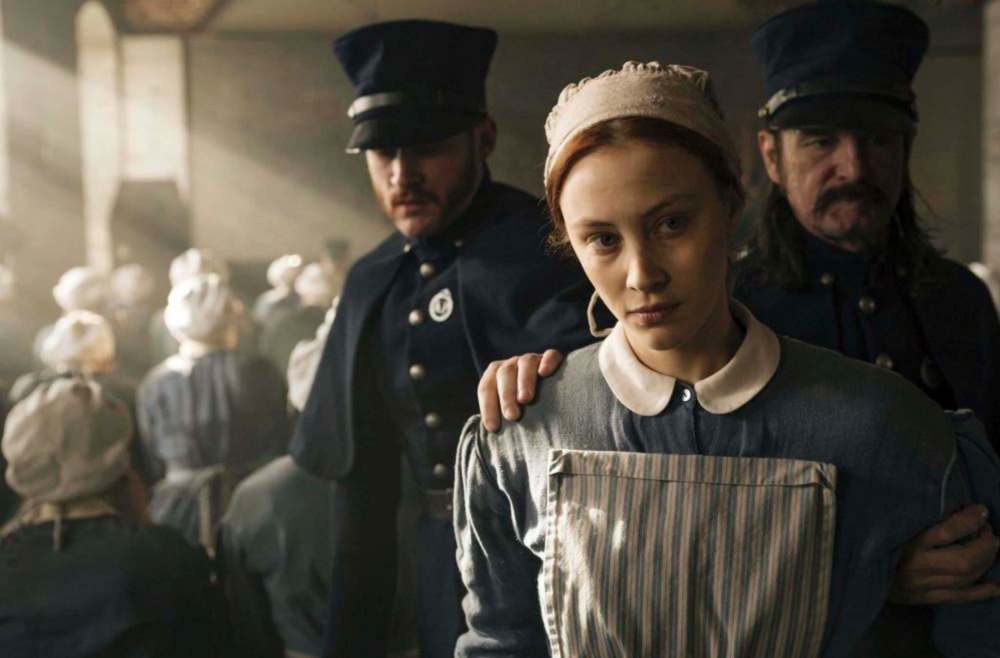
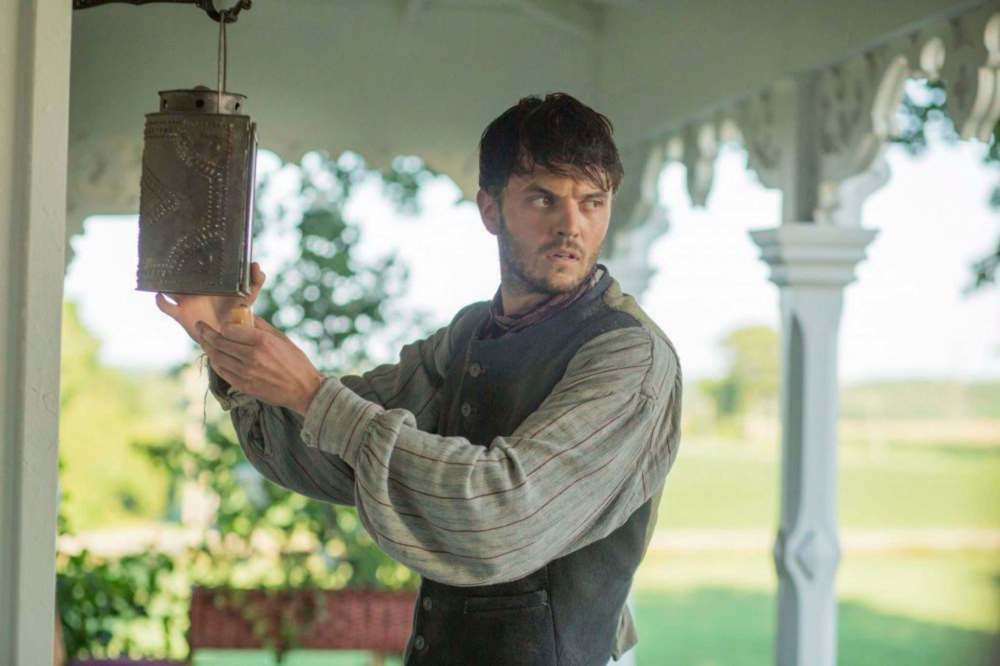
Set in Upper Canada, Alias Grace tells the story of Grace Marks (Sarah Gadon), a young Irish immigrant and maid who, along with stable-hand James McDermott (Kerr Logan), is convicted of the 1843 double-murder of their employer Thomas Kinnear (Paul Gross) and his housekeeper-turned-lover Nancy Montgomery (Anna Paquin). Alias Grace is inspired by true events: there really was a Grace Marks, who served 30 years in Kingston Penitentiary before she was pardoned. (McDermott, meanwhile, was hanged.) She relocated to New York and then, history goes dark.
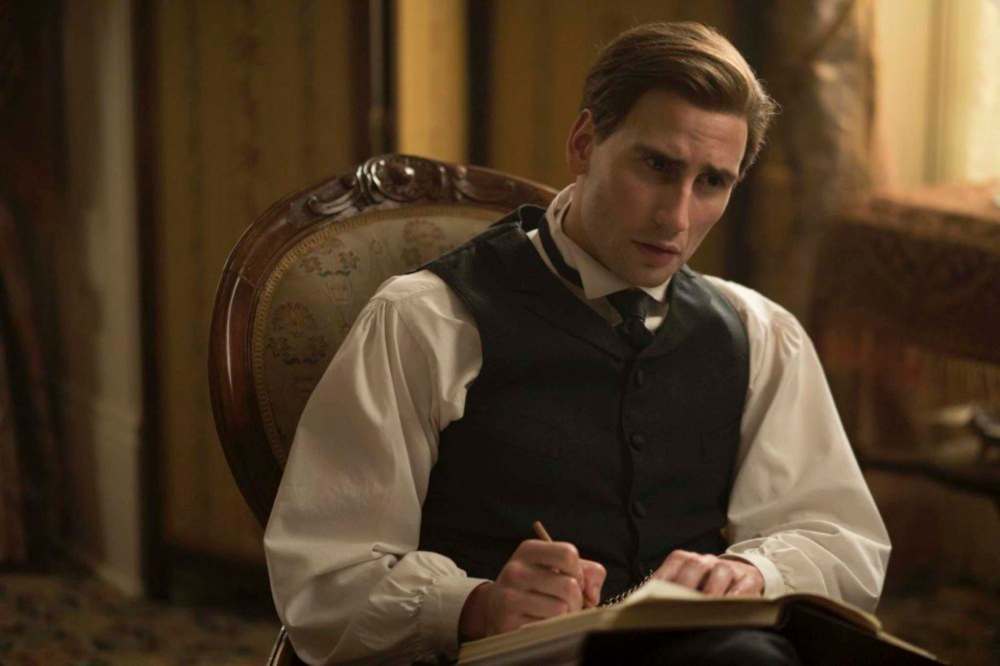
In the book and the TV adaptation, a fictional Dr. Simon Jordan (Edward Holcroft) is sent to try to parse Grace’s story and behaviour and write a report on behalf of a committee advocating for her pardon. And, like everyone else, he becomes obsessed with the inscrutable Grace.
Writer Sarah Polley (who first tried to obtain the rights to the novel when she was just 18) and director Mary Harron are two of the powerhouses behind this production. It’s not as visually edgy as The Handmaid’s Tale, but it offers a harrowing look at what life was like for women in that era (spoiler: not great!).
Alias Grace is about the ways in which women are trapped and caged, in prisons literal and figurative. As a poor immigrant woman, Grace’s ability to move through the world is hemmed in by her class, status and gender. Her dear friend, the spirited and rebellious Mary Whitney (Rebecca Liddiard), finds herself trapped with an unwanted pregnancy by a man who refuses to marry her and finds out exactly what “choice” looks like in a world where access to reproductive care is non-existent. Power shifts and imbalances — between doctor and patient, employer and employee — are examined, as is the way a salivating press dehumanizes a “celebrated murderess.”
Strip away the petticoats and this story becomes downright modern.
At its core, Alias Grace is also about the fascination with the idea that a beautiful young woman could be capable of something so dark. The question at the heart of the case, real and fictionalized: is Grace Marks really a “murderess,” or was she an accessory?
From Lizzie Borden to Karla Homolka, female killers (both accused and convicted) have long been a point of obsession — especially the pretty ones. Just as Dr. Jordan struggles to reconcile the mild-mannered quilting woman before him with the gruesome facts of the crime, many people have a hard time wrapping their mind around a woman who could kill because something seems fundamentally unnatural about it.
Women are seen as givers of life, which makes it shocking when they take it. (Gadon is exquisite as the endlessly complicated Grace. Sure, her Irish brogue is convincing and she has the blood-curdling pipes of a scream queen, but her genius is in the smallest performances, the hint of a smile or the blink-and-you-miss-it shift between a gaze and a glare.)

Quilts serve as a prominent metaphor in Alias Grace; in fact, you’ll notice in the credits that there’s a whole quilt crew on this production. The quilt’s squares represent pieces of a whole story, but they also represent the idea that Grace is a puzzle to be solved.
At one point, she says she knows what Dr. Jordan wants: “In your hand, you want to hold my beating female heart.”
That she qualified heart with “female” feels intentional. After all, the series is set in an era when women dealing with trauma or mental illness were often reduced to raving hysterics that needed either to be pointed in the direction of the nearest fainting couch or institution. To figure out Grace is to figure out women.
Of course, the truth is also complicated, memory is fallible and this story doesn’t come together like one of Grace’s quilts. Alias Grace forces the viewer to grapple with a difficult question: whose stories do we believe — and, perhaps more critically, why do we believe them?
jen.zoratti@freepress.mb.ca Twitter: @JenZoratti
Jen Zoratti is a columnist and feature writer working in the Arts & Life department, as well as the author of the weekly newsletter NEXT. A National Newspaper Award finalist for arts and entertainment writing, Jen is a graduate of the Creative Communications program at RRC Polytech and was a music writer before joining the Free Press in 2013. Read more about Jen.
Every piece of reporting Jen produces is reviewed by an editing team before it is posted online or published in print – part of the Free Press‘s tradition, since 1872, of producing reliable independent journalism. Read more about Free Press’s history and mandate, and learn how our newsroom operates.
Our newsroom depends on a growing audience of readers to power our journalism. If you are not a paid reader, please consider becoming a subscriber.
Our newsroom depends on its audience of readers to power our journalism. Thank you for your support.
TV review
Alias Grace
Monday, 9 p.m.
CBC
4 stars out of 5
Jen Zoratti is a columnist and feature writer working in the Arts & Life department, as well as the author of the weekly newsletter NEXT. A National Newspaper Award finalist for arts and entertainment writing, Jen is a graduate of the Creative Communications program at RRC Polytech and was a music writer before joining the Free Press in 2013. Read more about Jen.
Every piece of reporting Jen produces is reviewed by an editing team before it is posted online or published in print – part of the Free Press‘s tradition, since 1872, of producing reliable independent journalism. Read more about Free Press’s history and mandate, and learn how our newsroom operates.
Our newsroom depends on a growing audience of readers to power our journalism. If you are not a paid reader, please consider becoming a subscriber.
Our newsroom depends on its audience of readers to power our journalism. Thank you for your support.
Advertisement Advertise With Us
Advertisement Advertise With Us