

R.I.P., VCR
Dusty and often discarded, these machines revolutionized the way we watched TV

Advertisement
Read this article for free:
or
Already have an account? Log in here »
To continue reading, please subscribe:
Monthly Digital Subscription
$1 per week for 24 weeks*
- Enjoy unlimited reading on winnipegfreepress.com
- Read the E-Edition, our digital replica newspaper
- Access News Break, our award-winning app
- Play interactive puzzles
*Billed as $4.00 plus GST every four weeks. After 24 weeks, price increases to the regular rate of $19.95 plus GST every four weeks. Offer available to new and qualified returning subscribers only. Cancel any time.
Monthly Digital Subscription
$4.99/week*
- Enjoy unlimited reading on winnipegfreepress.com
- Read the E-Edition, our digital replica newspaper
- Access News Break, our award-winning app
- Play interactive puzzles
*Billed as $19.95 plus GST every four weeks. Cancel any time.
To continue reading, please subscribe:
Add Free Press access to your Brandon Sun subscription for only an additional
$1 for the first 4 weeks*
- Enjoy unlimited reading on winnipegfreepress.com
- Read the E-Edition, our digital replica newspaper
- Access News Break, our award-winning app
- Play interactive puzzles
*Your next Brandon Sun subscription payment will increase by $1.00 and you will be charged $17.95 plus GST for four weeks. After four weeks, your payment will increase to $24.95 plus GST every four weeks.
Read unlimited articles for free today:
or
Already have an account? Log in here »
Hey there, time traveller!
This article was published 30/07/2016 (3569 days ago), so information in it may no longer be current.
Last week, news broke about the death of the VCR. The Japan-based Funai company, the only outfit that was manufacturing the devices, announced it would cease production in August.
For most people, the surprise wasn’t that the videocassette recorder was dying after so many years of quiet, clunky obsolescence, but that it had still been alive.
It’s easy to make fun of VCRs. They are outmoded, unwieldy, unlovely and associated with the 1980s, the decade the machines really hit the household market. When it comes to audio-visual nostalgia, they possess none of the retro cool of vinyl and turntables, having more in common with the idiot-brother of the audio family, the eight-track tape. And since their ’80s advent, they have been displaced by several generations of better, faster, sleeker tech.
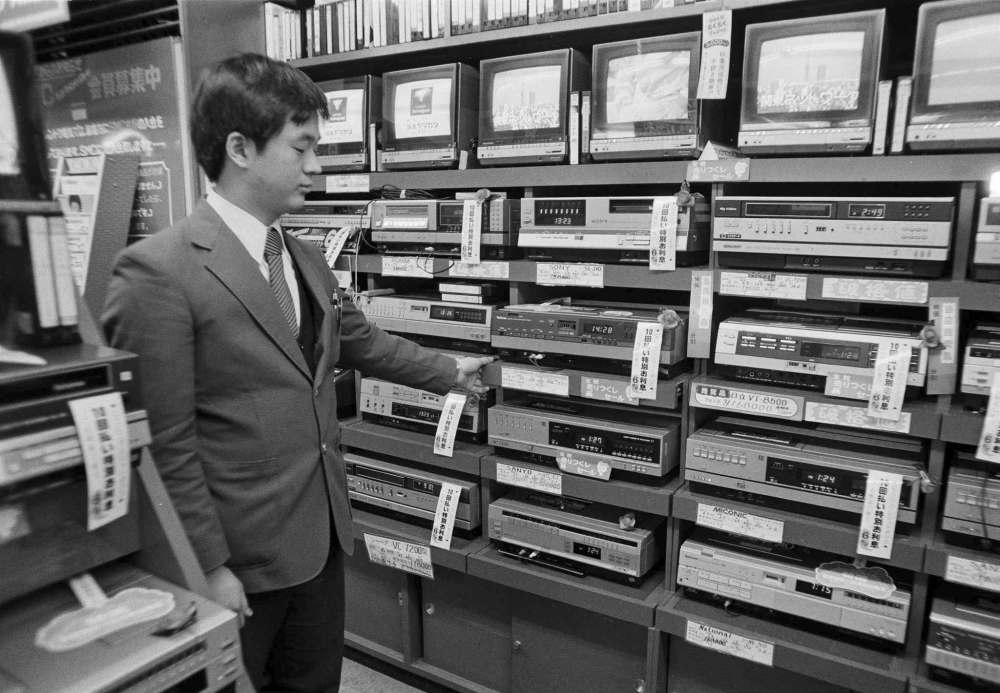
But VCRs changed our relationship with movies and TV, in ways so fundamental we now take them for granted. Because we have a hard time remembering the era before we could “Watch Whatever, Whenever,” as one early VCR ad promised, we sometimes lose sight of how revolutionary these changes were. As I mourn the death of the VCR — I still own one, though it’s getting peculiar — here are a few pop-culture moments that stand out:
THE TIME LORD: Time-shifting sounds like something from a sci-fi movie, but the VCR’s premise — that instead of watching when the network wanted you to watch, you could record a TV program and watch it when you wanted — was the radical first step leading to our current omnivorous, on-demand media culture.
Consider The Jewel in the Crown, a Masterpiece Theatre series about the final years of the British Raj, which aired on PBS starting in 1984. This was right on the cusp of the VCR age, when the machines were starting to pop up but not yet common.
A Washington Post article from 1985 talks about the series as “must-see TV.” For most VCR-less fans — and I was one — that meant “must-see-on-Sunday-night TV.” Referring to “the Jewel addiction,” the article cites the elaborate schemes and stratagems viewers employed to make sure they didn’t miss an episode.
It’s hard to recall now, but this was the mindset for people without VCRs: If you had to skip an episode of The Jewel in the Crown, it dropped out of sight like a stone dropped into a well, never to be seen again. “Catching up” meant buying the box set of novels by Paul Scott, on which the series was based, and reading like a demon.
THE OBSESSIVE: Likewise, in the pre-VCR period, a film came to your local theatre for a week or two, and then it was gone. Really gone. It might re-enter your life through the whims of your local repertory cinema or midnight-movie house. It might air, chopped up with commercials, on TV. But the idea you could own your favourite films and watch them again and again at home was like some Richie Rich dream.
The VCR changed that. And it changed the way we consume movies, allowing for re-watching and rewinding, for stopping and starting, for obsessive-compulsive examination.
Room 237 is a 2012 documentary about people who have developed complicated theories about the “real” hidden meanings behind Stanley Kubrick’s The Shining (1980). The theorizers include one fellow who thinks the whole movie is a coded admission that Kubrick helped fake the moon landing.
Resting on tiny details and momentary images, this kooky conjecturing requires repeated, extended and very close viewing, the kind of slightly crazed super-cinephile experience that could only come after the VCR.
THE TRASH COLLECTOR: Rewind This (2013) is an affectionate documentary look at VCR lovers, including one guy who owns 82 VHS movies with the words “death,” “deadly” or “dead” in the title and another fan who has organized his massive VHS horror collection into extremely specific sub-categories, including “Pre-sellout Wes Craven.”
According to these collectors, the VCR brought about the radical democratization of film distribution and consumption, especially the messy proliferation of trashy, cheesy, fabulous junk. The big studios initially resisted the home rental and sales market — they didn’t like the fact the product might go beyond their control — but indie companies immediately realized its possibilities, especially no-budget B-movie outfits like Troma (The Toxic Avenger, Surf Nazis Must Die). Rewind This celebrates crappy, cheap, gory direct-to-video movies, the kind of stuff that would have never shown on network TV or screened in mainstream theatres.

THE DIY ENTHUSIAST: In Michel Gondry’s 2008 comedy Be Kind Rewind, two guys accidentally erase all the tapes in a video-rental store and then re-create them, using duct tape, borrowed costumes and a giant VHS camcorder. The movie is a nutty ode to communal creativity and a shout-out to the technology that made home movies affordable, accessible and easier than ever before.
VCR tech allowed kids to re-enact lightsabre fights, record them and then watch them with their friends. This messing around might have happened in the pre-YouTube period, but it marked a shift from passive consumption to the idea of a creative, interactive fan culture.
❚ ❚ ❚
Even in the age of PVRs and Netflix and iTunes, then, the VCR retains a strange nostalgic power. Let’s take a brief moment to mark its passing, while remembering its lasting influence.
alison.gillmor@freepress.mb.ca
Studying at the University of Winnipeg and later Toronto’s York University, Alison Gillmor planned to become an art historian. She ended up catching the journalism bug when she started as visual arts reviewer at the Winnipeg Free Press in 1992.
Our newsroom depends on a growing audience of readers to power our journalism. If you are not a paid reader, please consider becoming a subscriber.
Our newsroom depends on its audience of readers to power our journalism. Thank you for your support.
Studying at the University of Winnipeg and later Toronto’s York University, Alison Gillmor planned to become an art historian. She ended up catching the journalism bug when she started as visual arts reviewer at the Winnipeg Free Press in 1992.
Our newsroom depends on a growing audience of readers to power our journalism. If you are not a paid reader, please consider becoming a subscriber.
Our newsroom depends on its audience of readers to power our journalism. Thank you for your support.
Advertisement Advertise With Us
Advertisement Advertise With Us