WEATHER ALERT

‘The perfect illegal drug’

Doc reveals Canada's uphill struggle against fentanyl

Advertisement

Advertise with us

Knowledge is power, even in situations where the prevailing sentiment is a feeling of powerlessness.

Read this article for free:


or

Already have an account? Log in here »

To continue reading, please subscribe:

Subscribe and receive a limited-edition Free Press branded hat or tote.

Digital Subscription

One year of digital access for only $205*

  • Enjoy unlimited reading on winnipegfreepress.com
  • Read the E-Edition, our digital replica newspaper
  • Access News Break, our award-winning app
  • Play interactive puzzles

*First annual payment billed as $205.00 + GST for one year. This annual subscription will automatically renew at $233.00 + GST every 52 weeks (10% off the regular annual price of $259.35). Offer available to new and qualified returning subscribers only. Cancel any time.

To continue reading, please subscribe:

Add Free Press access to your Brandon Sun subscription for only an additional

$1 for the first 4 weeks*

  • Enjoy unlimited reading on winnipegfreepress.com
  • Read the E-Edition, our digital replica newspaper
  • Access News Break, our award-winning app
  • Play interactive puzzles
Start now

*Your next Brandon Sun subscription payment will increase by $1.00 and you will be charged $17.95 plus GST for four weeks. After four weeks, your payment will increase to $24.95 plus GST every four weeks.

Hey there, time traveller!
This article was published 30/11/2016 (3565 days ago), so information in it may no longer be current.

Knowledge is power, even in situations where the prevailing sentiment is a feeling of powerlessness.

That’s why this week’s instalment of CBC’s Firsthand documentary series is a useful exercise — at a time when public unease and alarm is growing daily with each new revelation about fentanyl’s impact on Canadian cities, any information that increases understanding of the drug and its deadly effects is welcome.

The new documentary Unstoppable: The Fentanyl Epidemic, which airs Thursday at 9 p.m. on CBC, offers a grim but instructive look, examining the issue from perspectives of law-enforcement officers trying to stop its spread, front-line health-care workers dealing with its immediate effects, drug producers responsible for its rapid spread and family members of fentanyl victims.
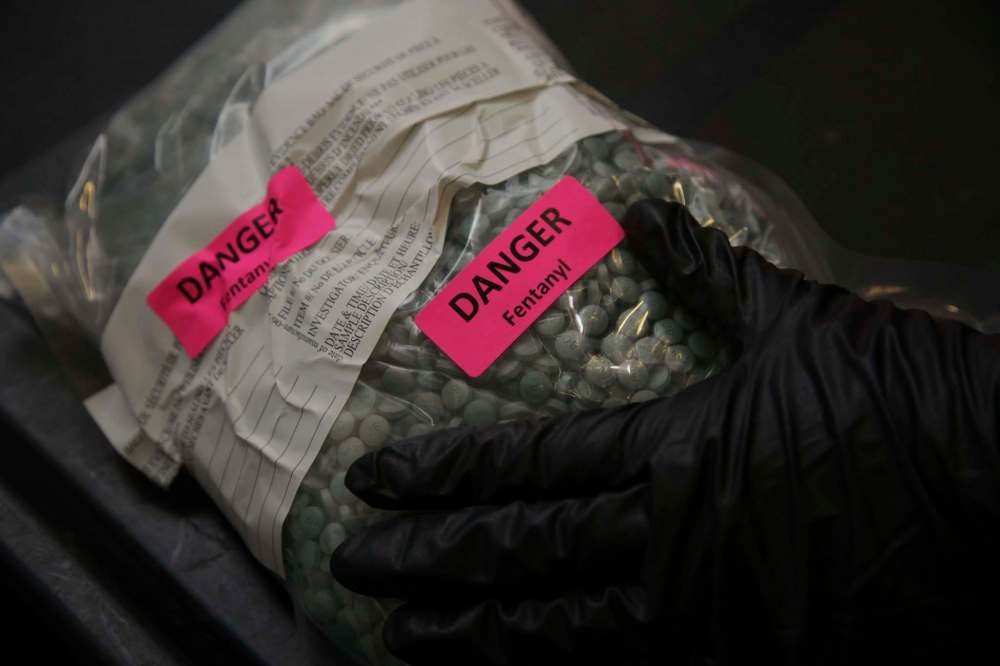
The new documentary Unstoppable: The Fentanyl Epidemic airs Thursday at 9 p.m. on CBC's Firsthand

The film, written and directed by former W5 correspondent and field producer Robert Osborne, focuses mainly on the rapid spread of fentanyl and associated opioids in a number of British Columbia communities, but the facts and opinions provided by Unstoppable mirror what has happened in Manitoba in recent months.

“It’s spreading like a virus because it’s the perfect illegal drug,” says Osborne, who also acts as the documentary’s narrator. “Police can’t stop it, and it’s a money-making machine for organized crime.”

Osborne’s first stop is Vernon, B.C., the home of a chemist and fentanyl producer who calls himself Beeker. The man, who has served jail time for his efforts and is facing new charges, takes the unusual step of appearing on camera without the use of shadowy lighting, pixellated images or electronic voice alteration.

Beeker is frank and unapologetic is his description of the fentanyl trade and his role in it. It is, he explains, a business that’s worth billions to the people who have so effectively made the opioid a dominant street drug in a frighteningly short time span. And he’s of the opinion that stepped-up police efforts to rein in the fentanyl trade are destined to be pointless and fruitless.

“I’m smarter than they are,” he says of law enforcement. “All of us chemists are smarter than the police… I don’t think of myself as an evil person; I think I have certain ethical flexibilities, though.”

Osborne takes his cameras to Grande Prairie, Alta., where he meets rancher Pat O’Connell, who lost a child to a fentanyl overdose. He describes his son, Byron, as a good guy who made some mistakes that led to drug use but had cleaned up his act after becoming a father. Byron was an average young man who loved his kid, was good to his family and showed up for work on time every day — until one weekend evening when the urge to party overtook him and a single dose of fentanyl left him braindead in a hospital bed.

“This isn’t pot; this isn’t soft drugs,” a tearful O’Connell says. “This is hardcore death material. If you just sold me a hit of fentanyl, then you’re basically an accessory to murder, as far as I’m concerned.”

Unstoppable also spends time with RCMP Cpl. Eric Boechler, one of the nation’s foremost fentanyl experts, as well as a pair of outreach nurses who deal daily with the opioid’s effects on Vancouver’s drug-afflicted Downtown Eastside, where about 90 per cent of the street heroin these days is actually fentanyl.

“Heroin almost doesn’t exist anymore,” says Beeker.
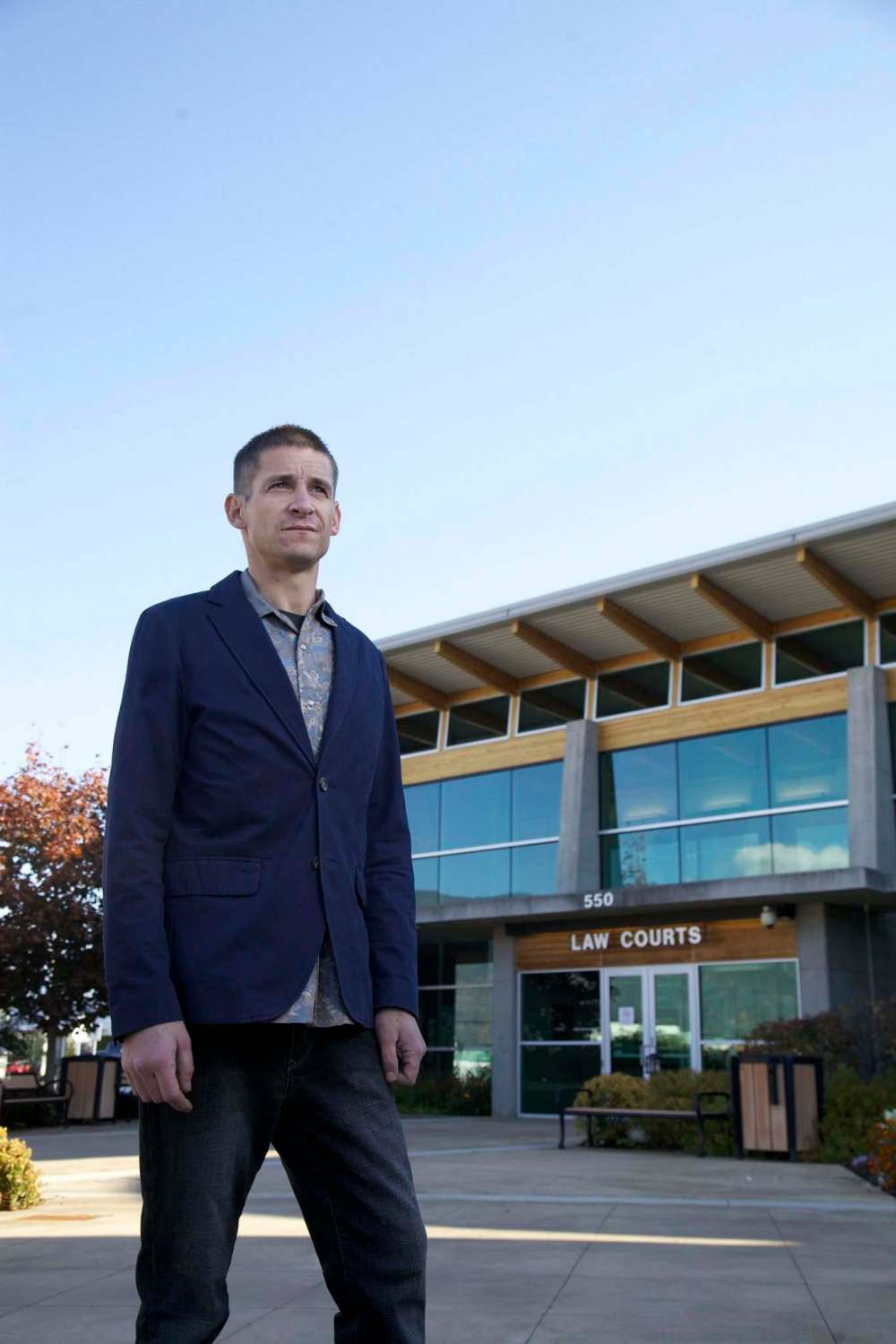
This B.C. chemist, who calls himself Beeker, offers his perspective on the fentanyl epidemic in the new documentary Unstoppable

There’s a lot of useful information in Unstoppable, but precious little in the way of hope or optimism.

Beeker, who holds a bachelor of science degree in biochemistry, was first lured into the drug game by a teaching assistant who asked if he’d be interested in helping to make LSD. He says the fentanyl epidemic will be over soon — because it’s about to be replaced by more powerful and exponentially more dangerous drugs.

“Just one very minor variation to the molecule increases its potency by a factor of 100,” he says. “Fentanyl is soon to be obsolete. It’s just not going to be out there any more, because there’s much more profitable (drugs). It doesn’t matter about better or safer or nothing; more profitable drugs and molecules are on the way. They’re in the mail (from China, the source of most fentanyl-producton basics) right now.”

brad.oswald@freepress.mb.ca

Twitter: @BradOswald
Report Error Submit a Tip

More Stories

‘Where are they going to go?’: encampment policy blamed for homeless people sleeping outside thrift store

Scott Billeck 5 minute read Preview

‘Where are they going to go?’: encampment policy blamed for homeless people sleeping outside thrift store

Scott Billeck 5 minute read Wednesday, Sep. 2, 2026

The owner of a Portage Avenue thrift shop says the city’s encampment ban has pushed dozens of homeless people from tent communities to spaces near her store.

Susan Lockhart, who runs Just Like New to You at 635 Portage Ave., says anywhere from 25 to 50 people can be found at any given time behind the store and along the back lane stretching between Sherbrook and Furby streets.

“Where are they going to go?” she said Wednesday from her shop. “I was just here on the weekend and I couldn’t get to our back door. There were people everywhere. Mattresses.”

Earlier this week, the city reported 275 people were known to be living in 72 encampments across Winnipeg — down from 100 encampments housing about 700 people last September. The report also noted that 141 sites have been remediated since the city’s encampment policy came into effect in November.

Read
Wednesday, Sep. 2, 2026

Westwood standoff ends with two arrested

Morgan Modjeski and Erik Pindera 3 minute read Preview

Westwood standoff ends with two arrested

Morgan Modjeski and Erik Pindera 3 minute read Updated: Yesterday at 6:29 PM CDT

An hours-long standoff in Westwood came to an end Thursday with Winnipeg police arresting two men and seizing a gun.

Winnipeg Police Service officers were called to Byrd Avenue shortly before 9:30 a.m. after a man was seen walking with what appeared to be a firearm, said police spokesman Const. Claude Chancy.

Officers identified a home connected to the investigation, he said.

Two men were arrested but Chancy could not yet say what they will be charged with. It’s not clear whether either of the men arrested was the male spotted with a gun.

Read
Updated: Yesterday at 6:29 PM CDT

St. Malo’s summer hot spot relies on dedicated community to make sure park-goers can kick back and relax

Melissa Martin 16 minute read Preview

St. Malo’s summer hot spot relies on dedicated community to make sure park-goers can kick back and relax

Melissa Martin 16 minute read 6:00 AM CDT

August 21, 10:10 a.m.There’s nobody on the beach at St. Malo Provincial Park yet, though there’s certain to be plenty of visitors later. It’s shaping up to be a hot late-August Friday in southern Manitoba; the forecast warns of a thunderstorm in the late afternoon, but that won’t stop Manitobans from flocking to savour one of the last great beach days of the summer.

On a typical such weekend, this park, situated just an hour’s drive southeast of Winnipeg, can squeeze up to 2,000 guests onto the sandy crescent of its expansive main beach, and about 600 more on its other bathing-ready shore, which is nestled near the campground and thus long called Camper Beach.

For now, though, the scene around the lake is quiet and picture-perfect. The morning sun sparkles on the lake’s placid grey surface. A gaggle of Canada geese swim lazily, honking at each other. As park manager Bill Prevost pulls up on the beach in a golf cart, he nods at the birds with a wink.

“Did we tell you about the rule?” Prevost quips. “If you come here, you have to take four geese back with you.”

Read
6:00 AM CDT

Letters, Sept. 4

7 minute read 2:00 AM CDT

Adult ed can be the future — now

Re: Reimagining education in Manitoba (Think Tank, Sept. 2)

In an increasingly mad world, where decency and humanity are at risk, driven by the endless din from the leader of the free world, Canada is reimagining itself. Our federal government is expediting dozens of nation-building projects valued at a reported $192 billion.

The goal of nation building is to strengthen Canada’s economic resilience and independence. We all want peace, a good home, a secure income and hope for a stable future for our children and grandchildren. Nation-building projects are a hopeful means to this end.

Manitoba’s next power plant already under construction

Colleen Kuruluk 4 minute read 2:00 AM CDT

Across Manitoba, we’re rapidly moving toward a more electrified future, as homes, businesses, industries, and transportation increasingly turn to electricity. This transition offers a significant opportunity to reduce greenhouse gas emissions, but it also requires us to rethink how we plan for and participate in our energy future.

Manitoba Hydro’s 2025 integrated resource plan (IRP), currently under review with the Public Utilities Board, projects that our province will need significant additional capacity over the next decade to meet growing electricity demand. Much of the public discussion following the IRP has focused on how to meet that growing demand and what new generation sources may need to be built.

These are important conversations, but I believe there’s another question that deserves just as much attention.

How much of that growing demand can we address by using energy more efficiently?

Man who pleaded guilty to killing three cats dies before sentencing

Morgan Modjeski 3 minute read Preview

Man who pleaded guilty to killing three cats dies before sentencing

Morgan Modjeski 3 minute read 2:00 AM CDT

A Winnipeg man awaiting sentencing after admitting he strangled three cats to death and dumped two of their carcasses under a city bridge, has died, the Free Press has learned.

Randy Jensen, 25, pleaded guilty on May 13 to one count of wilfully causing injury or suffering to animals in connection to the 2024 killings.

He was scheduled to be sentenced in January.

“That’s not something that anybody wanted,” said Kristy Zamonsky, founder of Project Artemis Animal Advocates. “We were all hoping for justice through the courts.”

Read
2:00 AM CDT