

Seeing things
Influential photographer looked beyond the surface to capture beauty of the ordinary
Advertisement
Read this article for free:
or
Already have an account? Log in here »
To continue reading, please subscribe:
Monthly Digital Subscription
$1 per week for 24 weeks*
- Enjoy unlimited reading on winnipegfreepress.com
- Read the E-Edition, our digital replica newspaper
- Access News Break, our award-winning app
- Play interactive puzzles
*Billed as $4.00 plus GST every four weeks. After 24 weeks, price increases to the regular rate of $19.95 plus GST every four weeks. Offer available to new and qualified returning subscribers only. Cancel any time.
Monthly Digital Subscription
$4.99/week*
- Enjoy unlimited reading on winnipegfreepress.com
- Read the E-Edition, our digital replica newspaper
- Access News Break, our award-winning app
- Play interactive puzzles
*Billed as $19.95 plus GST every four weeks. Cancel any time.
To continue reading, please subscribe:
Add Free Press access to your Brandon Sun subscription for only an additional
$1 for the first 4 weeks*
- Enjoy unlimited reading on winnipegfreepress.com
- Read the E-Edition, our digital replica newspaper
- Access News Break, our award-winning app
- Play interactive puzzles
*Your next Brandon Sun subscription payment will increase by $1.00 and you will be charged $17.95 plus GST for four weeks. After four weeks, your payment will increase to $24.95 plus GST every four weeks.
Read unlimited articles for free today:
or
Already have an account? Log in here »
Hey there, time traveller!
This article was published 17/02/2011 (5562 days ago), so information in it may no longer be current.
EVERYBODY can look,” said André Kertész, “but they don’t necessarily see.”
Kertész, a profoundly influential photographer, saw haunting beauty in urban street scenes, anonymous human figures and everyday objects.
The Hungarian-born artist, who lived from 1894 to 1985, was a pioneer in the use of hand-held cameras and is considered one of the fathers of photojournalism.
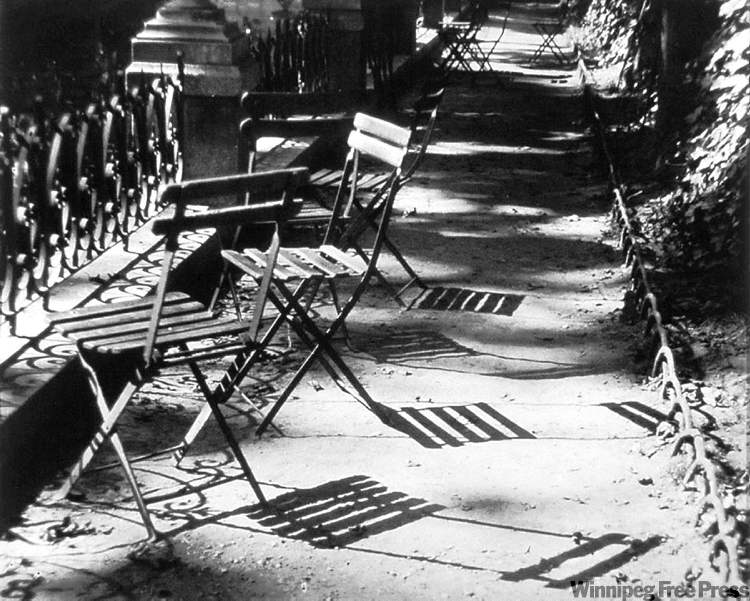
He roamed the streets of Paris in the 1920s and ’30s, often capturing fleeting moments amid the patterns and textures of city architecture.
Kertész liked to shoot from high angles on the streets below. He was drawn to silhouettes, shadows and watery reflections.
In the 1950s, using a telephoto lens, he made a famous study of New York’s snow-blanketed Washington Square Park from the window of his 12th-floor apartment.
His career spanned 70 years. Nearly 25 years ago, the Winnipeg Art Gallery’s then-curator of contemporary art and photography, Shirley Madill, wrote about him, “Of the half-dozen great photographers of the 20th century, André Kertész has had the most consistently humane vision…. His work was devoted to the search for those special moments that make existence seem understandable and worthwhile.”
André Kertész: Shadow Marks, a show of 35 elegant black-and-white photographs by the master, has just opened at the Winnipeg Art Gallery and is on view until Sept. 9.
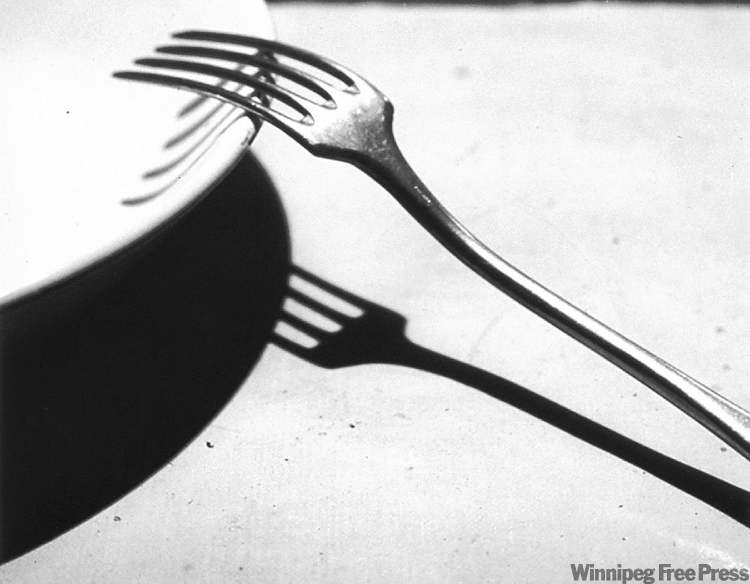
Many Winnipeggers might be surprised to hear that they’re from a collection of 180 Kertész prints that were gifted to the WAG by an anonymous donor in 1985. While there are other copies of the prints in existence, the collection is significant, says Mary Reid, current curator of contemporary art and photography. Some of them have never been displayed by the WAG until now.
Reid explains that back in 1983, the WAG presented a touring retrospective show called André Kertész: A Lifetime of Perception.
Two years later, a generous donor — the WAG won’t say whether it was a Winnipegger — made arrangements through a Toronto dealer to buy the whole show for the WAG’s permanent collection. The Free Press reported that its value exceeded $200,000.
Kertész, who was then 91 and living in New York, was scheduled to come to Winnipeg in October 1985 for a fundraising dinner in his honour, marking the donation of the images. But he died just days before he was to travel here. The dinner went ahead as a celebration of his life’s work.
The donation of the Kertész works — at a time when appreciation for photography as an art form was rising throughout the world — influenced the WAG to build its photography collection, which now amounts to more than 1,400 images.
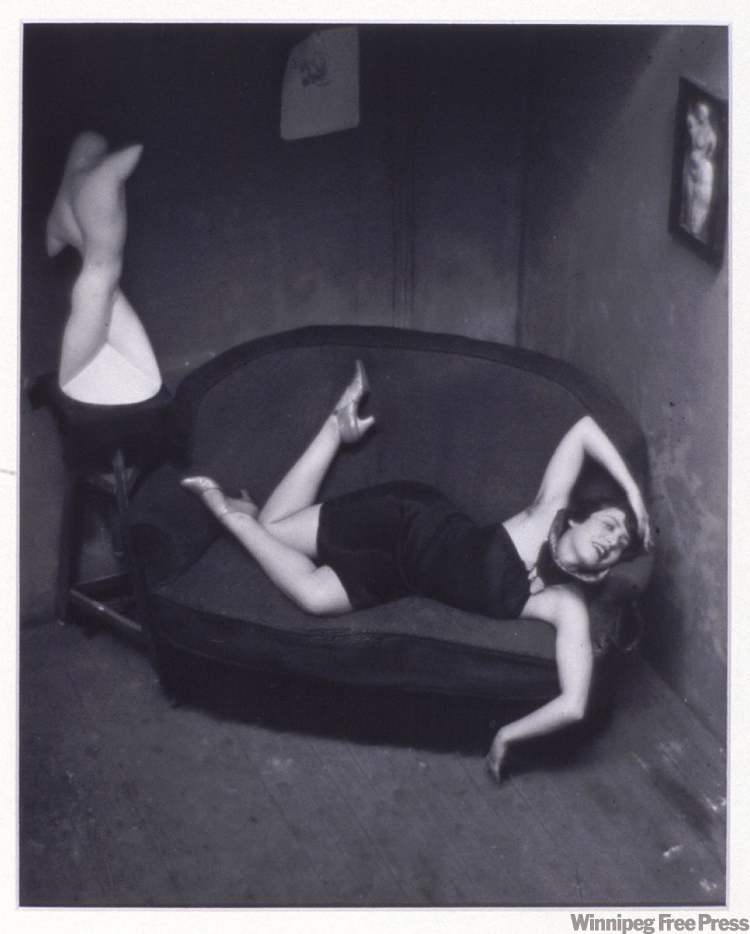
For this show, Reid selected the images and arranged them in mostly chronological order, from 1914 to 1980. In the centre of the room, the WAG is showing seven contemporary ceramic works from its collection — understated black and white bowls and vessels chosen to complement the graphic qualities of the photos.
Reid titled the show Shadow Marks in recognition of the importance of light and shadow throughout Kertész’s oeuvre. At first glance, she notes, the arresting images often make the viewer wonder, “What am I looking at?”
“He was trying to pick up the unexpected or the overlooked,” Reid says. “He created marvellous compositions out of things that are around us all the time… He had an amazing, keen, observant eye.”
alison.mayes@freepress.mb.ca
