Montreal pianist gives life to tortured Quebecer’s work
Advertisement
Read this article for free:
or
Already have an account? Log in here »
To continue reading, please subscribe:

Digital Subscription
One year of digital access for only $205*
- Enjoy unlimited reading on winnipegfreepress.com
- Read the E-Edition, our digital replica newspaper
- Access News Break, our award-winning app
- Play interactive puzzles
*First annual payment billed as $205.00 + GST for one year. This annual subscription will automatically renew at $233.00 + GST every 52 weeks (10% off the regular annual price of $259.35). Offer available to new and qualified returning subscribers only. Cancel any time.
To continue reading, please subscribe:
Add Free Press access to your Brandon Sun subscription for only an additional
$1 for the first 4 weeks*
- Enjoy unlimited reading on winnipegfreepress.com
- Read the E-Edition, our digital replica newspaper
- Access News Break, our award-winning app
- Play interactive puzzles
*Your next Brandon Sun subscription payment will increase by $1.00 and you will be charged $17.95 plus GST for four weeks. After four weeks, your payment will increase to $24.95 plus GST every four weeks.
Read unlimited articles for free today:
or
Already have an account? Log in here »
Hey there, time traveller!
This article was published 02/12/2011 (5415 days ago), so information in it may no longer be current.
In the 1930s, a child prodigy emerged from Montreal who was so extraordinary, he was dubbed “the Quebec Mozart.”
André Mathieu was a stunningly gifted pianist who wrote a concerto before the age of six. When he performed in Paris at about age seven, the legendary Romantic composer/pianist Sergei Rachmaninoff hailed him as a genius greater than himself.
“Rachmaninoff went down on his knees and said, ‘You’re the only one who can pretend to be my successor,'” says pianist Alain Lefèvre, who has devoted more than 30 years to researching the nearly forgotten composer and championing his works.

Mathieu’s life is the stuff of romantic tragedy. After triumphs such as winning a New York Philharmonic composition contest at age 11, performing at Carnegie Hall and earning raves from critics, the fragile artist slid into alcoholism and was reduced to performing piano marathons to support himself. He died destitute in 1968 at the age of 39.
Lefèvre, 49, who was also raised in Montreal and was himself a child prodigy, will never forget the day as a teenager in the 1970s when he heard a nun at his music school playing a rhapsodic piece that utterly transfixed him.
The nun told him it was written by a Quebec composer who was a drunk. That moment sent him on an odyssey to find Mathieu’s scores, document his life, record his works and proclaim to the world that Canada had produced a musical giant.
“His music is pure emotion and pure passion,” says the globe-trotting Lefèvre, who makes his Winnipeg debut tonight and Saturday performing Mathieu’s ardently romantic 40-minute Piano Concerto No. 4 with the Winnipeg Symphony Orchestra (the program also includes a Sibelius symphony).
The Juno Award-winning pianist says he has toured to 43 countries and performed Mathieu works in 29 of them. His crusade to revive Mathieu’s reputation on CD has made Mathieu the world’s top-selling Canadian classical composer, he says.
Mathieu, who has been called “the last Romantic” because his rapturous style was out of step with modernist music, was in such pathetic shape near the end of his life that he would try to pay for drinks with musical scores. He told barkeepers the manuscripts would make them rich one day. Lefèvre has actually recovered some of his scores from taverns.
Was Mathieu mentally ill? Lefèvre answers by saying he believes rejection by Quebecers — the Montreal Symphony, for instance, refused to play Mathieu’s work — destroyed the artist.
“I believe the worst thing that happened to Mathieu was that he was French Canadian. It’s typically French Canadian to fight each other, instead of promoting each other. When he came back to Quebec (after stints in New York and Europe) at age 20-something, some of his friends tried to organize a 20-concert tour in Quebec. They sold not more than 15 or 16 tickets. Of course he was feeling depressed and abandoned.”
Lefèvre also says other cultures show more understanding of artists’ demons. “Mussorgsky drank like a fish. But in Russia, what they think was important was that he was a genius.”
For some 20 years, Lefèvre was alone in his Mathieu obsession. Others have now taken up the cause. Last year The Child Prodigy, a Quebec movie dramatizing Mathieu’s life (with Lefèvre on the soundtrack), was released. A French biography has come out and Lefèvre hopes it will soon be translated.
The most moving part of the story is what happened after a Lefèvre recital in 2005. A female stranger approached the pianist and handed him decades-old recordings that Mathieu had made of himself playing a piano reduction of his Concerto No. 4. Experts had believed the concerto was lost.
The woman said, “I was the last love of Mathieu.”
“I was crying,” the pianist remembers. “The lady didn’t even say her name.”
To this day, he has no idea who she was. He took the recordings to composer Gilles Bellemare, who reconstructed the score that Winnipeggers will hear this weekend.
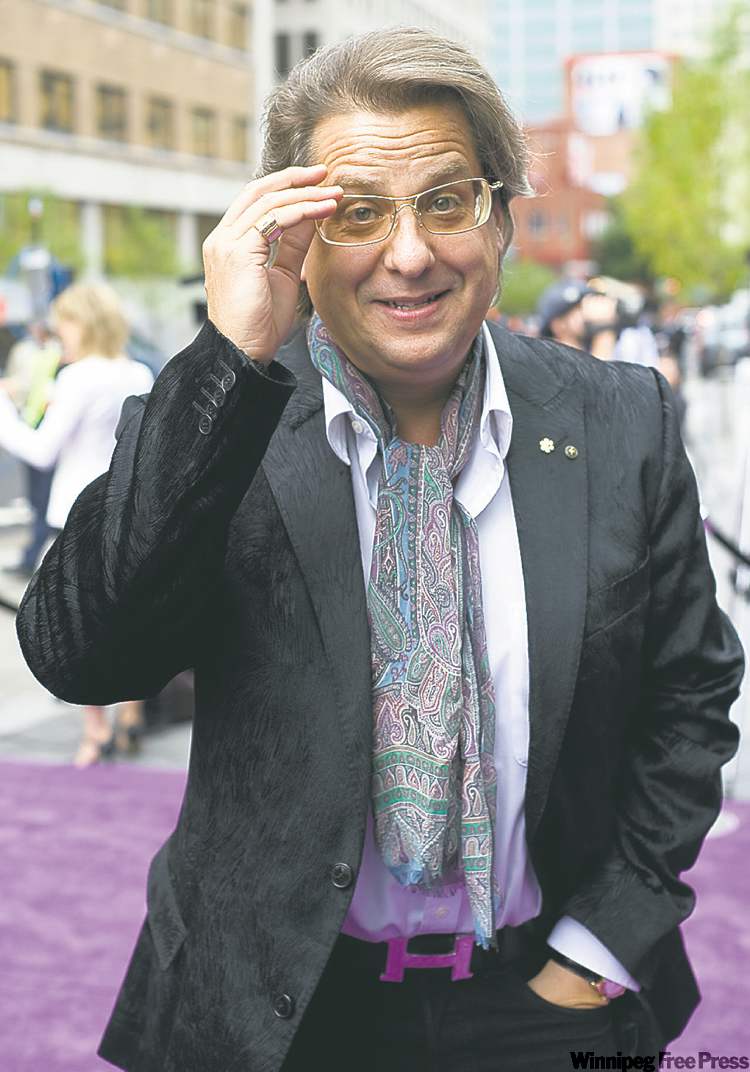
Some critics say Mathieu was overly influenced by Rachmaninoff. Others say he was an overlooked virtuoso and composing heavyweight.
“I never say this composer was the biggest genius in the world,” Lefèvre says. “But in the sound, there’s something that is purely Canadian. A lot of people would say it’s over-Romantic. But I play Mathieu everywhere…. I just believe we need to know this composer.”
Excerpts of Lefèvre playing Mathieu and an interview with PBS host Charlie Rose about Mathieu are at www.alainlefvre.com
alison.mayes@freepress.mb.ca
Concert Preview

Alain Lefèvre plays Mathieu’s Piano Concerto No. 4
Winnipeg Symphony Orchestra
Centennial Concert Hall
Tonight and Saturday at 8 p.m.
Tickets $23 to $87 at Ticketmaster