Drama king
More prodigious than Shakespeare, more controversial than Hitchens, George Bernard Shaw 'was our greatest entertainer and teacher'
Advertisement
Read this article for free:
or
Already have an account? Log in here »
To continue reading, please subscribe:

Digital Subscription
One year of digital access for only $205*
- Enjoy unlimited reading on winnipegfreepress.com
- Read the E-Edition, our digital replica newspaper
- Access News Break, our award-winning app
- Play interactive puzzles
*First annual payment billed as $205.00 + GST for one year. This annual subscription will automatically renew at $233.00 + GST every 52 weeks (10% off the regular annual price of $259.35). Offer available to new and qualified returning subscribers only. Cancel any time.
To continue reading, please subscribe:
Add Free Press access to your Brandon Sun subscription for only an additional
$1 for the first 4 weeks*
- Enjoy unlimited reading on winnipegfreepress.com
- Read the E-Edition, our digital replica newspaper
- Access News Break, our award-winning app
- Play interactive puzzles
*Your next Brandon Sun subscription payment will increase by $1.00 and you will be charged $17.95 plus GST for four weeks. After four weeks, your payment will increase to $24.95 plus GST every four weeks.
Read unlimited articles for free today:
or
Already have an account? Log in here »
Hey there, time traveller!
This article was published 19/01/2012 (5368 days ago), so information in it may no longer be current.
The 12th annual Master Playwright festival is throwing George Bernard Shaw a theatre party, which opens tonight on four stages.
Over the next 17 days the Dublin-born Shaw will be celebrated as an iconoclastic playwright, sparkling public speaker, quote machine and campaigning socialist. Others will recognize that genius but find him today a crashing bore whose didactic, long-winded plays are long out of fashion.
ShawFest 2012 finds the teetotaling vegetarian in a period of neglect, rarely produced or studied in school. It has been 24 years since the last Shaw play, You Never Can Tell, was presented at the Royal Manitoba Theatre Centre. Worse, he is even losing status at his namesake theatre in Niagara-on-the Lake. For the first time in the Shaw Festival’s 51-year history none of his plays will be staged at its flagship Festival Theatre in 2012. His works have not sold well in recent years and this season only two of the 11 plays scheduled will be his.
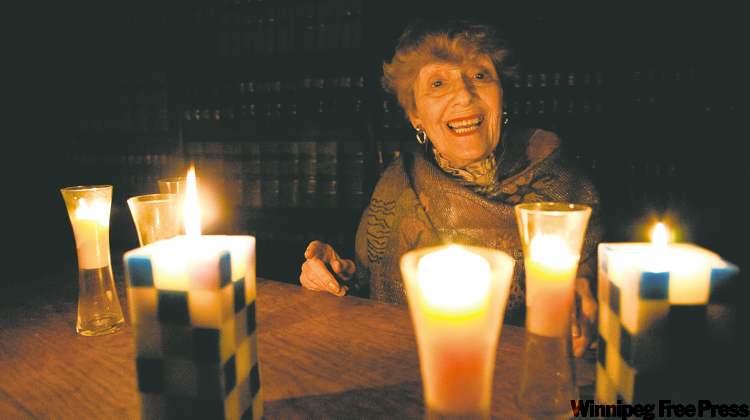
Still the balding, bearded Shaw made his mark and remains the only man to win the Nobel Prize for Literature (1925) and an Oscar for best screenplay (1938). His death at the age of 94 in 1950 was front page news around the globe. British Prime Minister Clement Attlee praised him, “As a critic, dramatist, man of letters, humorist, social revolutionary and prophet, he was our greatest entertainer and teacher.”
Here is what you need to know about Shaw:
Self-taught, self-made man
His most impressive accomplishment was overcoming the disadvantages of a broken, unhappy, impoverished home. Shaw, who hated his first name and dropped it early, never went to college and yet through force of will became one of the most intelligent men of his times.
For two years Shaw consumed the contents of the British Museum where he was discovered by the famous critic William Archer. Archer noted that Shaw had two books open on his desk: The score of Tristan and Isolde along with Das Kapital. Intrigued by someone so young being interested in both Richard Wagner and Karl Marx, Archer chatted up Shaw and found he said the most outrageous things with the most enchanting eloquence.
Soon Archer pulled some stings to have his young friend appointed music critic of the Saturday Review. From there it was no stopping Shaw’s ascension to a literary pedestal on which he stood for the best part of 75 years.
Never forgetting his humble beginnings, Shaw became a leading social reformer and helped to establish the Fabian Society, whose aim was to promote socialism. Shaw was a great believer in Horace’s dictum that the artist should delight and instruct. All of his plays, novels, and essays were intensively conceived political statements concerning poverty, infant mortality, pacifism, vegetarianism and feminism. He always advocated change.
For him it was all about improvement of the of the species, blowing up imprisoning conventions was always the first purpose of Shaw plays. It earned him the nickname “the demolition expert” by the critic Kenneth Tynan.
“He was always looking for ideas that would provoke, challenge and lead to social improvement,” says Shaw scholar Leonard Conolly.
All-purpose sage
Shaw was a global star, an intellectual provocateur a la Christopher Hitchens with splashes of the self-promotion of Donald Trump and playwright David Hare’s willingness to tackle every political hot potato.
“He was in the public eye continuously,” says Margaret Groome, University of Manitoba English professor. “He couldn’t leave anything un-commented upon.”
That he was a shameless know-it-all is what drove his torrential output of speeches, novels, plays, papers and an estimated 250,000 letters. He gave himself to causes with a pompous assuredness and his opinions were endlessly in demand.
“When I venture to say that a thing is so, it is so,” Shaw once famously declared.
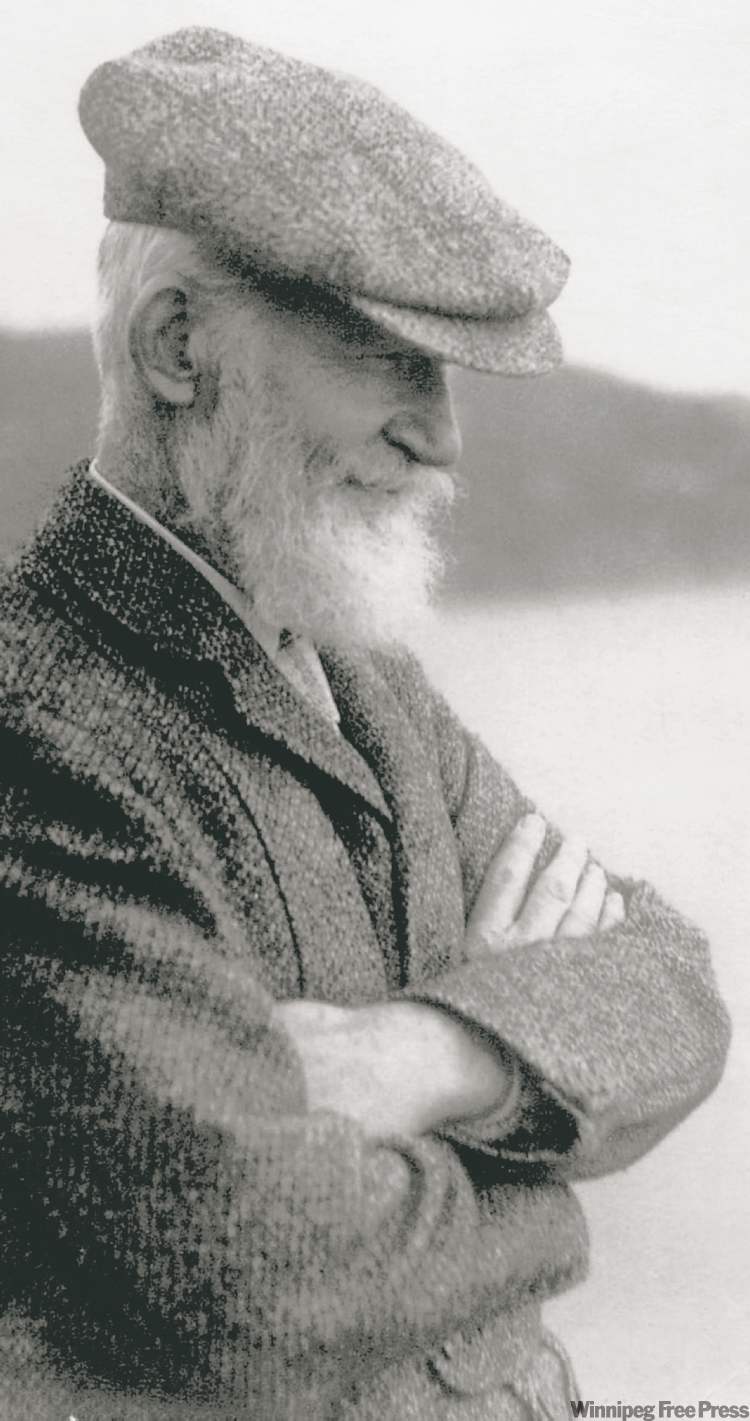
It was those kind of statements that earned him the moniker, the Dublin Smartie.
“Shaw knew he was a great man, before anyone else thought about it,” offered Canuck novelist Robertson Davies.
Is it BS that GBS rivals Shakespeare?
He penned 65 plays, much more than Shakespeare to whom he has often being compared, mostly by Shaw himself. Many scholars consider him the second greatest dramatist after the Bard. His master work in Pygmalion, which was immortalized on stage and screen as My Fair Lady. Other scripts that have survived the test of time are Major Barbara, Heartbreak House, Mrs. Warren’s Profession, Saint Joan and A Man’s a Man (which opened the new Manitoba Theatre Centre in 1970).
“He was preeminent writer of drama in the English language,” says Groome the director of the Black Hole Theatre’s of Arms and the Man at ShawFest. “He was so prolific that his dramas were being staged continuously.”
In 1898 Shaw published several of his works under the title Plays: Pleasant and Unpleasant. The unpleasant plays, like Mrs. Warren’s Profession, The Philanderer and Widower’s House dealt sternly with social ills. The pleasant plays, such as Arms and the Man, Candida and You Never Can Tell came with a heaping amount of comedic sugar added to its socialist medicine.
Unpleasant was a popular term at the turn of the century with reviewers to suggest qualities that they might not care to name like prostitution and starvation and slum landlords.
“They thought those issues were not fit for the ears of ladies and gentlemen,” says Groome. “Shaw felt that dramatic power could be used to force the spectator to face unpleasant facts. He’s trying to get at the conscience of the audience and have them go home uncomfortable.”
No sex please, We’re Irish
His public life in the spotlight led to much speculation about his private life, which on the surface seemed conventional.
Shaw lost his virginity at 29 to a friend of his mother, 15 years his senior, and at 42 wedded the Irish millionairess Charlotte Payne-Townsend, a union that was said at her request to have never been consummated. During their 45 years of marriage, he carried on many relationships with leading ladies of the stage.
The most notable of those was with Mrs. Patrick Campbell, for whom Shaw wrote the part of flower-girl-turned-socialite Eliza Doolittle in Pygmalion. That relationship is the subject of ShawFest offering Queen of My Heart by local playwright Talia Pura. Another one of his paramours, the actress and spiritualist Florence Farr, will be featured in My Affair With George Bernard by Winnipeg’s Daniel Thau-Eleff.
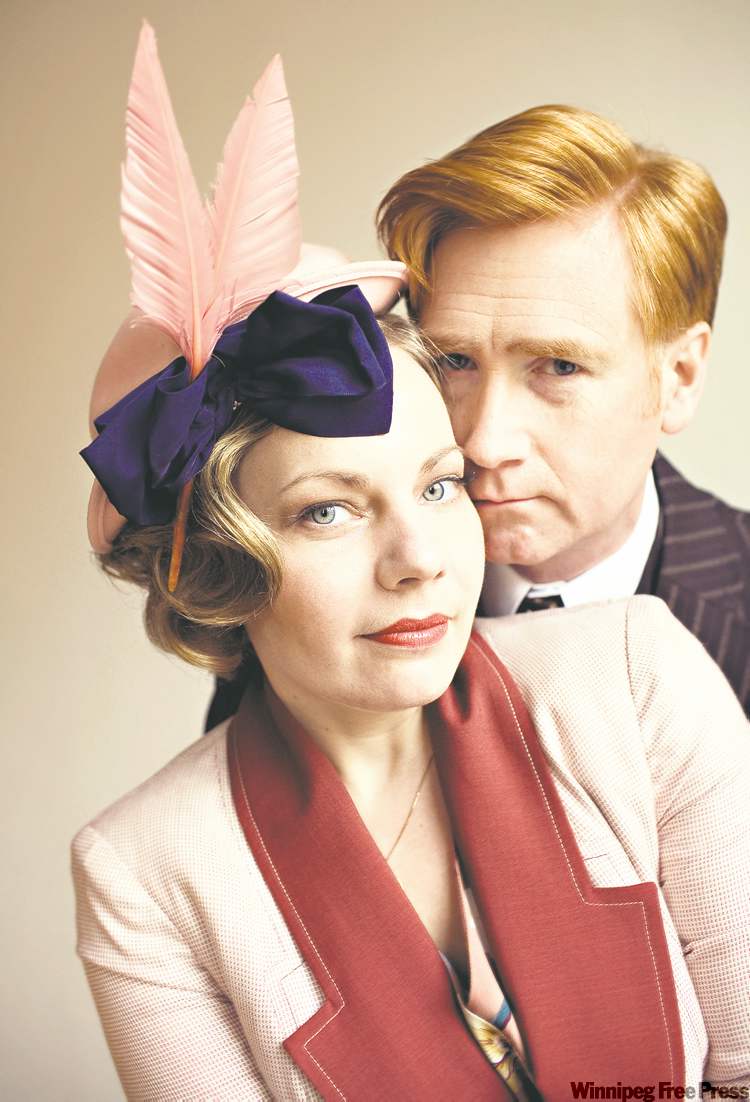
“Shaw describes himself as being sexually infatuated twice in his life — once as a young man and once as an older man,” says Thau-Eleff. “He’s not talking about his wife.”
In her 1993 book Bernard Shaw: The Ascent of the Superman, Sally Peters made a case that her subject had been a homosexual who had spent his life in the closet. Her evidence is pretty skimpy and unconvincing — photographs he and the young Harley Granville Baker took of each other frolicking in various stages of undress on a beach.
Mad Man
Shaw believed that the secret to success was to offend the greatest number of people but sometimes his contrarian nature got him into trouble. People could overlook his Scroogey calls for the abolition of Christmas or a new alphabet but his anti-war stance during the World War I made him terribly unpopular. His unsavory infatuation with Stalin, Mussolini and Hitler brought him nothing but revulsion.
“There are some unsettling opinions,” says Groome. “He didn’t see the darker implications of the strong leaders he was attracted to.”
Other critics savage his memory over his opinions of eugenics and his musings about using gas chambers to get rid of undesirables.

“I don’t care that he wrote witty little plays,” says Glen Beck, Fox News and talk show host. “The man was a monster.”
Thau-Eleff finds the problem with Shaw is that it was often impossible to tell when he was being honest and recklessly incendiary.
“He was serious about his political beliefs but when he had his tongue in cheek,” says Thau-Eleff, “it’s so hard to tell.”
kevin.prokosh@freepress.mb.ca