Sitar virtuoso became hippie musical icon
Advertisement
Read this article for free:
or
Already have an account? Log in here »
To continue reading, please subscribe:

Digital Subscription
One year of digital access for only $205*
- Enjoy unlimited reading on winnipegfreepress.com
- Read the E-Edition, our digital replica newspaper
- Access News Break, our award-winning app
- Play interactive puzzles
*First annual payment billed as $205.00 + GST for one year. This annual subscription will automatically renew at $233.00 + GST every 52 weeks (10% off the regular annual price of $259.35). Offer available to new and qualified returning subscribers only. Cancel any time.
To continue reading, please subscribe:
Add Free Press access to your Brandon Sun subscription for only an additional
$1 for the first 4 weeks*
- Enjoy unlimited reading on winnipegfreepress.com
- Read the E-Edition, our digital replica newspaper
- Access News Break, our award-winning app
- Play interactive puzzles
*Your next Brandon Sun subscription payment will increase by $1.00 and you will be charged $17.95 plus GST for four weeks. After four weeks, your payment will increase to $24.95 plus GST every four weeks.
Read unlimited articles for free today:
or
Already have an account? Log in here »
Hey there, time traveller!
This article was published 12/12/2012 (5034 days ago), so information in it may no longer be current.
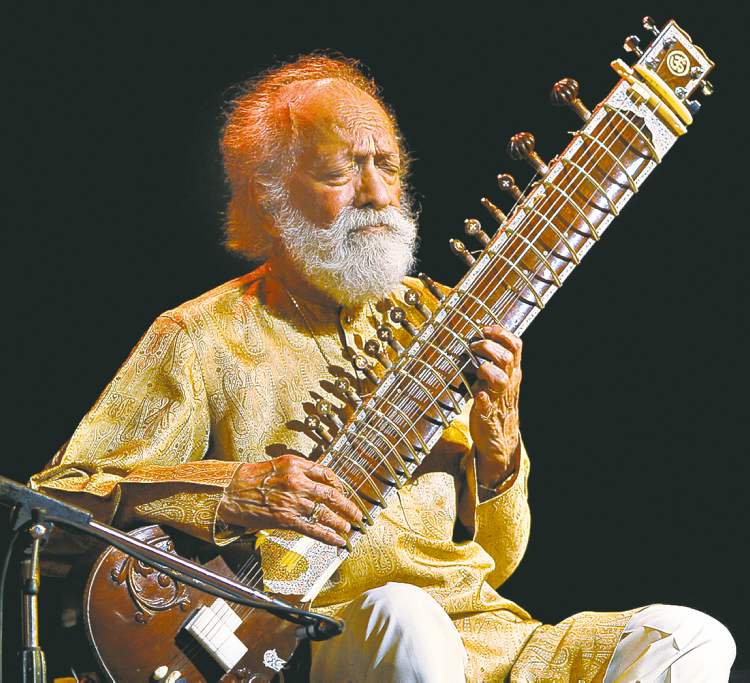
RAVI Shankar, the sitar virtuoso who became a hippie musical icon of the 1960s after hobnobbing with the Beatles and who introduced traditional Indian ragas to Western audiences over an eight-decade career, has died. He was 92.
The prime minister’s office confirmed his death and called him a “national treasure.”
Labelled “the godfather of world music” by George Harrison, Shankar helped millions of classical, jazz and rock lovers discover the centuries-old traditions of Indian music.
He also pioneered the concept of the rock benefit with the 1971 Concert For Bangladesh. To later generations, he was known as the estranged father of popular American singer Norah Jones.
As early as the 1950s, Shankar began collaborating with and teaching some of the greats of Western music, including violinist Yehudi Menuhin and jazz saxophonist John Coltrane. He played well-received shows in concert halls in Europe and the United States, but faced a constant struggle to bridge the musical gap between the West and the East.

His close relationship with Harrison, the Beatles lead guitarist, shot Shankar to global stardom in the 1960s.
— The Associated Press