

RWB’s Handmaid’s Tale creates darkly theatrical world
Advertisement
Read this article for free:
or
Already have an account? Log in here »
To continue reading, please subscribe:
Monthly Digital Subscription
$1 per week for 24 weeks*
- Enjoy unlimited reading on winnipegfreepress.com
- Read the E-Edition, our digital replica newspaper
- Access News Break, our award-winning app
- Play interactive puzzles
*Billed as $4.00 plus GST every four weeks. After 24 weeks, price increases to the regular rate of $19.95 plus GST every four weeks. Offer available to new and qualified returning subscribers only. Cancel any time.
Monthly Digital Subscription
$4.99/week*
- Enjoy unlimited reading on winnipegfreepress.com
- Read the E-Edition, our digital replica newspaper
- Access News Break, our award-winning app
- Play interactive puzzles
*Billed as $19.95 plus GST every four weeks. Cancel any time.
To continue reading, please subscribe:
Add Free Press access to your Brandon Sun subscription for only an additional
$1 for the first 4 weeks*
- Enjoy unlimited reading on winnipegfreepress.com
- Read the E-Edition, our digital replica newspaper
- Access News Break, our award-winning app
- Play interactive puzzles
*Your next Brandon Sun subscription payment will increase by $1.00 and you will be charged $17.95 plus GST for four weeks. After four weeks, your payment will increase to $24.95 plus GST every four weeks.
Read unlimited articles for free today:
or
Already have an account? Log in here »
Hey there, time traveller!
This article was published 17/10/2013 (4590 days ago), so information in it may no longer be current.
Since first penned nearly three decades ago, Margaret Atwood’s 1985 chilling dystopian novel The Handmaid’s Tale continues to paint a harrowing portrait of totalitarian forces, where women are subjugated to mere breeding machines and the rise of unrelenting religious fundamentalism threatens to choke any last vestige of human rights.
The Royal Winnipeg Ballet opened its 74th season with the world premiere of Lila York’s The Handmaid’s Tale, a gripping contemporary ballet based on Atwood’s famous novel. Set in the future society, Gilead, after a military coup has overthrown the U.S. government, women are indoctrinated as red-habited handmaids to bear children for commanders in lieu of their barren wives.
The two-hour, five-show production that runs until Sunday includes an edgy, contemporary pastiche score ranging from Arvo Pärt to Alfred Schnittke with the Winnipeg Symphony Orchestra led by Tadeusz Biernacki. Designer Clifton Taylor’s multi-level set, comprised of exposed scaffolding and lighting grids, provides a starkly cold canvas for Liz Vandal’s colour-coded costumes, all dramatically lit by Taylor and Anshuman Bhatia.
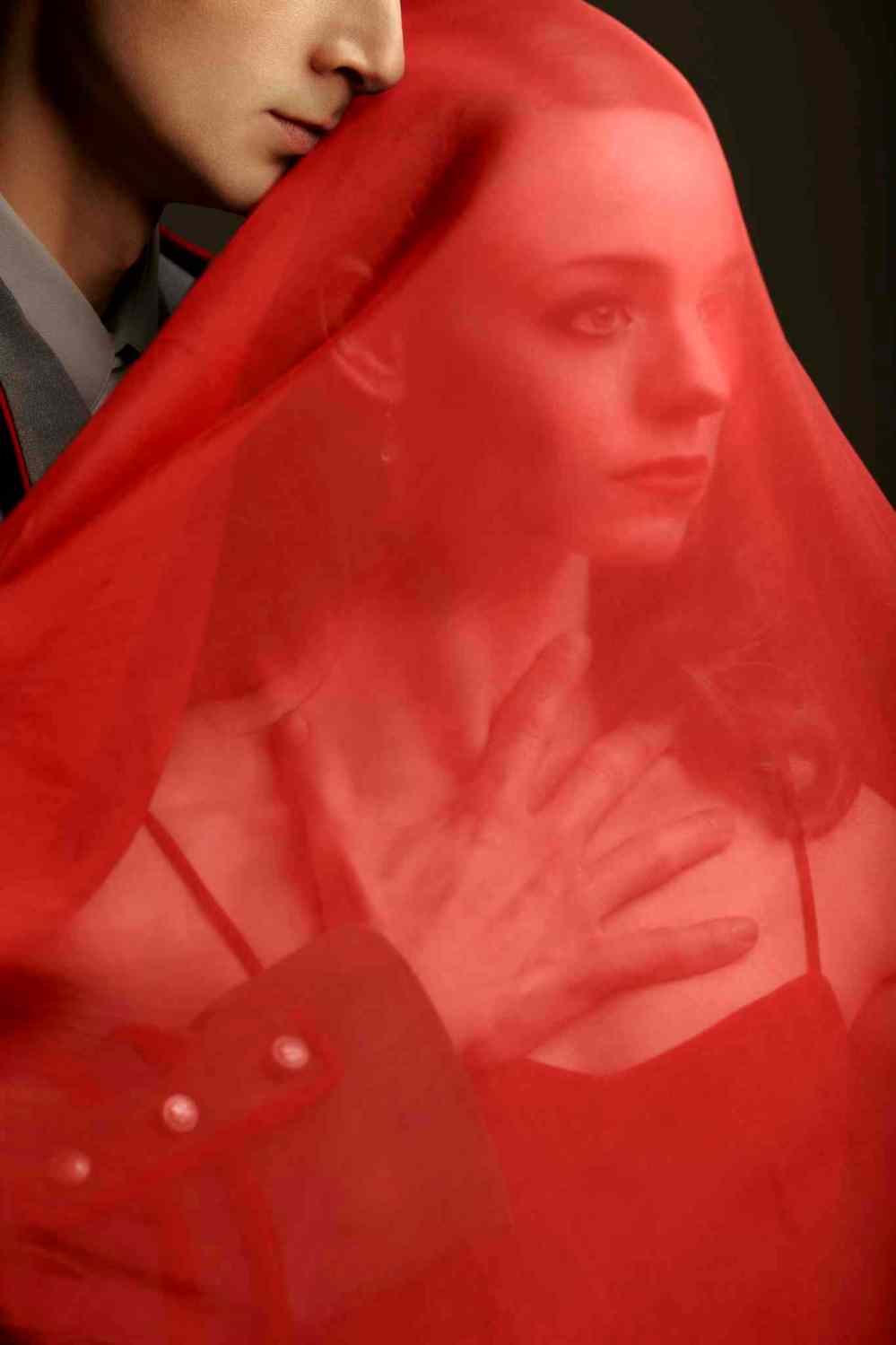
Billed as a “dance-drama,” the renowned New York-based choreographer succeeds at creating a darkly theatrical world complete with onstage technicians scanning the stage and audience with penetrating searchlights. Unfolding as a series of 16 scenes, the episodic plot-driven ballet, performed en pointe, highlights the key moments in the story’s narrative arc as well as plumbing the characters’ emotional relationships.
Principal dancer Amanda Green, as protagonist Offred, carries the two-act show, wistful for “the time before,” while revealing her tale through a series of pas de deux that punctuate the ensemble sections. Her first duet with the fearless Moira (Sophia Lee) ripples with dramatic tension cast against the pulsing handmaids who flex their feet in lockstep under the steely gaze of Aunt Lydia (Yayoi Ban).
Offred’s growing desperation becomes palpable during the macabre waltz danced with the Commander, danced with malicious glee by retiring longtime soloist Alexander Gamayunov. The ballet’s two sole love scenes, performed with chauffeur Nick (Dmitri Dovgoselets), provide tender contrast to the heavily stylized, suspended sex “ceremony” between Offred, the Commander and his wife, former gospel singer Serena Joy (Serena Sanford).
This extended scene — the crux of the story — felt overly abstracted and strangely egalitarian in the power-fuelled regime. After all, this is ostensibly gang rape, despite being state-sanctioned in the name of skewed Old Testament teachings. And Rock of Ages will never quite sound the same again.
The Eyes, who police the society, teem with athletic precision although felt overly polite at times with balletic pointed toes. The Resistance Fighters that eventually restore order during the May Day rebellion fared better, led by powerhouse Yosuke Mino, whose bounding leaps could topple any regime.
Highlights include the bawdy club scene where the Jezebels wearing red-fringed mini-dresses and character shoes clench their fists and thrust their limbs while turned topsy-turvy by the commanders. Lee’s Moira, now turned hardened harlot after escaping the Red Centre indoctrination, also delivers a razor-sharp, convulsing solo before sweeping across the stage with Green as the two former friends briefly reunite. Her utter rejection of Offred at the end of their duet pierces like a knife.
Despite some invariable weaknesses, such as too many blackouts and an unusual choice of ending that appears too abruptly, the RWB is to be commended for taking artistic risk in an age of caution by commissioning this brave new work. Ten years in the making since first conceived, York’s vision breathes new life into a venerable Canadian classic while literally embodying the story’s dark forces, with its sobering message as timely — and relevant — as ever.
holly.harris@shaw.ca
Q & A with Margaret Atwood
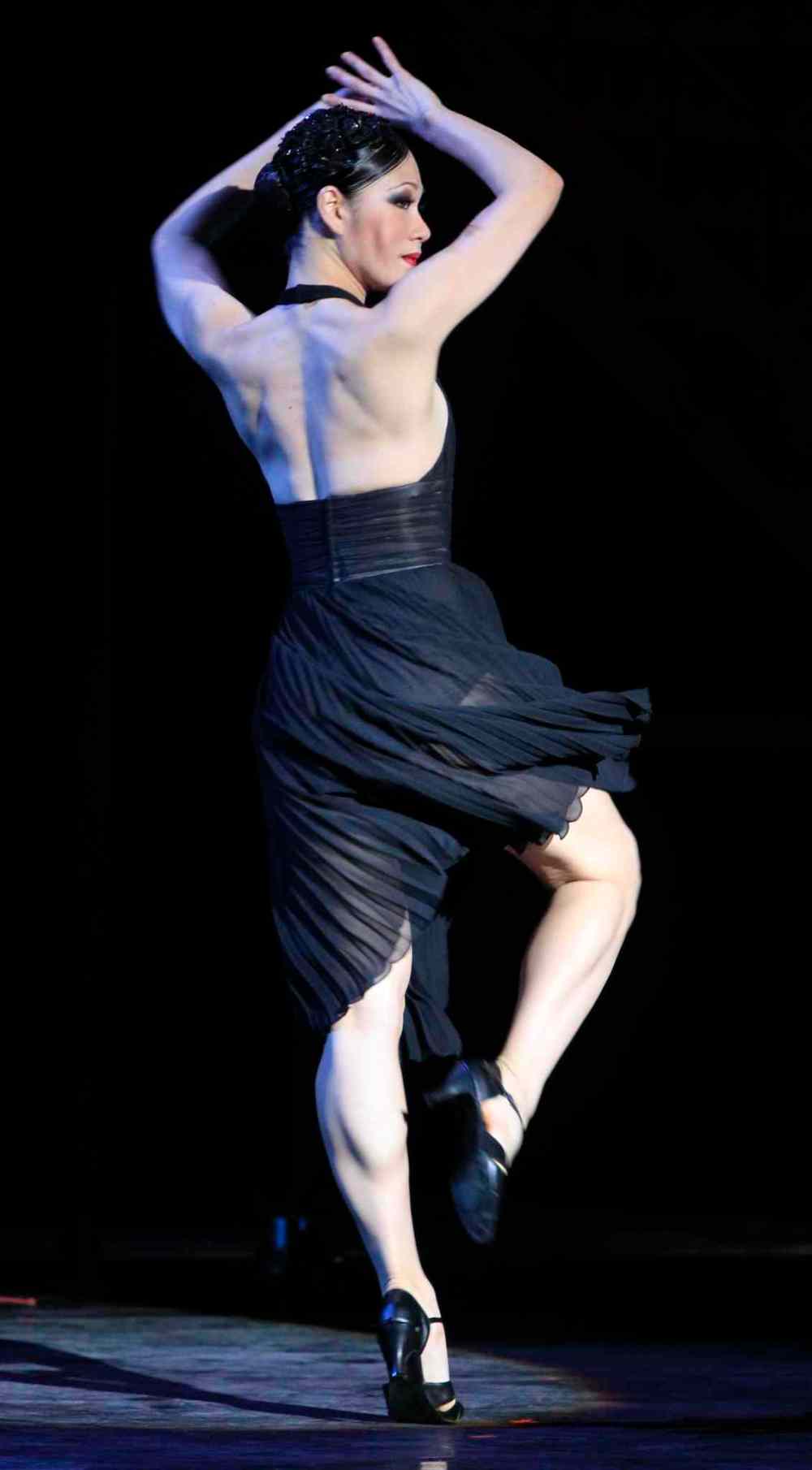
Previously adapted as a 1990 film and 2000 opera, the RWB premiere of The Handmaid’s Tale marks the first time Atwood’s literary masterpiece has been staged exclusively without the use of words. The internationally renowned author was in the audience on opening night, and gave two thumbs up for its newest incarnation.
WFP: Ms. Atwood, what is your initial response to this new work?
Margaret Atwood: It’s a very strong piece. It’s a very strong piece and very well danced.
WFP: Is it what you imagined?
MA: I didn’t imagine anything (laughs). I couldn’t have. I had no idea what to expect.
WFP: Were you surprised?
MA: I am extremely, pleasantly surprised.
WFP: By what in particular?
MA: The last piece… was very unexpected. But a lot of the ballet was unexpected. It’s quite varied. There are some pretty raucous moments and some extremely energetic moments, particularly with the male dancers. The pieces of music that Lila chose to put with each scene, she also put a lot of thought into that.
WFP: How well do you think your literary story translates to movement?

MA: I don’t think it’s a translation. I think it’s a new work inspired by, which is different from a translation.

WFP: Do you feel that Lila York was able to capture the essence of the story?
MA: Yes, no question — by the body language of the story. Like when the body is restrained, when the body is controlled. When the body is helpless, when the body is free… Totalitarianism is very much about bodies. Who gets to control whose body, and how free you are to express yourself. And what kind of constraint it puts on the body to be un-free. People hold themselves differently.
WFP: Sounds like you’re very happy with the ballet, then.
MA: I’m very pleased and I think Lila should be very pleased. And the company should be very pleased and Winnipeg should be very pleased.
— Holly Harris
Holly Harris writes about music for the Free Press Arts & Life department.
Our newsroom depends on a growing audience of readers to power our journalism. If you are not a paid reader, please consider becoming a subscriber.
Our newsroom depends on its audience of readers to power our journalism. Thank you for your support.