

Choreographer speaks universal language
African troupe communicates via a variety of voices
Advertisement
Read this article for free:
or
Already have an account? Log in here »
To continue reading, please subscribe:
Digital Subscription
One year of digital access for only $75*
- Enjoy unlimited reading on winnipegfreepress.com
- Read the E-Edition, our digital replica newspaper
- Access News Break, our award-winning app
- Play interactive puzzles
*Billed as $5.77 plus GST every four weeks. After 52 weeks, price increases to the regular rate of $19.95 plus GST every four weeks. Offer available to new and qualified returning subscribers only. Cancel any time.
Monthly Digital Subscription
$4.99/week*
- Enjoy unlimited reading on winnipegfreepress.com
- Read the E-Edition, our digital replica newspaper
- Access News Break, our award-winning app
- Play interactive puzzles
*Billed as $19.95 plus GST every four weeks. Cancel any time.
To continue reading, please subscribe:
Add Free Press access to your Brandon Sun subscription for only an additional
$1 for the first 4 weeks*
- Enjoy unlimited reading on winnipegfreepress.com
- Read the E-Edition, our digital replica newspaper
- Access News Break, our award-winning app
- Play interactive puzzles
*Your next Brandon Sun subscription payment will increase by $1.00 and you will be charged $17.95 plus GST for four weeks. After four weeks, your payment will increase to $24.95 plus GST every four weeks.
Read unlimited articles for free today:
or
Already have an account? Log in here »
Hey there, time traveller!
This article was published 02/11/2013 (4588 days ago), so information in it may no longer be current.
In an age when social networking, digital chat rooms and instant messaging are readily accessible with the mere click of a mouse, it’s perilously easy for any sense of personal identity to get submerged by all the cyber-babble.
Mozambique-born dance artist Casimiro Nhussi, 49, has something to say about that, as his 11-year-old company NAfro explores the idea of “voice” in his newest production, Sauti. The show, running through Sunday at the Gas Station Arts Centre, in turn, is a literal translation in Swahili for “voice,” one of the polyglot dancer/choreographer/artistic director/teacher/musician’s eight spoken languages.
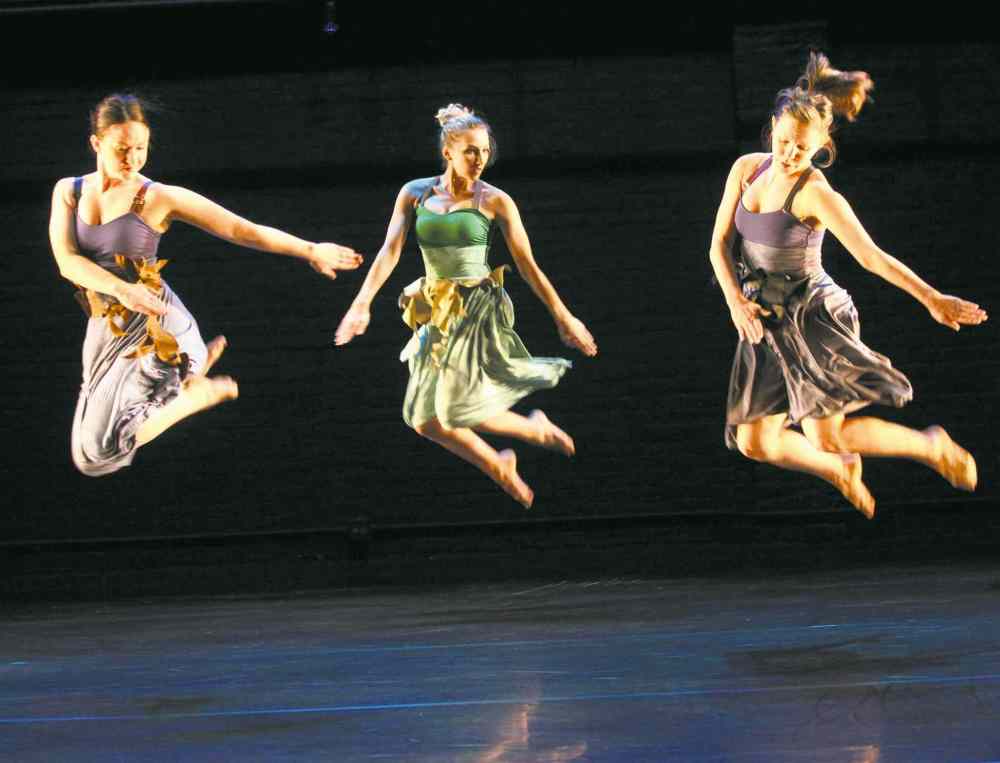
“There’s always a voice that comes out of our human bodies, whether it’s through movement, singing or dancing,” the effusive Nhussi explains during an interview. “That voice is always there, even if we don’t use words.”
The former principal dancer/artistic director of the Mozambique National Song and Dance Company arrived in the city 16 years ago and eventually founded Western Canada’s only professional African contemporary dance company in 2003. The six-dancer troupe presents two productions each year, with its next show slated for late February. Each program hosted by Nhussi becomes an eagerly anticipated, interactive “event,” with its loyal following all too eager to bang on hand drums or shake their booties onstage after each performance as part of the troupe’s joyous, final ritual community dance.
Those same fans might recall seeing an earlier incarnation of Sauti staged in October 2008, featuring choreography by Nhussi and Calgary’s Michèle Moss. Nhussi assures that this is an all-new production that offers two new, unique and wholly distinctive world premières by BaKari Ifasegun Lindsay, co-founder of Toronto’s Collective of Black Artists (COBA), and Zab Maboungou, founder of Montreal-based troupe Nyata Nyata Dance Company.
Renowned as the pioneer of African dance in Canada, Maboungou wowed audiences last November with her arresting solo De/Liberated Gestures during NAfro’s ambitious Moving Inspirations Festival celebrating its 10th anniversary. Her latest creation, Noise, performed by company dancers Hélène Mancini, Nicole Coppens, Paige Lewis, Alexandra Garrido, Alexandra Scarola and Ardley Zozobrado examines the idea of private “space” that we each seek to carve out for ourselves in a noisy, distraction-filled world. The abstract, 15-minute work with live accompaniment by Nhussi and percussionist Tim Church showcases the choreographer’s idiosyncratic movement vocabulary based on her own devised “rhythms and movement” technique, as a combustion of African traditional dance with contemporary influences.
“I have let myself be inspired by the NAfro Dancers and the fact that Casimiro gave me complete carte blanche to create a new piece with them,” Maboungou says in an email. “So with music (‘noise’) and movement, I tried arranging probable and improbable encounters in space, while at the same time, coming out with specific dynamics where ‘noise’ becomes ‘music.'”

The program’s second première, Lindsay’s Yobu-Carry (Wolof), set to music by Terry Riley and Tirlok Gurtu, offers its own take, with the 28-minute contemporary ensemble work exploring “emotional transformation through physical interaction.” The Trinidad-born artist, who studied with New York City’s fabled Alvin Ailey American Dance Theater and teaches at Toronto’s Ryerson University, also appeared at the NAfro festival last year in his trio Cross Currents, a kaleidoscopic showpiece of percussive movement where its three dancers seemed to morph into one living, interconnected organism.
“The first time I saw his piece (in rehearsals) last summer, I said, ‘Oh yeah,'” Nhussi says with a grin. “His message is very clear in what he wants, and is saying, and really suits the idea of ‘sauti.'” Besides offering its unique blend of African and contemporary dance, NAfro productions have become equally known for their rafter-shaking, live musical accompaniment that also includes Nhussi performing with the onstage, nine-piece drum band. The multi-talented artist is becoming increasingly known for his own original music; he was recently nominated for a 2013 Western Canadian Music Award (World Recording of the Year) for his second album, Gweka. Before that, he received another nomination in 2010 for his inaugural album, Makonde, an experience that he found emotionally overwhelming, as it validated another of his many creative dialects.
“This is the beginning of the next chapter,” the indefatigable artist states proudly. “I particularly chose these two choreographers because I want to keep cultivating my audience to appreciate different types of African contemporary dance,” he adds.
“Voice is our identity. And because we are human, we all have different voices. We need to create space. We need room for all these voices to be heard.”
holly.harris@shaw.ca
Holly Harris writes about music for the Free Press Arts & Life department.
Our newsroom depends on a growing audience of readers to power our journalism. If you are not a paid reader, please consider becoming a subscriber.
Our newsroom depends on its audience of readers to power our journalism. Thank you for your support.