It’s weird
WAG's blockbuster Dalí show illustrates why the Spanish surrealist remains both popular and polarizing
Advertisement
Read this article for free:
or
Already have an account? Log in here »
To continue reading, please subscribe:

Digital Subscription
One year of digital access for only $205*
- Enjoy unlimited reading on winnipegfreepress.com
- Read the E-Edition, our digital replica newspaper
- Access News Break, our award-winning app
- Play interactive puzzles
*First annual payment billed as $205.00 + GST for one year. This annual subscription will automatically renew at $233.00 + GST every 52 weeks (10% off the regular annual price of $259.35). Offer available to new and qualified returning subscribers only. Cancel any time.
To continue reading, please subscribe:
Add Free Press access to your Brandon Sun subscription for only an additional
$1 for the first 4 weeks*
- Enjoy unlimited reading on winnipegfreepress.com
- Read the E-Edition, our digital replica newspaper
- Access News Break, our award-winning app
- Play interactive puzzles
*Your next Brandon Sun subscription payment will increase by $1.00 and you will be charged $17.95 plus GST for four weeks. After four weeks, your payment will increase to $24.95 plus GST every four weeks.
Read unlimited articles for free today:
or
Already have an account? Log in here »
Hey there, time traveller!
This article was published 02/10/2014 (4306 days ago), so information in it may no longer be current.
I grew up in Tampa, Fla., a half-hour from the museum housing the largest Salvador Dalí collection in North America. On a 10th-grade field trip, I taught myself how to roll my tongue standing in front of The Hallucinogenic Toreador, a four-metre-tall acid trip of a canvas depicting a bullfighting ring full of marching Venuses de Milo and giant houseflies. I feel like Dalí would have appreciated the randomness of that. The same reproduction prints I had on my bedroom wall as a teenager are currently for sale in the WAG gift shop.
Dalí Up Close, which opened to record crowds in an after-hours blowout for last week’s Nuit Blanche, came as a welcome reminder of why, like so many people, I was drawn to the Spanish surrealist when I was younger. It also reminded me why (like many others) my enthusiasm dimmed a bit as time went on.
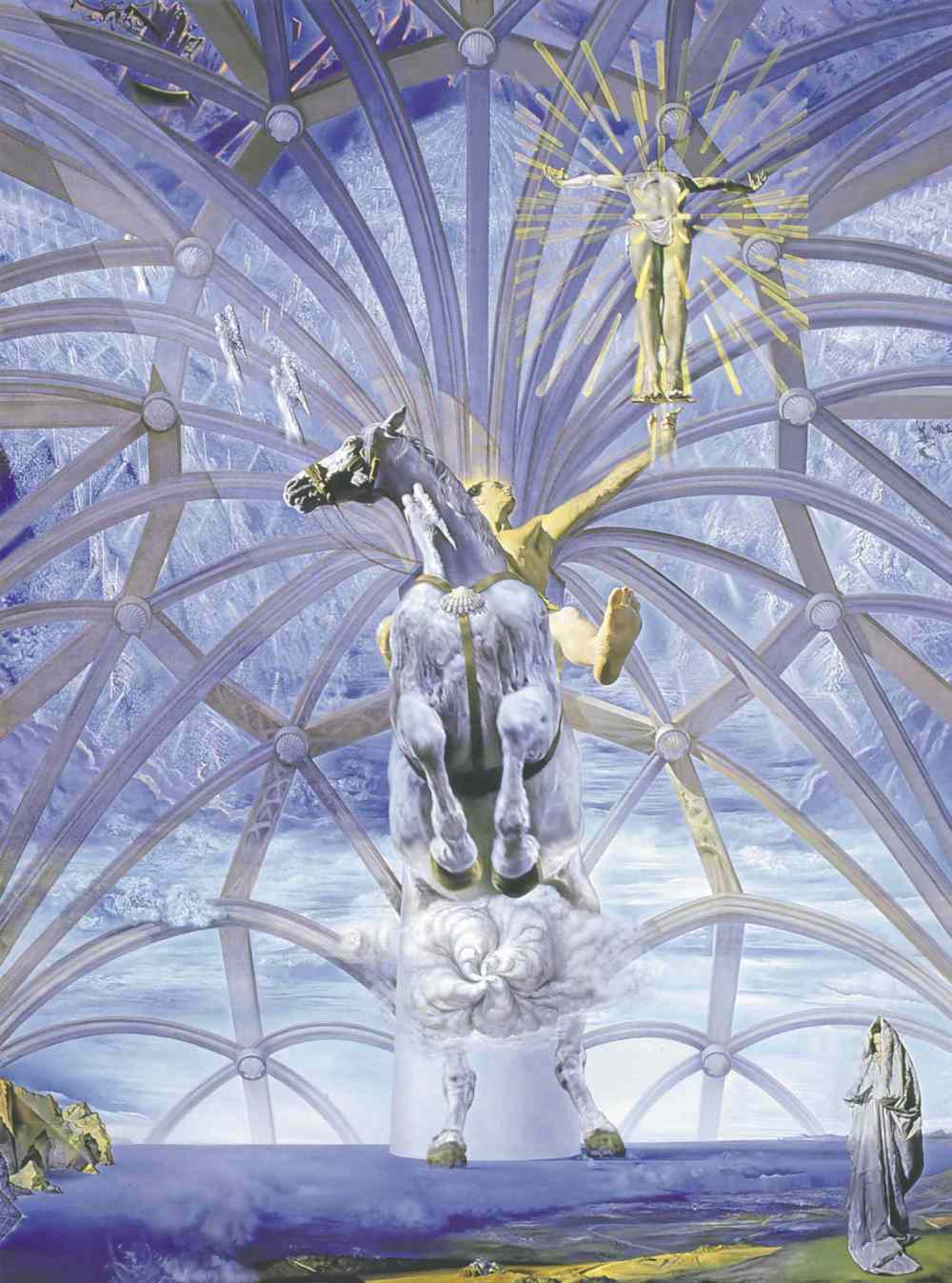
Up Close revolves around Santiago El Grande, another four-metre-tall acid trip of a canvas, this one showing a horseback-riding apparition of St. James charging out of the sea beneath a crystalline blue, cathedral-vaulted sky. The painting has all the most compelling features of Dal’s postwar output — his unique fusion of traditional Catholic iconography, scientific imagery and impenetrable dreamscapes; his superhuman draftsmanship, his soaring self-possession and bombast.

Though plainly stunning, the painting also showcases his weird and sometimes troubling politics. Dalí was expelled from the original surrealist group in 1934, partly in response to his perceived sympathies toward European fascism. Later, he would lend his support to Spanish dictator Francisco Franco. Santiago Matamoros — “St. James the Moor-slayer,” referring to the medieval, North African Muslims who once occupied parts of Spain — can be understood as a symbol of violent, xenophobic nationalism, which further complicates an already complex image.
Santiago is the show’s proper “masterwork,” the rest comprising a rewarding mixed bag of smaller canvases, photographs and works on paper, jewelry designs and so on. Together, these offer a fascinating and fairly comprehensive picture of Dal’s wide-ranging activities.
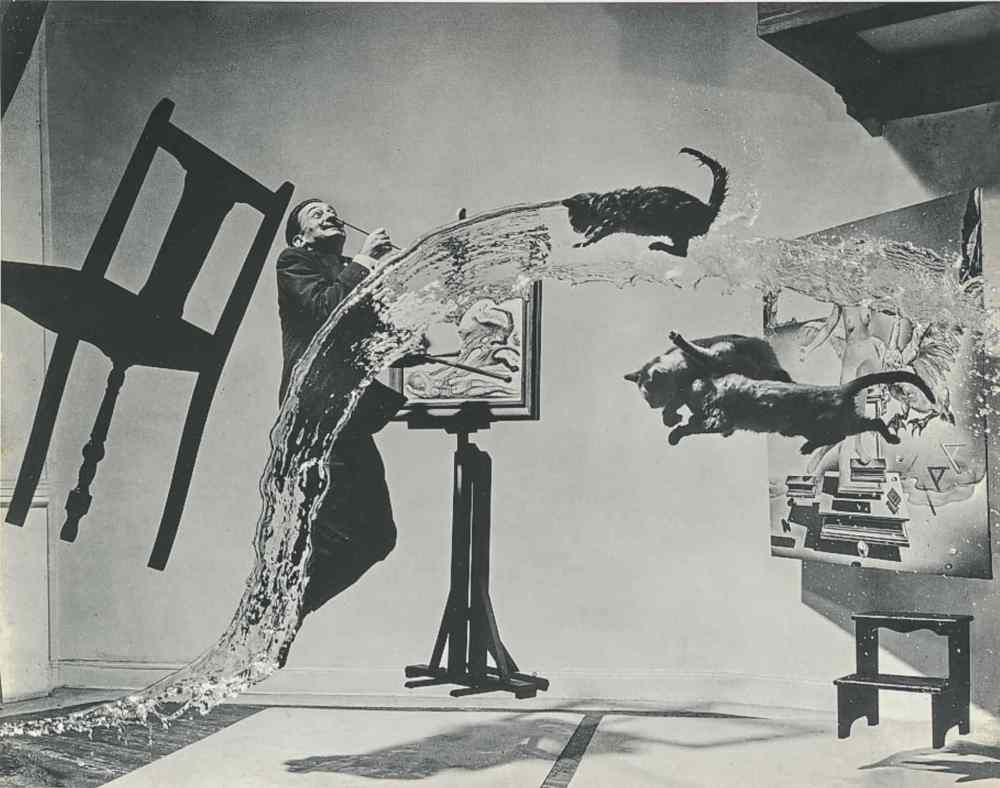
At one end of the spectrum, Remorse, or Sphinx Embedded in Sand is one of the show’s few examples of Dal’s “classic” surrealist output, a tiny, suitably enigmatic canvas from 1931. (His most famous painting, The Persistence of Memory or “the melting clocks,” appears in the form of a painted-over reproduction from the ’70s). At the other end, a series of portraits made in collaboration with photographer Philippe Halsman show Dalí playing with his iconic moustache, succinctly illustrating the artist’s committed embrace of celebrity and silliness.
Dalí Up Close dovetails into a second exhibition, Masterworks from the Beaverbrook Art Gallery, a conservative but frequently captivating showcase of paintings spanning the Northern Renaissance to the Group of Seven.
There are plenty of highlights for fans of painting, but for fans of Dalí in particular, the show helps locate the artist within a centuries-long lineage of Western figuration. For all his calculated kookiness, Dalí was a traditionalist at heart (and a masterful one at that), which goes a long way toward explaining why his work remains so popular — and so polarizing.

Steven Leyden Cochrane is a Winnipeg-based artist, writer and educator.
History
Updated on Thursday, October 2, 2014 10:17 AM CDT: Corrects spelling of Dalí