Gender politics
Marlowe's tale of Edward II given new relevance in local production

Advertisement
Read this article for free:
or
Already have an account? Log in here »
To continue reading, please subscribe:

Digital Subscription
One year of digital access for only $205*
- Enjoy unlimited reading on winnipegfreepress.com
- Read the E-Edition, our digital replica newspaper
- Access News Break, our award-winning app
- Play interactive puzzles
*First annual payment billed as $205.00 + GST for one year. This annual subscription will automatically renew at $233.00 + GST every 52 weeks (10% off the regular annual price of $259.35). Offer available to new and qualified returning subscribers only. Cancel any time.
To continue reading, please subscribe:
Add Free Press access to your Brandon Sun subscription for only an additional
$1 for the first 4 weeks*
- Enjoy unlimited reading on winnipegfreepress.com
- Read the E-Edition, our digital replica newspaper
- Access News Break, our award-winning app
- Play interactive puzzles
*Your next Brandon Sun subscription payment will increase by $1.00 and you will be charged $17.95 plus GST for four weeks. After four weeks, your payment will increase to $24.95 plus GST every four weeks.
Read unlimited articles for free today:
or
Already have an account? Log in here »
Hey there, time traveller!
This article was published 01/10/2015 (4019 days ago), so information in it may no longer be current.
In contemporary pop culture, the story of the English monarch Edward II was brutally summed up in a single scene in the movie Braveheart. Recall the scene in which the fey Prince Edward is stunned when his father, Edward Longshanks (Patrick McGoohan), tosses the prince’s male lover out a tower window, a moment often referenced as evidence of director Mel Gibson’s homophobic tendencies.
Suffice it to say, speculation on the younger Edward’s sexuality didn’t start with Gibson. In 1593, playwright Christopher Marlowe wrote Edward II, a historic drama examining the murder and treachery that accompanied Edward II’s reign. Marlowe didn’t stint on the king’s unabashedly sexual affection for his friend, Gaveston, presenting it with none of the subtextual ambiguity one might expect from the era.
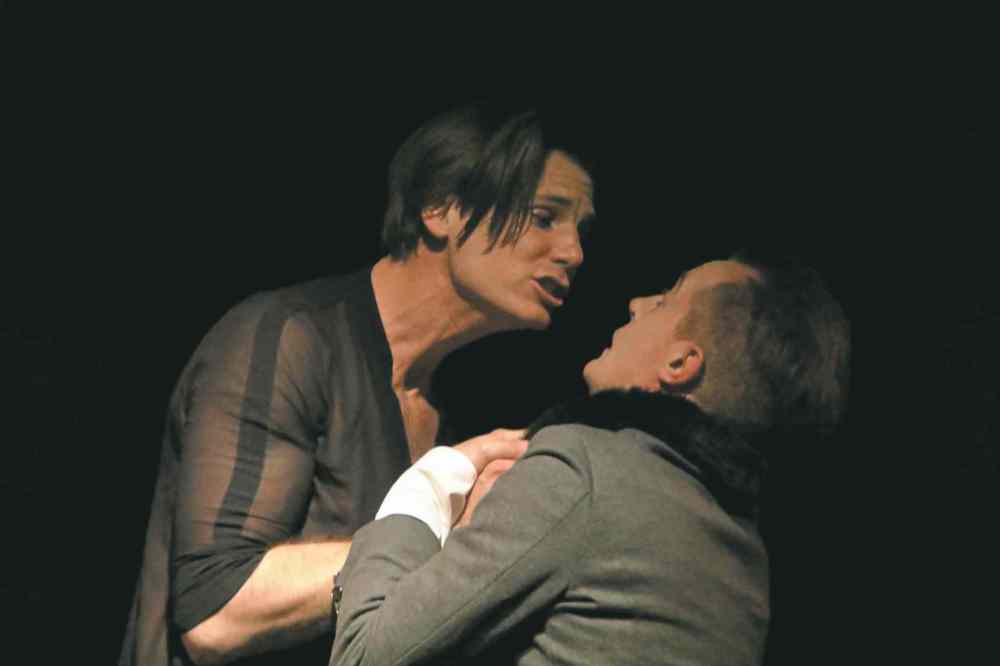
But that candour alone wasn’t the incentive for the Winnipeg company Theatre by the River to mount a production of Edward II, says artistic director Mel Marginet.
“When we were looking at various shows, this one kind of stood out on the front lines, not only for the queer themes that are involved,” Marginet, 32, says in a phone interview.
The play’s portrayal of back-room political intrigue seemed especially pertinent, she says.
“At the time we chose this play, we were in the middle of the mayoral election in Winnipeg and things were kind of funky on the provincial front with the NDP having their split,” she says. “And we were looking ahead, thinking, ‘If we stage this in the fall of 2015, we’ll probably have a federal election as well.’ “
That dynamic seemed relevant, Marginet says, in the portrayal of Edward as “a reluctant ruler.”
“Those around him are able to manipulate him and influence him, and he has an inability as a leader to stand up for what he wants till it’s too late and things are out of his hands.”
An additional layer of gender politics was added in the contemporized adaptation of the play by Winnipeg writer Kendra Jones at the behest of director Sarah Constible, Marginet says.
“She was interested in speaking to its relevance today because gay relationships are so accepted,” Marginet says.
Hence, in this version, the nobles’ disapproval of Gaveston is “because he’s not royal, because he’s low-born.”
“He’s been given these titles and given this influence, and according to them, he doesn’t deserve it. And King Edward is not a good king when Gaveston is around. He’s a bad influence on him.
“So Sarah came in with that eye, focusing the play in that direction and then bringing in that (Edward II’s son) the prince is a transgender character.
“We exist in a world where (a homosexual relationship) is acceptable and accepted. Our audience won’t be like: ‘They’re gay?!’ “Marginet says.
“It doesn’t have that provocative aspect to it, so we felt we had to move it forward and move the themes forward.”
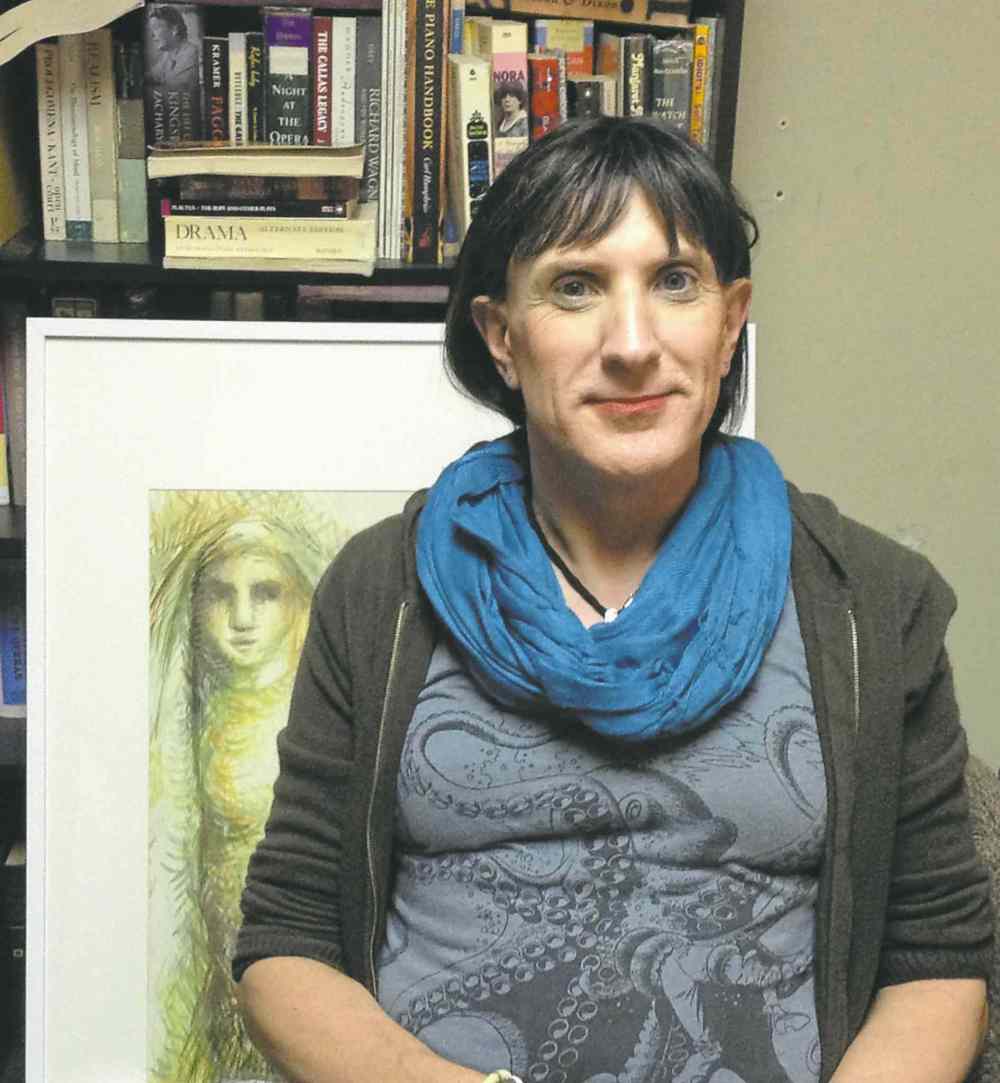
In handling the transgender theme, Constible enlisted local writer-producer Lara Rey to co-direct. Lara was previously known as Al Rae, artistic director of the Winnipeg Comedy Festival and co-creator of the CBC series Little Mosque on the Prairie. Rae announced her own gender transition this summer.

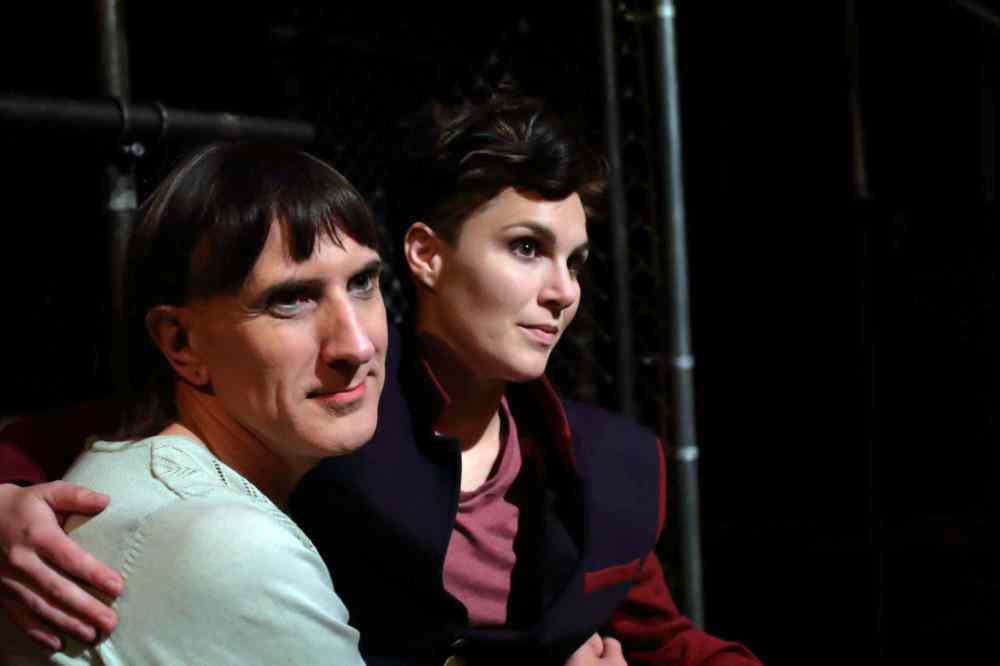
“Sarah was able to bring in Lara to bring in that authenticity, to be able to make sure we’re on the right track in exploring the themes of going through that transition from a teenage boy’s perspective,” says Marginet, who herself plays the prince.
“She was able to answer a lot of my questions and just make me feel more confident that I’m representing things correctly and that we’re on the right track there.”
“It was something that was conceived of before I arrived,” says Rae, 53. “But I think part of the reason I was invited to assistant-direct was: could I look at this and, based on my own personal experience, could I bring anything to the table in terms of what this would be like for a young person? What are some of the things that I did that they might be able to incorporate? So that was part of the process.
“Now that it’s perfectly fine to do Edward II and be perfectly unambiguous about Gaveston and Edward II’s relationship, in order to have the same kind of a shock that we might have had in 1970, we’ve moved to the next frontier,” Rae says. “And the next challenge in LGBT issues is that it’s still kind of a struggle for transgender people like myself to get full acceptance.”
randall.king@freepress.mb.ca
Our newsroom depends on a growing audience of readers to power our journalism. If you are not a paid reader, please consider becoming a subscriber.
Our newsroom depends on its audience of readers to power our journalism. Thank you for your support.
Theatre Preview
Edward II
- Theatre by the River
- Asper Centre for Theatre and Film, 400 Colony St.
- Oct. 1 to 4
- Tickets $15 to $20
- theatrebytheriver.com
Autobiographical show a step on Rae’s journey
PRIOR to her gender transition, Lara Rae’s primary connection to the theatre scene was as Al Rae, fringe-festival critic for the CBC. So, in a way, a transition from critic to assistant director was also a factor in her job on Edward II.
“This is the first official equity show I’ve ever worked on,” Rae says, referring to the Canadian Actor’s Equity Association, an organization denoting professional-level accomplishment.
“I’ve done theatre and things I’ve written myself, but this is my first official union show. It’s exciting.”
Indeed, Rae’s prior experience in theatre was writing One Man’s Show as a one-woman show for actor Sarah Constible — Edward II’s director — for Theatre Projects Manitoba. It was a play that proved prescient in terms of Rae’s gender transition.
“It was an autobiographical show about me that was kind of a gender journey that didn’t quite reach the transgender part. It was about a kind of struggle with gender and queerness and stuff, and I had her play me in the show,” Rae says.
That play was written after Rae publicly came out of the closet in January 2013, after a long period of denial and the end of a 23-year marriage.
Taking the next transgender step has been, for Rae, “an extremely positive experience from the mental-health perspective.
“It’s a life-saving kind of decision that I’d made, and from an acceptance standpoint, it’s been pretty smooth. I’ve been pretty lucky to have the support of my friends and family — this is not a very common experience,” she says.
“And I’m very lucky to work in the arts and to have established myself in the community, and have so many kind friends.”
Rae acknowledges that the journey for many transgender people is not as easy.
“Between people who are rejected by everybody and struggle, to the people like Caitlyn Jenner who have a bounty of privilege, there’s a vast panorama of diversity within the trans community,” she says.
“So it’s very difficult, as one transgender woman, to talk about the experience, except in a very specific and personal way. Everyone’s story is different. We share, I would say, the same biological variation that causes you at the age of, say, four — or in my case, my earliest conscious memory — to think that something is gravely wrong, to the time when you decide to actually do something about it.”
Our newsroom depends on a growing audience of readers to power our journalism. If you are not a paid reader, please consider becoming a subscriber.
Our newsroom depends on its audience of readers to power our journalism. Thank you for your support.
Advertisement Advertise With Us
Advertisement Advertise With Us
History
Updated on Thursday, October 1, 2015 8:18 AM CDT: Replaces photo