Comedy comes out of conflict
Love conquers all, except Jewish parents

Advertisement
Read this article for free:
or
Already have an account? Log in here »
To continue reading, please subscribe:

Digital Subscription
One year of digital access for only $205*
- Enjoy unlimited reading on winnipegfreepress.com
- Read the E-Edition, our digital replica newspaper
- Access News Break, our award-winning app
- Play interactive puzzles
*First annual payment billed as $205.00 + GST for one year. This annual subscription will automatically renew at $233.00 + GST every 52 weeks (10% off the regular annual price of $259.35). Offer available to new and qualified returning subscribers only. Cancel any time.
To continue reading, please subscribe:
Add Free Press access to your Brandon Sun subscription for only an additional
$1 for the first 4 weeks*
- Enjoy unlimited reading on winnipegfreepress.com
- Read the E-Edition, our digital replica newspaper
- Access News Break, our award-winning app
- Play interactive puzzles
*Your next Brandon Sun subscription payment will increase by $1.00 and you will be charged $17.95 plus GST for four weeks. After four weeks, your payment will increase to $24.95 plus GST every four weeks.
Read unlimited articles for free today:
or
Already have an account? Log in here »
Hey there, time traveller!
This article was published 12/03/2016 (3833 days ago), so information in it may no longer be current.
Winnipeg playwright Cairn Moore writes what she knows in her comedy-drama Shiksa, the story of a blond, blue-eyed agnostic artist who finds herself negotiating a cultural minefield when she falls in love with a Jewish man.
The centrepiece of the Winnipeg Jewish Theatre’s So, Nu?: A Festival of New Winnipeg Jewish Plays, Moore’s work is an outside-looking-in perspective of the common phenomenon of “mixed marriage.” Moore’s own story is different from that of her stage proxy, but there is a veracity in it that, one comes to believe, springs from more than just imagination.
Emma McTavish (Tracy Penner) is an unsuccessful painter facing imminent eviction from her Wolseley Avenue apartment. She has a meet-cute with her downstairs neighbour, Zack (Andrew Cecon), who comes to deliver some misdirected mail. Romantic lightning strikes.
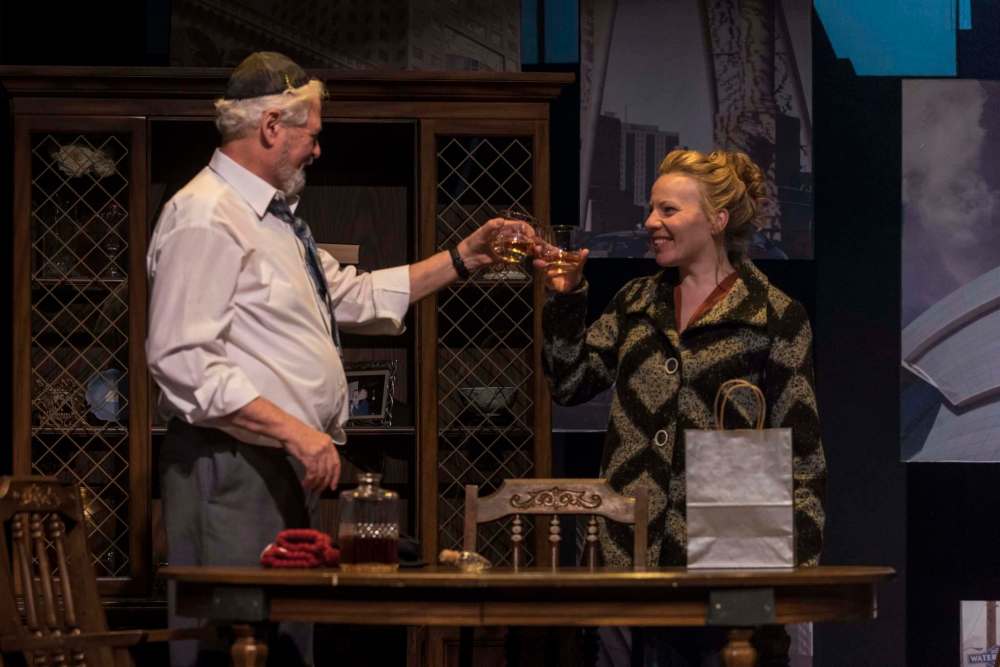
But something is amiss. Zack is in no hurry to introduce his new girlfriend to his parents, Abe (Harry Nelken) and Esther (Patricia Hunter). He even concocts a story that they’re vacationing in Palm Springs when they are, in fact, waiting for their son to make his usual appearance at their Friday Shabbat dinner. (The set by Sean E. McMullen seamlessly transitions in mid-stage between Zack’s/Emma’s apartment on the right and his parents’ home on the left.)
Fearing the worst may have happened to their suspiciously absent lawyer son, the couple decide to investigate Zack’s apartment, where the resulting coitus interruptus at least puts to rest Esther’s growing suspicion Zack might be a “fagelah.”
But when the relationship comes to light, the folks have a whole new set of concerns, especially Abe, who reactively labels mixed-faith marriage in the most extreme terms, including “the second Holocaust” and “the destruction of our people.”
Esther proves more conciliatory. She is the product of a mixed marriage between a Jewish mother and a Christian father (explaining her secret love of Christmas music), and she makes sly overtures to bring Abe around to embracing Emma. But even she can’t necessarily surmount the chasm that opens between Zack and Emma over Zack’s deceptions.
There is much to admire here, especially in the performances of Nelken and Hunter, who bring a lot of warmth and lived-in humanity to their older couple. For his part, Cecon does good work delineating the inner conflicts that compel an otherwise decent man to less-than-decent behaviour.
Penner has a more difficult time with Emma, though not because of lack of skill. Ironically, Moore’s stage surrogate is the character with the least viability. She comes off as an unwieldy amalgam of tragic heroine and manic pixie dream girl.
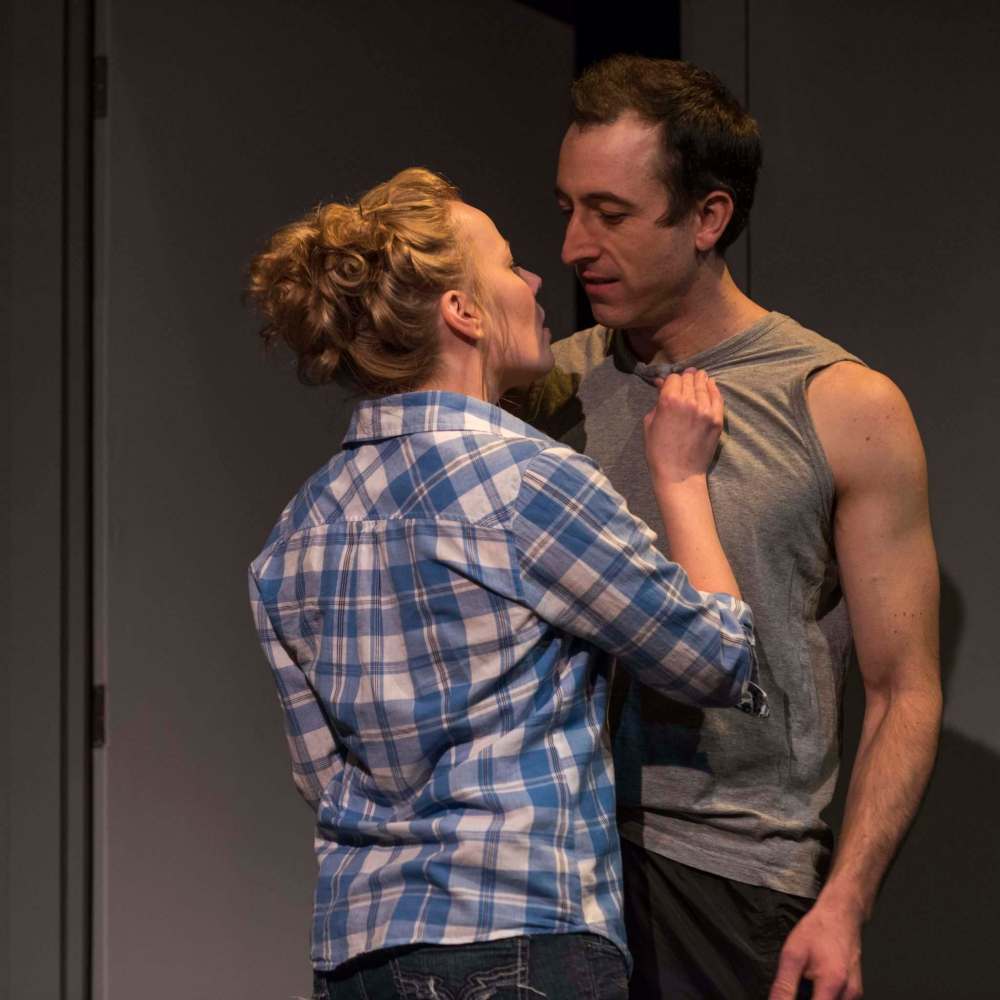
Even so, Moore’s play mostly impresses as funny, moving and ballsy, both in its embrace of a faith that is “more about belonging than believing” and its critique of Abe’s ever-simmering intolerance.
randall.king@freepress.mb.caTwitter: @FreepKing
Our newsroom depends on a growing audience of readers to power our journalism. If you are not a paid reader, please consider becoming a subscriber.
Our newsroom depends on its audience of readers to power our journalism. Thank you for your support.
Theatre Review
Shiksa
❚ Winnipeg Jewish Theatre, Berney Theatre
❚ To March 19
❚ Tickets $25-$40 at 204-477-7478 or www.wjt.ca
★★★ out of five
Our newsroom depends on a growing audience of readers to power our journalism. If you are not a paid reader, please consider becoming a subscriber.
Our newsroom depends on its audience of readers to power our journalism. Thank you for your support.
Advertisement Advertise With Us
Advertisement Advertise With Us