Film fans wait no more
Examination of Beckett's only movie a love letter to avant-garde cinema

Advertisement
Read this article for free:
or
Already have an account? Log in here »
To continue reading, please subscribe:

Digital Subscription
One year of digital access for only $205*
- Enjoy unlimited reading on winnipegfreepress.com
- Read the E-Edition, our digital replica newspaper
- Access News Break, our award-winning app
- Play interactive puzzles
*First annual payment billed as $205.00 + GST for one year. This annual subscription will automatically renew at $233.00 + GST every 52 weeks (10% off the regular annual price of $259.35). Offer available to new and qualified returning subscribers only. Cancel any time.
To continue reading, please subscribe:
Add Free Press access to your Brandon Sun subscription for only an additional
$1 for the first 4 weeks*
- Enjoy unlimited reading on winnipegfreepress.com
- Read the E-Edition, our digital replica newspaper
- Access News Break, our award-winning app
- Play interactive puzzles
*Your next Brandon Sun subscription payment will increase by $1.00 and you will be charged $17.95 plus GST for four weeks. After four weeks, your payment will increase to $24.95 plus GST every four weeks.
Read unlimited articles for free today:
or
Already have an account? Log in here »
Hey there, time traveller!
This article was published 18/11/2016 (3595 days ago), so information in it may no longer be current.
It sounds like the fantasy love child of a critical theorist and a serious cineaste: a film project written by Samuel Beckett, the absurdist playwright and author of Waiting for Godot; helmed by Alan Schneider, an important director of 20th-century theatre; produced by Barney Rosset, a daring publisher of banned and avant-garde works; shot by Boris Kaufman, cinematographer for French master Jean Vigo (and younger brother of pioneering Soviet filmmaker Dziga Vertov); and enacted by the self-referential silent-era star Buster Keaton.
This film actually was made, in 1965, under Beckett’s audaciously minimalist title Film. Modernist Dream Team notwithstanding, the production was disastrously difficult and the resulting 22-minute piece, an exploration of what Beckett called “the agony of perceivedness,” is classed by most critics as a fascinating failure.
Notfilm, Ross Lipman’s “kino-essay” about this angsty existential undertaking, shares some of that vibe, being ambitious and odd, its dense ideas and layered visuals occasionally misfiring, but more often mesmerizing.
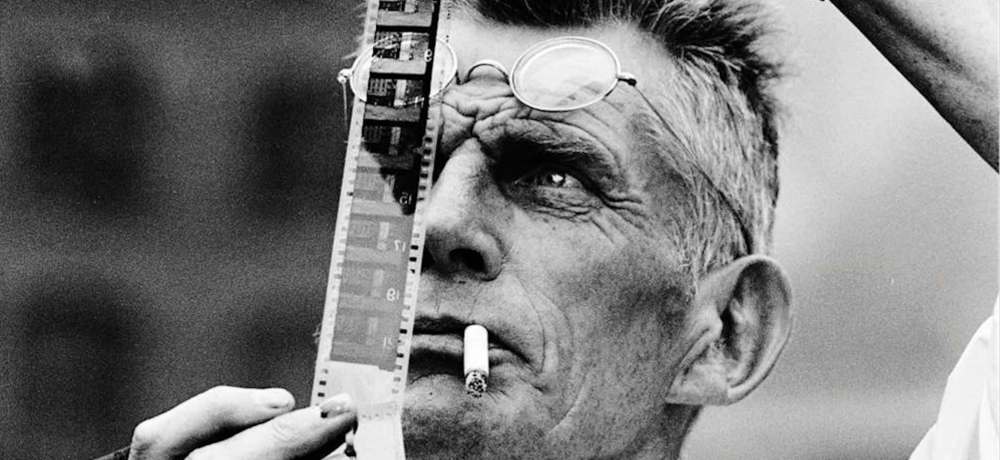
Lipman, a filmmaker and film restorationist, brings broad knowledge and deep-down research to this material. He pulls off revealing interviews with some of the central personalities, now in their 80s and 90s. Lipman even discovers crucial forgotten footage in rusty cans in Barney Rosset’s kitchen, as well as unearthing some rare audio of Beckett speaking during production meetings. (The tapes seem to have been recorded without his knowledge, but later released with his consent.)
Beckett hated to be photographed, filmed or taped, and he finds himself in the midst of a paradoxical project, making a film about the horror of being filmed. His script, Lipman explains, centres on a cinematic chase enacted between E (the eye of the camera, the “I” of consciousness) and O (the object of the camera, played by Keaton, perpetually fleeing with his back to us).
It makes sense that Beckett would turn to a silent-film actor for his central character. “Every word is like an unnecessary stain on silence and nothingness,” he once said, and the only spoken line in Film is “Shhhh.” The filmmakers tried to get Charlie Chaplin but were rebuffed, which raises some interesting questions. (The Chaplin vs. Keaton thing is the film-fan equivalent to the Superman vs. Batman thing for comic-book nuts.)
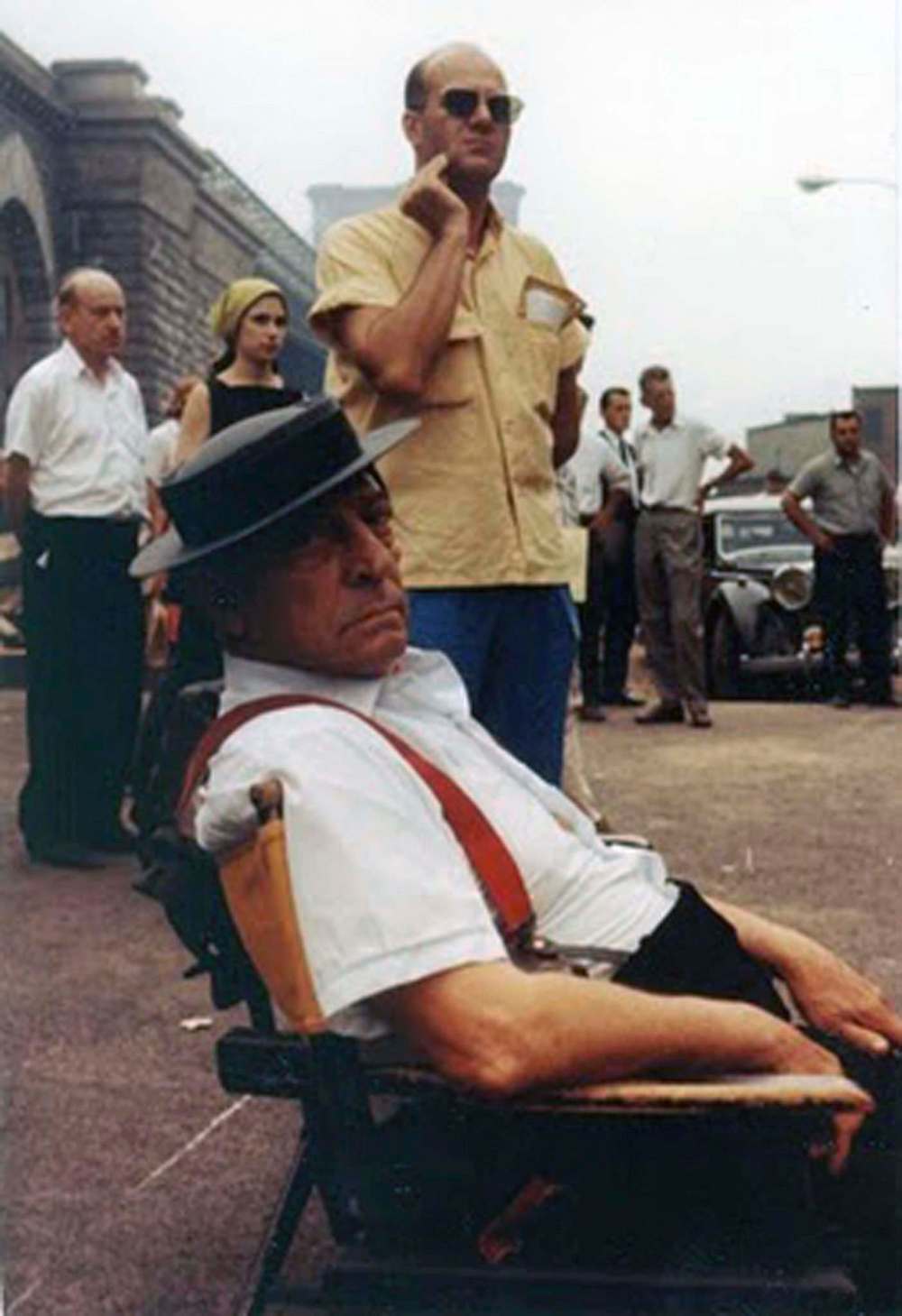
Keaton, with his stone-faced stoicism and deadpan humour, might be considered a naturally Beckettian type. Unfortunately, Keaton and the crew did not hit it off. Asked later what Beckett meant with Film, Keaton replied: “It was one of those art things. I was confused when I shot it, and I’m still confused.”
And if Keaton didn’t really get the project, Lipman believes the other collaborators didn’t get Keaton, an experienced filmmaker and technical perfectionist who might have helped them through their rookie mistakes.
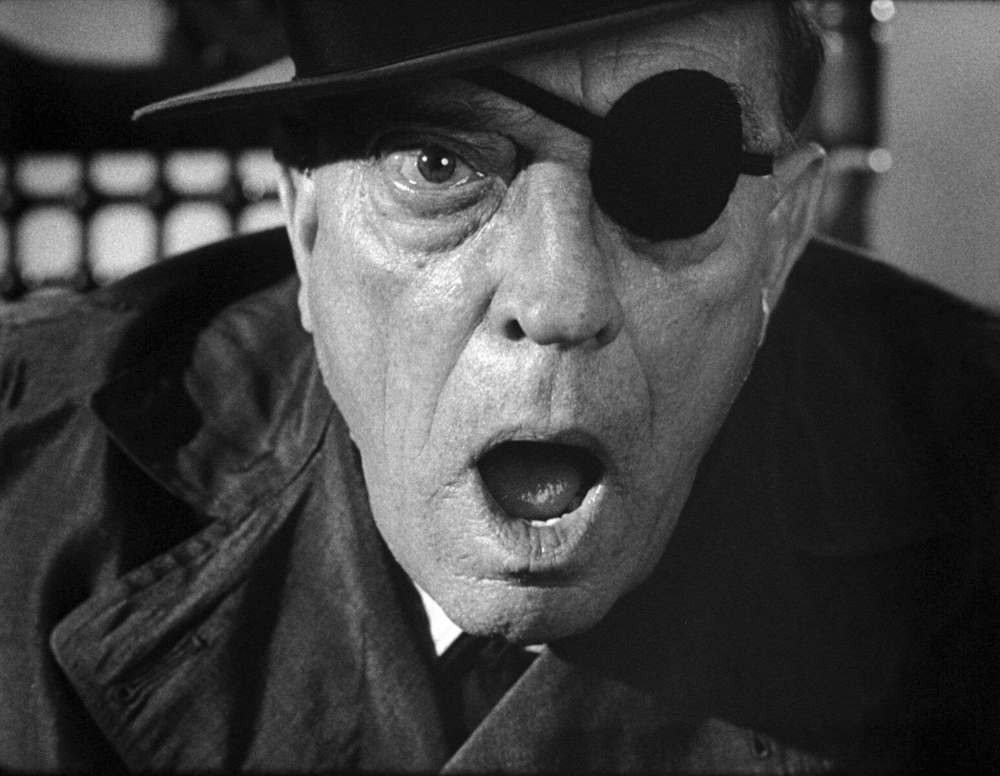

Lipman blends his detailed historical account of Film’s production with good gossip and gently wandering reflections on the big questions: perception, memory, mortality, time and the fundamental nature of cinema.
General viewers might find Notfilm overly long and digressive, but hardcore film fans will probably embrace it, flaws and all. By exploring the great gap between intention and achievement, by preferring valiant failure to perfection, Lipman has crafted a poignant love letter to cinema’s possibilities.
Studying at the University of Winnipeg and later Toronto’s York University, Alison Gillmor planned to become an art historian. She ended up catching the journalism bug when she started as visual arts reviewer at the Winnipeg Free Press in 1992.
Our newsroom depends on a growing audience of readers to power our journalism. If you are not a paid reader, please consider becoming a subscriber.
Our newsroom depends on its audience of readers to power our journalism. Thank you for your support.
MOVIE REVIEW

Notfilm
Featuring Samuel Beckett and Buster Keaton
Cinematheque
Subject to classification
130 minutes
Four stars out of five
Other voices
Though not as polished as Film, Lipman’s Notfilm might be that rare instance where the critical commentary is of more interest than the work itself.
— Peter Keough, Boston Globe
For all its gifted collaborators, Film was not a match made in heaven, but for moviegoers who care about film not just as a title, Notfilm can be unreservedly recommended.
— Kenneth Turan, Los Angeles Times
Notfilm offers Beckett academics a rare chance to hear the man speak and Lipman’s investigation is commendably rigorous.
— Tara Brady, Irish Times
Studying at the University of Winnipeg and later Toronto’s York University, Alison Gillmor planned to become an art historian. She ended up catching the journalism bug when she started as visual arts reviewer at the Winnipeg Free Press in 1992.
Our newsroom depends on a growing audience of readers to power our journalism. If you are not a paid reader, please consider becoming a subscriber.
Our newsroom depends on its audience of readers to power our journalism. Thank you for your support.
Advertisement Advertise With Us
Advertisement Advertise With Us