Graduates of mentorship program showcase skills they don’t teach you in art school

Advertisement

Advertise with us

Teaching art often begins with the “elements and principles of design” — line, shape, form and volume, balance, emphasis, etc. — the building blocks, it’s understood, of a “successful artwork.” Others crucial elements can sometimes get overlooked.

Read this article for free:


or

Already have an account? Log in here »

To continue reading, please subscribe:

Subscribe and receive a limited-edition Free Press branded hat or tote.

Digital Subscription

One year of digital access for only $205*

  • Enjoy unlimited reading on winnipegfreepress.com
  • Read the E-Edition, our digital replica newspaper
  • Access News Break, our award-winning app
  • Play interactive puzzles

*First annual payment billed as $205.00 + GST for one year. This annual subscription will automatically renew at $233.00 + GST every 52 weeks (10% off the regular annual price of $259.35). Offer available to new and qualified returning subscribers only. Cancel any time.

To continue reading, please subscribe:

Add Free Press access to your Brandon Sun subscription for only an additional

$1 for the first 4 weeks*

  • Enjoy unlimited reading on winnipegfreepress.com
  • Read the E-Edition, our digital replica newspaper
  • Access News Break, our award-winning app
  • Play interactive puzzles
Start now

*Your next Brandon Sun subscription payment will increase by $1.00 and you will be charged $17.95 plus GST for four weeks. After four weeks, your payment will increase to $24.95 plus GST every four weeks.

Opinion

Hey there, time traveller!
This article was published 05/01/2017 (3502 days ago), so information in it may no longer be current.

Teaching art often begins with the “elements and principles of design” — line, shape, form and volume, balance, emphasis, etc. — the building blocks, it’s understood, of a “successful artwork.” Others crucial elements can sometimes get overlooked.

What type of line draws together a family or community, for instance? Is it dark or light, loose or precise? What is the shape of caring? What form or volume can encapsulate grief? What if, instead of “balance” or “emphasis,” a work of art aimed for reconciliation, compassion or relief?

Caregivers of all kinds understand these other principles, know the motions in their bones and muscles. At Aceartinc., the eight emerging artists in The Body Holds What It Knows, graduates of the yearly Foundation Mentorship Program at Mentoring Artists for Women’s Art (MAWA), work to give them lasting form.
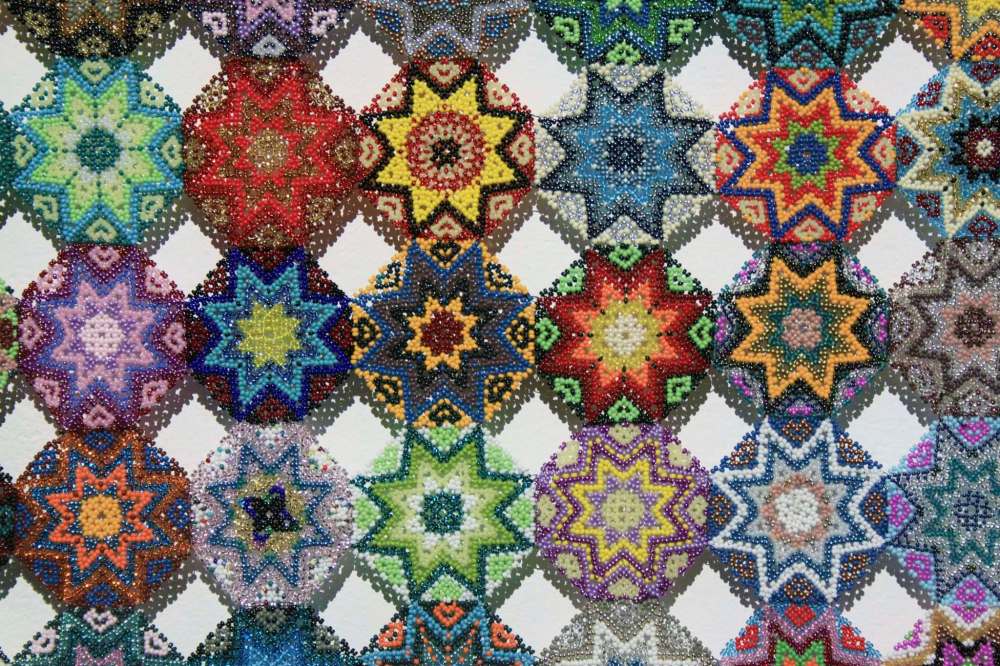
Becca Taylor's collaborative We Made This Together

A haunting double projection by Natalie Baird records tender, disjointed impressions of the artist’s visits with her father, who lives with Parkinson’s disease and dementia. Hands fumble, shadows strain to touch, faces come in and out of focus, but a slender, shimmering line of contact persists.

Carolyn Mount’s Urns for Healing recall Lee Bontecou’s steel-and-canvas constructions and Judith Scott’s enigmatic wrapped forms at a more intimate scale. Sketchy wireframes sheathed and bound in salvaged fabric become abstract but tangible vessels for loss and the yearning to reconnect.

Stuffed into dresser drawers with balls of twine, bottles of teeth, and bones, Melanie Wesley’s frenetically embroidered, half-formed fabric effigies take on lives of their own.

Valérie Chartrand and Kelly Ruth each examine the interconnectedness of natural and human ecologies through the lens of labour. Chartrand’s busy take on The Last Supper comprises beehives crammed with photos, prints and other offerings to warn of and ward off colony collapse. Ruth’s Coral Reef Studies weave together wool, conductive thread, blinking LEDs, and a soundscape of crashing waves and foreboding, mounting rhythms.

Kristen Snowbird’s Sweat

Looking inward, Kristin Snowbird narrates the transformative experience of her first sweat lodge ceremony in an installation of video and beaded campfire stones. Tracy Fehr, meanwhile, imagines herself a domestic goddess in the classical sense, embroidering a baroque self-portrait as the Greek hearth goddess Hestia. Ceramic bowls filled with ashes and wine might be offerings, paint pots, or just dirty dishes, collapsing domestic, artistic and celestial spheres.
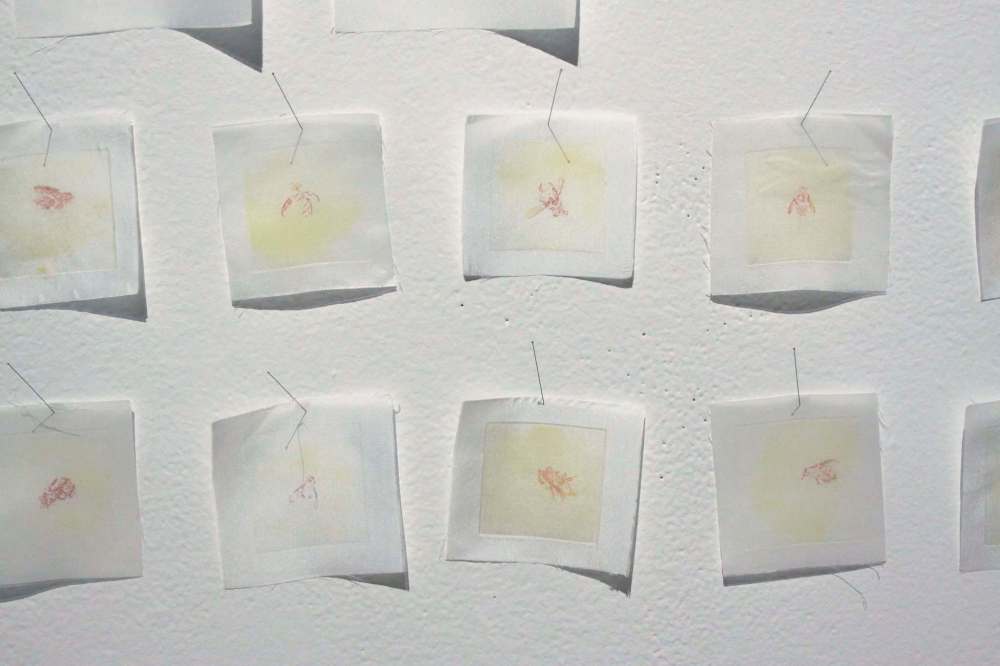
Colony Portraits by Valérie Chartrand

Becca Taylor enlisted volunteers for her aptly titled We Made This Together, a blanket of 168 glittering beaded medallions. A jewel-like microcosm of the community that produced it, the compact piece contains seemingly limitless variation, and its possible to imagine its repeated motifs extending in all directions forever.

That, in a real sense, is the aim of MAWA’s mentorship program — to help women embarking on careers as artists discover the forms and vocabularies, elements and principles that will carry them forward.


Steven Leyden Cochrane is a Winnipeg-based artist, writer and educator.
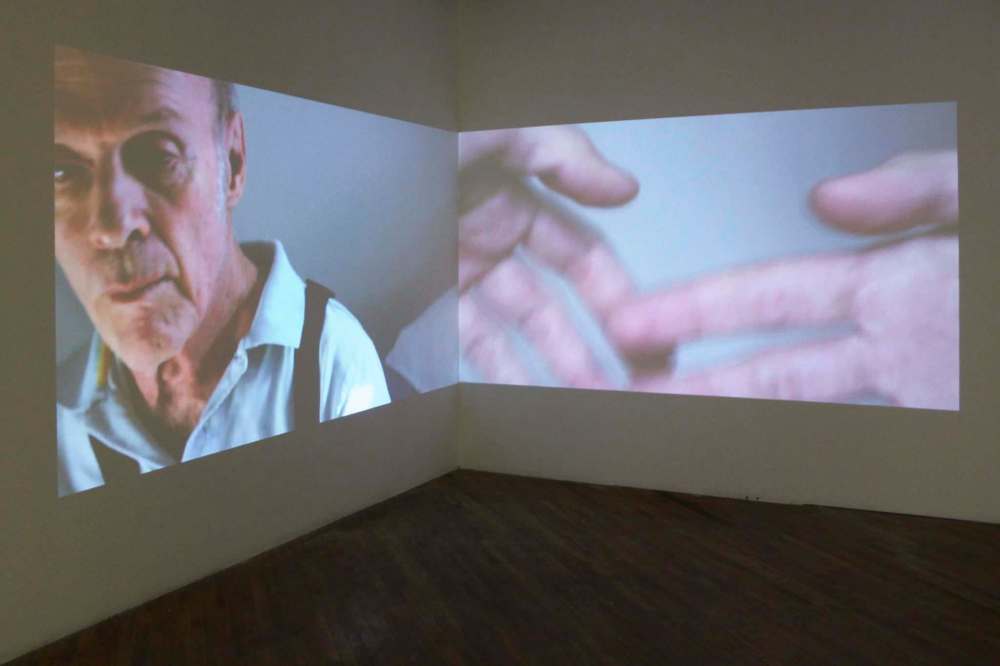
Natalie Baird, Visits
Report Error Submit a Tip

More Stories

Local medical scrubs retailer feeling abandoned by U of M, RRC Polytech nursing programs

Maggie Macintosh 4 minute read Preview

Local medical scrubs retailer feeling abandoned by U of M, RRC Polytech nursing programs

Maggie Macintosh 4 minute read Thursday, Aug. 6, 2026

A Winnipeg uniform store is appealing to medical students to shop locally for scrubs this back-to-school season as it grapples with growing competition online and an apparent shutout by local campuses.

Unimor Healthwear has long ordered uniforms in bulk in navy blue, burgundy and pewter, as nurses-in-training are required to wear those colours based on where they’re enrolled in the province.

“It’s not like it used to be,” Evan Schwartz said about customer traffic to his store at 98 Sherbrook St.

The company’s director estimated he spent about $15,000 to stock up on scrubs in pewter in preparation for the launch of Red River College Polytechnic’s upcoming nursing intake.

Read
Thursday, Aug. 6, 2026

Sending the wrong message

Andrea Charron 4 minute read 2:01 AM CDT

The U.S. State Department has announced plans to close five overseas diplomatic posts approved by Congress: Douala, Cameroon (a branch office); St. George’s, Grenada (an embassy); Nagoya, Japan (a consulate); Medan, Indonesia (a consulate); and Winnipeg, Canada (a consulate).

All are located in countries that are partners or allies of the United States.

It is unusual for the United States to reduce its diplomatic footprint. With the exception of some retrenchment efforts during the Trump administration, Washington has generally viewed diplomacy as a force multiplier. Diplomacy is not simply a matter of authority and leverage. It requires sustained local engagement, relationships and presence.

Consulates and branch offices are not the same as embassies. They are smaller missions, headed by consuls or consuls general rather than ambassadors and often provide a more limited range of services. Yet they play a vital political, economic and cultural role, supporting both local populations and American citizens abroad.

Poilievre’s lips moving, but Canadians aren’t interested in what he’s saying

Tom Brodbeck 5 minute read Preview

Poilievre’s lips moving, but Canadians aren’t interested in what he’s saying

Tom Brodbeck 5 minute read Thursday, Aug. 6, 2026

Pierre Poilievre’s biggest political challenge right now isn’t Prime Minister Mark Carney’s popularity.

It’s the fact that he still seems to be campaigning against a political landscape that no longer exists.

More than a year after the 2025 federal election, the Conservative leader is still relying on the same message, the same themes and the same attacks that defined his party’s campaign before voters went to the polls.

And Canadians appear to be tuning it out.

Read
Thursday, Aug. 6, 2026

Survival guide offers a frightening perspective on life in U.S. prisons

Reviewed by Bill Rambo 4 minute read Preview

Survival guide offers a frightening perspective on life in U.S. prisons

Reviewed by Bill Rambo 4 minute read 2:01 AM CDT

Canadian criminal sentencing guidelines identify “three traditional utilitarian goals — deterrence … incapacitation and rehabilitation.”

In spite of lofty intentions, fiction and film have identified North American incarceration in general as largely negative, incapacitating most inmates only while they are actually behind bars. Prison often leads to more crime, teaching criminal behaviour.

Tom Nelson spent more than 17 years in medium and maximum security facilities in the U.S. for such pasttimes as auto theft, armed robbery and drug dealing. Then he turned that life of crime around and became a successful physical trainer and gym owner in Los Angeles.

Nelson met and formed a friendship with Taylor Sheridan, creator and writer of such series as Yellowstone, Landman and the prequels 1883 and 1923. When COVID devastated the gym business and Nelson’s health was failing, Sheridan suggested turning Nelson’s attempt at a screenplay about prison life into a book.

Read
2:01 AM CDT

Venezuela: unfinished business for the U.S.

Gwynne Dyer 5 minute read 2:01 AM CDT

Experienced imperialists understand that you can’t just take over a country and expect it to run itself. It takes time and work to turn it into an obedient and profitable colony and two months is not enough. Donald Trump moved on to his next target too soon and given how Iran’s been working out for him, he probably hasn’t thought of Venezuela in months.

U.S. Secretary of State Marco Rubio, who acts as Trump’s viceroy for Venezuela, hasn’t been there since the U.S. kidnapped President Nicolás Maduro and his wife in January. (In fact, he may never have been there at all — I can find no evidence of it.) But he does think about Venezuela. In fact, he controls the country very tightly from his Washington office.

He and Trump’s choice for interim president, Delcy Rodríguez, talk online every day, we are told. (She was the vice-president under Maduro, so she was the obvious choice if Trump wanted a local collaborator with supporters in the army and the secret police.) Rubio collects the government’s income and he tells her what she can spend her share on.

It’s an awkward arrangement, because the cabinet is still the core Chavista leaders, minus only Maduro himself. Trump thinks Rodríguez is a “terrific person” and doesn’t worry about elections: Venezuelans “wouldn’t even know how to have an election right now.” But Rubio understands that they really do expect an election to be part of the “transition.”

Chrysler refines Pacifica and Grand Caravan as buyers return to practical family hauler

Kelly Taylor 5 minute read Preview

Chrysler refines Pacifica and Grand Caravan as buyers return to practical family hauler

Kelly Taylor 5 minute read Yesterday at 3:00 AM CDT

BURLINGTON, Ont. — The mighty minivan — relegated to the scrap heap by the rush to crossovers and SUVs — is making a comeback, and Chrysler hopes to lead the way with its top-selling, Canadian-made Grand Caravan and Pacifica models.

While many manufacturers — Mazda, Ford, GM, Hyundai and Nissan — abandoned the once-popular family hauler, Chrysler has continued to play in the segment since it was launched by Lee Iacocca in 1983.

For 2027, the Pacifica gets a cosmetic refresh and the Grand Caravan is a holdover, but new this year are price savings of up to $7,200, Chrysler product planner Mike Szymkiewicz told journalists assembled here for the launch of the two vehicles.

“It’s primarily that we’re taking less margin, but we’re also adding content,” he said. “So less margin but we hope more volume.”

Read
Yesterday at 3:00 AM CDT