Dry-eyed, weeping and the space in between
At this week's Art Talk/Art Walk, we'll be looking at how art has stirred viewers in the past and present

Advertisement
Read this article for free:
or
Already have an account? Log in here »
To continue reading, please subscribe:
Digital Subscription
One year of digital access for only $1.44 a week*
- Enjoy unlimited reading on winnipegfreepress.com
- Read the E-Edition, our digital replica newspaper
- Access News Break, our award-winning app
- Play interactive puzzles
*Billed as $5.77 plus GST every four weeks. After 52 weeks, price increases to the regular rate of $19.95 plus GST every four weeks. Offer available to new and qualified returning subscribers only. Cancel any time.
To continue reading, please subscribe:
Add Free Press access to your Brandon Sun subscription for only an additional
$1 for the first 4 weeks*
- Enjoy unlimited reading on winnipegfreepress.com
- Read the E-Edition, our digital replica newspaper
- Access News Break, our award-winning app
- Play interactive puzzles
*Your next Brandon Sun subscription payment will increase by $1.00 and you will be charged $17.95 plus GST for four weeks. After four weeks, your payment will increase to $24.95 plus GST every four weeks.
Read unlimited articles for free today:
or
Already have an account? Log in here »
Hey there, time traveller!
This article was published 30/01/2017 (3555 days ago), so information in it may no longer be current.
In the 1700s, French philosopher and art critic Denis Diderot exhorted painters to “move me, astonish me, unnerve me, make me tremble, weep, shudder, rage.” In Diderot’s era, breaking down in tears in front of paintings was common.
Stendahl syndrome, a psychosomatic disorder that seems to arise from viewing art of overwhelming beauty or profound significance, is named for the 19th-century French novelist who described his intense response to the artworks inside the church of Santa Croce in Florence, Italy.
“I felt my heart pulsating… life was drained out of me [and] while I walked, I was afraid to fall,” Stendahl wrote. “I felt submerged in a great surging wave of mysterious glory.”
Today, the standard gallery-going experience tends to be bit more emotionally subdued and polite. Art historian James Elkins, author of Pictures and Tears, acknowledges that for contemporary audiences, crying has mostly shifted to other media — to movies, music, sometimes books.
But even in our comparatively unweepy era, people can be affected deeply by visual art, though the exact process can be unpredictable and hard to parse. “Crying is often a mystery, and for that matter, so is not crying,” Elkins admits.
In this Friday’s Art Talk/Art Walk at the Free Press News Café, part of the First Fridays in the Exchange program, we’ll be talking about art and emotions with artist Derek Brueckner, artist and art historian Liv Valmestad, and Andrew Kear, curator of historical Canadian art at the Winnipeg Art Gallery.
We’ll look at what has stirred viewers in the past and what grabs audiences now.
Diderot, for example, adored the paintings of Jean-Baptiste Greuze, whose hammy village melodramas depicted pious widows, ungrateful sons and hungry children beseeching drunken fathers. In our rather unsentimental era, we’re probably more inclined to find Greuze and his overwrought narratives embarrassing.
These days, the artist cited as the most likely to get tears flowing is Mark Rothko, the New York abstract-expressionist painter who worked in simple large-scale blocks of vibrating colour. As Valmestad points out, “There’s a whole psychology of colour.”
For Valmestad, “My reaction to art is often very visceral, very physical.” She is drawn to the work of Jean Dubuffet, Anselm Kiefer and Käthe Kollwitz, and her emotional responses are often rooted in “the texture, the colour. I just love that tactileness.”
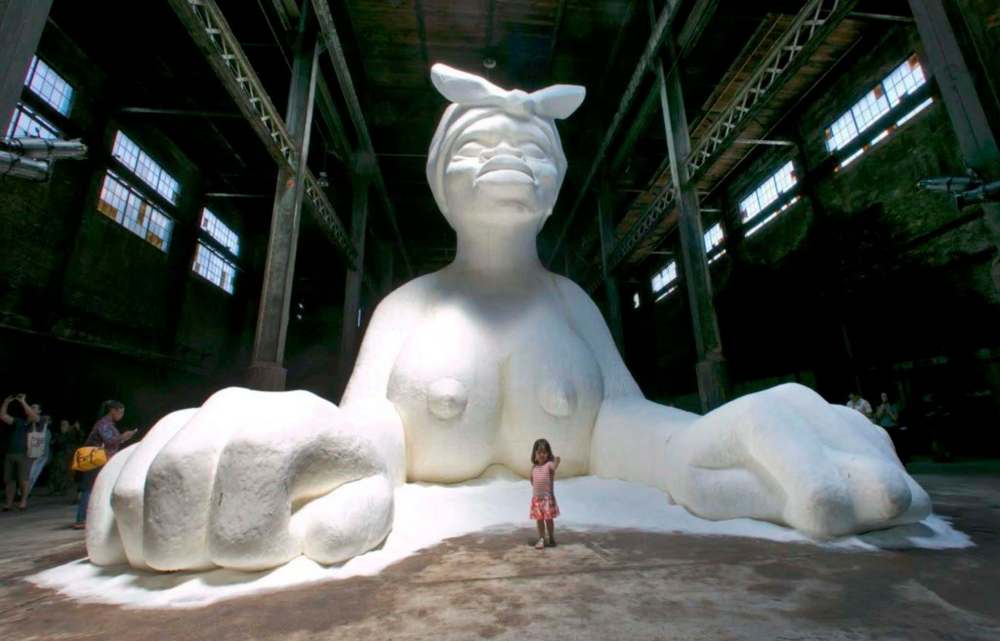
Brueckner also points to the physical experience of encountering art. One work that has really stayed with him is Kara Walker’s A Subtlety, or the Marvelous Sugar Baby, a massive sculpture suggesting a cross between an African-American woman and a sphinx, made from a polystyrene core covered with 30 tonnes of white sugar. Constructed in a soon-to-be demolished sugar refinery in Brooklyn, N.Y., the work is about race and power, about how the wealth of the sugar trade was bound up with the horrific history of slavery.
“With this work, it was the scale and the materiality,” Brueckner says. “And the fact that you could smell the sugar, that it was actually in a sugar factory. That took my breath away.”
Kear’s responses to art are often grounded in language and ideas.
“Since the 1960s, since conceptual art, there’s a heightened awareness of art being an intellectual enterprise,” Kear suggests. “We’re aware now that artists are interested in thinking in conceptual puzzles.”
Intellectual responses and emotional reactions are not necessarily mutually exclusive. In fact, they can be intertwined. The more you know about a work and its background, the richer and fuller your experience might be. Part of the emotional effect of Rothko, Kear suggests, might involve “knowing how he talked about his art and knowing his story.”
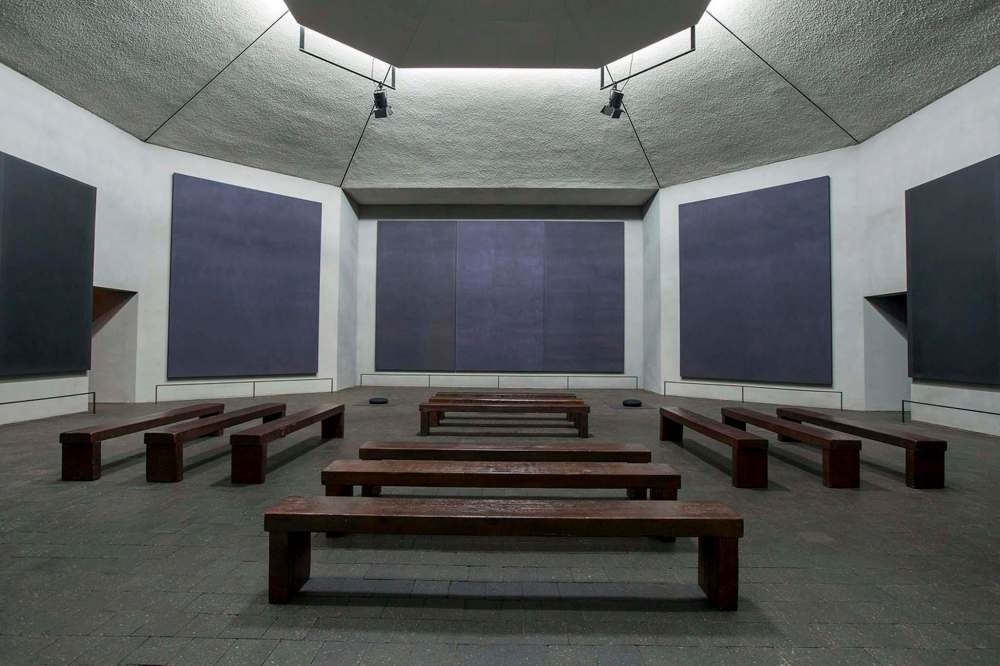
Rothko believed his paintings addressed “the exhilarated tragic experience” of human life. He worked on the Rothko Chapel, a space for nondenominational contemplation in Houston, Texas, in which minimalist benches are surrounded by 14 huge, dark paintings, before dying of suicide in 1970.
In Picture and Tears, Elkins quotes from the books in which thousands of visitors to the chapel have left comments: “Thank you for creating a place for my heart to cry,” writes one. “Once more I am moved — to tears,” says another. And in what Elkins calls the saddest entry, a visitor writes: “I wish I could cry.”
On Friday, we’ll be bringing in art works from Rothko to Rembrandt to Rebecca Belmore, talking about art and emotion, about crying, not crying and wanting to cry.
alison.gillmor@freepress.mb.ca
Studying at the University of Winnipeg and later Toronto’s York University, Alison Gillmor planned to become an art historian. She ended up catching the journalism bug when she started as visual arts reviewer at the Winnipeg Free Press in 1992.
Our newsroom depends on a growing audience of readers to power our journalism. If you are not a paid reader, please consider becoming a subscriber.
Our newsroom depends on its audience of readers to power our journalism. Thank you for your support.
Studying at the University of Winnipeg and later Toronto’s York University, Alison Gillmor planned to become an art historian. She ended up catching the journalism bug when she started as visual arts reviewer at the Winnipeg Free Press in 1992.
Our newsroom depends on a growing audience of readers to power our journalism. If you are not a paid reader, please consider becoming a subscriber.
Our newsroom depends on its audience of readers to power our journalism. Thank you for your support.
Advertisement Advertise With Us
Advertisement Advertise With Us