National Geographic’s Genius turns its focus to Picasso
Advertisement
Read this article for free:
or
Already have an account? Log in here »
To continue reading, please subscribe:

Digital Subscription
One year of digital access for only $205*
- Enjoy unlimited reading on winnipegfreepress.com
- Read the E-Edition, our digital replica newspaper
- Access News Break, our award-winning app
- Play interactive puzzles
*First annual payment billed as $205.00 + GST for one year. This annual subscription will automatically renew at $233.00 + GST every 52 weeks (10% off the regular annual price of $259.35). Offer available to new and qualified returning subscribers only. Cancel any time.
To continue reading, please subscribe:
Add Free Press access to your Brandon Sun subscription for only an additional
$1 for the first 4 weeks*
- Enjoy unlimited reading on winnipegfreepress.com
- Read the E-Edition, our digital replica newspaper
- Access News Break, our award-winning app
- Play interactive puzzles
*Your next Brandon Sun subscription payment will increase by $1.00 and you will be charged $17.95 plus GST for four weeks. After four weeks, your payment will increase to $24.95 plus GST every four weeks.
Read unlimited articles for free today:
or
Already have an account? Log in here »
Hey there, time traveller!
This article was published 24/06/2017 (3386 days ago), so information in it may no longer be current.
National Geographic just aired its season finale of Genius — with Geoffrey Rush as Albert Einstein — on Tuesday night, but executive producers Ron Howard and Ken Biller have already identified their Season 2 subject: painter Pablo Picasso, to be featured in a new season due next spring.
Picasso’s career spanned some 80 years and 50,000 works. Among his most famous: The Old Guitarist, from his Blue Period; Guernica, sparked by the Nazi bombing of the Spanish town and Les Demoiselles D’Avignon, inspired by his lover, Fernande Olivier.
What sold them on the Spanish modern artist?
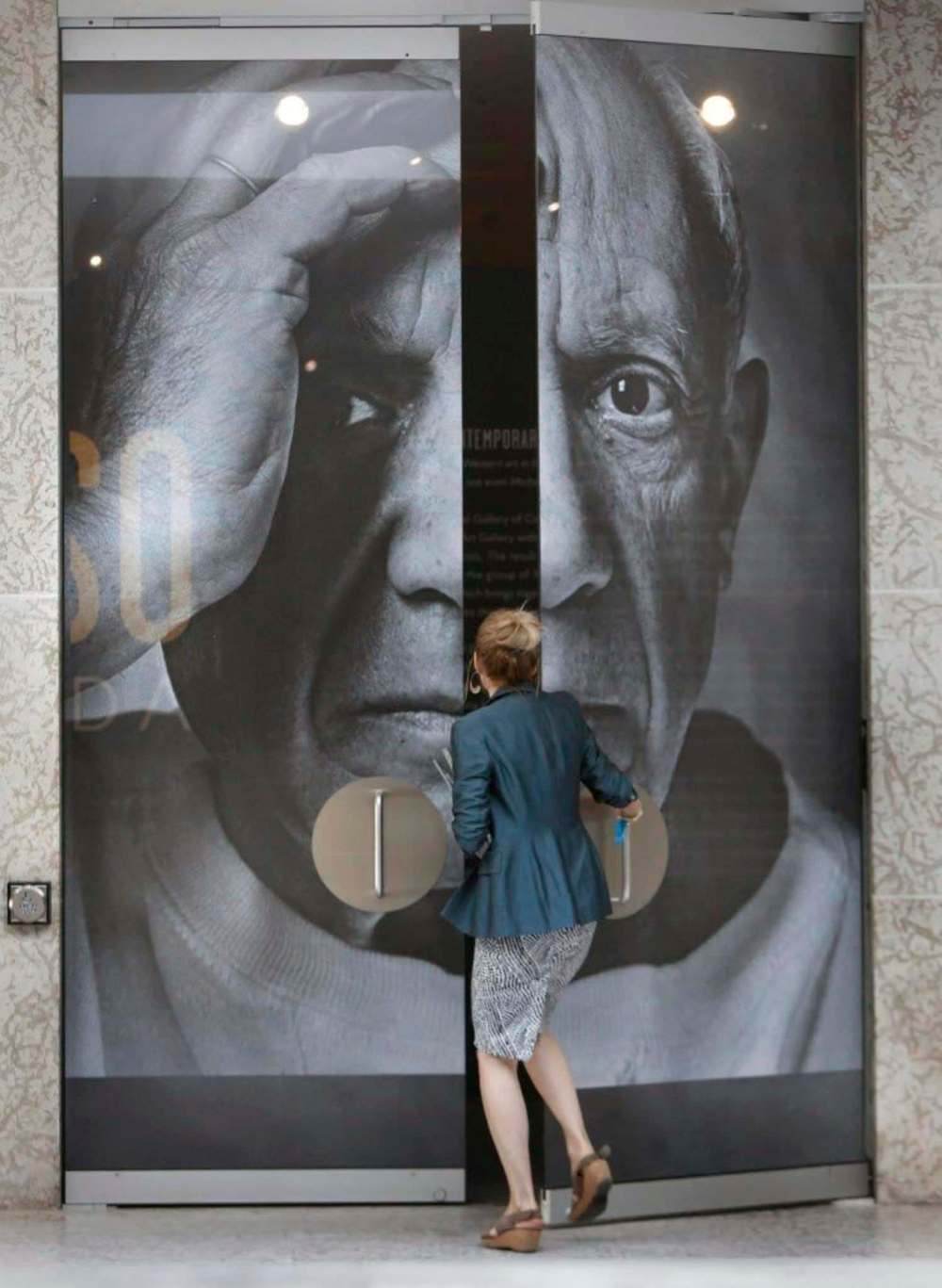
“His name stirred curiosity in people,” Howard explained. He was a household name and yet you don’t really know the story of his life or what inspired him, drove him or troubled him and how through the turbulence, he achieved such artistic greatness in so many different ways and over so many years. It’s that combination that made him feel like a great choice for Season 2.”
Plus, says Biller, “It was important for us, in terms of proof of concept for the show, to make a declarative statement that Genius is not only about scientists.”
They also confirmed that Season 2 will continue the nonlinear storytelling approach they took with Einstein’s story, but that may not be the case for future seasons.
“Because Pablo Picasso lived such a long life and we want to give the audience a sense of the entirety of his life, our intention at this point is to cast a younger and older Picasso, as we did with Johnny Flynn and Geoffrey Rush (playing Einstein),” Biller said. “We don’t have any casting in mind yet but we’re certainly hoping to attract that same level of talent.”
And as with Einstein, they’ll show all parts of Picasso’s life, even the unflattering parts.
“Geoffrey Rush was thrilled that we were approaching the (Einstein) character in a sort of warts-and-all way and so we were all aware we were making some bold choices but that’s what we loved about the writing and approach,” Howard says.
“We’re not interested in playing it safe and National Geographic was great about encouraging that kind of creativity as long as it was reflecting the characters and the truth of the story in an honest way.”
That entails depicting their sex lives, although Biller says that’s not for the purpose of titillation.
“One of the truths of Einstein that I didn’t know about when I began on the project is that he had many sexual relationships. He was an intensely sexual person,” he says. “He was not faithful to his wife. He had a very unorthodox view of sexuality and monogamy and an unorthodox marriage with his second wife. If we’re going to spend 10 hours exploring a character, I don’t think the audience would be interested in him standing at the blackboard for 10 hours. We thought it was really important to get the science right and to get the history right but it was also really important to get the character right.”
Biller says the show put the women in Einstein’s life “front and centre,” and the show expects to do the same with the Picasso season.
“In the case of both of these figures, their personal and romantic lives are inextricably linked to their drive and genius,” he says. “In the case of Einstein, it was his intense relationship and collaboration with his first wife (fellow physicist Mileva Maric). In the case of Picasso, you will see there are many women at many stages in his life who were not only romantic figures but contributed, got in the way of or drove his achievements. So we have to tell those stories.”
They say they’re hoping to focus on a woman in a potential third season.
“Unfortunately, the way that history works, if you Google ‘geniuses,’ there are many brilliant women and genius women who’ve lived throughout history,” Biller says. “But history hasn’t remembered a lot of them. So the pool from which to choose is smaller, though we think we do have some really compelling ideas.”
— USA Today