Treasured connection
Dedication to Folklorama has helped Winnipeg family maintain, grow Hungarian roots

Advertisement
Read this article for free:
or
Already have an account? Log in here »
To continue reading, please subscribe:

Digital Subscription
One year of digital access for only $205*
- Enjoy unlimited reading on winnipegfreepress.com
- Read the E-Edition, our digital replica newspaper
- Access News Break, our award-winning app
- Play interactive puzzles
*First annual payment billed as $205.00 + GST for one year. This annual subscription will automatically renew at $233.00 + GST every 52 weeks (10% off the regular annual price of $259.35). Offer available to new and qualified returning subscribers only. Cancel any time.
To continue reading, please subscribe:
Add Free Press access to your Brandon Sun subscription for only an additional
$1 for the first 4 weeks*
- Enjoy unlimited reading on winnipegfreepress.com
- Read the E-Edition, our digital replica newspaper
- Access News Break, our award-winning app
- Play interactive puzzles
*Your next Brandon Sun subscription payment will increase by $1.00 and you will be charged $17.95 plus GST for four weeks. After four weeks, your payment will increase to $24.95 plus GST every four weeks.
Read unlimited articles for free today:
or
Already have an account? Log in here »
Hey there, time traveller!
This article was published 12/08/2017 (3263 days ago), so information in it may no longer be current.
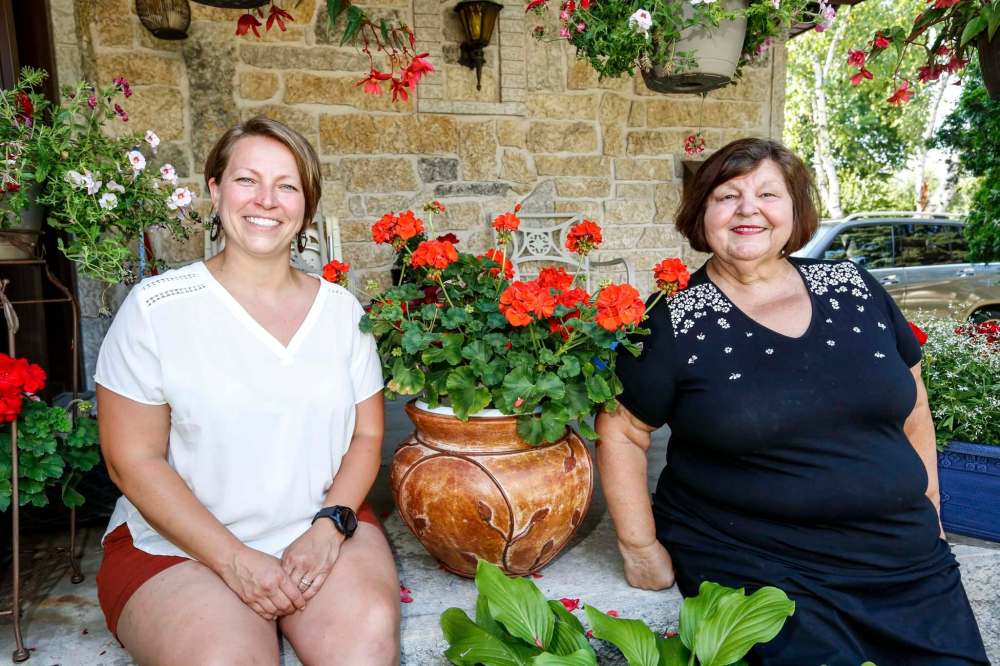
Elizabeth Kovach is holding court in her Garden City kitchen — which, at this moment, is warmed by the scent of chicken paprikash and cabbage rolls. Her two grown children, Chuck and Liz, are over for dinner, along with her sister. Her two young grandchildren are running around.
Over barack pálinka, a Hungarian apricot brandy, she’s telling stories. Stories of Hungary, the country she left with her family in 1963, not long after the 1956 Hungarian Revolution. Kovach, then 13, had tucked two pieces of chocolate in her pocket that she was hoping to save, little tastes of home. By the time she arrived in Canada, they had melted.
She tells stories about the time she returned to Hungary for the first time in 1989 with her family, and the awe of actually being in Europe as the Berlin Wall — and all of the horror it represented — fell. She laughs about the time she tried to rent a minibus upon arrival in Hungary and was told by the man working the rental desk she couldn’t possibly drive one because she was a woman. “I drove combines! How hard could it be?” she says with a snort.
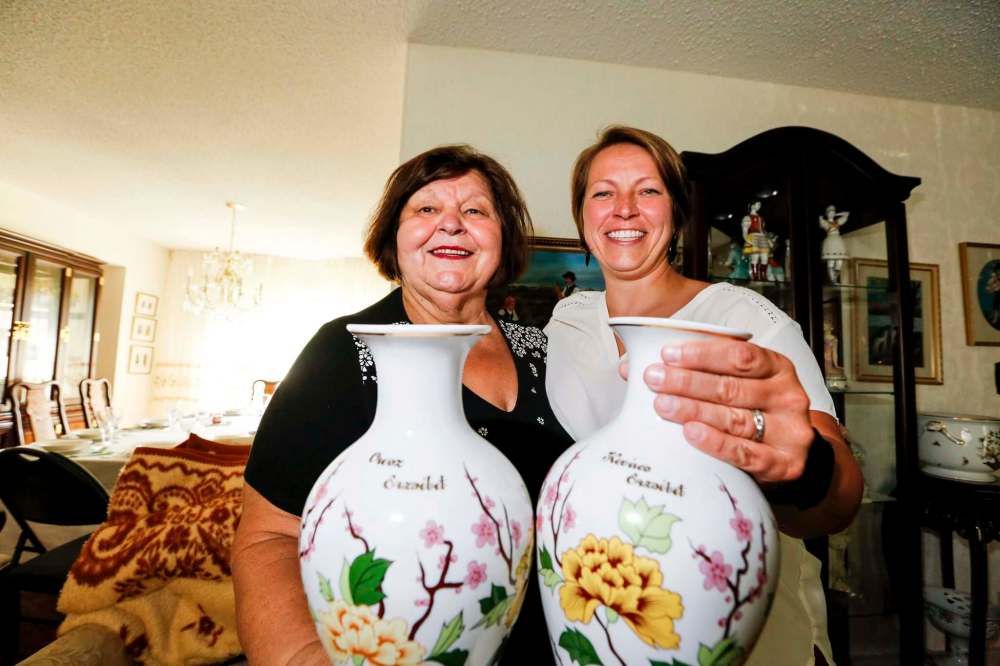
The dining-room table is set with the gold-edged floral Hungarian china they brought back from that same trip; every last piece was packed in plastic shopping bags and balanced carefully on Chuck and Liz’s laps for the entire flight home. “We weren’t sure if the feeling would ever return to our hands,” quips Liz, now 41.
And, of course, Kovach tells stories about Folklorama, the festival she’s been part of since the late-1980s. Like the time she rode in a convertible in the Folklorama parade, only for the car to stall and require a push up Broadway.
Kovach, 67, is the irrepressible matriarch of the Hungary-Pannonia Pavilion, which runs Aug. 13-19 at the Burton Cummings Community Centre on Arlington Street. She served as pavilion co-ordinator for 25 years; in 2016 she was awarded the Hungarian Gold Cross of Merit — equivalent to the Order of Canada — for her volunteerism. These days, she cooks for Folklorama, rolling the 1,600 fist-sized cabbage rolls that will be served over the pavilion’s run.
Kovach’s children are still involved with Folklorama, too, having danced at the multicultural festival since the 1980s. Her husband, also named Chuck, is affectionately dubbed the Langos Express, making deliveries of the famed deep-fried bread.
Being involved with the Hungary-Pannonia pavilion has allowed Kovach to not only stay connected with her culture, but also share it with her first-generation Canadian kids. “Ever since I came to Canada, I wanted to keep my heritage,” Kovach says.
That was something her own parents, who were eager to leave Hungary in the rear view, didn’t understand. After all, their culture had been stolen from them, suppressed by communism under Soviet occupation. Kovach herself recalls being rounded up on Sundays and brought out to fields to pick potato bugs, effectively preventing her from attending church.
“They were bitter, you know?” Kovach says, her eyes filling and her voice breaking. Then she laughs. “Sorry.”
“Well, they were a bit bitter because for many years they couldn’t understand why we were celebrating our culture,” says Liz, jumping in for her mom. “My grandparents were resentful and didn’t understand it. But they didn’t see the side we saw. We weren’t disenfranchised by the government; we grew up here. We were first-generation Canadians. We had the opportunity to meet so many friends though dance and Hungarian Scouts.”
Kovach’s parents softened toward the idea of a cultural celebration when they saw their grandchildren dance for the first time.
“There was almost that moment where they realized they were proud we kept on because they were so far removed they saw the beauty in it,” Liz says. “Even now, my grandmother helps them make cabbage rolls.”
“She’s 91 years old and she’s helping us make cabbage rolls,” Kovach says, laughing.
Since childhood, Liz and Chuck have taken an active interest in Hungarian culture. Liz recalls a second trip to Budapest in 1993, when she was 17. “All of a sudden, it was like Hungary wanted to become the U.S.A., so there was McDonald’s popping up everywhere…”
Her mother scoffs loudly. “… in beautiful buildings!”
“There’s all this great culture, great food, and no one listened to the music,” Liz continues. She spent all the money she earned from her part-time job in a Hungarian butcher shop on folk costumes and CDs, bringing a suitcase full of music home to Canada. Her Hungarian cousins were aghast. “They thought I was insane, and it drove them nuts,” she recalls with a laugh.
In the 1990s, Hungarian culture, it seemed, was thriving everywhere but Hungary. Kovach tells another story, this time about a Hungarian woman who visited the Hungary-Pannonia Pavilion at Folklorama in the 1990s. The woman was leaning against the wall, crying softly. When Kovach asked her what was wrong, she responded: “I have to travel 10,000 kilometres to see my culture.” (That’s changed in the past couple of decades, though; Liz points out that Hungary now has a So You Think You Can Dance?-style show dedicated to traditional folk dancing.)
For young Liz and Chuck, being involved with Folklorama was something they looked forward to every summer. They relished celebrating the culture their parents have worked so hard to preserve, making lifelong friends in the process. “I’m always very grateful they gave us that,” Liz says. “I look at the relationship I have with my brother, and we’re close because of culture.”
Draped over a kitchen chair is a Hungarian blouse for her little niece, who will likely be dancing on Folklorama stages next year. “It’s so nice to see the legacy of everything we’ve stayed true to be passed to the next generation,” Liz says.
“We’re Canadian, we’re very proud to be Canadian; we’re also very grateful that Canada allows us to celebrate our culture, express it and continue to perpetuate it.”
jen.zoratti@freepress.mb.caTwitter: @JenZoratti
Jen Zoratti is a columnist and feature writer working in the Arts & Life department, as well as the author of the weekly newsletter NEXT. A National Newspaper Award finalist for arts and entertainment writing, Jen is a graduate of the Creative Communications program at RRC Polytech and was a music writer before joining the Free Press in 2013. Read more about Jen.
Every piece of reporting Jen produces is reviewed by an editing team before it is posted online or published in print – part of the Free Press‘s tradition, since 1872, of producing reliable independent journalism. Read more about Free Press’s history and mandate, and learn how our newsroom operates.
Our newsroom depends on a growing audience of readers to power our journalism. If you are not a paid reader, please consider becoming a subscriber.
Our newsroom depends on its audience of readers to power our journalism. Thank you for your support.
FESTIVAL PREVIEW
Folklorama
To Aug. 19
Various venues
Advance tickets available at folklorama.ca
Jen Zoratti is a columnist and feature writer working in the Arts & Life department, as well as the author of the weekly newsletter NEXT. A National Newspaper Award finalist for arts and entertainment writing, Jen is a graduate of the Creative Communications program at RRC Polytech and was a music writer before joining the Free Press in 2013. Read more about Jen.
Every piece of reporting Jen produces is reviewed by an editing team before it is posted online or published in print – part of the Free Press‘s tradition, since 1872, of producing reliable independent journalism. Read more about Free Press’s history and mandate, and learn how our newsroom operates.
Our newsroom depends on a growing audience of readers to power our journalism. If you are not a paid reader, please consider becoming a subscriber.
Our newsroom depends on its audience of readers to power our journalism. Thank you for your support.
Advertisement Advertise With Us
Advertisement Advertise With Us