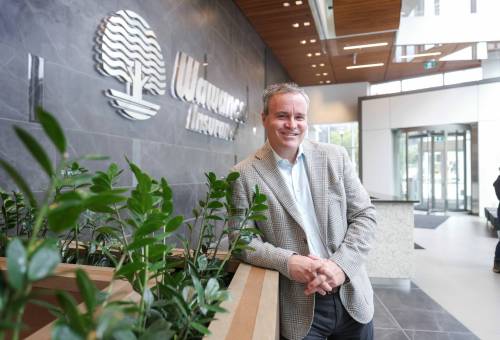
85-year-old filmmaker telling a story of hope
Obomsawin's Our People Will Be Healed shines light on Indigenous youth reconnecting with their heritage

Advertisement
Read this article for free:
or
Already have an account? Log in here »
To continue reading, please subscribe:

Digital Subscription
One year of digital access for only $205*
- Enjoy unlimited reading on winnipegfreepress.com
- Read the E-Edition, our digital replica newspaper
- Access News Break, our award-winning app
- Play interactive puzzles
*First annual payment billed as $205.00 + GST for one year. This annual subscription will automatically renew at $233.00 + GST every 52 weeks (10% off the regular annual price of $259.35). Offer available to new and qualified returning subscribers only. Cancel any time.
To continue reading, please subscribe:
Add Free Press access to your Brandon Sun subscription for only an additional
$1 for the first 4 weeks*
- Enjoy unlimited reading on winnipegfreepress.com
- Read the E-Edition, our digital replica newspaper
- Access News Break, our award-winning app
- Play interactive puzzles
*Your next Brandon Sun subscription payment will increase by $1.00 and you will be charged $17.95 plus GST for four weeks. After four weeks, your payment will increase to $24.95 plus GST every four weeks.
Read unlimited articles for free today:
or
Already have an account? Log in here »
Hey there, time traveller!
This article was published 04/11/2017 (3254 days ago), so information in it may no longer be current.
TORONTO — There may not be a documentary filmmaker alive as prodigiously productive as Alanis Obomsawin.
She is the first to admit this. In an interview at the National Film Board office in Toronto prior to premièring her latest feature doc Our People Will Be Healed at the Toronto International Film Festival, the soft-spoken Obomsawin cops to a staggering work ethic, shooting feature-length films interconnected by theme and subject. She sees her new film as one film in a series of five.
“And at one point, I was working on all of them at the same time,” she says.
Our People Will Be Healed is a spiritually galvanizing portrait of a school in Norway House. It was an outgrowth of another film, We Can’t Make the Same Mistake Twice (2016), an exposé of how Indigenous children may be subject to inferior care by Canadian child-welfare agencies.
That doc focused on the tragic case of Jordan River Anderson, a child from Norway House who became a political football with different levels of government fighting over which would foot the bill for his medical care.
If his story was ultimately tragic, this cycle of films denotes an optimistic turn for Obomsawin, whose past films have covered the bleak divide between Canada’s Indigenous people and its settler population, including most famously Kanehsatake: 270 Years of Resistance (1993), a hard-hitting examination of the standoff between Mohawk warriors and government forces at Oka, Que., in 1990.
“Everywhere I go, I really listen to a lot of people, and many ideas come from that,” she says, describing her system.
“So when I went to Norway House and I saw this school, it was just unbelievable.”
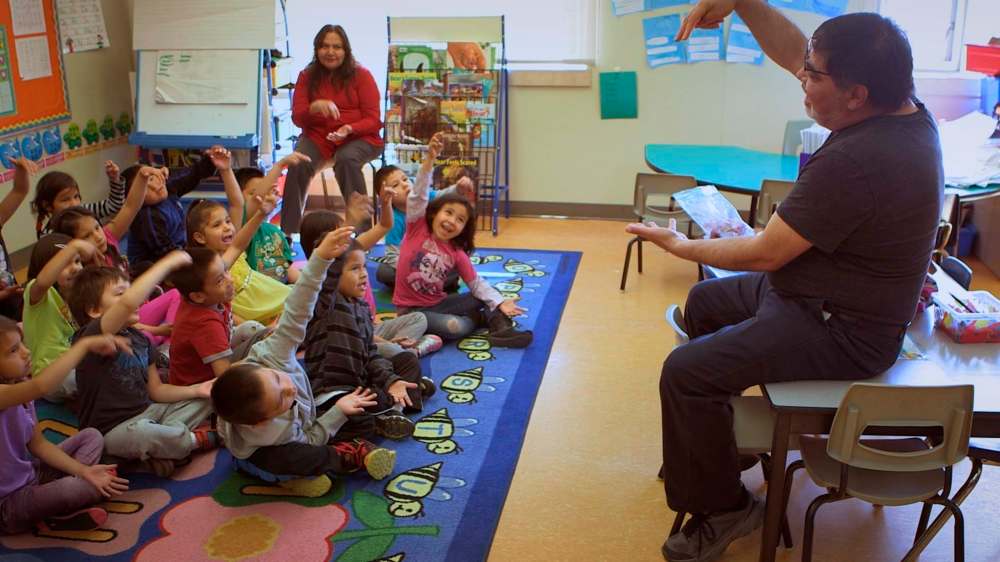
Obomsawin is referring to the Helen Betty Osborne Ininiw Education Resource Centre, a school built on the site of a residential school that actively strives to undo the damage caused by those older institutions that engaged in robbing their students of their culture.
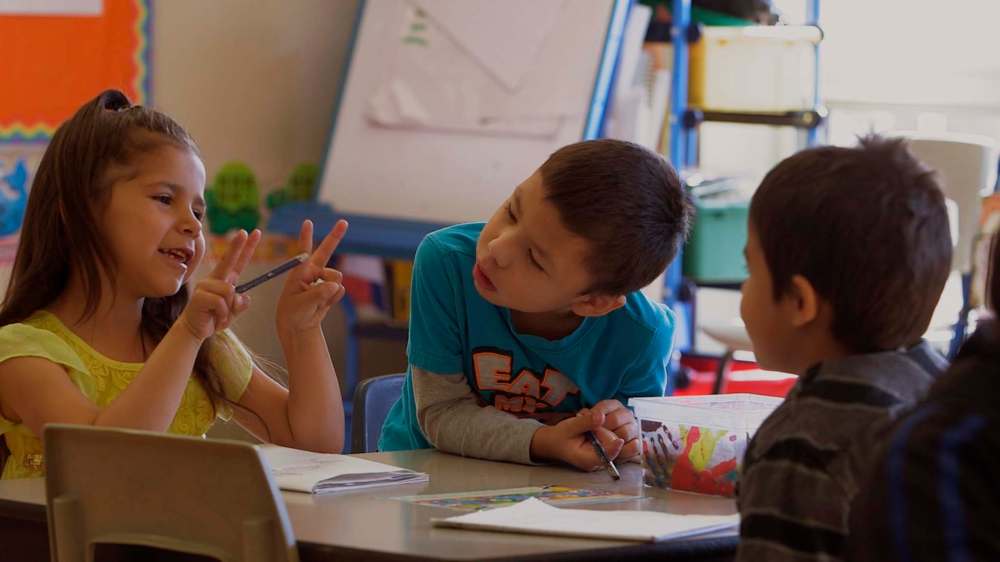
Obomsawin’s cameras are there to catch that process, which includes kids being re-taught their native Cree language, or older kids going on a wilderness canoe trip that connects them to an ancient way of life.
And, yes, Obomsawin, who is 85 years old, was there for it.
“Every film I make, I’m there,” she says.
“I do all the interviews and I stay with it. I had a very bad cold on that trip. There’s a (scene) where I’m doing an interview and I sound like a bear.”
“We followed them all the way. It took us four hours to get to the camping place,” she says. “They had to break 16 beaver dams to get there… so many beaver dams.”
Obomsawin praises the school administration’s outside-the-box thinking in dealing with, say, latecomers.
“You hear the principal say how attendance was good until Grade 9 and then kids didn’t show up in the classroom (for grades) 10, 11, and 12,” she says. “They knew that young people like to sleep in the morning, so they have a later bus and tell the parents: ‘We don’t care if they’re late. We’d rather see them in school than not see them at all.’
“In most schools, you’re punished if you’re not on time,” Obomsawin says. “This is a totally different attitude. And it’s working.”
Obomsawin, born near Lebanon, N.H., and raised on the Odanak reserve near Sorel, Que., has been making films for the National Film Board since 1967. Her latest cycle of films, including Healed and Mistake, is rounded out by The People of the Kattawapiskak River (2012), Hi-Ho Mistahey! (2013), Trick or Treaty? (2014) and carry a common thread of unbridled hope.
“There’s a prophecy that says the seventh generation will be the one that cures our people, and it will be young people,” she says. “And I think it’s really happening.
“When young people get up and say, ‘That’s enough suicide, we’re going to do something else.’ You can’t beat that. It’s the strongest thing that can happen to heal the people,” she says.
“When you hear the young people talking in the film, you just feel protected. You feel this is the best remedy against suicide.
“I’m not saying it’s all finished, but a lot of it, they’re turning it around.”
Alanis Obomsawin will deliver an introduction and a Q-and-A following Sunday evening’s screening of Our People Will Be Healed.
randall.king@freepress.mb.ca
Twitter: @FreepKing
Our newsroom depends on a growing audience of readers to power our journalism. If you are not a paid reader, please consider becoming a subscriber.
Our newsroom depends on its audience of readers to power our journalism. Thank you for your support.
MOVIE PREVIEW
Our People Will Be Healed
Directed by Alanis Obomsawin
Gimme Some Truth Film Festival
Cinematheque
Sunday, 7 p.m.
PG
97 minutes
Our newsroom depends on a growing audience of readers to power our journalism. If you are not a paid reader, please consider becoming a subscriber.
Our newsroom depends on its audience of readers to power our journalism. Thank you for your support.
Advertisement Advertise With Us
Advertisement Advertise With Us