

Fresh prints
Martha Street Studio a 'refuge' for printmakers

Advertisement
Read this article for free:
or
Already have an account? Log in here »
To continue reading, please subscribe:
Monthly Digital Subscription
$1 per week for 24 weeks*
- Enjoy unlimited reading on winnipegfreepress.com
- Read the E-Edition, our digital replica newspaper
- Access News Break, our award-winning app
- Play interactive puzzles
*Billed as $4.00 plus GST every four weeks. After 24 weeks, price increases to the regular rate of $19.95 plus GST every four weeks. Offer available to new and qualified returning subscribers only. Cancel any time.
Monthly Digital Subscription
$4.99/week*
- Enjoy unlimited reading on winnipegfreepress.com
- Read the E-Edition, our digital replica newspaper
- Access News Break, our award-winning app
- Play interactive puzzles
*Billed as $19.95 plus GST every four weeks. Cancel any time.
To continue reading, please subscribe:
Add Free Press access to your Brandon Sun subscription for only an additional
$1 for the first 4 weeks*
- Enjoy unlimited reading on winnipegfreepress.com
- Read the E-Edition, our digital replica newspaper
- Access News Break, our award-winning app
- Play interactive puzzles
*Your next Brandon Sun subscription payment will increase by $1.00 and you will be charged $17.95 plus GST for four weeks. After four weeks, your payment will increase to $24.95 plus GST every four weeks.
Read unlimited articles for free today:
or
Already have an account? Log in here »
Hey there, time traveller!
This article was published 28/11/2017 (3088 days ago), so information in it may no longer be current.
When you enter the Martha Street Studio in Winnipeg’s East Exchange District, the first thing you see is a strikingly beautiful copper wall.
Referencing the metal plates used in intaglio printmaking techniques, the wall is covered with names and images, as well as a quotation from Beatrice Warde, an early 20th-century typography expert.
“Friend, you stand on sacred ground. This is a printing office,” she writes. Warde’s faith in printing as the “crossroads of civilization,” the “refuge of all the arts” and the “armoury of fearless truth” feels pretty contagious as you enter the building, which since 1988 has been a hub for city printmakers.
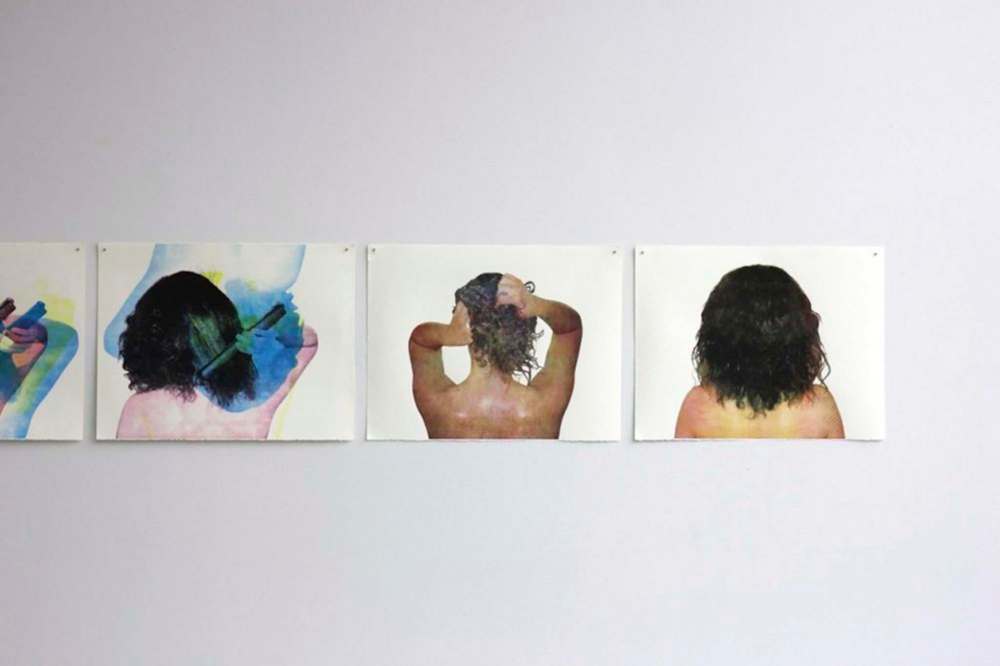
At the upcoming First Fridays in the Exchange Art Talk/Art Walk, multidisciplinary Winnipeg artists Mariana Muñoz Gomez and Alison James will speak about why they are drawn to the power of the print medium.
James, who works at Martha Street as a studio technician, and Muñoz Gomez, who is the professional program co-ordinator, will also talk about what goes on at the artist-run centre, which houses all the complicated equipment needed to create prints, from machines that look like something from a 19th-century factory floor to super-high-tech digital printers.
Martha Street offers resources and educational opportunities for artists and community members, along with showing and selling work, particularly by Manitoba artists. Because prints are usually produced in multiple editions, they are often more affordable than paintings, making them a good way to kick-start an art collection.
Though usually released in numbered editions, prints aren’t merely identical reproductions. In fact, explains James, “every print is considered an original because of the human hand, which isn’t capable of creating the exact same image each time.”
The history of printmaking, which has involved disseminating printed information as well as crafting fine art prints, goes back centuries. Techniques such as etching, engraving, lithography and woodblock printing require a skilled, highly technical understanding of things like chemistry and physics, along with a delicate kind of artistic mastery. Contemporary artists often work with these traditional techniques in unexpected ways.
James, for example, creates prints and then forms them into stop-motion animations that explore the fallible nature of personal memory.
Muñoz Gomez also takes an unconventional approach. “I did an installation piece where I had a bunch of prints crumpled up in a corner, which isn’t exactly a typical use of printmaking,” she relates. Muñoz Gomez has also made works that reference the nature of printing, deconstructing photorealistic images into their constituent colour layers, for instance, in a kind of conceptual examination of representation and identity.
For both artists, the printmaking process is often as important as the final product. “It’s kind of hard to understand what it’s all about until you see it or until you do it,” Muñoz Gomez believes.
James agrees: “Any printmaker has to love the process.”
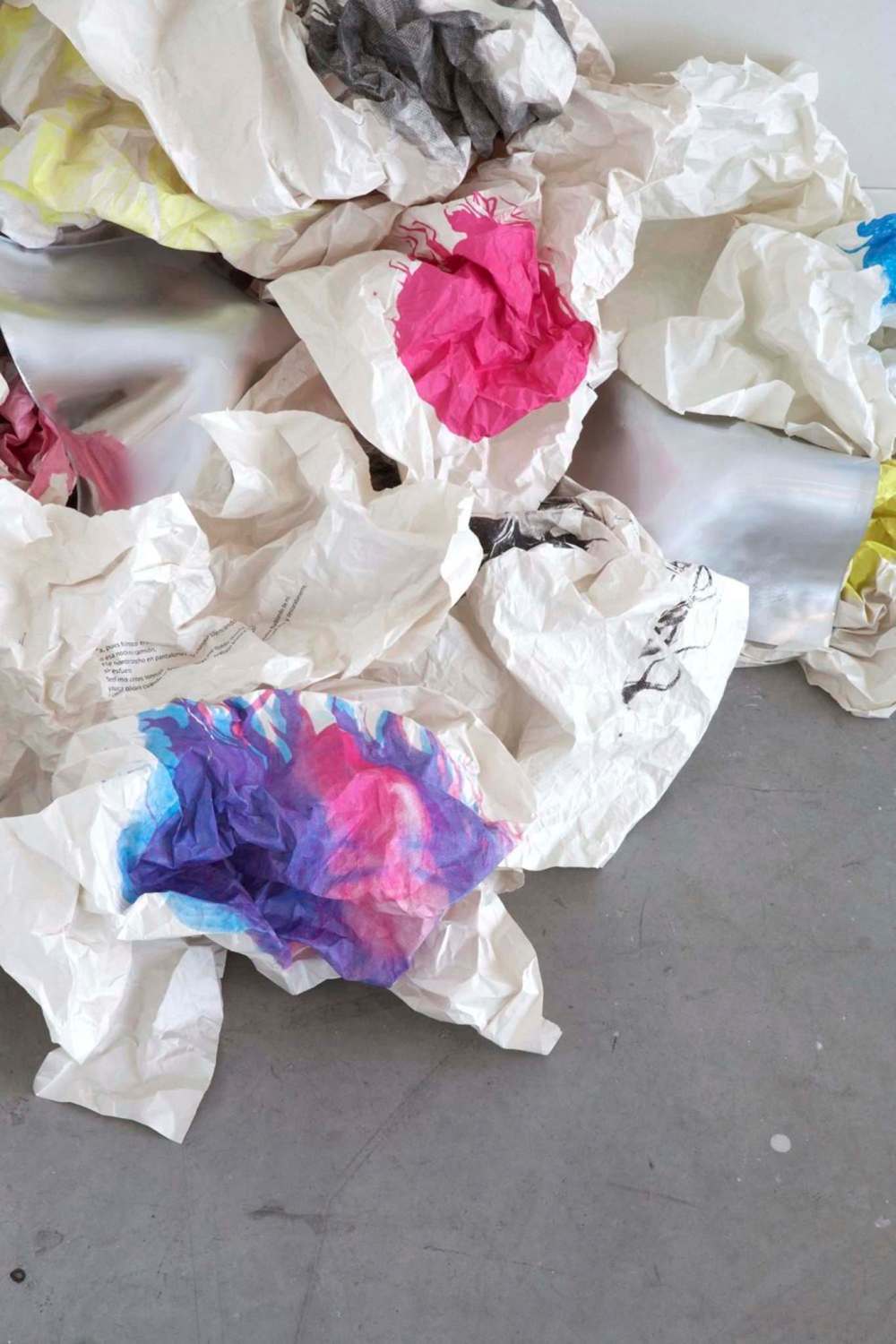

Printmaking methods can be time-consuming — “The Home of Slow Art,” reads a sign outside the Martha Street door — as well as physically laborious. “Almost any kind of printmaking involves some kind of workout,” James jokes.
Even after all that work, you don’t necessarily know exactly what you’ll end up with. “There’s a certain feeling, a certain texture to a handmade print,” says Muñoz Gomez, as she points to small, unpredictable variations in one piece.
According to James: “A lot of it is about control, but a lot of things are happy accidents, especially with things like etching, where you’re, you know, sticking things in acid.
“I think a lot of people love printmaking for that sense of surprise.”
We’ll be talking with Mariana Muñoz Gomez and Alison James about printmaking’s rich past and possible futures at the First Fridays Art Talk at the Free Press News Café Friday at 6 p.m. Call 204-697-7069 or email wfpnewscafe@gmail.com to reserve tickets, which are $20.
Studying at the University of Winnipeg and later Toronto’s York University, Alison Gillmor planned to become an art historian. She ended up catching the journalism bug when she started as visual arts reviewer at the Winnipeg Free Press in 1992.
Our newsroom depends on a growing audience of readers to power our journalism. If you are not a paid reader, please consider becoming a subscriber.
Our newsroom depends on its audience of readers to power our journalism. Thank you for your support.
Studying at the University of Winnipeg and later Toronto’s York University, Alison Gillmor planned to become an art historian. She ended up catching the journalism bug when she started as visual arts reviewer at the Winnipeg Free Press in 1992.
Our newsroom depends on a growing audience of readers to power our journalism. If you are not a paid reader, please consider becoming a subscriber.
Our newsroom depends on its audience of readers to power our journalism. Thank you for your support.
Advertisement Advertise With Us
Advertisement Advertise With Us