Fabricating a dream
Layers of tulle go into Nutcracker's iconic hand-crafted costumes
Advertisement
Read this article for free:
or
Already have an account? Log in here »
To continue reading, please subscribe:

Digital Subscription
One year of digital access for only $205*
- Enjoy unlimited reading on winnipegfreepress.com
- Read the E-Edition, our digital replica newspaper
- Access News Break, our award-winning app
- Play interactive puzzles
*First annual payment billed as $205.00 + GST for one year. This annual subscription will automatically renew at $233.00 + GST every 52 weeks (10% off the regular annual price of $259.35). Offer available to new and qualified returning subscribers only. Cancel any time.
To continue reading, please subscribe:
Add Free Press access to your Brandon Sun subscription for only an additional
$1 for the first 4 weeks*
- Enjoy unlimited reading on winnipegfreepress.com
- Read the E-Edition, our digital replica newspaper
- Access News Break, our award-winning app
- Play interactive puzzles
*Your next Brandon Sun subscription payment will increase by $1.00 and you will be charged $17.95 plus GST for four weeks. After four weeks, your payment will increase to $24.95 plus GST every four weeks.
Read unlimited articles for free today:
or
Already have an account? Log in here »
Hey there, time traveller!
This article was published 21/12/2017 (3126 days ago), so information in it may no longer be current.
When the curtain rises on the Royal Winnipeg Ballet’s (RWB) annual holiday production of Nutcracker, its glittering galaxy of stars include not just the elegant danseurs and ethereal ballerinas who bring the beloved story ballet to life each December, but its sum total of nearly 250 pristine tutus, fantastical animal costumes, multicultural outfits and Victorian-era finery as delicious as a Christmas treat.
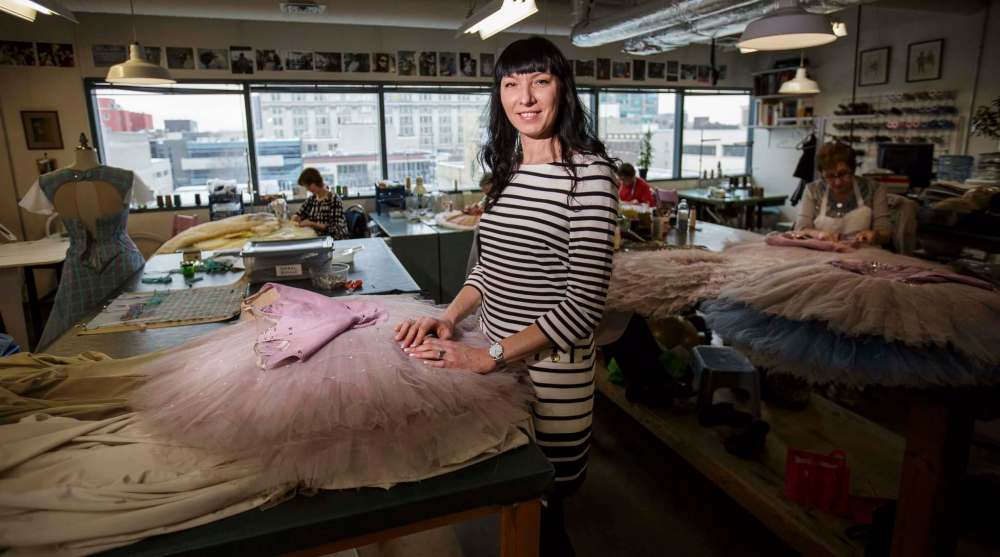
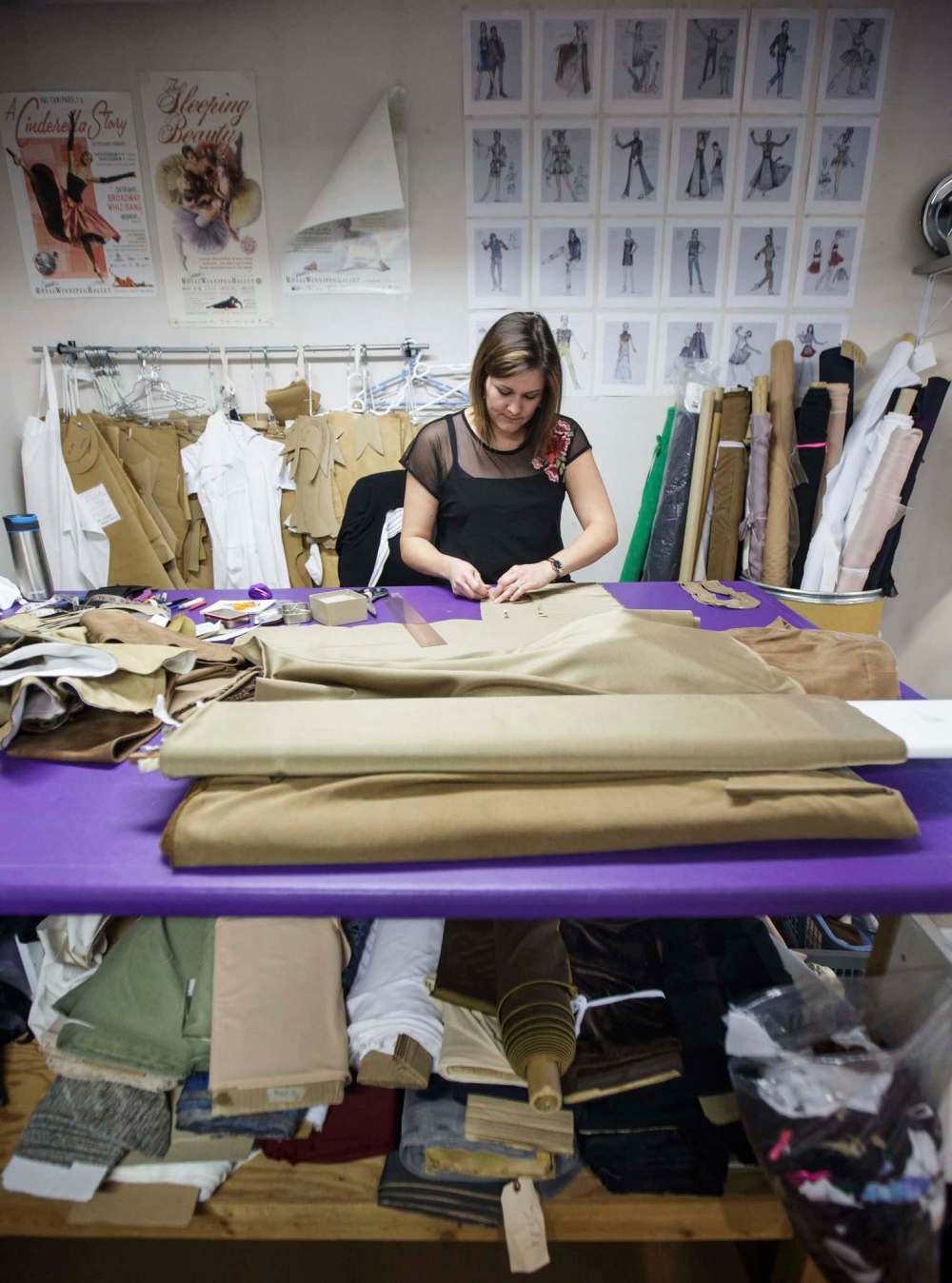
“The whole show is really beautiful,” says the RWB’s director of wardrobe, Alena Zharska, who has headed her staff of 12 for the past four years and still works as a cutter.
“Paul Daigle is a wonderful costume designer and this ballet is one of my favourites, because it really sparkles,” she says of the New Brunswick-based artist and former RWB dancer, who has also created costumes for Mark Godden’s Dracula, The Magic Flute, and last month’s Miroirs, during the company’s mixed bill Our Story.
Originally choreographed by Galina Yordanova and Nina Menon in 1999, the 124-minute ballet tells the tale of wide-eyed innocent Clara (performed by corps de ballet dancer Saeka Shirai, with all lead roles alternating), who is whisked away to a magical kingdom with her dashing Nutcracker Prince (principal dancer Dmitri Dovgoselets) to become the ballerina of her dreams.
The production also features sumptuous sets by Brian Perchaluk, lighting by Michael J. Whitfield, with Julian Pellicano leading the Winnipeg Symphony Orchestra through Tchaikovsky’s soaring score.
Tutus essentially come in two flavours: romantic tutus — think ankle-skimming, soft skirts, featured in such ballets as Giselle and The Sleeping Beauty — and first appeared in 1832 at the Paris Opera. Its tulled cousin, the Classical tutu, came much later, characterized by a short, stiff skirt projecting from the hips that leaves the legs free.
Even fashion designers have gotten into the act: Cecil Beaton, Christian Lacroix and Isaac Mizrahi have all tried their hand at the iconic costume.
One of biggest “ooh and ah” moments during Nutcracker is seeing the ensemble of snowflakes appearing in crisp, white tutus during Act 1’s Magical Forest scene, complete with falling flakes. Zharska, who worked in the fashion industry prior to joining the RWB in October 2001, says a single tutu — there are 26 for the snowy group — takes an astonishing 50 hours to make, in addition to several months of fittings, adjustments, pattern-making, fabric-dying (all costumes are created in white) and decorating that begins like clockwork every August.
Zharska notes that most of the show’s current tutus have survived years of use, and are repaired and refreshed prior to each new production.
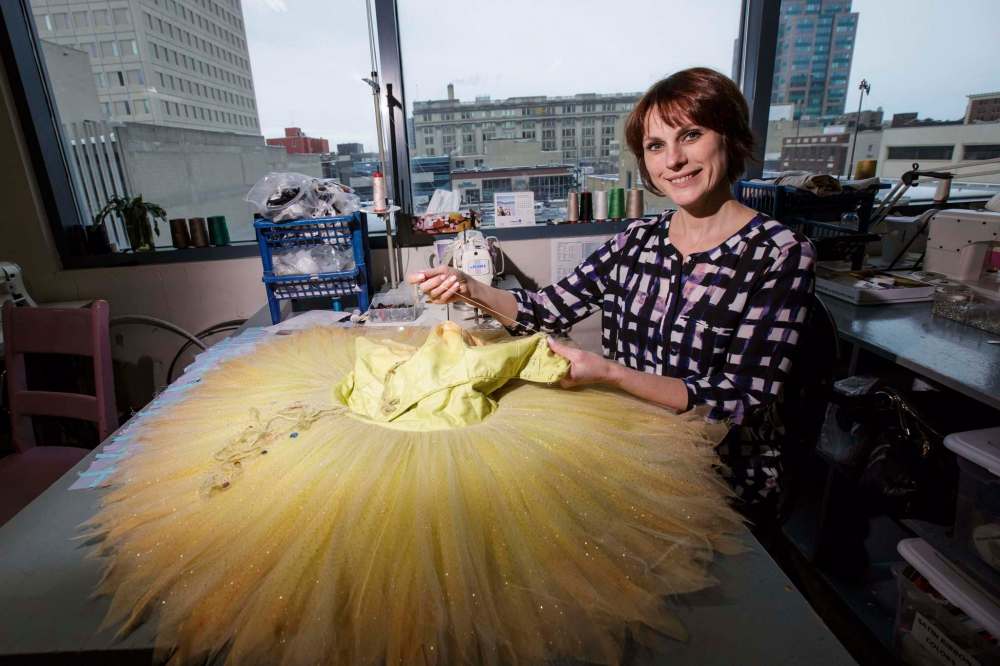
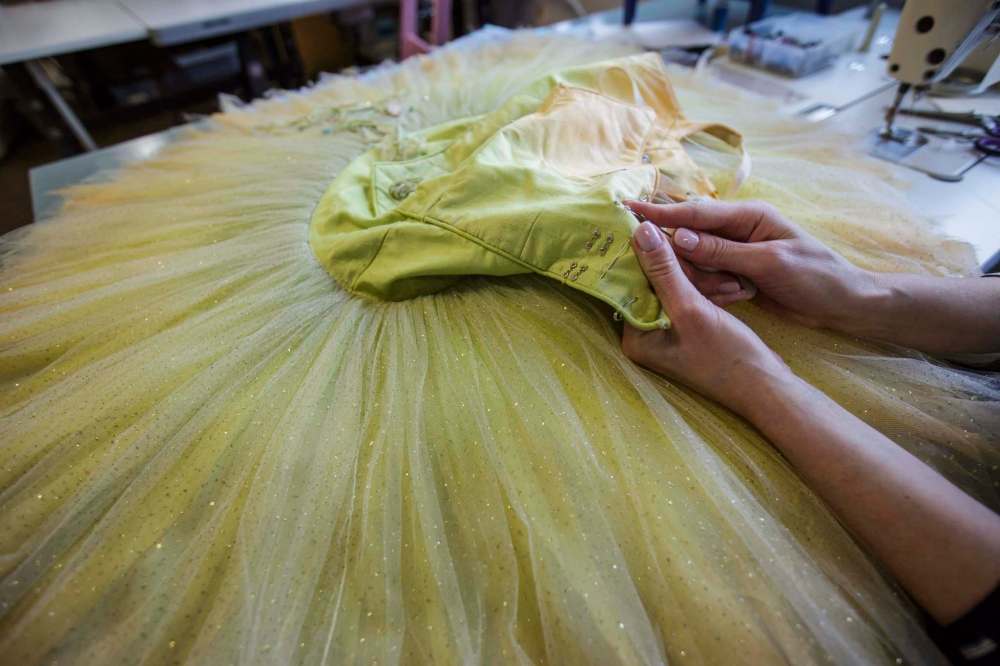
Tutus are “built” using 10 to 12 layers of tulle netting, painstakingly sewn by hand to a stiff wire hoop that creates their iconic shape, with the final layer gilded with rhinestones, jewels and sequins that add further wow factor. Each one, designed to last for decades, costs between $2,000 and $4,000 to make, with a particularly elaborate confection, such as the one worn during Act 2’s Spanish dance — Zharska’s personal favourite — featuring handmade fabric with the heftier price tag.
A former ballerina in her native Ukraine, RWB head seamstress Angela Gaft, who has worked with the company for 10-plus years, is responsible for sewing costumes and making sample prototypes for new designs. She has first-hand knowledge of what it’s like wearing an outfit that fits tighter than a rattlesnake’s skin.
“You have to feel beautiful in your costume. Every tutu is different, and is supposed to help you become whatever character you are creating,” says Gaft, who performed in many Nutcracker productions during her own dancing days, giving her further awareness of the performers’ needs.
One particular challenge is accommodating different shapes and sizes of dancers, with two or three ballerinas typically sharing a single costume. Rows of hooks and eyes are stitched at the back of the tutu’s bodice, with each performer assigned his or her own personal “sizing” bar. Principal dancers, who always have their own costumes, easily zip themselves in without needing to fuss with tiny fasteners.
Despite their feather-light beauty, tutus also need to be strong enough to weather the ravages of time, blazing stage lights, not to mention countless performances, including multiple lifts, twists, turns and spins of extreme athleticism. Costumes are checked regularly for rips and tears, and are carefully hand-washed following the end of the run, air-dried and eventually transported to the RWB’s downtown storage warehouse until the following year. The company’s annual tour of the ballet includes RWB’s head of touring Brenda Belmonté, who is also responsible for the ballerinas’ tiaras, with footwear manager Janet Anderson tending to shoes.
Faithful Nutcracker fans have also been treated to added characters of the animal kind over the past several years. The ballet has always included Daigle’s creepy, flying bats and leaping mice with bulging bellies that appear during Clara’s Act 1 nightmare scene, and the waddling Filbert the Bear who swipes at figgy pudding and gets a giggle out of audience members each year.
Corps de ballet member Katie Bonnell (alternating with Jaimi Deleau), reprising her role as a friendly grizzly this year, first squeezes into an inner shell before donning the synthetic fur pelt and headpiece; Gaft says that while there is enough room for movement, the costume can get particularly steamy under stage lights.
Adorable polar bear cubs performed by 12 local children and shepherded by furry den mother Hazel were added in 2014, as well as the ballet’s most recent characters, a flock of reindeer that pull Clara’s wintry sleigh.
“Whenever people see these costumes up close, they are always very impressed,” Zharska says proudly of her dedicated team’s artistic handiwork.
“When they watch the ballet onstage, it becomes even more magical, or even miraculous, and they enjoy it even more.”
holly.harris@shaw.ca
Holly Harris writes about music for the Free Press Arts & Life department.
Our newsroom depends on a growing audience of readers to power our journalism. If you are not a paid reader, please consider becoming a subscriber.
Our newsroom depends on its audience of readers to power our journalism. Thank you for your support.