

A very Canadian story — in all its pride and shame
Indian Horse directed by a graduate of 'Clint Eastwood Academy'

Advertisement
Read this article for free:
or
Already have an account? Log in here »
To continue reading, please subscribe:

Digital Subscription
One year of digital access for only $205*
- Enjoy unlimited reading on winnipegfreepress.com
- Read the E-Edition, our digital replica newspaper
- Access News Break, our award-winning app
- Play interactive puzzles
*First annual payment billed as $205.00 + GST for one year. This annual subscription will automatically renew at $233.00 + GST every 52 weeks (10% off the regular annual price of $259.35). Offer available to new and qualified returning subscribers only. Cancel any time.
To continue reading, please subscribe:
Add Free Press access to your Brandon Sun subscription for only an additional
$1 for the first 4 weeks*
- Enjoy unlimited reading on winnipegfreepress.com
- Read the E-Edition, our digital replica newspaper
- Access News Break, our award-winning app
- Play interactive puzzles
*Your next Brandon Sun subscription payment will increase by $1.00 and you will be charged $17.95 plus GST for four weeks. After four weeks, your payment will increase to $24.95 plus GST every four weeks.
Read unlimited articles for free today:
or
Already have an account? Log in here »
Hey there, time traveller!
This article was published 12/04/2018 (3108 days ago), so information in it may no longer be current.
Indian Horse is a very Canadian movie that simultaneously encompasses our national pride — hockey — and our national shame — residential schools.
Based on a novel by the late Richard Wagamese, the film tells the story of Saul Indian Horse, a kid brutally plucked from his First Nations family to be indoctrinated into white Christian society in an Ontario Catholic residential school.
The job of directing the film fell to a Canadian-born filmmaker best known for his collaborations with an authentic Hollywood superstar.
The bulk of Stephen Campanelli’s credits are as a camera operator, especially as related to his own field of expertise, the Steadicam. The Montreal-born Campanelli has enjoyed a particularly fruitful collaboration with Clint Eastwood on pretty much every Eastwood-directed film since The Bridges of Madison County (1995), including his latest, The 15:17 to Paris.
But after living in Los Angeles for 22 years, Campanelli was compelled to move back home “to this more sane country” last year, while editing Indian Horse. He returned with a clearer picture of Canada’s own dark history regarding its First Nations people.
“It’s funny, growing up in Montreal, they hardly teach you about the rest of Canada, never mind Indigenous stories,” he says on the phone from his Vancouver home. “It was kept a secret.”
The secret was exposed to Campanelli upon reading Ojibway author Wagamese’s book, which roughly parallels Wagamese’s own life.
“I was really shocked,” he says. “How could this have happened in what we call a great country?
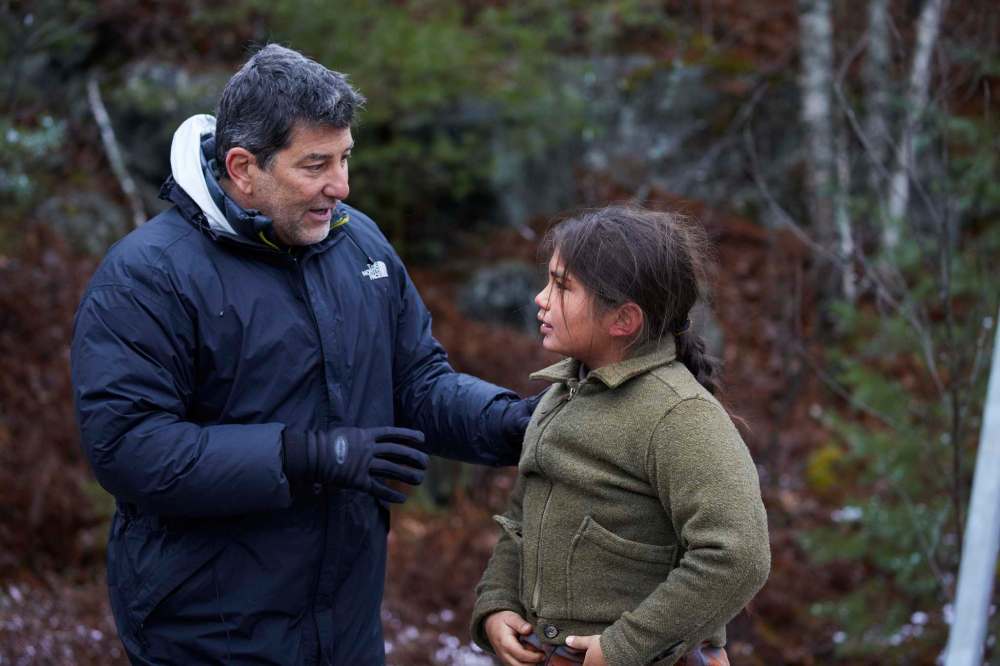
“Canadians have this wonderful reputation around the world for being nice people and we did this to our indigenous people so it really shocked and angered me and I thought: I really need to get more people to know about this story.”
Campanelli acknowledges that he would have been at a disadvantage, if not for the approval of the author.
“He was very hands-on in the beginning because these are his words and his novel and most of us are not indigenous and that was an issue, of course, to tell an indigenous story,” Campanelli says. “But Richard was onboard, right from the beginning. He saw that we all had the creative, collaborative vision of telling his story — not our story, not a settler’s story, but his story — and he took us under his wing right away and it was a great collaboration.
“I met him several times and he’s the one who picked Dennis Foon to write the screenplay and he completely approved of me being the director.”
Wagamese died in his sleep of indeterminate causes early in 2017, but he did get a glimpse of the movie that was to be.
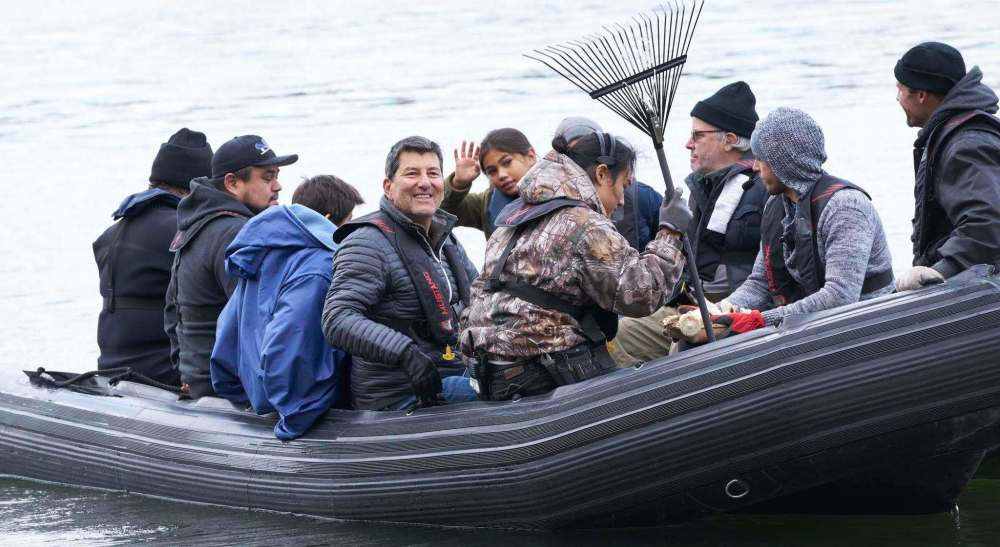
“He got to see some of the dailies, the stuff we shoot every day,” Campanelli says. “We sent him the footage so he did see his characters coming to life.”
Campanelli’s experience behind the camera informed his approach to the material.
“Being a cameraman all my life, everything for me is very visual and even in Richard’s book, he writes very poetically but very cinematically, to me,” he says.
“As I was reading the book, I could imagine the story unfolding behind my eyeballs.
“I loved that part of it. I love storytelling from a camera’s point of view because that’s what I’ve been doing all my life,” he says.
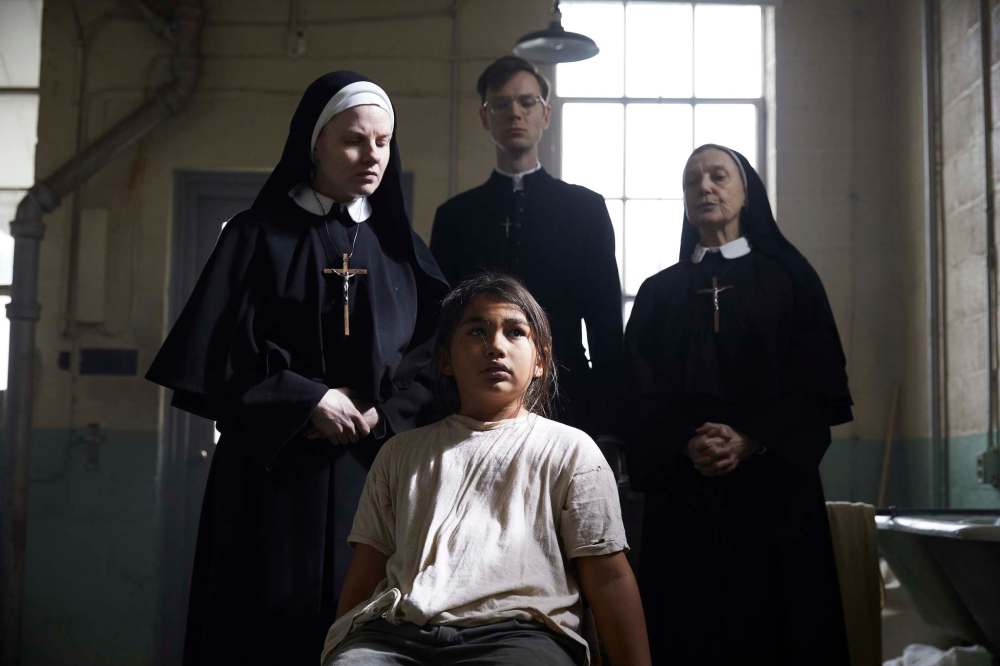
Campanelli jokes that he is a graduate of “Clint Eastwood University” when it comes to bringing a hardworking ethos to his directing work. So, naturally, he felt compelled to show a rough cut to Eastwood the first chance he got.
“So I flew down to L.A. to Warner Bros. and we booked a private studio there and I showed him the film on the big screen and he was blown away,” Campanelli says. “He was very impressed and he quite literally said: ‘How can I help you? How can I get people to see this movie? They need to see it.’

“I said, ‘Well, if you can lend us your name, it would really help get the word out there.’ And without thinking about it too much, he said, ‘Sure, absolutely.’ He really wanted people to see this movie and that’s how he came on board as our executive producer.
“It goes to tell you what kind of man he is,” Campanelli says. “He’s just a great human being and he saw what I call a little Canadian movie and he saw the value of it and the impact of it. He was very moved by it, as a lot of people are.
“I can’t wait for all Canada to see it when it comes out,” Campanelli continues. “I’m very proud and honoured to be a part of it. It changed my life for the better.”

Indian Horse opens Friday at Grant Park and Polo Park cinemas.
randall.king@freepress.mb.ca Twitter: @FreepKing
Our newsroom depends on a growing audience of readers to power our journalism. If you are not a paid reader, please consider becoming a subscriber.
Our newsroom depends on its audience of readers to power our journalism. Thank you for your support.
Indian Horse
Opens Friday
Grant Park, Polo Park
14A
101 minutes.
Our newsroom depends on a growing audience of readers to power our journalism. If you are not a paid reader, please consider becoming a subscriber.
Our newsroom depends on its audience of readers to power our journalism. Thank you for your support.
Advertisement Advertise With Us
Advertisement Advertise With Us





