Thirty years on the cutting edge
Audacious performance art duo has seen their lives transformed from pariahs to pioneers

Advertisement
Read this article for free:
or
Already have an account? Log in here »
To continue reading, please subscribe:

Digital Subscription
One year of digital access for only $205*
- Enjoy unlimited reading on winnipegfreepress.com
- Read the E-Edition, our digital replica newspaper
- Access News Break, our award-winning app
- Play interactive puzzles
*First annual payment billed as $205.00 + GST for one year. This annual subscription will automatically renew at $233.00 + GST every 52 weeks (10% off the regular annual price of $259.35). Offer available to new and qualified returning subscribers only. Cancel any time.
To continue reading, please subscribe:
Add Free Press access to your Brandon Sun subscription for only an additional
$1 for the first 4 weeks*
- Enjoy unlimited reading on winnipegfreepress.com
- Read the E-Edition, our digital replica newspaper
- Access News Break, our award-winning app
- Play interactive puzzles
*Your next Brandon Sun subscription payment will increase by $1.00 and you will be charged $17.95 plus GST for four weeks. After four weeks, your payment will increase to $24.95 plus GST every four weeks.
Read unlimited articles for free today:
or
Already have an account? Log in here »
Hey there, time traveller!
This article was published 14/07/2018 (2944 days ago), so information in it may no longer be current.
In 1988, Shawna Dempsey and Lorri Millan decided to move from Toronto and call Winnipeg home.
They were young artists and lovers, entering into a new artistic partnership.
“So many great artistic collaborations have been the great male genius artist and his wife who supports in the background,” Dempsey says.
“And we were self-conscious of that as a shitty model,” Millan finishes with a laugh.
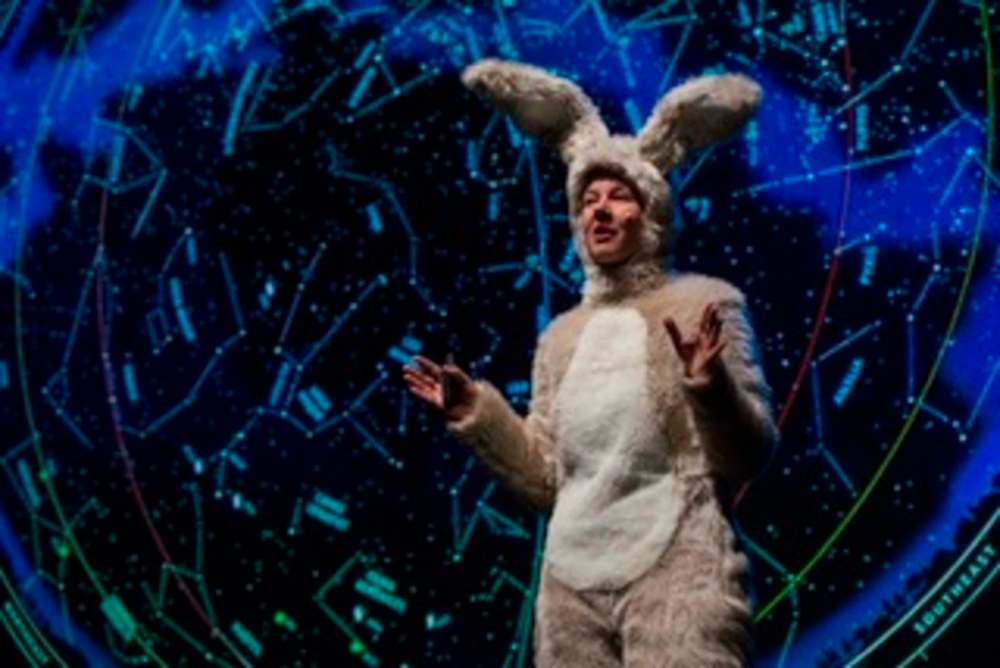
Dempsey and Millan broke up after five years, but their artistic partnership continues to flourish. Together, they have become one of Canada’s most acclaimed performance art duos, making provocative, groundbreaking feminist works that still resonate — including 1990’s landmark mock music video We’re Talking Vulva, a gleeful “wear-and-care manual” featuring Dempsey dressed as a giant rapping and dancing vulva, and Lesbian National Parks and Services, an ongoing performance work that debuted in 1997 featuring Dempsey and Millan in full Lesbian Ranger gear, parodying nature documentaries.
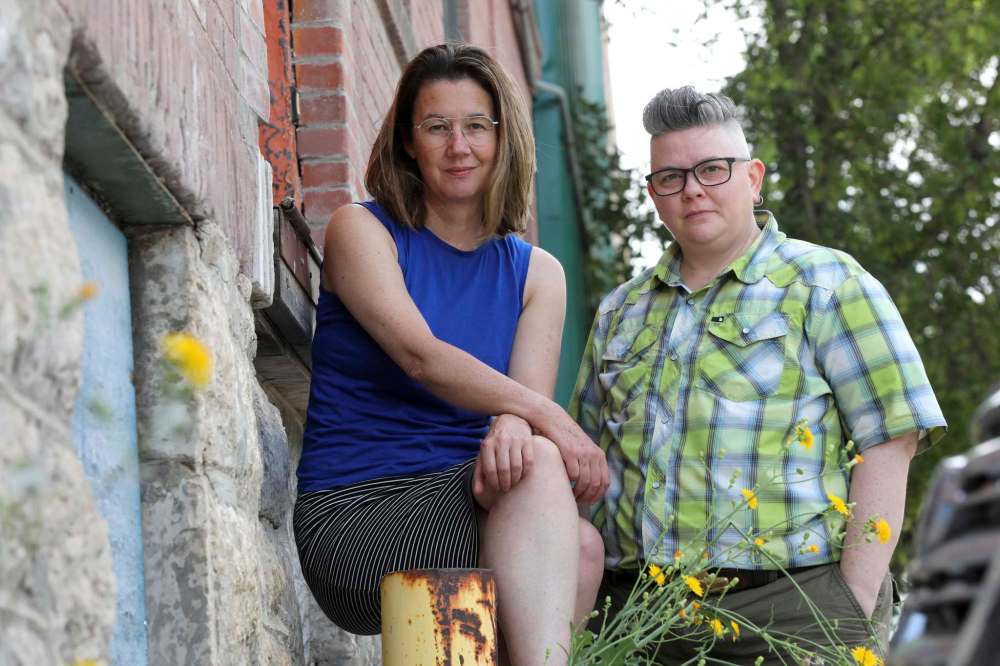
This year, Dempsey and Millan are celebrating their 30th anniversary as collaborators, so it’s only fitting that they should be the recipients of the 2018 Manitoba Arts Award of Distinction from the Manitoba Arts Council. The award acknowledges the long-term achievements of a Manitoba artist, and comes with a $30,000 prize. “We were shocked,” Dempsey says.
Their 30-year career dovetails with a time in history which has seen change at a speed they couldn’t imagine when they first started using art to comment on social-justice issues.
“When we started making work in the ‘80s, the women’s movement was pretty recent then,” Dempsey says. “As women, we were still fighting for abortion then in Canada. And then continuing with the AIDS crisis in the ‘80s, where so many people died amidst incredible societal indifference, and there was tremendous violence against homosexual people. In my lifetime, we were criminalized and then medicalized and then killed, arrested, denied work, denied housing. It was a rough time. At our home, pre-internet, we received handwritten death threats — and then later with the internet, in the ‘00s, we received online threats.
“So, there has been an almost unimaginable shift. If you had told me 30 years ago that we could get married and change our genders, I would say, ‘No, that’s impossible.’ The speed of change has been fantastic.”
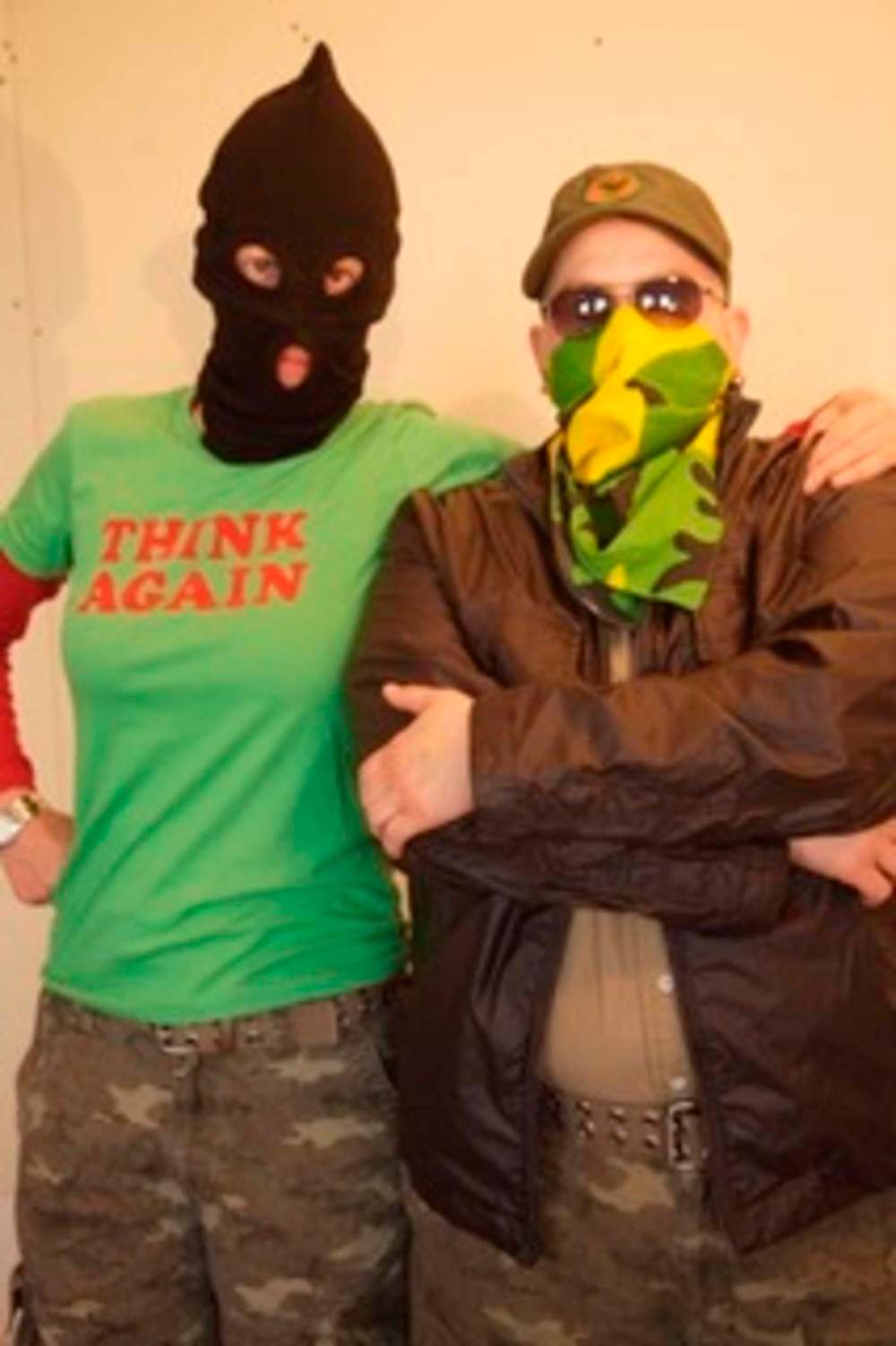
“Women’s control of their bodies pops up like an apple in a barrel every few years, especially in the States right now,” Millan says. “There are some issues that just don’t go away. And then there’s the cornered conservative animal that isn’t pleased with any of us. But there’s just no getting around how much easier it is to be different than it used to be.”
Dempsey says she and Millan emerged at a time when there was a lot of interest in feminist and gay work — and not only was there an appetite for that kind of boundary-breaking art in the days before on-demand content, there were dedicated venues for it.
“There were film festivals, there were cabarets, there were all sorts of places you could do live work and present your films or videos,” Millan adds. “That petered out, and you might blame the internet — but you might also blame the fact that you made a difference. That maybe we were part of something that shifted from the urgent revolutionary fervour that was firing everyone up, to a place… well the obvious example is we have gay marriage, for instance, and other shifts in human rights in Canada. So there was not only the interest in the work, but there were lots of places the work could get shown.
“Now, there aren’t, actually,” she says. “There’s not really a focused event, a focused energy. How art is seen and distributed has really changed.”
Dempsey and Millan have also seen their share of pushback. In 1997, they created One Gay City, a public art installation that featured artist-created bus-shelter ads riffing on Winnipeg’s civic slogan, One Great City. The installation became the subject of a Manitoba Human Rights Commission challenge after the ad agency who controlled the bus shacks objected to the content, and were backed by Canadian Advertising Standards. The duo settled with the ad agency in 1999.
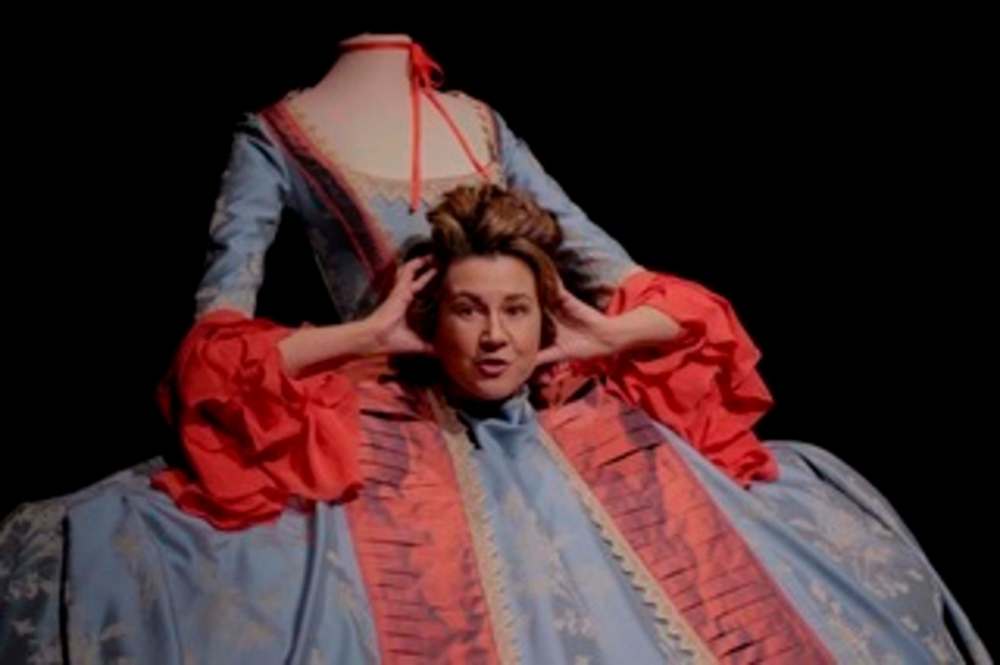
We’re Talking Vulva, meanwhile, continues to cause a stir nearly 30 years later.
“Vulva is our litmus test; every couple of years it gets banned somewhere, or gets somebody’s knickers in a knot,” Millan says. “There’s no sex, there’s no nudity, there’s no violence — it’s actually just a lighthearted description of female anatomy, and it remains the single-most controversial piece we’ve ever done.”
But controversy, Millan says, is just one way to tell their story. For the most part, people are receptive to the duo’s art. “I can count on one hand the number of walkouts we’ve had,” Millan says.
People want to hear what Dempsey and Millan have to say, because they create meaningful connections with their audiences. And their work is not done; social-justice issues remain top of mind for the pair.
“Those ideas aren’t all we work with, but they still obviously inflame us so we still work with them, because it needs to be said,” Dempsey says.
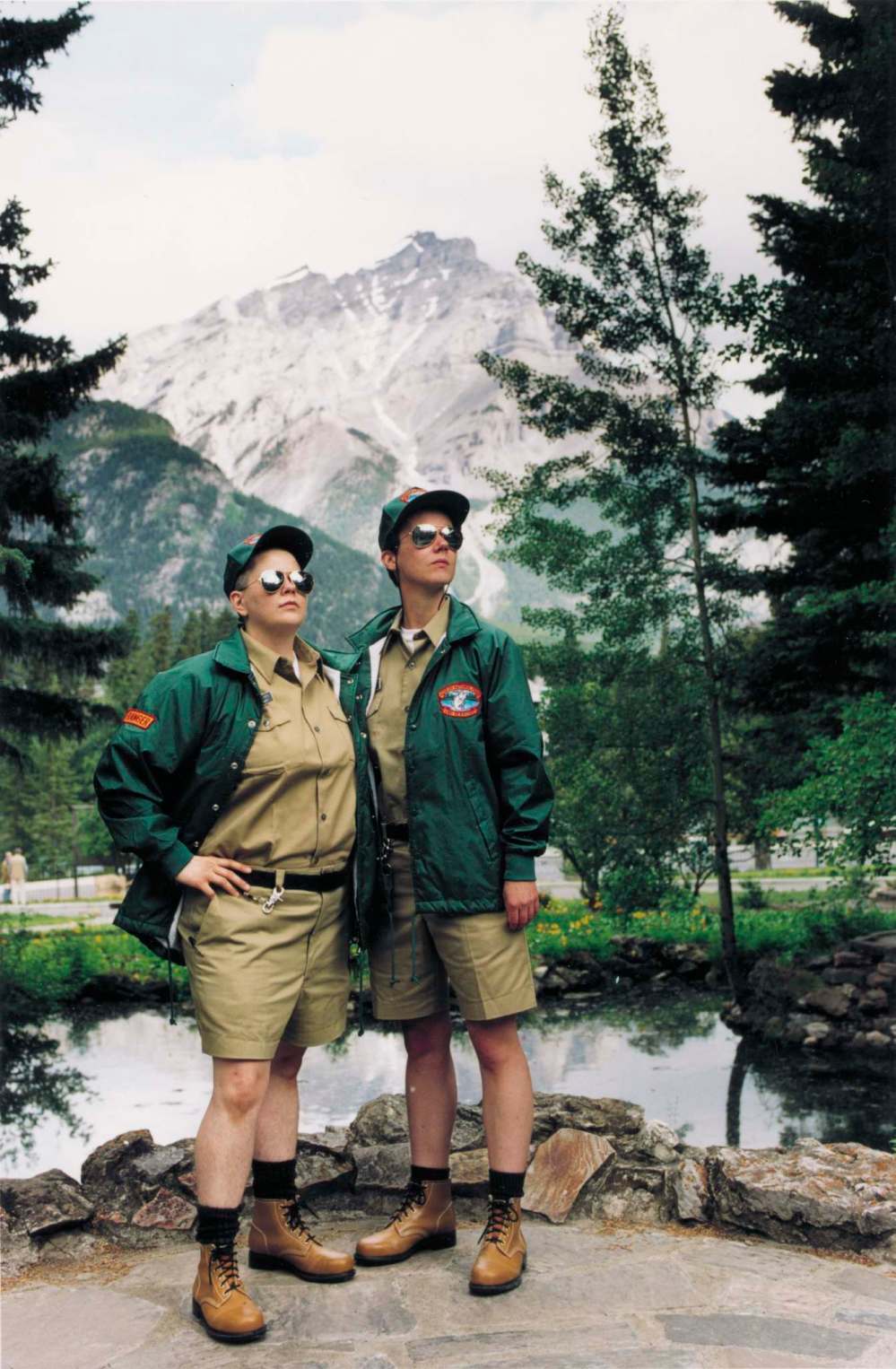
“Because we’re artists, we’ve tried to come up with new ways to discuss issues that remain fundamental to progressive change,” Millan adds.
That they’ve been able to do so for three decades is no small feat. Their work is built on collaboration — true collaboration, not the capitalist buzz-word version.

“Collaboration is not a 50-50 relationship,” Millan says. “It’s 100 per cent mine and 100 per cent Shawna’s, and we make something that neither of us could make on our own.”
Millan recognizes a collaborative arrangement isn’t for everyone, and it comes with its own set of growing pains and requires some letting go.
“But I do think everybody could benefit from a healthy collaborative experience,” Millan says. “You get to question all these notions of what it means to create, what it means to own, what it means to share, what it means to control — and also, if you’re really lucky, you’ll learn about longevity, and the power of building a really long, rich relationship.”
jen.zoratti@freepress.mb.ca
Twitter: @JenZoratti
Jen Zoratti is a columnist and feature writer working in the Arts & Life department, as well as the author of the weekly newsletter NEXT. A National Newspaper Award finalist for arts and entertainment writing, Jen is a graduate of the Creative Communications program at RRC Polytech and was a music writer before joining the Free Press in 2013. Read more about Jen.
Every piece of reporting Jen produces is reviewed by an editing team before it is posted online or published in print – part of the Free Press‘s tradition, since 1872, of producing reliable independent journalism. Read more about Free Press’s history and mandate, and learn how our newsroom operates.
Our newsroom depends on a growing audience of readers to power our journalism. If you are not a paid reader, please consider becoming a subscriber.
Our newsroom depends on its audience of readers to power our journalism. Thank you for your support.
Jen Zoratti is a columnist and feature writer working in the Arts & Life department, as well as the author of the weekly newsletter NEXT. A National Newspaper Award finalist for arts and entertainment writing, Jen is a graduate of the Creative Communications program at RRC Polytech and was a music writer before joining the Free Press in 2013. Read more about Jen.
Every piece of reporting Jen produces is reviewed by an editing team before it is posted online or published in print – part of the Free Press‘s tradition, since 1872, of producing reliable independent journalism. Read more about Free Press’s history and mandate, and learn how our newsroom operates.
Our newsroom depends on a growing audience of readers to power our journalism. If you are not a paid reader, please consider becoming a subscriber.
Our newsroom depends on its audience of readers to power our journalism. Thank you for your support.
Advertisement Advertise With Us
Advertisement Advertise With Us