

A tale of seduction and damnation
Mozart's opera inspired by legend of Don Juan makes long-awaited return
Advertisement
Read this article for free:
or
Already have an account? Log in here »
To continue reading, please subscribe:

Digital Subscription
One year of digital access for only $205*
- Enjoy unlimited reading on winnipegfreepress.com
- Read the E-Edition, our digital replica newspaper
- Access News Break, our award-winning app
- Play interactive puzzles
*First annual payment billed as $205.00 + GST for one year. This annual subscription will automatically renew at $233.00 + GST every 52 weeks (10% off the regular annual price of $259.35). Offer available to new and qualified returning subscribers only. Cancel any time.
To continue reading, please subscribe:
Add Free Press access to your Brandon Sun subscription for only an additional
$1 for the first 4 weeks*
- Enjoy unlimited reading on winnipegfreepress.com
- Read the E-Edition, our digital replica newspaper
- Access News Break, our award-winning app
- Play interactive puzzles
*Your next Brandon Sun subscription payment will increase by $1.00 and you will be charged $17.95 plus GST for four weeks. After four weeks, your payment will increase to $24.95 plus GST every four weeks.
Read unlimited articles for free today:
or
Already have an account? Log in here »
Hey there, time traveller!
This article was published 27/11/2018 (2878 days ago), so information in it may no longer be current.
Manitoba Opera turned the art of seduction into blood sport Saturday night, thanks to its season opener of Mozart’s dramma giocoso, Don Giovanni, which walks a rapier’s edge between hilarious social commentary and chilling battles for the soul.
It’s also a mystery why it’s taken 15 long years for Winnipeg opera buffs to see the wunderkind’s supernatural masterpiece based on an Italian libretto by Lorenzo Da Ponte, in turn originally inspired by the legend of Spanish libertine Don Juan. It was last staged by the 46-year-old company in 2003.
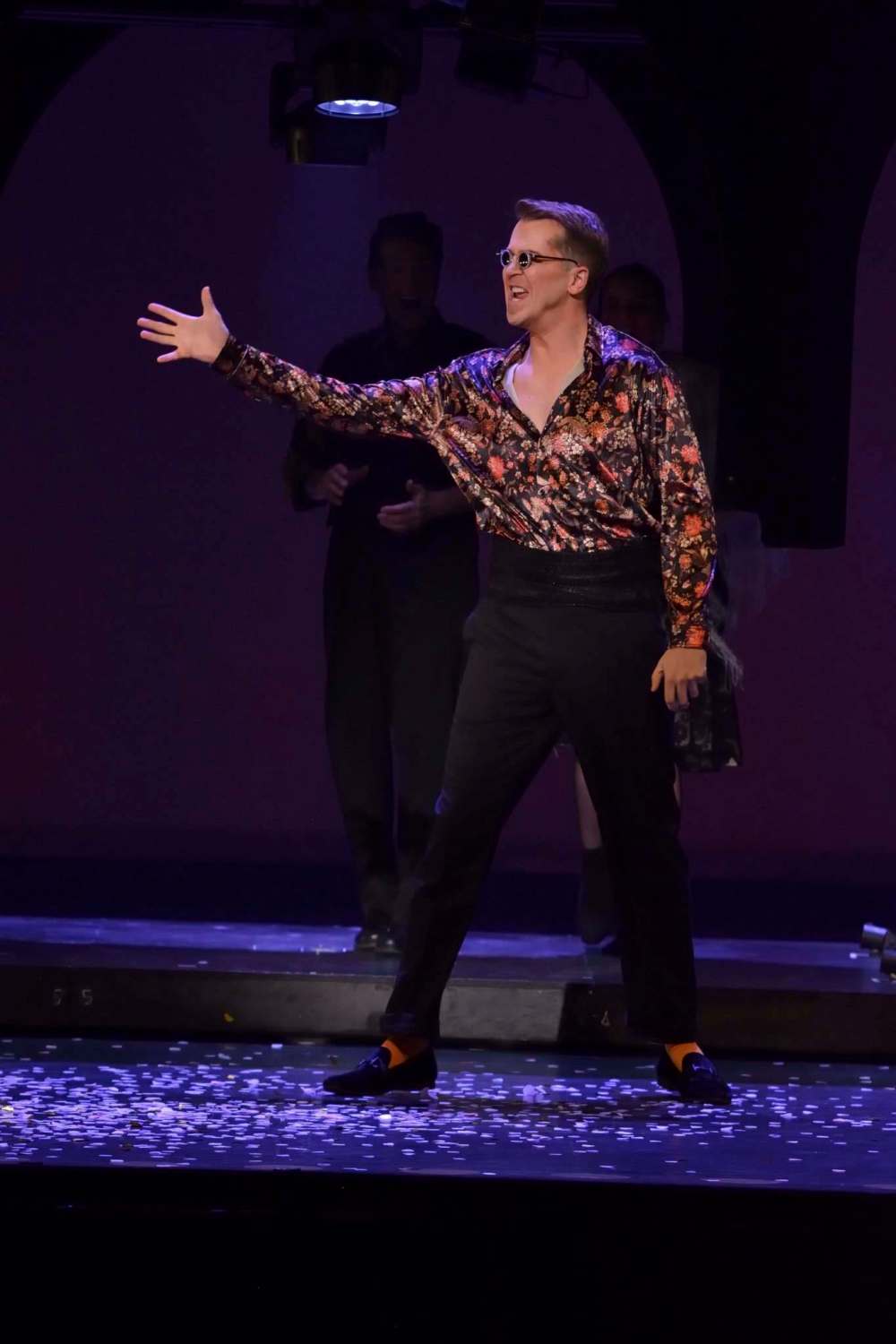
Perhaps it’s because we’ve been waiting for Canadian bass-baritone Daniel Okulitch to don the matador’s mantle, with the acclaimed singer reprising his signature title role he’s performed a dozen times worldwide. The Ottawa-born artist electrified Saturday night’s audience with his stylized, swaggering toreador, the fulcrum to Spanish-born director Oriol Tomas’s artistic vision, nearly stealing the show with every haughty, struck pose and whip-cracking foot stomp fuelled by raw machismo, as well as oozing charisma during his serpentine seduction of his female prey caught in his crosshairs.
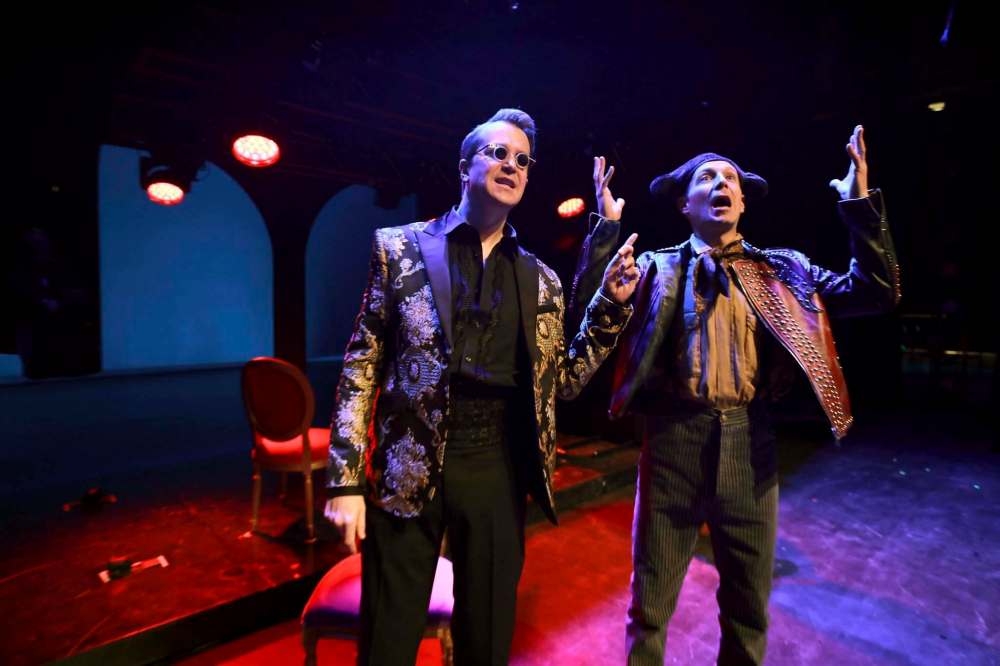
In Mozart’s two-act opera penned in 1787, quintessential bad boy Don Giovanni lords power and lusts after a series of women, including betrothed Donna Anna, jilted Spanish spitfire Donna Elvira and peasant girl Zerlina as each becomes entangled in his spider’s web of seduction. After first raping Anna and then murdering her father, the Commendatore, Don Giovanni is ultimately given a one-way ticket to eternal damnation after defiantly refusing to repent for his evil ways.
Maestro Tyrone Paterson led the Winnipeg Symphony Orchestra with his customary finesse throughout the 175-minute (including intermission) production. Scott Henderson creates eye-popping lighting effects heightened by billowing stage smoke, while a wonderfully imagistic, tiered set of a skeletal bullring with hipster-vibe costumes from Edmonton Opera evokes past glory — and gory — days of blood-soaked bullfights, or alternatively a futuristic, burnt-out landscape still moaning with death and decay from a not-so-distant past.
What makes this production sing are its two male leads. Okulitch displays supreme conviction and ease as he traverses his narrative arc, matched equally by his fierce embodiment of Giovanni’s deepest, most volatile desires.
His wheedling of Zerlina, sung by soprano Andrea Lett during the Act I wedding-party scene, which quickly escalates into a full-on sexual assault juxtaposed with Mozart’s genteel orchestral accompaniment is the stuff of nightmares — and kudos to both these strong performers for their no-holds-barred realization of the stomach-churning plotline.
Okulitch’s richly resonant vocals, including clear diction and agile phrasing were also exhibited during his effortless, trip-off-the-tongue Italian recitatives, and a rapid-fire delivery of famous, fizzy champagne aria, Finch’han dal vino, as effervescent as a glass of bubbly.
But his chameleonic artistry also includes an impressive emotional palette, with an innate ability to mine the subtlest nugget of gold from this operatic Gibraltar, including his lushly romantic Deh, vieni alla finestra, wooing Elvira’s maid with his soaring, lyrical voice that seemingly knows no bounds.
Canadian bass-baritone Stephen Hegedus easily holds his own against Okulitch’s bravura performance as Giovanni’s valet/sidekick — and witness —creating oceanic undertows of subtext as he rails against, reveres, and finally, triumphantly wrests power during the final brilliant image as his master perishes. His biting into an apple as forbidden fruit packed its own emotional wallop, courtesy of Tomas’s sensitive direction that also showed his knack for creating numerous, compelling stage tableaus.
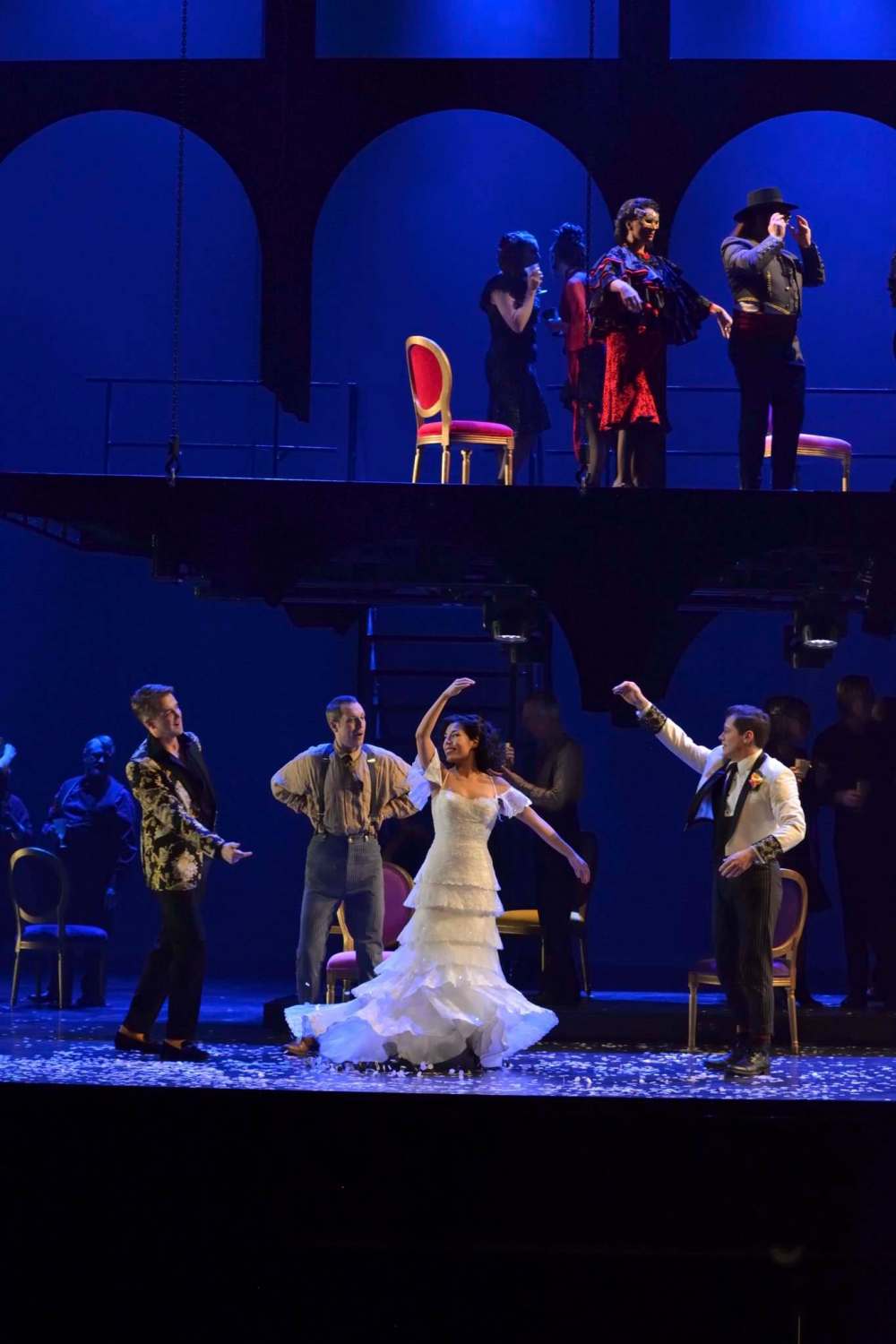
Hegedus’s spot-on comedic timing during Act II’s opening scene, where he disguises himself with Giovanni’s sartorial jacket, had viewers in stitches with his buffoonery, as well as during his catalogue aria, Madamina, il catalogo e questo, during which he nonchalantly lists Giovanni’s conquests to a gaping Elvira.
The trio of female leads who serve as the opera’s backbone must create a compelling, collective whole, as well as individuate their own respective characters as they embark on their own dramatic journeys. Mostly, the three Winnipeg-born, bred or based sopranos succeeded, albeit with a few bumps along the road.
Jessica Strong, marking an auspicious Manitoba Opera debut as soloist, projected her lusciously warm vocals, including gleaming high notes during each of her major arias, including Or sai chi l’onore rapire a me volse, and later, a limpid Non mi dir, as well as eye-of-the-storm trio Protegga il giusto cielo sung with Don Ottavio (tenor Owen McCausland) and Elvira, where they plead for heavenly protection. She also instilled fascinating subtext into her own role, torn between lust and revulsion for Giovanni, with her solid acting skills morphing through prismatic gradations of emotional colour.
Monica Huisman crafted a wildcat Elvira who becomes the scourge — and moral checkpoint — of Giovanni’s existence, bringing bushels of energy to the stage with her indignation, at times so heightened that it caused slight intonation issues with her uppermost range. Still, this powerhouse delivered her Ah, chi mi dice mai with the fury of a woman scorned, and even more forcefully, her subsequent Ah, fuggi il traditor in which she thwarts Giovanni’s initial seduction of Zerlina also showcased her innate dramatic flair.

Last but not least, Lett’s lighter, albeit crystal-clear, assured soprano voice nailed each of Zerlina’s arias, including (thankfully) injecting dramatic irony into Batti, batti o bel Masetto, in which she begs husband Masetto (baritone Johnathon Kirby) to beat her for being tempted by Giovanni, as well as Vedrai carino, that flips the narrative on its head as she slyly seduces Masetto.
American bass Kirk Eichelberger instilled gravitas in his ghostly role as the Commendatore, including his booming Don Giovanni! A cenar teco m’invitasti sung to an increasingly unrepentant Giovanni. The Act II cemetery scene, in which tombstones are replaced by hanging, severed bulls’ heads, created an arresting trompe-l’oeil, with (depending on sightlines) his own skull appearing replaced by that of a hulking beast.
Tomas wisely chose to omit the final ensemble in which the cast reappears to deliver a neatly sewn up moral, typically included since the early 20th century. Still, the opera’s shuddering finale felt oddly anticlimactic. All-too-brief pyrotechnic effects, while still shocking, felt less flaming-tongues-from-hell, than nifty special effects borrowed from your latest rock concert. And a rafter-shaking voice like Eichelberger’s really doesn’t need to be amplified, which only jarred the senses, while the female demons that suddenly take the stage felt far too Canadian-polite.
Having said all this, kudos to Tomas and his committed cast for bringing Mozart’s perennial classic to life, even more resonant in today’s #MeToo bullring, still blood-soaked with beasts of cutthroat power, politics and ever-threatening, pervasive sexual predation.
holly.harris@shaw.ca
Holly Harris writes about music for the Free Press Arts & Life department.
Our newsroom depends on a growing audience of readers to power our journalism. If you are not a paid reader, please consider becoming a subscriber.
Our newsroom depends on its audience of readers to power our journalism. Thank you for your support.
History
Updated on Tuesday, November 27, 2018 7:25 AM CST: Fixes cutline
Updated on Tuesday, November 27, 2018 4:43 PM CST: Corrects reference to Monica Huisman arias.


