Communist-era Polish art on display

Exhibit explores work created amid heavy censorship

Advertisement

Advertise with us

A new exhibition at the Ogniwo Polish Museum explores the history of Polish poster art and how the posters were used to covertly communicate artists’ feelings during Communist rule.

Read this article for free:


or

Already have an account? Log in here »

To continue reading, please subscribe:

Subscribe and receive a limited-edition Free Press branded hat or tote.

Digital Subscription

One year of digital access for only $205*

  • Enjoy unlimited reading on winnipegfreepress.com
  • Read the E-Edition, our digital replica newspaper
  • Access News Break, our award-winning app
  • Play interactive puzzles

*First annual payment billed as $205.00 + GST for one year. This annual subscription will automatically renew at $233.00 + GST every 52 weeks (10% off the regular annual price of $259.35). Offer available to new and qualified returning subscribers only. Cancel any time.

To continue reading, please subscribe:

Add Free Press access to your Brandon Sun subscription for only an additional

$1 for the first 4 weeks*

  • Enjoy unlimited reading on winnipegfreepress.com
  • Read the E-Edition, our digital replica newspaper
  • Access News Break, our award-winning app
  • Play interactive puzzles
Start now

*Your next Brandon Sun subscription payment will increase by $1.00 and you will be charged $17.95 plus GST for four weeks. After four weeks, your payment will increase to $24.95 plus GST every four weeks.

Hey there, time traveller!
This article was published 05/10/2019 (2513 days ago), so information in it may no longer be current.

A new exhibition at the Ogniwo Polish Museum explores the history of Polish poster art and how the posters were used to covertly communicate artists’ feelings during Communist rule.

Hidden Messages as a Means of Communication is on display at the museum (1417 Main St.) until the end of December. The posters on display range from pre-Second World War to contemporary works.

“There are many layers in this poster art on display,” says Magdalena Blackmore, a Polish-language instructor at the University of Manitoba’s department of German and Slavic studies who has curated the exhibition.

MIREK WEICHSEL PHOTO
A selection of posters, including Farewell to Autumn, on display at the Ogniwo Polish Museum on Main Street.
MIREK WEICHSEL PHOTO A selection of posters, including Farewell to Autumn, on display at the Ogniwo Polish Museum on Main Street.

A tour of the exhibition reveals posters ranging from traditional representations of cultural events (theatres, films and even circuses) to more abstract and experimental works. Blackmore says those posters became critically acclaimed and have been showcased by galleries around the world, including New York’s Museum of Modern Art and the Tate Modern gallery in London.

For example, in the poster titled Farewell to Autumn, by award-winning painter and poster artist Wieslaw Walkuski, the striking image of a yellowed and fragile human torso with blood-red veins is curled up around the edges like a dead leaf in fall.

Blackmore says all the posters are either owned by the museum or were donated by various people in Manitoba’s Polish community. Many of them often brought them back to Canada from Poland and displayed them in their homes. “We put a call out to the community and they decided to donate these posters,” Blackmore said during a recent tour.

After the Second World War, the Soviet Union imposed Communist rule on Eastern Bloc countries under its umbrella, including Poland. Soviet rule didn’t begin to ease until 1989.

“Some cities like Warsaw were completely destroyed during the war, and as it was gradually rebuilt, you had these wooden fences around construction sites,” Blackmore says. “These were the first galleries where these posters were exhibited. They were free public spaces. Because of the postwar economy and politics, it was really hard for artists to practise.”

Poland also faced shortages of all sorts of goods, including art materials, she says.

Photos by MIREK WEICHSEL
Magdalena Blackmore, a Polish-language instructor at the University of Manitoba, curated the exhibit Hidden Messages as a Means of Communication.
Photos by MIREK WEICHSEL Magdalena Blackmore, a Polish-language instructor at the University of Manitoba, curated the exhibit Hidden Messages as a Means of Communication.

“There was change in patronage because the Communist government prohibited privately owned galleries,” Blackmore says. “So, there was none of that traditional patronage (from private sources) for artists. Many artists had to redefine their way of making art.”

On top of that, the government insisted on particular ways of creating art and subject matter. It was called socialist realism, a style of esthetic uniformity that glorified and idealized the role of the working class, according to the exhibition.

This style was imposed on Polish artists, and they were forced to create art that reflected the Communist ideology, Blackmore adds.

“The consequences of contradicting these instructions ranged from open criticism to the ostracism of an artist and the end of their career,” she says.

“The posters at that time, especially, undergo censorship. When someone designed a poster, two copies were printed and one of them was sent to a censor. The censor looked at it and there are archival photos you would see with the signature of the censor saying ‘yes’ or ‘no’ — accepted or not. Only after that step was the poster sent to a publisher and printed in larger quantities.”

Since there were shortages of paint and canvases, having that state sponsorship allowed many artists the means of earning an income, Blackmore says.

MIREK WEICHSEL PHOTO
The posters shown at Hidden Messages as a Means of Communication range from advertisements for cultural events to abstract and experimental works.
MIREK WEICHSEL PHOTO The posters shown at Hidden Messages as a Means of Communication range from advertisements for cultural events to abstract and experimental works.

“The posters did not have to serve the function of advertising as we see today,” she says. “The posters were just art for the sake of art.

“That’s why this field/genre was very popular at this time. When you look at some Polish posters, the posters send clear messages using universal symbols. To me, personally, the quality of work is amazing.”
Report Error Submit a Tip

More Stories

‘We got attacked’: Carney says retaliatory tariffs on U.S. to take effect next month

Catherine Morrison and David Baxter, The Canadian Press 8 minute read Preview

‘We got attacked’: Carney says retaliatory tariffs on U.S. to take effect next month

Catherine Morrison and David Baxter, The Canadian Press 8 minute read Updated: 3:46 PM CDT

OTTAWA - Prime Minister Mark Carney says retaliatory tariffs will hit the U.S. starting next month after Canada walked away from what he called a "bad deal."

The U.S. introduced new 50 per cent tariffs on billions of dollars in Canadian exports on Saturday after trade talks failed.

"We got attacked," Carney told reporters on Parliament Hill Saturday when asked about the escalating trade war.

Carney suspended talks with the United States late Friday and summoned his negotiators back to Ottawa.

Read
Updated: 3:46 PM CDT

Plenty of alternatives to U.S. wines on the shelves

Ben Sigurdson 5 minute read Preview

Plenty of alternatives to U.S. wines on the shelves

Ben Sigurdson 5 minute read 6:00 AM CDT

In February 2025, Manitoba (and most other provinces) pulled American liquor from store shelves as part of the ongoing trade dispute with the United States.

Then in December, the province followed a similar course to others and put American booze that was already on hand back on shelves, selling off inventory that had been wasting away in warehouses for months, and directing proceeds from those sales to charities.

Lineups sprung up at numerous stores as consumers snapped up bestselling American products — think Maker’s Mark, Jack Daniel’s, Apothic Red and the like. After that initial rush, what was left has been languishing on shelves ever since, with many products eventually being drastically discounted for a quick sale, lest they become too long in the tooth.

I decided early on not to write about/review U.S. products in this space until things were well and truly sorted. But a few months back, I found myself in the mood for a big, oaky red wine and — in a moment of weakness, or nostalgia, or maybe just curiosity — I picked up a $30-ish California Cabernet Sauvignon.

Read
6:00 AM CDT

Provincial teacher watchdog releases names, details in three disciplinary matters

Maggie Macintosh 6 minute read Preview

Provincial teacher watchdog releases names, details in three disciplinary matters

Maggie Macintosh 6 minute read Updated: Yesterday at 11:19 AM CDT

An Interlake teacher with a history of “intimidating” outbursts has been ordered to participate in counselling and study anger-management strategies after he made a child cry.

Read
Updated: Yesterday at 11:19 AM CDT

Roadside giants towering symbols of Canada’s quirkiness

Jen Zoratti 4 minute read Preview

Roadside giants towering symbols of Canada’s quirkiness

Jen Zoratti 4 minute read 2:01 AM CDT

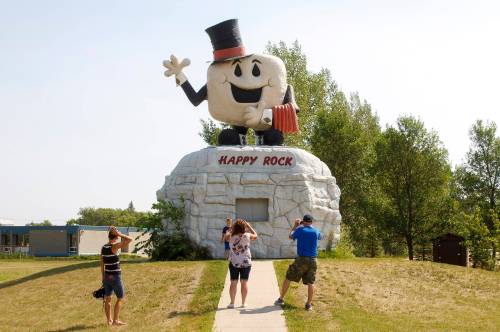
Could you imagine a Canada without Mr. PG repping Prince George, B.C.? Or the Big Nickel in Sudbury? Or, my personal favourite, Happy Rock in Gladstone?

Earlier this summer, CBC’s Cost of Living looked at the economics of these giant roadside attractions — of which there are more than 1,500 in Canada — and the cost of keeping them.

Some are falling into disrepair — this is why public art funding is necessary, by the way, not just for construction, but maintenance — and some towns are weighing whether or not that money is better spent elsewhere.

The main character of the story: Tyra the Tyrannosaurus, the rather literal symbol of Drumheller, Alta., a.k.a. the Dinosaur Capital of the World since 2000, who could be facing extinction after the lease agreement between the town and the Drumheller and District Chamber of Commerce ends in 2029.

Read
2:01 AM CDT

ER wait times have hit all-time highs in Winnipeg and are impacting nearly all aspects of hospital operations

Tom Brodbeck 17 minute read Preview

ER wait times have hit all-time highs in Winnipeg and are impacting nearly all aspects of hospital operations

Tom Brodbeck 17 minute read Yesterday at 6:00 AM CDT

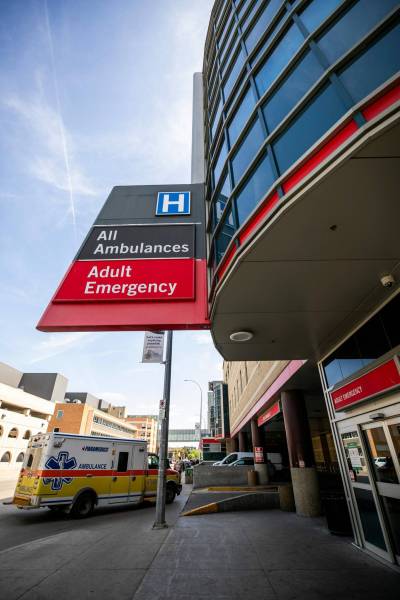
On most days at Health Sciences Centre’s adult emergency department, all 58 treatment beds are filled with sick patients. Another dozen or so brought in by ambulance line the hallways on stretchers, with only one nurse to look after them.

Out in the waiting room, about 30 or 40 people — sometimes more — are slouched in chairs in pain or discomfort, waiting hours to see a doctor. Most have been assessed by a triage nurse, but many will have to wait 10 to 20 hours to be examined by a physician because there’s no room for them in the treatment area.

Some patients leave because they can no longer tolerate the excruciating wait, only to return days later, sicker than they were before.

Welcome to the emergency department at Manitoba’s largest hospital, where some of the highest-acuity patients seek medical care but now face delays that were unimaginable a few years ago.

Read
Yesterday at 6:00 AM CDT

Transit union pleads for full shields after near ‘hijacking situation’

Nicole Buffie 5 minute read Preview

Transit union pleads for full shields after near ‘hijacking situation’

Nicole Buffie 5 minute read Thursday, Aug. 20, 2026

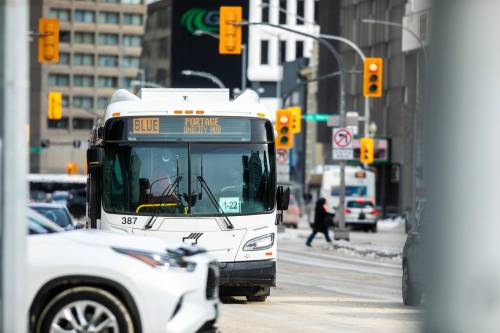
The union representing Winnipeg Transit drivers says the need for full safety shields is critical after an operator was threatened with a hatchet early Thursday.

Read
Thursday, Aug. 20, 2026