Hot take on Hermione

Awaken envisions queen's lost years in The Winter's Tale

Advertisement

Advertise with us

William Shakespeare’s The Winter’s Tale famously features a huge gap of time wherein Queen Hermione is presumed to be dead before being resurrected as a statue 16 years later to complete the redemption arc of her husband, King Leontes.

Read this article for free:


By clicking the button above, an account will be created and you will begin to receive some of our recommended newsletters. You may opt out of any newsletter by visiting your Email and Communication Preferences page or by clicking "unsubscribe" at the bottom of any email.

or

Already have an account? Log in here »

To continue reading, please subscribe:

Digital Subscription

One year of digital access for only $1.44 a week*

  • Enjoy unlimited reading on winnipegfreepress.com
  • Read the E-Edition, our digital replica newspaper
  • Access News Break, our award-winning app
  • Play interactive puzzles

*Billed as $5.77 plus GST every four weeks. After 52 weeks, price increases to the regular rate of $19.95 plus GST every four weeks. Offer available to new and qualified returning subscribers only. Cancel any time.

To continue reading, please subscribe:

Add Free Press access to your Brandon Sun subscription for only an additional

$1 for the first 4 weeks*

  • Enjoy unlimited reading on winnipegfreepress.com
  • Read the E-Edition, our digital replica newspaper
  • Access News Break, our award-winning app
  • Play interactive puzzles
Start now

*Your next Brandon Sun subscription payment will increase by $1.00 and you will be charged $17.95 plus GST for four weeks. After four weeks, your payment will increase to $24.95 plus GST every four weeks.

Hey there, time traveller!
This article was published 18/01/2020 (2471 days ago), so information in it may no longer be current.

William Shakespeare’s The Winter’s Tale famously features a huge gap of time wherein Queen Hermione is presumed to be dead before being resurrected as a statue 16 years later to complete the redemption arc of her husband, King Leontes.

It’s not the most graceful of Shakespearean turns, and just one of a plethora of reasons why The Winter’s Tale is rarely staged, but it certainly serves as an exploratory goldmine for playwright Tracey Penner in her new play Awaken, which opened at the Rachel Browne Theatre on Thursday night.

A co-production between zone41 theatre and Shakespeare in the Ruins, Awaken warm-heartedly hypothesizes what happened to Hermione during those missing, mysterious years.

Dylan Hewlett photo
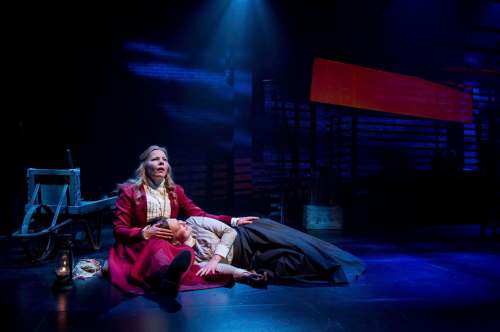
In Awaken, Tracey Penner (left), as Paulina, and Daria Puttaert as Queen Hermione explore Hermione’s missing 16 years in Shakespeare’s The Winter’s Tale.
Dylan Hewlett photo In Awaken, Tracey Penner (left), as Paulina, and Daria Puttaert as Queen Hermione explore Hermione’s missing 16 years in Shakespeare’s The Winter’s Tale.

A Winter’s Tale is one of Shakespeare’s late romances, which incorporates elements of tragedy (King Leontes’ jealousy), magic (Hermione’s statue-to-human resurrection), mythology (the Oracle of Apollo) and the annoying presence of old men who are cranky about something and are going to be redeemed, usually via the sacrifice of a woman (the aforementioned Leontes).

Thankfully — or tragically, depending on your perspective — there are no cranky old men in Awaken. In fact, there’s no men in Awaken at all. Instead, Penner focuses on characters that Shakespeare often ignores or uses as plot devices: the women.

Penner stars as Paulina, a servant to Queen Hermione, played by Daria Puttaert. Though contemporary in use of language, the well-paced two-hander draws from select Shakespearean techniques — evocative imagery, recurring symbolism, the occasional monologue — and forgoes others (there is nary a fourth-wall break to be found here) to create something of an impressionistic companion piece to one of Shakespeare’s last plays.

Penner proposes that Hermione — whose son has just died and whose baby daughter has been abandoned in Bohemia at the behest of the king, believing Hermione to be unfaithful — has been whisked away to safety by Paulina. What unfolds next is a 90-minute play that spans 16 years of Hermione living in a shed, learning to cook, exploring her sexuality and training to be a statue.

Out of context from the greater stakes of The Winter’s Tale, Awaken can sometimes feel too distant from the overarching conflict Hermione truly faces, but there’s plenty of quiet internal drama and philosophical musings for Penner and Puttaert to play with as their characters reflect on their social status, their sexuality and their agency as women living in a patriarchal society.

Penner’s script doesn’t plumb the depths of gender and feminist theory as it could, and has a few elements of third-wave feminism that don’t fully connect in a fourth-wave world (Hermione’s embrace of her new-found bisexuality is represented by ditching her corset and… wearing high-waisted flared pants?), but it’s a kind and jovial take that pulls from a variety of mythical and literary sources, much in the way Shakespeare liked to do.

The graceful set design by Kara Pankiw is supported by Scott Henderson’s unfussy lighting that mostly relies on simple warm and cool washes to demarcate the indoor environment of the shed in which Hermione lives and the changing seasons of the world outside of it.

Daina Leitold’s costumes are a masterclass in colour and texture, if not particularly indicative of the time period in which the play is it set (for the record: I don’t know the time period, and it doesn’t matter to me, but it may to others), and the elements are aptly harmonized with Chris Coyne’s sound design, which alternates between a deeply satisfying ambiance and a kind of jarring but not uninteresting pseudo-Celtic vibe.

All of this is brought skillfully together by director Krista Jackson, who takes Penner’s slightly-too-amiable script and imbues it with an intriguing, enigmatic air that makes for a tale worthy of heading out in the middle of winter for.

Frances.Koncan@freepress.mb.ca

Dylan Hewlett photo
Tracey Penner (left), as Paulina, and Daria Puttaert as Queen Hermione explore Hermione’s missing 16 years in Shakespeare’s The Winter’s Tale.
Dylan Hewlett photo Tracey Penner (left), as Paulina, and Daria Puttaert as Queen Hermione explore Hermione’s missing 16 years in Shakespeare’s The Winter’s Tale.

Twitter: @franceskoncan

Report Error Submit a Tip

More Stories

Awaken envisions queen's lost years in The Winter's Tale

Frances Koncan 4 minute read Preview

Awaken envisions queen's lost years in The Winter's Tale

Frances Koncan 4 minute read Saturday, Jan. 18, 2020

William Shakespeare’s The Winter’s Tale famously features a huge gap of time wherein Queen Hermione is presumed to be dead before being resurrected as a statue 16 years later to complete the redemption arc of her husband, King Leontes.

It’s not the most graceful of Shakespearean turns, and just one of a plethora of reasons why The Winter’s Tale is rarely staged, but it certainly serves as an exploratory goldmine for playwright Tracey Penner in her new play Awaken, which opened at the Rachel Browne Theatre on Thursday night.

A co-production between zone41 theatre and Shakespeare in the Ruins, Awaken warm-heartedly hypothesizes what happened to Hermione during those missing, mysterious years.

A Winter’s Tale is one of Shakespeare’s late romances, which incorporates elements of tragedy (King Leontes’ jealousy), magic (Hermione’s statue-to-human resurrection), mythology (the Oracle of Apollo) and the annoying presence of old men who are cranky about something and are going to be redeemed, usually via the sacrifice of a woman (the aforementioned Leontes).

Read
Saturday, Jan. 18, 2020

Province orders ban on private teacher-student messaging

Maggie Macintosh 4 minute read Preview

Province orders ban on private teacher-student messaging

Maggie Macintosh 4 minute read Updated: Yesterday at 6:14 PM CDT

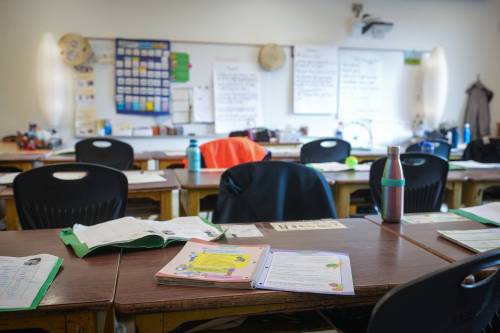
Manitoba teachers are no longer allowed to text or use social media to contact a student – regardless of whether they coach a school sports team or supervise other activities outside typical instruction times.

Read
Updated: Yesterday at 6:14 PM CDT

Goblin:Macbeth is a monstrously entertaining show

Holly Harris 4 minute read Preview

Goblin:Macbeth is a monstrously entertaining show

Holly Harris 4 minute read 2:18 PM CDT

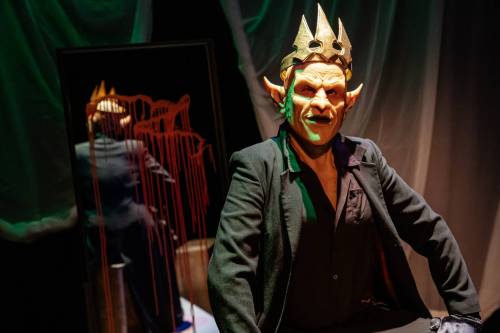
Screw your courage to the sticking point, for Royal Manitoba Theatre Centre has just unleashed a gaggle of goblins at the Tom Hendry Warehouse in its ghoulishly theatrical Goblin:Macbeth.

The darkly subversive, 95-minute (sans intermission) production is the brainchild of Spontaneous Theatre’s Bruce Horak and Rebecca Northan (also serving as director), with Ellis Lalonde (sound designer).

It stars a trio of larger-than-life, pointy-eared goblins, Wug, Kragva and Moog — fie on anyone seeking to determine their tightly guarded mortal identities — who cavort and kibbitz with audience members before stumbling across The Complete Works of William Shakespeare.

After indignantly declaring “we are not Tolkien goblins,” and sharing a bit of goblin-lore (who knew these demons had 17 genders?) they vow they will attempt to “do theatre” to better understand our culture, choosing the Bard’s superstition-riddled Scottish Play for being the shortest and bloodiest.

Read
2:18 PM CDT

What $4 pumpkin can teach us about workplace culture

Tory McNally 7 minute read Preview

What $4 pumpkin can teach us about workplace culture

Tory McNally 7 minute read 2:02 AM CDT

There are few things more revealing about a workplace than what happens when someone suggests a little fun.

Put a pumpkin on the reception desk, announce a Halloween costume day or suggest that everyone take 20 minutes to enjoy some candy and you may discover that your organization falls into one of two camps.

There are those who embrace the opportunity to do something different and those who immediately begin calculating the cost of lost productivity.

Somewhere, a manager is currently wondering whether the employee who spent 15 minutes decorating their office door could have used that time to answer three emails. Another is worried allowing costumes will somehow lead to a complete collapse of professional standards. A third is quietly trying to figure out whether a bowl of miniature chocolate bars can be claimed as a business expense.

Read
2:02 AM CDT

Winnipeg Jets trade Connor Hellebuyck to New Jersey Devils

Free Press staff 1 minute read Preview

Winnipeg Jets trade Connor Hellebuyck to New Jersey Devils

Free Press staff 1 minute read Yesterday at 11:34 AM CDT

Connor Hellebuyck has been traded.

The Winnipeg Jets announced Friday morning they have sent the netminder to the New Jersey Devils for four players and two draft picks.

The Jets are receiving: Dawson Mercer, Alexander Command, Nico Daws and Nick Bjugstad.

More to come.

Read
Yesterday at 11:34 AM CDT

Opening of Portage and Main shows even seemingly insurmountable impasses can be overcome

Jason Syvixay 10 minute read Preview

Opening of Portage and Main shows even seemingly insurmountable impasses can be overcome

Jason Syvixay 10 minute read 2:00 AM CDT

There are places in a city that become more than places. Portage and Main is one of them. For generations of Winnipeggers, the intersection has represented downtown, traffic, development and civic identity. Its reopening to pedestrians in 2025, after 46 years of closure, was about more than crossing a street. It was a reminder that decisions made by one generation can shape the choices available to another — and that even seemingly permanent decisions can be reconsidered.

I have spent much of my professional life thinking about Winnipeg as a planner, working in public, private and non-profit settings. My PhD research gave me an opportunity to examine Portage and Main differently: not simply as a debate about cars and pedestrians, but as a window into how power operates in a city. I reviewed 569 archival documents spanning the 1960s to the present, interviewed 48 planners with experience in Winnipeg, and mapped the relationships between planners, politicians, developers, engineers, residents, businesses and advocacy groups.

What emerged was a story about how planning decisions become embedded in a city’s institutions, agreements, infrastructure, professional practices and political expectations — shaping not only what gets built, but who gets to influence what gets built.

The closure of Portage and Main in 1979 did not remain a decision confined to a particular political moment. Over time, it was reinforced by development agreements, physical infrastructure, property relationships, traffic-engineering practices, administrative routines, and public narratives about mobility and downtown revitalization. The people who made many of those original decisions eventually left office. The arrangements they created remained. Later planners inherited them.

Read
2:00 AM CDT