

Abstract thinking
Sometimes games value strategy over simple strokes of luck
Advertisement
Read this article for free:
or
Already have an account? Log in here »
To continue reading, please subscribe:
Monthly Digital Subscription
$0 for the first 4 weeks*
- Enjoy unlimited reading on winnipegfreepress.com
- Read the E-Edition, our digital replica newspaper
- Access News Break, our award-winning app
- Play interactive puzzles
*No charge for 4 weeks then price increases to the regular rate of $19.95 plus GST every four weeks. Offer available to new and qualified returning subscribers only. Cancel any time.
Monthly Digital Subscription
$4.99/week*
- Enjoy unlimited reading on winnipegfreepress.com
- Read the E-Edition, our digital replica newspaper
- Access News Break, our award-winning app
- Play interactive puzzles
*Billed as $19.95 plus GST every four weeks. Cancel any time.
To continue reading, please subscribe:
Add Free Press access to your Brandon Sun subscription for only an additional
$1 for the first 4 weeks*
*Your next subscription payment will increase by $1.00 and you will be charged $16.99 plus GST for four weeks. After four weeks, your payment will increase to $23.99 plus GST every four weeks.
Read unlimited articles for free today:
or
Already have an account? Log in here »
Hey there, time traveller!
This article was published 03/10/2020 (1916 days ago), so information in it may no longer be current.
Theme is an important part of most board-gaming experiences. It allows us to escape from life and momentarily slip into the role of someone else, be it a railroad developer in Ticket to Ride, a settler in Catan or a detective in Clue. It temporarily offers us the chance to act, and to make decisions, from a vantage point that is different than that of our current life circumstances — unless, of course, you actually are an astronaut settling a planet (as in Terraforming Mars) or a medieval merchant working in Turkey (as in Istanbul).
Theme is also important in the visual presentation of a game. It allows the publishers to create colourful artwork, card text and descriptions, or miniatures to further the immersive experience of game play.
But there are plenty of games out there that are basically devoid of any theme. As a result, these games rely very heavily on the intellectual challenge of the actual game rather than the added distractions of a thematic background story or visually stimulating components. In board-gaming lingo these games are referred to as abstract games.
As a broad definition, one could say abstract board games are games that do not rely on any chance. They are primarily based on the players’ skill and strategic thinking and have no random elements, such as dice rolling, or card draws. Generally, they strive to avoid any tactical advantage that might come from any kind of luck. Most abstract games are simple at their core and easy to learn. However, they often offer deep and thought-provoking strategy mechanics under the surface and evoke the challenge to do better the next time around. They are also lacking any theme (thus the term ‘abstract’), or at the very least, any added theme is fundamentally unimportant to the actual game play. For that reason, most abstract games have very simple and cleanly designed components that allow the players to focus on the rational aspects of the game without any unnecessary visual distractions. The majority of abstract games are designed for two players but there are some exceptions that allow for more.
The most widely known example of an abstract game would be chess. It has no theme (unless you consider it to be a vague battle of two royal courts). The fundamentals of chess are relatively easy to learn but the game takes a lifetime to master. It also has no real element of luck (except the random start player choice) and relies completely on a player’s strategic thinking and planning. Other classic and popular games that come to mind would be Connect 4, Othello, checkers or Go.
In our modern board-gaming world, abstract games continue to be popular, while new and exciting titles are entering the market on a regular basis. There is something inherently satisfying in engaging in an intense battle of wits with your opponent while trying to stay one step ahead of them. If you are a competitive person who enjoys a strategic challenge, you should give some abstract board games a try. Here are some of my favourites:
YINSH
2 players, ages 9 and up
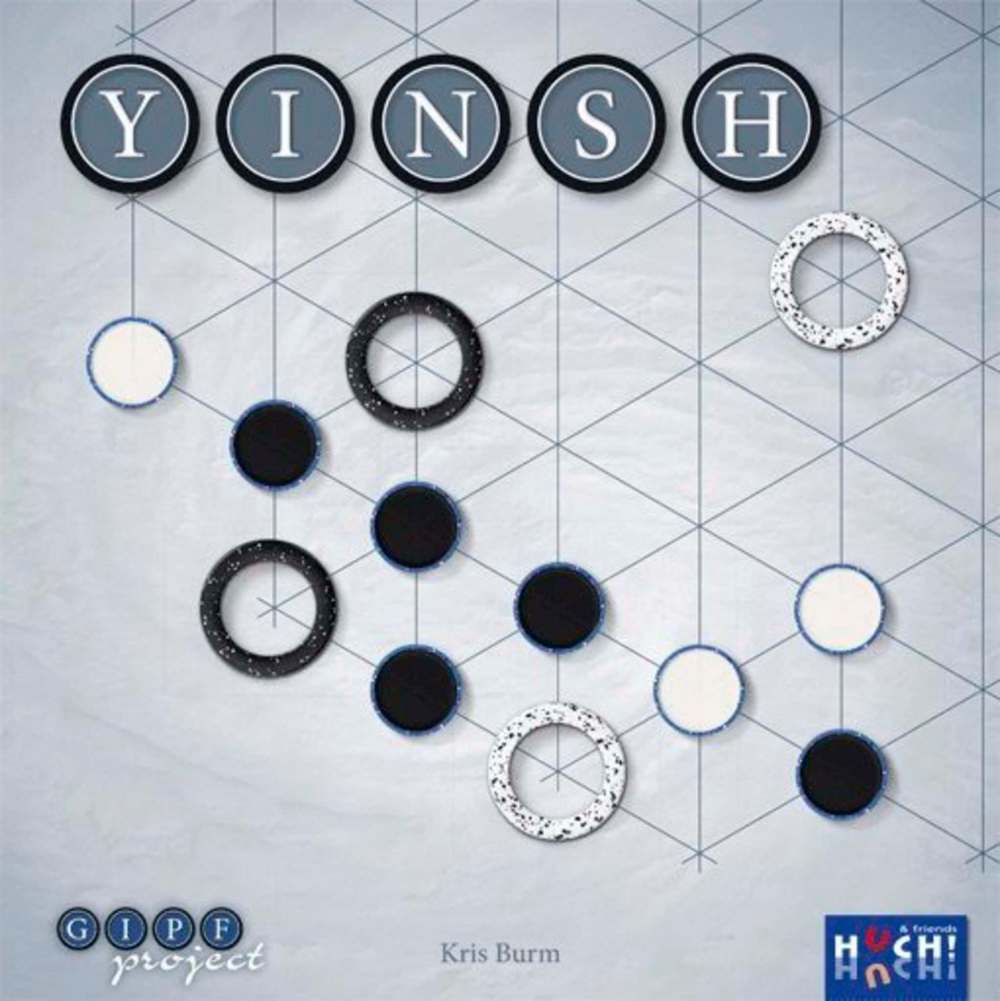
Players each start with five rings on the board. Every time a ring is moved, it leaves a marker behind. Markers are white on one side and black on the other.
When markers are jumped over by a ring they must be flipped, so their colour is constantly changing. The players must try to form a row of five markers with their own colour face up. If a player succeeds in doing so, they removes one of their rings as an indication they has formed such a row.
The first player to remove three of his rings wins the game. In other words, each row you make brings you closer to victory — but also makes you weaker, because you have one fewer ring to play with. Very tricky!
HIVE
2 players, ages 9 and up
A highly addictive game that is not restricted by a board and can be played anywhere on any flat surface.
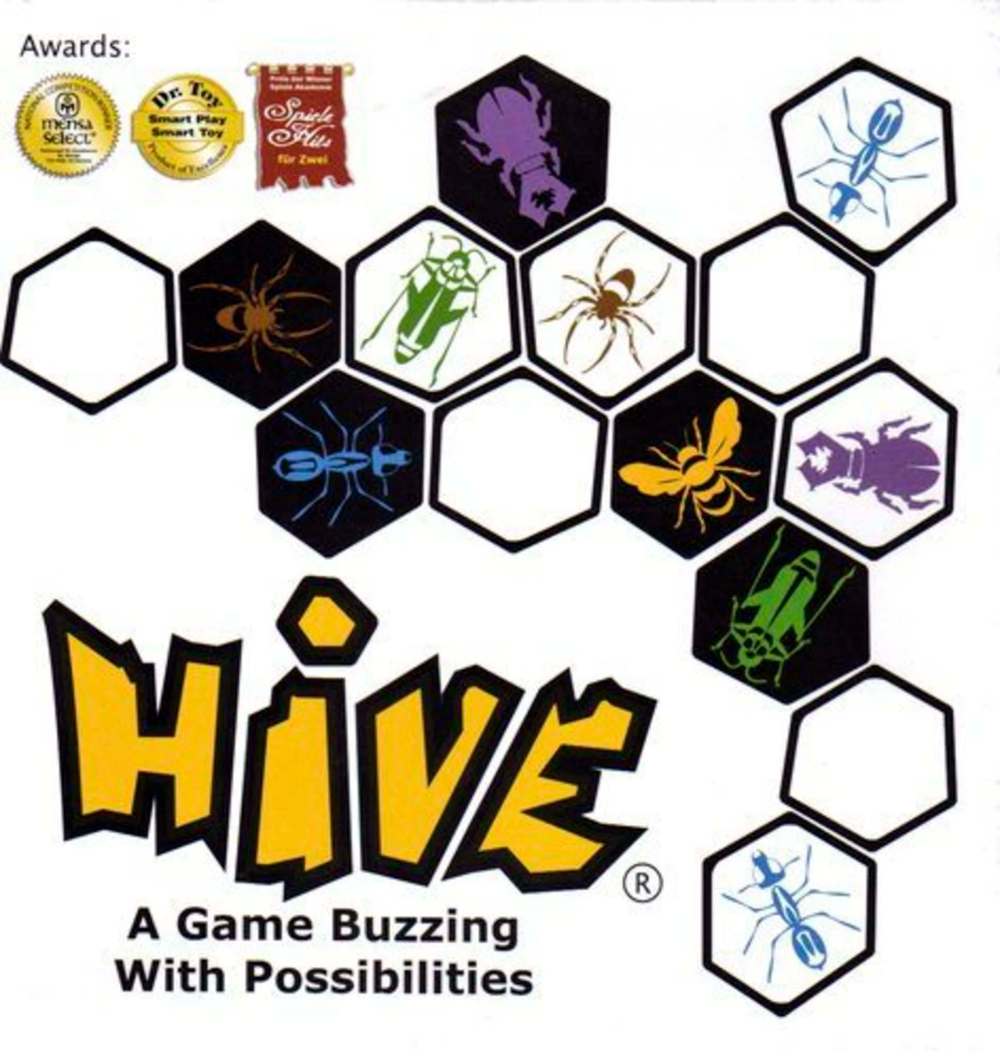
Hive is made up of 22 pieces, 11 black and 11 white, resembling a variety of creatures each with a unique way of moving — kind of like chess with critters.
The object of the game is to totally surround your opponent’s queen, while at the same time trying to block your opponent from doing likewise to your queen. The first player to surround his opponent’s queen wins the game.
QUORIDOR
2-4 players, ages 8 and up
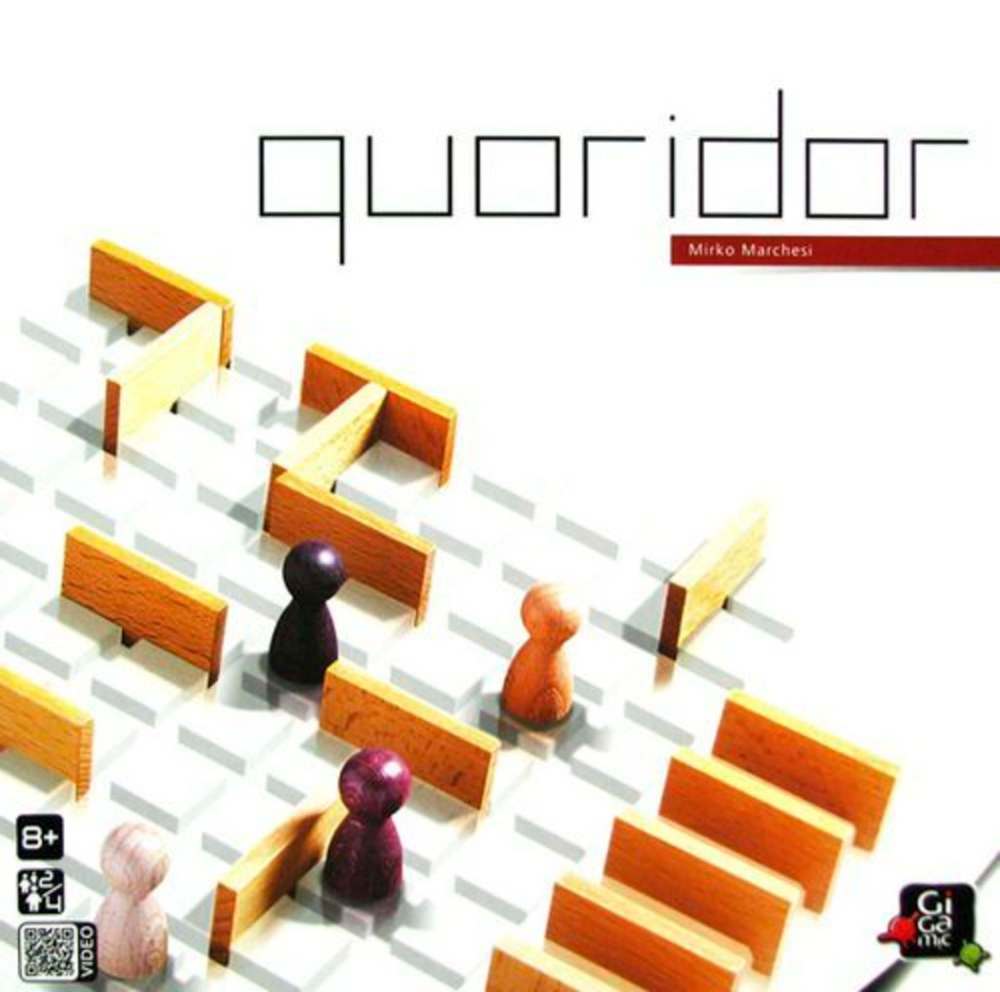
This game is surprisingly deep despite its simple rules.
The object of the game is to advance your pawn to the opposite edge of the board. On your turn, you may either move your pawn or place a wall. You may hinder your opponent with wall placement, but not completely block him off.
Meanwhile, he is trying to do the same to you. The first pawn to reach the opposite side wins.
ONITAMA
2 players, ages 8 and up
An almost perfect information abstract game with a random starting setup. On a 5×5 board, both players start with five pawns on their side, with the main pawn in the middle.
Each player has two open cards that each display a possible move for any of their pieces. There is a fifth card that cannot be used by either player. On a player’s turn, they choose one of their cards and move one of the pieces according to the chosen card. They then replace the card they used with the fifth card. The other player then chooses one of their cards, and so on.
Moving onto one of the opponent’s pawns removes that pawn from the game. Taking the opponent’s main pawn or moving your main pawn into your opponent’s main pawn’s starting space wins the game.
SANTORINI
2-4 players, ages 8 and up
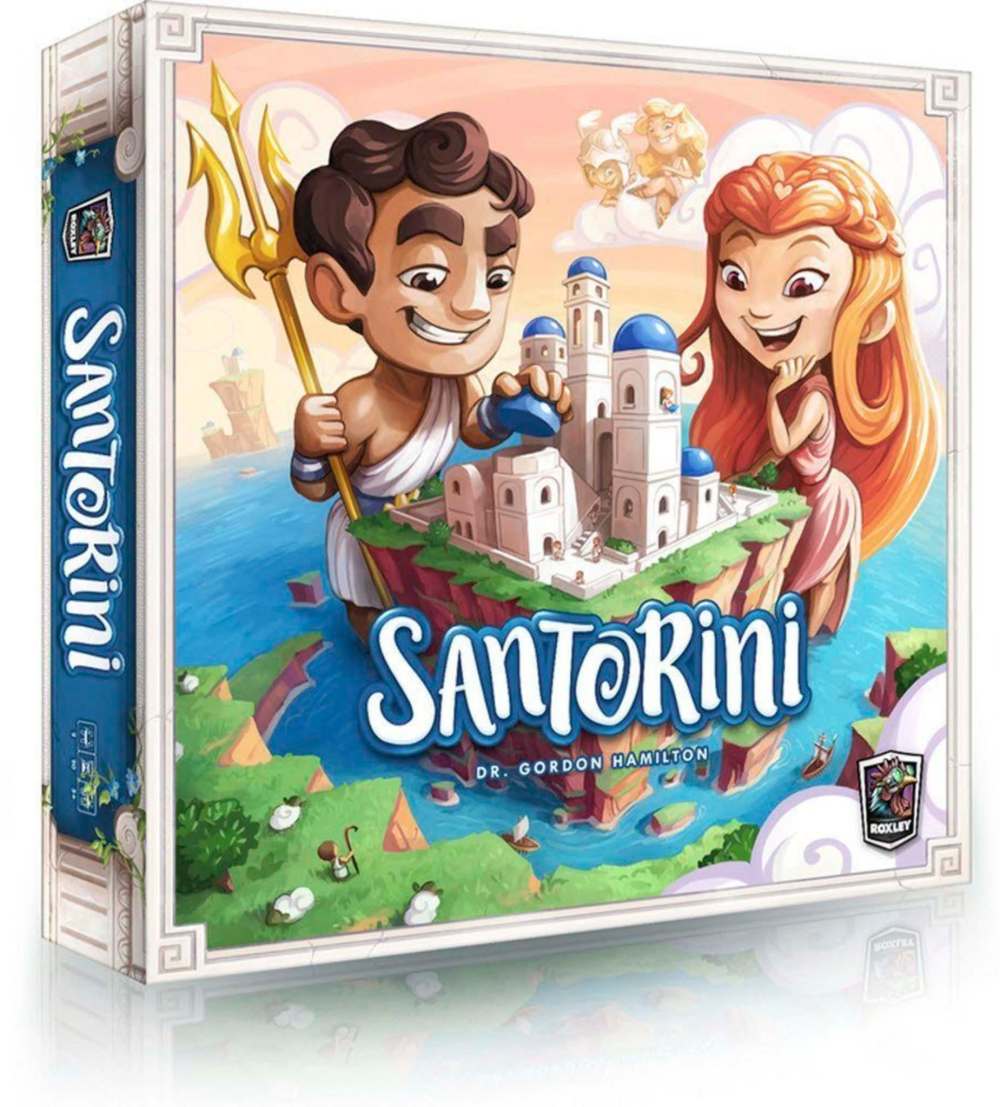
A visually stunning and highly accessible pure strategy game that is simple enough for an elementary school classroom.
The rules are deceptively simple but with enough gameplay depth and content for even hardcore gamers to explore. Each turn consists of two steps: Move one of your builders into a neighbouring space, then construct a building level adjacent to the builder you moved.
If either of your builders reaches the third level, you win. The game also offers variable player powers for more advanced game play.
Olaf Pyttlik is a Winnipeg board-game enthusiast and co-owner of Across the Board Game Café. In a regular column, he looks at the renaissance of board games and shares games ideas for families and friends of all ages. Email him at olaf@acrosstheboardcafe.com.